


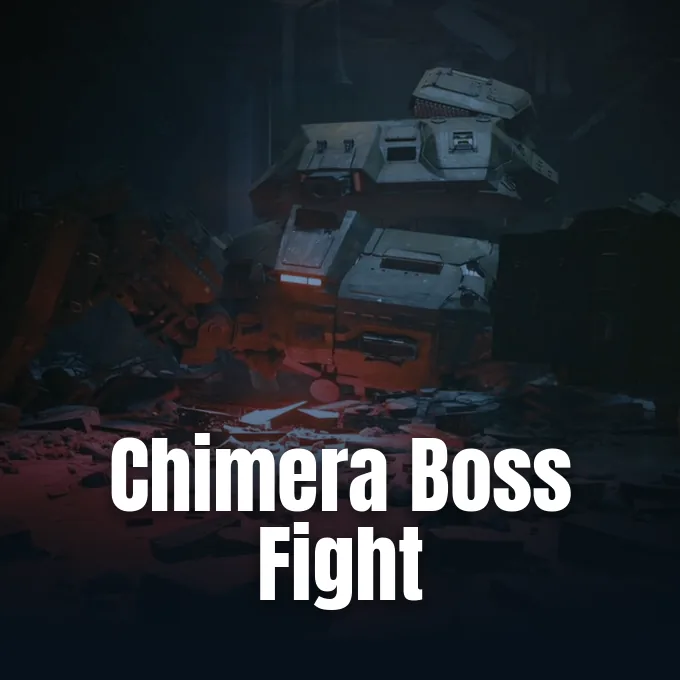
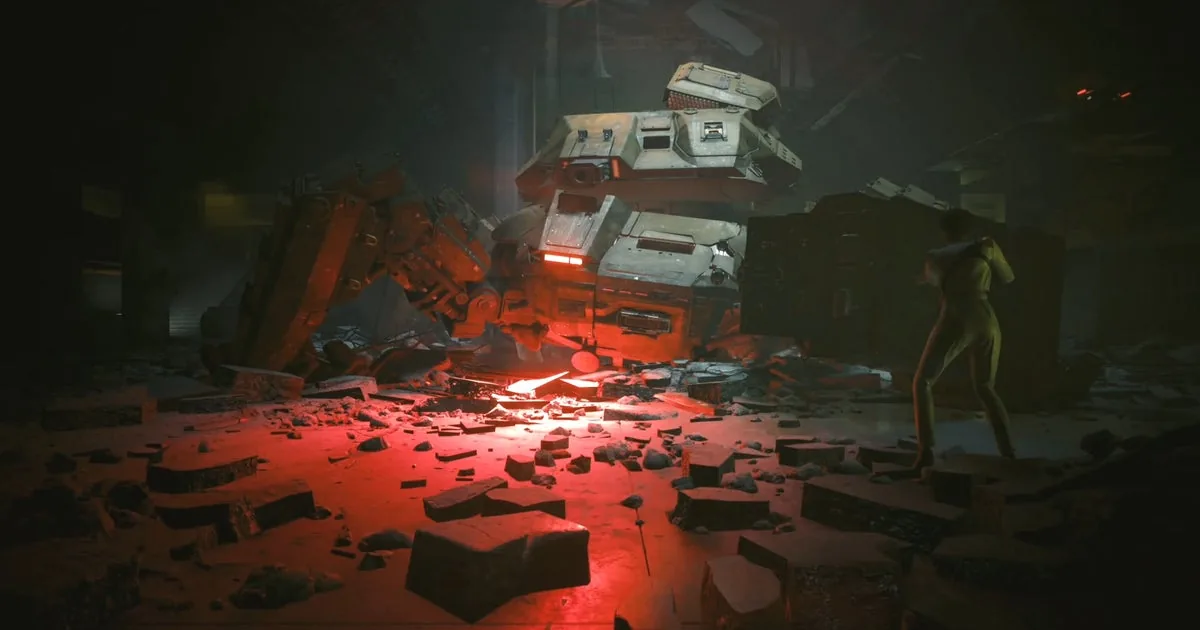
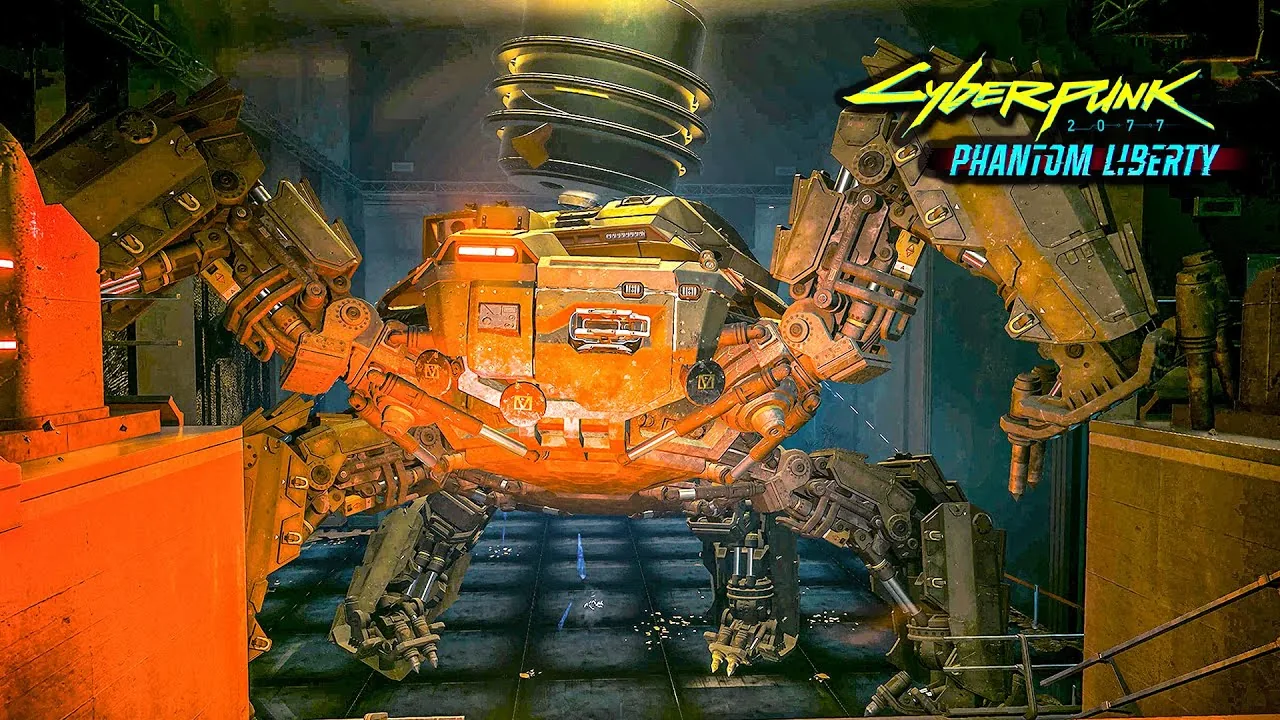
When players guide V and President Rosalind Myers deep into the subterranean tunnels of Dogtown, an armored spider-tank crashes through the ceiling to ignite the explosive climax of the opening act. CD Projekt Red developers revealed that constructing this sequence was one of the most grueling undertakings in the studio’s history. Perfecting the Chimera boss fight in Cyberpunk 2077: Phantom Liberty required two full years of continuous redesigns, cross-departmental coordination, and four separate reconstructions of the combat vehicle [1].
Origins of the Chimera Boss Fight
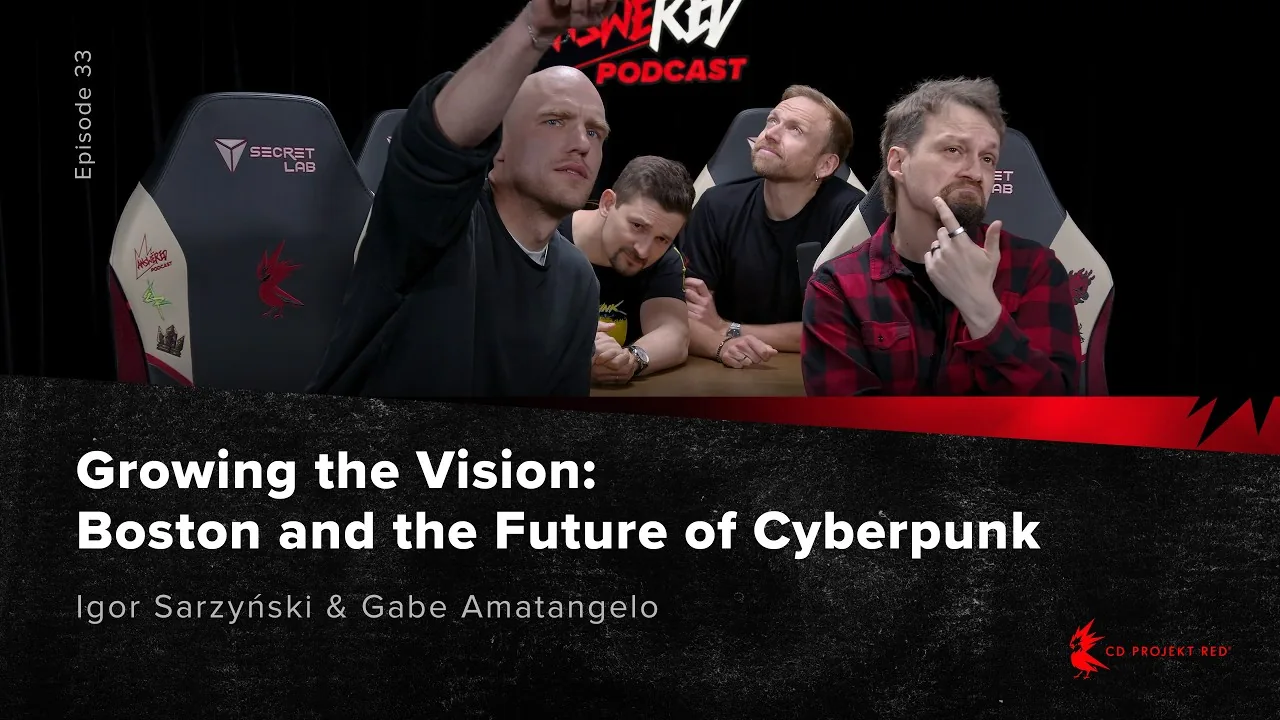
The monumental encounter did not start as a finished set piece, but rather as an ambitious technological benchmark intended to test the limits of the expansion. Speaking on episode 33 of the studio’s official AnsweRED podcast, game director Gabe Amatangelo and creative director Igor Sarzyński reflected on the steep production hurdles that defined the project [1]. How could a single encounter demand two full years of continuous iteration across four distinct development departments?
Amatangelo explained that the production team treated the armored vehicle as an intersection where multiple creative priorities collided simultaneously. ‘Sometimes we’re making content that’s a nexus point of different disciplines; the Chimera is a great example of that,’ Amatangelo said, emphasizing that combat mechanics, environmental storytelling, visual fidelity, and overarching worldbuilding had to align without diminishing the immediate panic of escaping Dogtown [3]. To establish that terrifying presence, Amatangelo and art director Paweł Mielniczuk spent months trading real-world military references across email and YouTube, examining footage of heavy artillery and rapid-firing miniguns to craft an acoustic profile that would terrify players when the machine emerged from the shadows [1].
Paweł Mielniczuk confirmed the timeline during the broadcast. The team spent two continuous years refining every stage of the Chimera boss fight [2].
Balancing Disciplines Across Four Rebuilds
Achieving harmony between differing development departments proved far more demanding than the directors initially anticipated. Amatangelo explained that the sequence was constantly swinging between conflicting creative extremes during internal playtests. In certain builds the sequence leaned too heavily into rigid narrative scripting, while in others it became an unforgiving bullet-hell shooter or an indulgent graphical showcase that neglected basic combat clarity [3]. Maintaining narrative urgency while preserving player freedom became an exhaustive trial for the technical leads.
Striking a functional equilibrium forced the three directors to break down the encounter moment by moment. ‘There were so many moving parts,’ Amatangelo explained on the broadcast, detailing how the team sat together to examine the pacing beat by beat [2]. Paweł Mielniczuk revealed that the studio ended up completely rebuilding the tank four separate times, swapping primary cannons, defensive missile pods, and physical chassis equipment to accommodate evolving gameplay specifications [3]. The machine was rebuilt four times.
Balancing multi-phase combat encounters remains a major focus across modern action titles, as seen when Netmarble detailed combat mechanics and narrative integration for Solo Leveling: Karma during Tokyo Game Show demonstrations. For CD Projekt Red, each rebuild of the Chimera boss fight meant discarding months of completed animation work to ensure neither cinematic pacing nor responsive gunplay suffered [2]. That willingness to scrap functional systems allowed encounter designers to rebuild the sequence until the pacing felt seamless.

Iterating the Chimera Tank Fight Mechanics
The mechanical blueprint drew direct aesthetic inspiration from Japanese cyberpunk animation, notably the heavy multi-legged walking tanks showcased throughout Ghost in the Shell. During the Chimera boss fight, V and President Rosalind Myers find themselves trapped in an underground Barghest facility (the private militia ruling the lawless district of Dogtown), forced to sprint between crumbling concrete pillars while the behemoth tracks their movements with heavy automated fire [2]. Encounter designers wanted players to feel completely outmatched during the initial minutes of combat.
Critical reception highlighted both the dramatic spectacle and the mechanical friction that emerged from such an intricate arena. Rick Lane of PC Gamer noted that systematically dismantling the armored behemoth proved grueling during early playthroughs, comparing the protracted battle to the punishing Toad Prince encounter found in The Witcher 3: Hearts of Stone [2]. The battle anchors the opening act. Lane observed that while the combat loop felt demanding, the sheer theatricality of the confrontation established Phantom Liberty as one of the standout gaming achievements of the decade.
Writing for Rock Paper Shotgun, critic Oisin Kuhnke observed that the sequence channels a distinct PlayStation 3-era design sensibility, opening with an exhilarating chase where player agency remains restricted before dumping V into an open arena where the tank hunkers down for combat [3]. Kuhnke questioned whether the massive production investment justified the final arena showdown, yet acknowledged the technical craftsmanship required to bring the autonomous spider-tank to life across multiple hardware configurations.
Phantom Liberty Chimera as an Expensive Milestone
The sheer scale of bespoke modeling, mechanical rigging, and custom sound design carried a substantial price tag for the Polish development studio. Igor Sarzyński stated during the retrospective that constructing the completed vehicle made it one of the most expensive art assets in the studio’s entire history [1]. Sarzyński called it their costliest asset. Multiple bespoke animations had to be authored specifically for the sequence, ensuring that each damaged leg and shattered armor plate reacted dynamically to incoming player ordnance.
That substantial resource allocation underscores how CD Projekt Red approached the expansion as a vital opportunity to rehabilitate its public standing following the rocky launch of the original game in 2020. Former Eurogamer managing editor Tom Senior described Phantom Liberty as a remarkable expansion and bittersweet conclusion, praising its ability to deliver premium action sequences that rival the most extravagant cinematic games on the market [1]. The studio poured extensive funding into bespoke set pieces to prove that its storytelling ambitions remained unmatched.
The expansion arrived across PC, PlayStation 5, Xbox Series X/S, and Mac, while also targeting future hardware including Nintendo Switch 2 [1]. Delivering an intricate military set piece that runs reliably across differing hardware tiers proved that the studio had mastered its proprietary technology before shifting toward new commercial pipelines. That technical redemption elevated the Chimera boss fight into a proud showcase for the engine.
Lessons for Future CD Projekt Red Projects
The two-year development cycle poured into the Chimera boss fight generated foundational production protocols that CD Projekt Red is already transferring into ongoing productions. With the newly established Boston studio spearheading development on Project Orion—the official codename for the sequel to Cyberpunk 2077—leadership is actively restructuring internal studio pipelines to prevent cross-disciplinary bottlenecks between artists and encounter designers [2]. Creative teams now establish shared design benchmarks before building high-fidelity assets.
The studio currently balances a demanding production roadmap that includes The Witcher 4 and a major upcoming expansion for The Witcher 3: Wild Hunt before Project Orion enters full-scale manufacturing [2]. Game director Gabe Amatangelo emphasized that establishing open communication channels early in pre-production prevents the departmental siloing that made the Chimera boss fight such a time-consuming trial. That strategic shift ensures future combat encounters benefit from earlier cross-team alignment.
V fights beside President Rosalind Myers. That hard-fought victory against the autonomous war machine proved that high-risk creative iteration, though exhausting, can elevate a mechanical boss encounter into an enduring highlight of modern game design [3]. The studio iterates until systems align.
- ONLINE NEWS Makar, C. (2026, September 25). Cyberpunk 2077 studio on the two years it took to get Phantom Liberty’s coolest moment right. Eurogamer. [Article Link]
- ONLINE NEWS Lane, R. (2026, September 26). It took CD Projekt two years to design Phantom Liberty’s Chimera Tank boss fight: ‘We were iterating over and over’. PC Gamer. [Article Link]
- ONLINE NEWS Kuhnke, O. (2026, September 26). Cyberpunk 2077: Phantom Liberty’s Chimera tank boss fight was apparently so complex it took two years of ‘reiterating over and over’ to get it right. Rock Paper Shotgun. [Article Link]


