




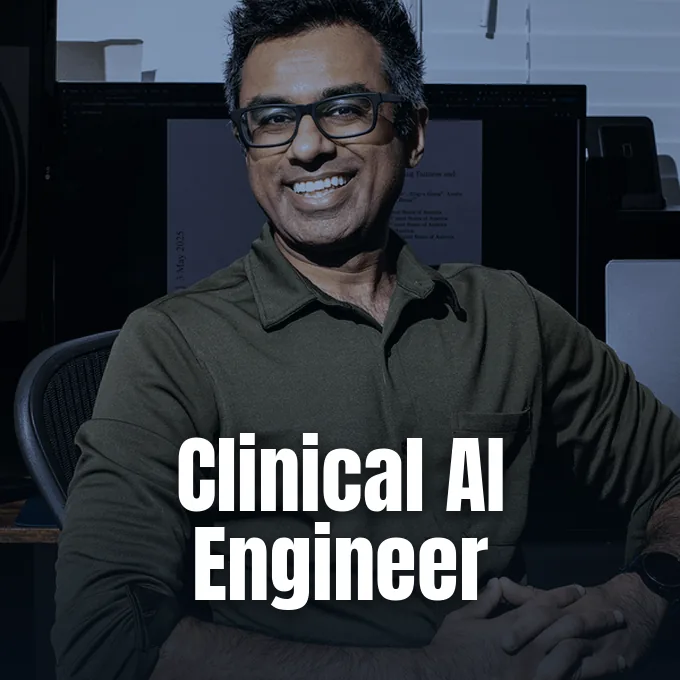
Boston Children’s Hospital brought ER doctor Dinesh Rai on board in August 2023 to craft prompts for AI models, but his daily work soon grew into that of a clinical AI engineer. As base models matured, hospital leaders saw that real medical computing required building dependable software rather than simply writing clever prompts [1].
Beyond Prompt Engineering
When Boston Children’s Hospital advertised an opening for a prompt engineer in 2023, tech firms viewed the job as a new frontier, and companies eagerly sought people who knew how to draw useful answers from large language models (LLMs) by choosing words carefully, giving examples, and setting personas. In an article by Jackie Snow in IEEE Spectrum, hospital staff recounted that period of trial and error. Rai doubted the institution would pick an ER doctor. Administrators hired him in August 2023 [1].
Early enthusiasm for prompt crafting cooled fast. As newer base models handled plain English without special tricks, John Brownstein, the chief innovation officer at Boston Children’s, recognized that hospital goals had to shift. “Knowing how to prompt AI properly was going to be the job function of the future,” John Brownstein said, recalling how early hospital plans focused on finding the right words to steer text systems. That early vision did not last [1].
With stronger models available, hospital leaders turned to harder questions about clinical safety and software setup. Brownstein said their focus shifted from asking basic questions to building software agents that help run daily hospital work. “How do you embed these tools in your day-to-day operations? How do you build agents to manage literally everything that you do?” Brownstein asked. Meeting that goal meant Rai could not spend his days testing text prompts; he had to write real code and work with doctors in children’s wards [1].
The Clinical AI Engineer Role in Boston
Rai brought an unusual background to Boston Children’s. He completed undergraduate studies in supply chains and marketing at Rutgers Business School before enrolling at the Albert Einstein College of Medicine. In 2014, as neural networks began drawing wider notice, he taught himself how to code while starting his medical studies [1].
While training as an ER doctor, Rai built software and launched Academius, an online platform for medical students to track residency interviews and rank lists. Treating an individual patient in the ER gave him deep personal satisfaction. Writing code offered an entirely different scale of impact, allowing a single software system to help thousands of doctors care for far more children than one physician could ever treat by hand. After completing a fellowship in clinical informatics between 2021 and 2022 (which links medical care with IT systems), he realized that working in health tech full-time was possible. In 2022, he paused his medical practice to join Pieces, a health care AI company, where he led work using language models to summarize patient charts before coming to Boston [1].
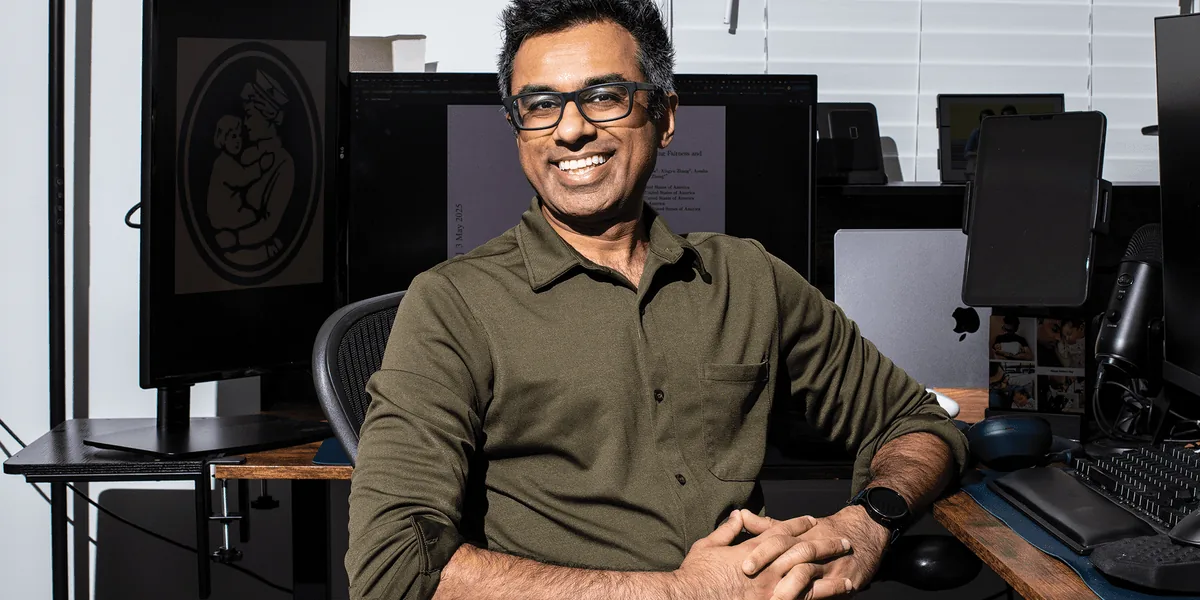
Rai recently reactivated his medical license, intending to resume ER shifts in Boston within the next year. At Boston Children’s, he splits his schedule between two worlds: spending mornings writing code with software engineers and devoting afternoons to visiting bedside doctors to understand their clinical workflow hurdles. “I’m more like a clinical AI engineer now,” Rai said [1].

Clinical Doppelgangers and Patient Data
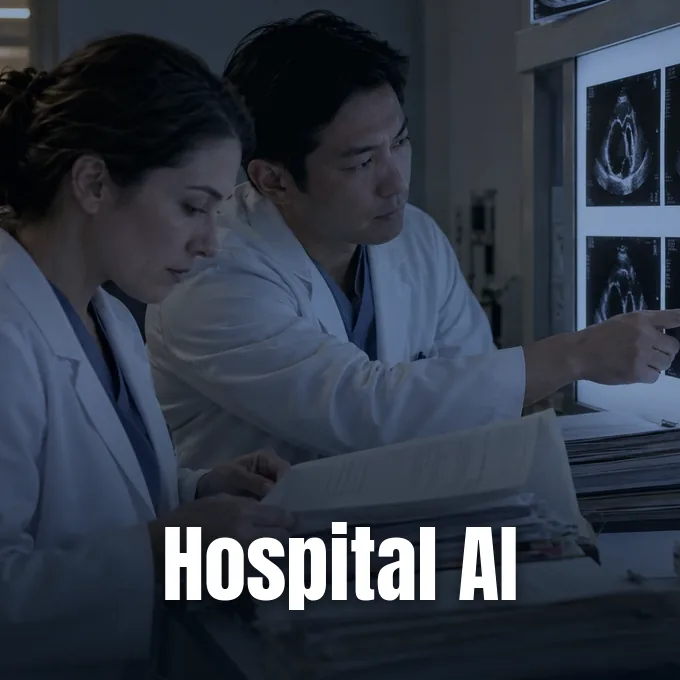
One of Rai’s major projects at Boston Children’s is an internal search tool called clinical doppelgangers. The software helps doctors find past patient records that share rare traits with a child currently in their care, searching through historical files so clinicians can examine how past children responded to specific therapies over time. Standard medical guidelines draw from large clinical trials. Pediatric hospitals frequently treat rare conditions that do not fit into published literature [1].
Doctors do not use the search tool as a substitute for controlled clinical trials. Instead, the archive gives physicians extra clues when treating rare illnesses that lack clear guidance in medical journals. Building the tool sparked deep debate between coders and doctors over how much chart data to feed into an AI model when predicting a health outcome [1].
Both groups wanted to give the AI model as much patient history as possible, yet their reasoning rested on opposing assumptions. Programmers assumed that every chart detail could help the system, while bedside doctors assumed the AI would spot unrelated facts and dismiss them without confusion. Rai disagreed with both groups. In medical care, an unusual lab value or elevated pulse often has zero connection to the main diagnosis. When an AI tool encounters an unrelated abnormality, it can easily invent a convincing explanation for why that outlier matters. “That’s where the dual perspective has been valuable,” Rai said, “not just translating between teams, but recognizing when an approach that looks reasonable from either perspective rests on assumptions we shouldn’t make” [1].
Testing Notes in Children’s Wards
Rai faced similar hurdles when building a tool to draft clinical progress notes. Rather than releasing the software widely, his team asked hospital doctors to inspect batches of generated notes before approving the code. Care teams in the cardiac intensive care unit proved vital during testing because they had managed fragile patients for weeks [1].
Doctors who had spent weeks caring for an ill infant in intensive care could spot charting errors that outside reviewers skimming the chart would easily miss. Rai said medical skepticism is a helpful safeguard when introducing software to a hospital ward. “I think some skepticism is healthy, and we don’t try to talk people out of it,” Rai said. His team told doctors from day one that the tool was built to support clinical judgment, not replace personal review of a patient’s chart [1].
Showing doctors where the code slipped built genuine trust. “People trust it more when they’ve seen its mistakes than when we just tell them it’s good,” Rai said. By watching the tool make errors during testing, bedside doctors learned when to verify generated text and when to trust their own clinical eyes [1].
Why a Clinical AI Engineer Needs Hospital Context
The evolving job of a clinical AI engineer shows how tech work in health care is moving past early buzzwords. Rai cautions people interested in the field against trying to master any single tool or fleeting coding library. While basic programming skills and a clear grasp of machine learning are helpful, doctors do not need to become database architects or algorithm researchers to do valuable work. What matters most is deep domain knowledge: understanding clinical workflows, how medical chart data is created, what that data actually represents, and where patient care breaks down under stress [1].
Without direct clinical experience, software teams risk misreading charts and building tools that fail during busy shifts. “The value isn’t just knowing how to get an answer from a model,” Rai said. “It’s knowing what context it needs and whether that context supports the answer we’re asking it to give” [1].
Three years after Boston Children’s posted its job listing for a prompt specialist, Rai’s work shows how hospitals are weaving AI into patient care. The hospital moved past simple query writing by pairing software engineers with doctors who understand the day-to-day realities of children’s medicine. Rai plans to resume part-time clinical shifts in ER medicine within the coming year while continuing his software work on hospital systems. His career path indicates that the durability of medical software depends less on clever prompt wording than on doctors who know how hospital chart data is formed and where language models can err [1].
- ONLINE NEWS Snow, J. (2026, November 27). This ER Doctor Became a Hospital’s First Clinical AI Engineer. IEEE Spectrum. [Article Link]


