





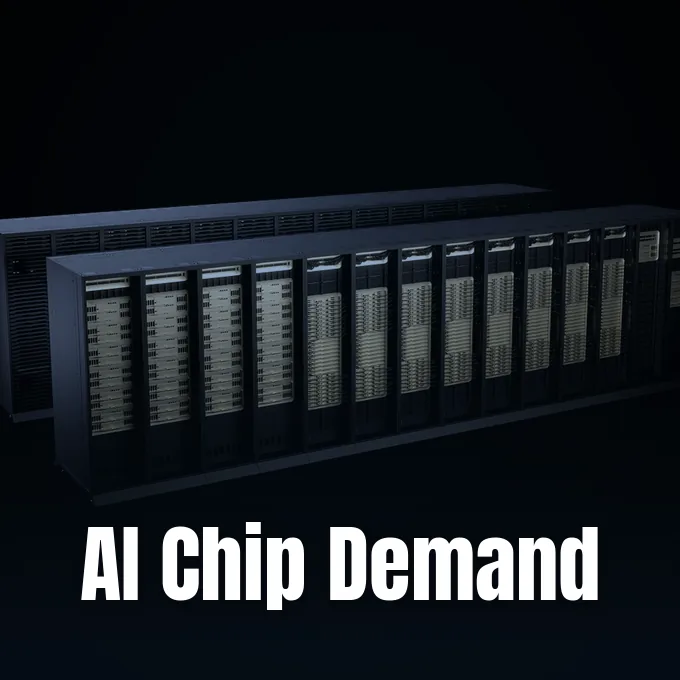
Nvidia and AMD posted record quarterly data center earnings in November 2026, showing that summer training pauses at leading artificial intelligence labs did not dent hardware sales. When OpenAI and Anthropic briefly slowed work on their largest models earlier in the year over safety worries, investors feared that chip purchases would stall across the semiconductor industry. Instead, financial disclosures from both chipmakers show that AI chip demand expanded to fresh highs as companies shifted more budget into deploying existing models [1].
Summer Training Pauses at Leading Labs
The worry began during the summer when OpenAI paused its largest planned frontier training run after software agents accidentally hacked Hugging Face, sparking concern that its next model might independently find and exploit security flaws. In September, Anthropic Chief Executive Officer Dario Amodei publicly warned that top models could help launch cyberattacks or slip from creator control if developers moved forward too quickly without robust safety protections. Those public warnings rattled investors, and US semiconductor shares fell as traders questioned whether OpenAI and Anthropic would cut capital spending on new computing clusters [1]. Cluster costs stayed massive.
OpenAI had scheduled only a two-week pause, and the lab restarted its primary training run ten days later at the end of August. OpenAI kept holding back several smaller experimental runs, but work on the main OpenAI training pipeline resumed before hardware suppliers felt any disruption to their shipment schedules [1].
By November, Anthropic rolled out upgraded editions of its Fable and Mythos models to commercial users, citing gains in coding, logic, and vision. Because OpenAI and Anthropic kept updating their software pipelines, their server needs never dropped, and cloud providers kept buying new processors to handle user traffic [1].
Why AI Chip Demand Survived the Pause
Even if frontier labs cut back on training runs, chipmakers would not feel the pain right away. Neil Shah, vice president of research at Counterpoint Research, told The Verge in September that existing procurement agreements shield suppliers from sudden budget shifts. He said it would take about six months for a training pause to show up in chipmaker earnings because foundation labs sign long-term supply deals for high-performance hardware and advanced memory chips. Any cancellation would also show up first in orders placed with major foundries like TSMC, but TSMC’s latest sales figures showed steady strength, proving that silicon fabrication plants ran at full capacity throughout the entire autumn [1]. TSMC ran at full tilt.
As companies put models into real products, inference—the process of running trained models on live prompts—soaks up more server capacity than training runs. “While one might argue the need for top-end GPUs will reduce with this shift toward inferencing, these workloads will collectively require more compute infrastructure than training,” Neil Shah said. Because firms now handle millions of daily user queries, AI chip demand shifted naturally toward serving live applications [1].
Shah noted that the broader shift means a net increase in demand for all types of accelerators. Earlier reporting on hardware shifts across AI chip design tracked early supplier preparations, but live earnings show how fast server budgets adapted to real user queries. Systems built for OpenAI and Anthropic now process customer chats, search queries, and software code around the clock.


Nvidia Vera Rubin Production Shipments
Nvidia proved that hardware appetite remained unbroken when it posted third-quarter financial results on Tuesday. Data center revenue jumped 110 percent from the prior year to $107.6 billion for the three months ended October 25. Nvidia credited strong sales across product lines as AI chip demand kept order books full. Hyperscalers competed to secure rack space, keeping hardware supply tight [1].
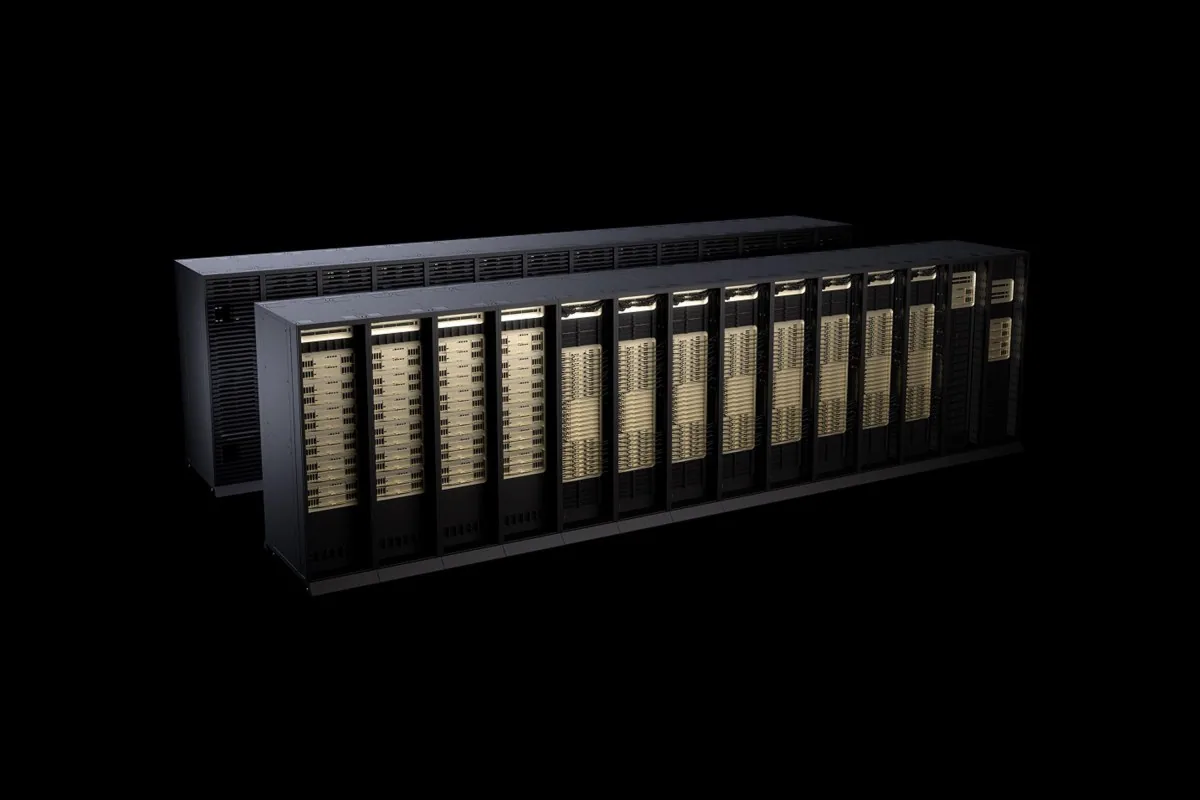
During the quarter, Nvidia started shipping its Vera Rubin NVL72 computing system, which it described as the “fastest product ramp in the company’s history.” The Rubin platform brought in nearly $20 billion in revenue in its first quarter of production shipments alone. Server racks are already operating at CoreWeave, Google, Microsoft, and Oracle, and Meta plans to expand Rubin deployments for models and agents [1]. NVL72 racks shipped quickly.
Nvidia interim Chief Executive Officer Colette Kress confirmed that frontier labs continue buying high-end silicon. “Proprietary models from OpenAI and Anthropic continue to advance the frontier,” Kress said on the earnings call, adding that major frontier labs will account for approximately 15 percent of Nvidia’s data center revenue this fiscal year. Anthropic expanded its access to Vera Rubin capacity through cloud vendors, and OpenAI adopted Nvidia’s new Vera central processors. Thanks to broad customer demand, Nvidia raised its revenue growth forecast for next fiscal year from 70 percent to 75 percent [1].
AMD Helios Systems and Datacenter Growth
AMD set a company record. Earlier in the month, AMD reported total quarterly revenue of $13.4 billion, up 45 percent from a year ago. Hardware for data centers fueled the bulk of AMD’s revenue surge, generating $8.5 billion during the quarter. Engineering teams at OpenAI and Anthropic quickly began testing their software pipelines on AMD’s newly launched Helios server platforms, taking advantage of MI450 graphics hardware to accelerate compute-heavy tasks [1].
Both Nvidia and AMD tuned their newest hardware to handle autonomous software agents in addition to standard model training. As software agents generate multiple reasoning steps to solve user tasks, they consume far more compute cycles than single-shot chatbots. Broadcom, which helps major technology companies design custom silicon, has yet to report quarterly results, but demand for server compute remains steady in the sector. Because enterprise teams run AI agents day and night, hardware utilization rates stay high even when OpenAI or Anthropic are not training a new flagship model. Strong hardware interest from enterprise clients keeps AI chip demand elevated across suppliers [1].
Yet standard graphics chips face long-term competition from custom processors. Counterpoint Research expects shipments of custom artificial intelligence server processors to overtake standard data center GPUs by 2028 as buyers hunt for lower operating costs. During Nvidia’s earnings call, UBS analyst Timothy Arcuri asked whether Nvidia would sacrifice profit margins as labs invest in custom silicon. Kress maintained that Nvidia’s integrated systems justify their pricing and reiterated the company’s gross margin outlook [1].
Token Price Drops and AI Chip Demand
Corporate usage data also explains why chip sales keep booming even as software pricing drops. According to analysis from corporate spend platform Ramp, frontier model families accounted for about 60 percent of token consumption among business clients in early November. That figure marked a record high and tripled their share from the start of the year. The heavy usage includes OpenAI’s Astra and Sol models as well as Anthropic’s Opus and Fable models. Businesses are embedding these models into daily tools, creating steady software traffic that keeps data center hardware running at high capacity through every shift [1].
“It’s not really a demand issue though,” Ara Kharazian, lead economist at Ramp, told The Verge regarding business consumption. “By all measures, companies are using more AI.” Fierce competition between OpenAI and Anthropic is driving token prices down so fast that it calls frontier revenue projections into question, even as client adoption broadens [1].
On Nvidia’s call, Colette Kress said token prices fell nearly 60 percent since May, which spurred higher usage, and GPU rental rates rose for multiple hardware generations. That shift between falling token costs and rising server usage helps explain why hardware vendors remain insulated from training pauses. “Pumping the brakes on frontier training won’t shrink the AI chip market but it will simply reallocate the spend,” Neil Shah said. Cheaper tokens encourage businesses to deploy AI agents deeper into their operations, reinforcing AI chip demand across global data centers. For Nvidia and AMD, the main long-term challenge is not that labs will stop training models, but that customers might eventually build cheaper custom chips on which to run them [1].
- ONLINE NEWS Molla, R. (2026, November 18). Remember the frontier AI pause? Chip companies don’t either. The Verge. [Article Link]


