





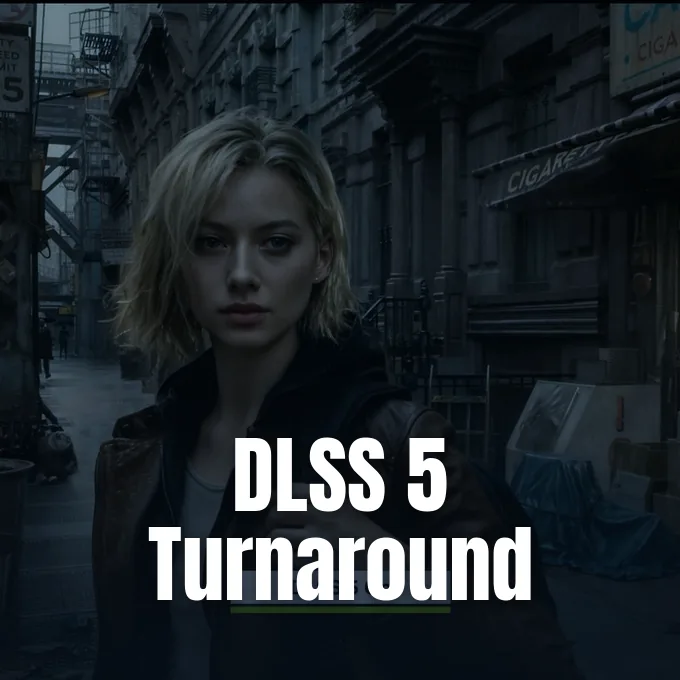
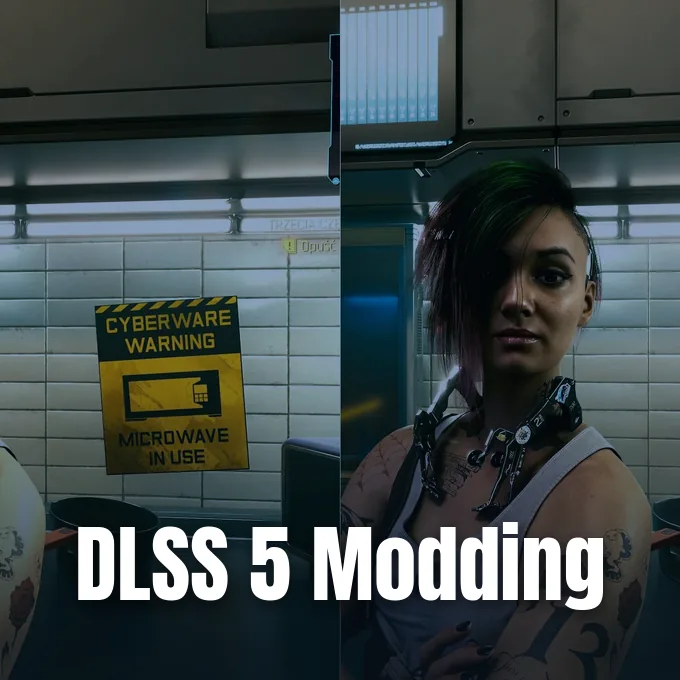
PC gamers are reconsidering their stance on NVIDIA’s neural rendering technology after community testing showed clear visual gains in unsupported titles. When NVIDIA founder Jensen Huang first unveiled the feature at GTC 2026, players widely criticized early demonstrations as artificial filters that smoothed away character details and altered lighting. Player sentiment shifted as modders extracted engine files from NBA 2K27 and enabled DLSS 5 graphics in older games like Control and Cyberpunk 2077 [1]. While high hardware costs and chip shortages continue to trouble the graphics card market, software-based reconstruction has quickly become a central focus for players looking to preserve image quality without buying top-tier silicon [5].
Early Backlash Against DLSS 5 Graphics
Jensen Huang introduced DLSS 5 at GTC 2026, describing it as the “GPT moment for graphics” [6]. The announcement promised that neural rendering would calculate lighting, skin tones, and fabric textures by analyzing color and motion vectors from the game engine [3]. But early public footage triggered sharp online mockery from players who disliked the resulting look [5].
Clips from Resident Evil Requiem and Starfield circulated on social platforms, where players complained that character faces looked smoothed over with digital makeup. Critics quickly branded the technology “AI slop” after seeing gritty horror protagonists turned into polished digital figures. Studio reaction proved equally messy. According to reporting from Insider Gaming, creative teams at Capcom and Ubisoft were surprised by the public presentation, having received little prior notice about how their games would appear in promotional materials. A later email exchange between YouTuber Daniel Owen and NVIDIA representative Jacob Freeman stoked further skepticism when discussions suggested the pipeline behaved like a 2D post-processing layer. Gamers argued that an unguided filter risked erasing atmospheric fog and custom lighting choices that artists spent years calibrating [5].
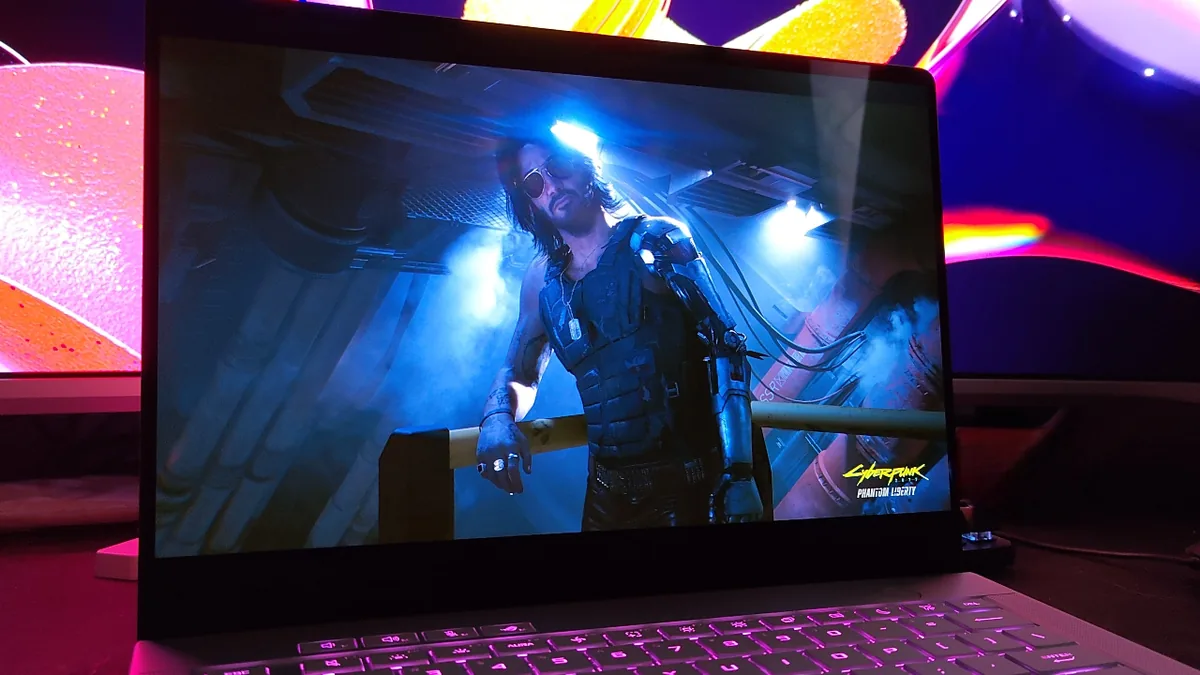
Artistic control sat at the center of these complaints. Gamers and studio artists expressed concern over data ownership, questioning whether feeding proprietary assets into an AI pipeline might weaken developer control over character models. Jon Peddie Research estimates that NVIDIA holds 95% of the graphics market, meaning changes to its software ecosystem touch every major release in the PC space [5].
Community Tests with Leaked Files
The first turning point arrived through a data leak. After early access builds of NBA 2K27 went live in late August 2026, VideoCardz reported that users found an unreleased neural rendering file tucked inside the game folder. Modders from the RenoDX group extracted the file, and a developer known as SpeedLemur modified the code so it could hook into other PC titles. Enthusiasts loaded the neural routine into Remedy Entertainment’s action game Control, giving the public its first look at DLSS 5 running outside scripted company presentations. The leaked software allowed players to experiment with seven visual styles and fine adjustment sliders, testing character rendering under real gameplay conditions [4].
Running the leaked code produced clear tradeoffs between visual clarity and raw speed. On an RTX 5070 Ti desktop system running Control at 4K resolution with high ray tracing, the baseline frame rate was 71 frames per second under standard DLSS Quality settings. Enabling neural rendering dropped performance to 35 frames per second, cutting speed in half on the test system [4].
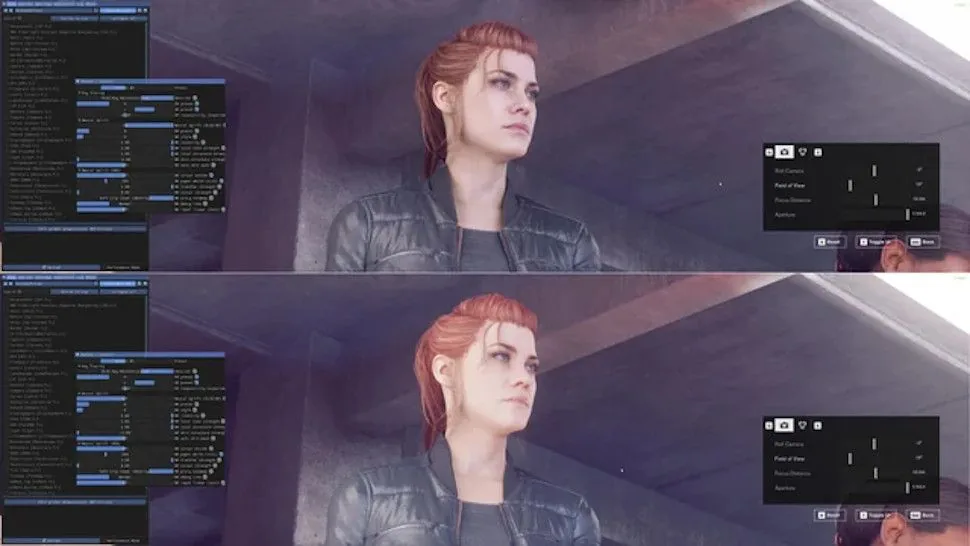
Even with lower frame rates, user reactions on Reddit changed quickly. Players pointed out that protagonist Jesse Faden displayed realistic skin textures, accurate self-shadowing, and proper light falloff that looked noticeably better than the early Capcom demonstrations. Commenters said that simple tone adjustments fixed many early color flaws without altering the geometry underneath the image. Because the early file only targeted character models and lacked full scene tuning, users understood that the heavy performance penalty reflected an unfinished build. Modder communities showed that neural enhancement could upgrade older games without distorting artistic details, prompting enthusiasts to reconsider whether the underlying technology had genuine merit for the PC platform [4].

How Does the Neural Pipeline Work?
NVIDIA clarified how DLSS 5 operates when press previews opened ahead of its official September 3 release for NBA 2K27. Unlike generative video systems that guess frames from text prompts, DLSS 5 relies on real-time determinism. The engine ingests 3D data from the rendering pipeline, including surface normals, motion vectors, scene depth, and lighting conditions [2].
By binding every frame to actual game geometry, the model avoids the morphing flaws and shifting facial features common in offline video models. To keep developers in charge of their aesthetic direction, NVIDIA introduced new adjustment tools. Studio artists can choose between three model profiles, labeled Model A, Model B, and Model C, which offer varying balances of contrast and brightness. Fine sliders allow teams to tune tone and structure independently, while automasking tools let developers restrict neural enhancement to specific character models without touching surrounding environments. By late summer, NVIDIA had streamlined the code to run across desktop cards and cloud servers [2]. Charlie Guillemot, co-CEO of Vantage Studios, said the technology changes how lighting and materials behave in upcoming projects like Assassin’s Creed Shadows [3].

The architecture has also grown lighter than the test setups shown earlier this year. Early engineering demos required two RTX 5090 graphics cards running together, raising doubts about consumer practicality. In tests conducted by Tom’s Guide on an RTX 5060 laptop, gameplay in NBA 2K27 held steady between 90 and 100 frames per second with multi-frame generation turned on [2].
Player Perceptions of DLSS 5 Graphics
As community testing grew through November, player commentary on forums shifted from skepticism to enthusiastic adoption. One player on Reddit described the visual upgrade as a “new normal,” explaining that returning to native graphics felt like dropping to low settings. Another commenter said that non-player characters in supported titles gained realistic facial shadows and authentic skin translucency, while turning the feature off made faces look like pale clay sculptures. Several users compared the visual transition to moving from 30 frames per second up to 60 frames per second, where going backward feels jarring. That shifting sentiment showed that when neural models respect artistic lighting, players readily embrace the visual jump [1].
Testing in complex role-playing titles showed that difference. A gamer testing Cyberpunk 2077 with hundreds of mods recounted crashing the game, only to spend an hour wondering why characters looked flat and plastic before discovering that DLSS 5 had deactivated during the reboot [1]. In a related development, PC modders injected DLSS 5 into unsupported games using third-party utility loaders to enhance lighting in legacy releases.
Players who spent days testing these unofficial tweaks reported that returning to unassisted graphics felt flat by comparison [1]. Skepticism has not vanished from online forums. Some players argue that neural enhancements produce an uncanny valley look in stylized games, and flight simulation fans question how well the model handles ground terrain [4]. Others worry that relying on neural rendering will encourage game publishers to release unoptimized code [5]. Yet player discussion has largely moved past early dismissals of “AI slop,” focusing instead on which older games benefit most from community injections and how developers will implement DLSS 5 graphics in future updates [1].
Hardware Scarcity and the Software Strategy
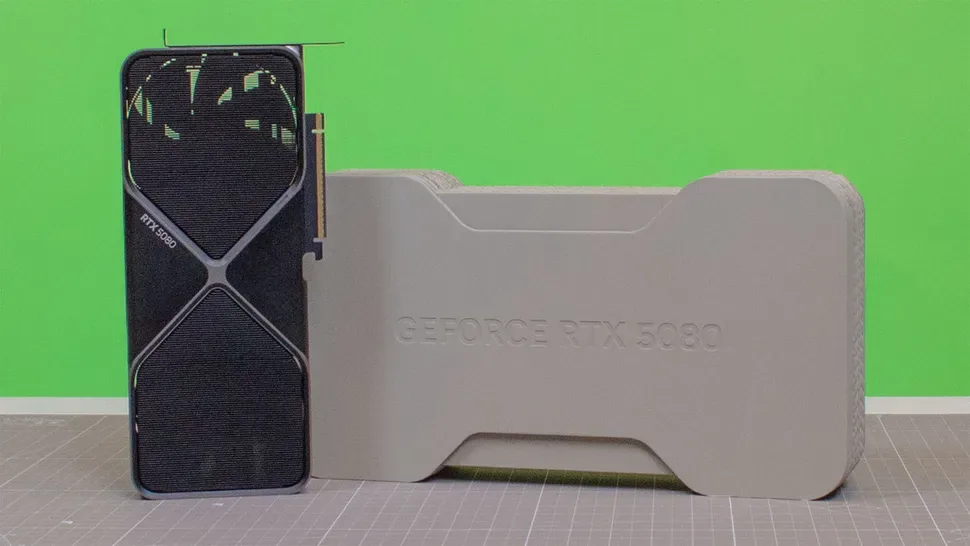
The growing acceptance of DLSS 5 arrives amid price pressure in the PC component market. Retail prices for the RTX 5080 and RTX 5070 Ti have surged well above their suggested figures, while top-tier cards like the RTX 5090 are difficult to purchase at standard rates. Meanwhile, consumer silicon supply faces pressure as chipmakers prioritize enterprise processors for AI data centers [1].
Industry reports also suggest that NVIDIA cancelled its rumored RTX 5080 Super refresh, leaving high-end buyers with fewer hardware options. In this tight retail environment, software enhancements offer a practical lifeline for players who can’t afford expensive upgrades. NVIDIA plans to extend official DLSS 5 support to RTX 4000 series graphics cards in 2027, widening access for millions of existing setups [1]. Cloud services are also stepping in to deliver neural rendering without local hardware purchases. That shift aligns with platform rollouts, such as when the Hogwarts Legacy DLSS 5 upgrade arrived on GeForce Now to stream high-fidelity visuals to players running hardware that cannot natively support demanding ray tracing workloads.
Industry history suggests this pattern will continue to shape PC gaming. When NVIDIA launched the original DLSS upscaler in 2018 with the RTX 2080, gamers initially criticized blurry edges before later revisions turned upscaling into an industry standard [6]. With over 750 games now incorporating DLSS technologies, neural reconstruction is following that familiar path from controversy toward everyday use across the gaming industry [3].
- ONLINE NEWS Allan, D. (2026, November 15). Some gamers are now hooked on DLSS 5 and can’t game without it. TechRadar. [Article Link]
- ONLINE NEWS England, J. (2026, September 1). I wanted to hate Nvidia’s DLSS 5 ‘AI filter’ — but the real DLSS 5 is photorealistic black magic. Tom’s Guide. [Article Link]
- PRESS RELEASE Lin, H. (2026, November 14). NVIDIA DLSS 5 delivers AI-powered breakthrough in visual fidelity for games. NVIDIA. [Article Link]
- ONLINE NEWS Allan, D. (2026, August 29). Nvidia DLSS 5 leak sparks major turnaround among PC gamers. TechRadar. [Article Link]
- ONLINE NEWS Mirchandani, V. (2026, March 22). Why everyone hates NVIDIA DLSS 5 (but will love it eventually). Digital Trends. [Article Link]
- ONLINE NEWS Thomas, J. (2026, March 16). Nvidia claims new DLSS 5 is the ‘GPT moment’ for gaming graphics. IGN. [Article Link]


