




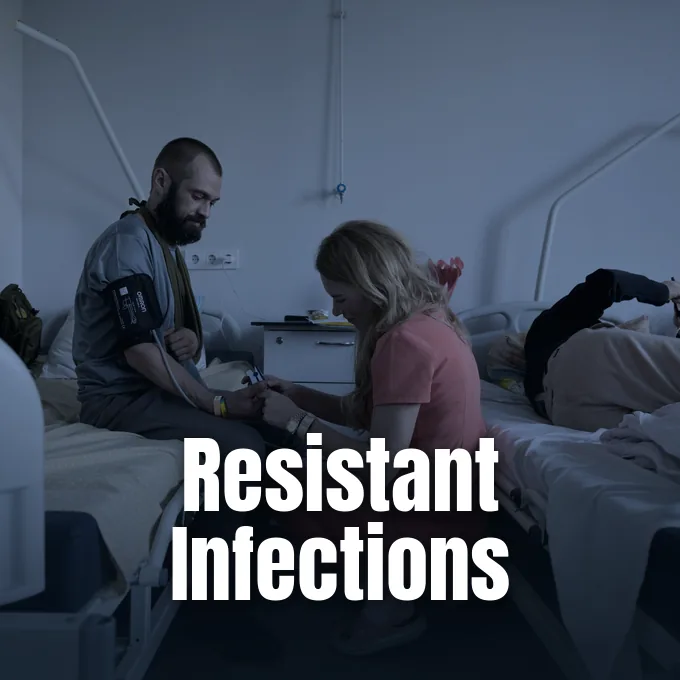
Ukrainian trauma hospitals treating war casualties face a mounting medical challenge as antibiotic resistant infections take hold inside crowded patient wards. Shrapnel, contaminated soil, and charred uniform fabric drive opportunistic bacteria deep into damaged tissue, while long evacuation routes between frontline stabilization posts and regional surgical centers allow pathogens to incubate before laboratory tests can identify them. Global surveillance networks often prioritize acute biological alerts, such as the plague in Russia and related inquiries into regional pathogen facilities, yet drug-resistant hospital infections pose a persistent danger to surgical recovery in active combat zones. To prevent amputations and fatal bloodstream poisoning, surgical teams in Lviv, Dnipro, and Kyiv are overhauling basic trauma care [4].
- How Antibiotic Resistant Infections Spread from Combat Zones
- Prewar Roots of Resilient Hospital Pathogens
- Surgical Complications During Limb Salvage
- Tracking Drug Resistant Infections Across Evacuation Routes
- Antibiotic Scarcity Inside Overcrowded Trauma Wards
- Clinical Guidelines and Reconstructive Partnerships
How Antibiotic Resistant Infections Spread from Combat Zones
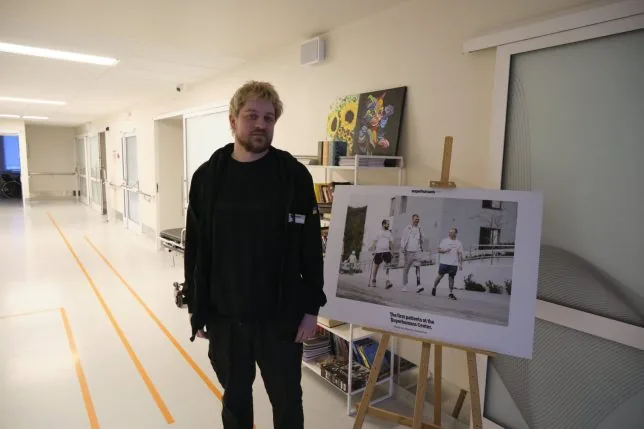
Soldiers wounded by artillery shelling and landmines face prolonged transfers between frontline posts. At the Superhumans Center in Lviv, surgery head Danylo Turkevych cares for patients sent from eastern combat sectors. Early in the war, patient transfers from Donetsk, Kharkiv, and Dnipro took weeks or months. Turkevych said that moving patients between multiple evacuation hospitals gave resistant bacteria ample opportunity to colonize deep wounds [3].
The influx of wounded personnel has strained healthcare infrastructure in western Ukraine. Tens of thousands of soldiers and nearly 14,000 civilians have suffered trauma since the full-scale Russian invasion began in 2022. At the 2,400-bed First Lviv Territorial Medical Union, which includes St. Panteleimon Hospital, Australian clinician Hailie Uren and clinical pharmacist Nataliia Aliieva reviewed patient records to track prescribing patterns. After analyzing more than 6,800 diagnostic isolates from hospital archives, they discovered that bacterial susceptibility to frontline antibiotics had dropped to 30 percent or less for several common pathogens. Uren reported that this drop left doctors with very few effective options to halt systemic bloodstream infections among reconstructive surgery and burn patients [4].
Prewar Roots of Resilient Hospital Pathogens
These resilient strains did not originate during frontline combat. Genomic research published in Genome Medicine by microbiologist Patrick Mc Gann of the Walter Reed Army Institute of Research evaluated 167 Acinetobacter baumannii and 93 Pseudomonas aeruginosa isolates. Mc Gann determined that post-invasion resistant clones matched bacterial strains circulating in Ukrainian clinics before 2022. The breakdown in peacetime infection control simply accelerated their spread through crowded wards [1].
Decades of non-prescription antibiotic sales in peacetime Ukraine created a deep baseline of drug resistance. Olena Moshynets, an antibiotic resistance researcher at the Institute of Molecular Biology and Genetics in Kyiv, explained that people routinely purchased antibiotics over the counter for simple viral fevers. Serhii Shyrinkin, hospital director at Dnipro State Medical University, said that unguided antibiotic use persists throughout eastern regions despite tighter regulations in the capital. His hospital, located near the Pivdenmash aerospace facility, has suffered blast damage and broken windows from repeated missile strikes while continuing to admit wounded casualties. This stubborn bacterial resistance mirrors conditions seen during the Iraq War, where A. baumannii contaminated trauma wards so thoroughly that military doctors nicknamed the organism “Iraqibacter” [4].
Surgical Complications During Limb Salvage
Standard surgical procedures can create serious complications when patients remain in transit without continuous monitoring. Negative pressure wound therapy uses suction pumps and dressings to close open flesh, but overusing the method allows bacteria to flourish in bone cavities. Danylo Turkevych observed that trapped textile fragments and shrapnel often cause persistent deep tissue infections in war wounds. When systemic drugs fail, limb amputation becomes the only remaining way to stop the infection from spreading [3].
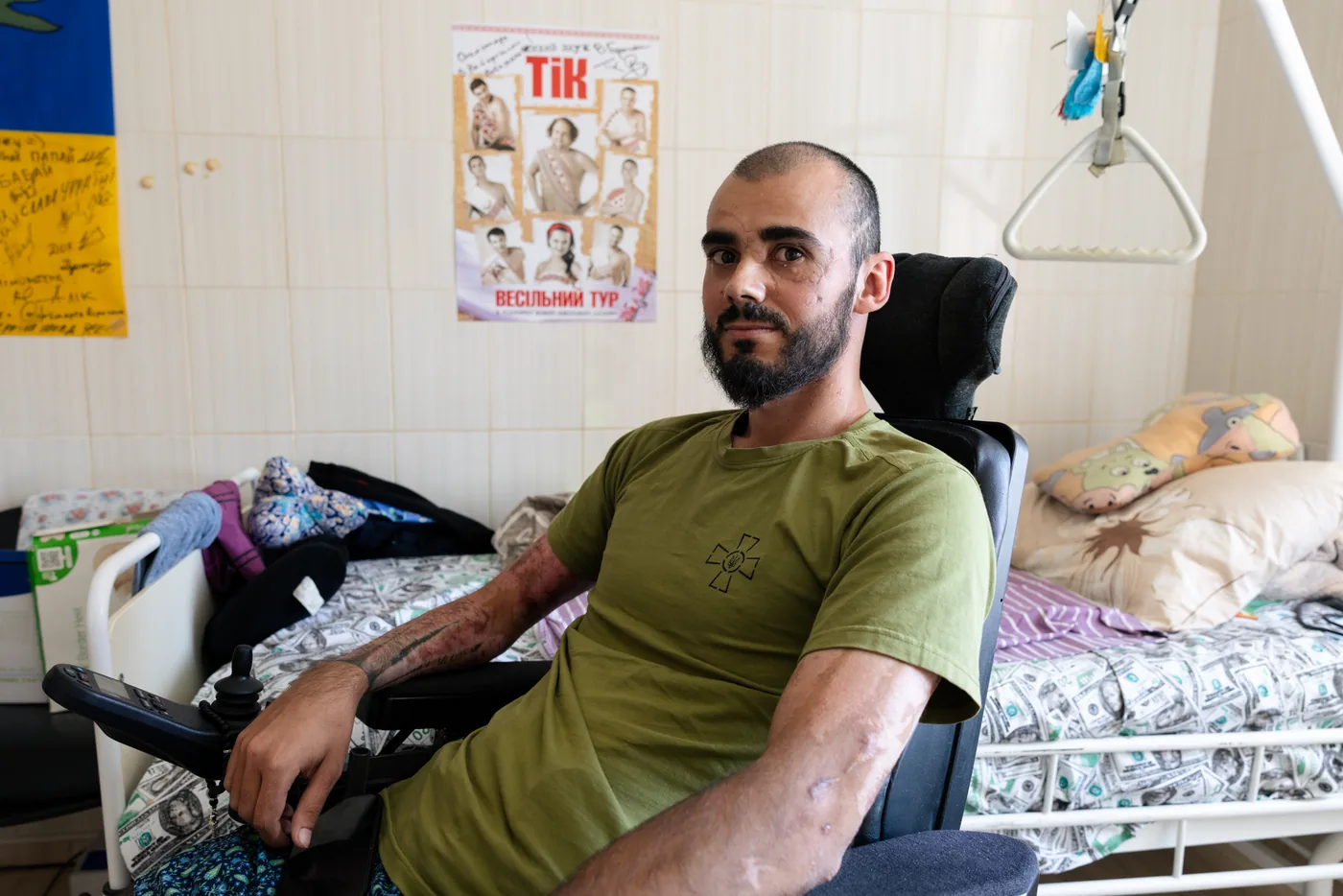
Even complete limb amputations do not always eliminate resistant pathogens from surviving tissue. Danylo Turkevych warned that patients can shed bacteria years after surgery, saying: “You’re basically becoming a biological weapon” [3]. At Vinnytsia Regional Pirogov Clinical Hospital, burn specialist Dr. Roman Chornopyshchuk treats soldiers suffering from complex blast trauma. More than half of his patients present with combined injuries where burns cover more than 30 percent of total body surface area. His patient Oleksandr Gromadskyi was transferred 500 miles to Vinnytsia after his vehicle struck an anti-tank mine in Donetsk. Gromadskyi lost both legs and overcame deep bone necrosis through targeted surgical cleaning before his skin grafts could successfully close the wound [5].


Tracking Drug Resistant Infections Across Evacuation Routes
International medical transfers have documented the breadth of bacterial resistance carried by war casualties. A study in Infection detailed a wounded Ukrainian soldier evacuated to the Netherlands who carried 14 distinct carbapenemase-producing micro-organisms. The isolates included eleven Enterobacterales, two Pseudomonas aeruginosa strains, and one carbapenem-resistant Acinetobacter baumannii. Genetic analysis revealed six different resistance genes, showing that resistance plasmids had transferred between bacterial species inside the patient [2].
Cross-border screenings in northern and western Europe have reinforced these clinical findings. An investigation by the University of Helsinki and HUS Helsinki University Hospital found that among Ukrainian refugees hospitalized for war wounds, close to 80 percent carried multi-drug resistant bacteria. Richard Sullivan, co-director of the Centre for Conflict & Health Research at Kings College London, reported that European hospitals remain ill-prepared for resistant bacteria because surveillance systems focus on acute viral threats like dengue fever or rabies. Sullivan warned that without government-mandated reporting and sustained funding, tracking falters in European hospitals. He said: “Modern battlefields like Ukraine create the perfect storm for AMR” [3].
Antibiotic Scarcity Inside Overcrowded Trauma Wards
Acute nursing shortages inside regional trauma units make basic infection prevention difficult to sustain. Olena Moshynets said that some hospital wards function with one nurse for every thirty beds, making hand hygiene protocols challenging to maintain. To conserve limited supplies, some facilities practiced micro-dosing, administering small antibiotic quantities that failed to cure infections while encouraging bacterial resistance. Doctors often faced situations where a chosen antibiotic was simply the only drug available in stock [3].
These frontline shortages align with sobering global projections for antimicrobial resistance. A study published in The Lancet revealed that drug-resistant infections were the direct cause of 1.14 million deaths globally in 2021 [3]. Public health researchers forecast that cumulative deaths attributed to antimicrobial resistance will reach 39.1 million by 2050. Luise Martin, an infectious disease specialist at Charité University Hospital in Berlin, warned that the most dangerous bacterial strains no longer respond to several of the most potent antibiotics known to medicine [4]. The pathogen Klebsiella pneumoniae alone kills more than 100,000 people annually, showing how quickly resilient hospital pathogens can undermine routine surgical care when antimicrobial stewardship breaks down [3].

Clinical Guidelines and Reconstructive Partnerships
Ukrainian health authorities have developed updated guidelines to streamline antibiotic prescription practices. In 2023, the Ministry of Health created three clear categories: first-line drugs, a watch group, and reserve antibiotics. Viktor Strokous, head of emergency medicine at Kyiv City Clinical Hospital No. 6, said the framework eliminated chaotic prescribing habits in emergency trauma wards. However, wartime budget limits still prevent clinics from purchasing newer reserve antibiotics from abroad [4].
International surgical programs are expanding clinical capabilities for Ukrainian doctors managing combat trauma. Through the Doctors United for Ukraine initiative, created by Yale School of Medicine gynecologist Dr. Alla Vash-Margita, Ukrainian physicians travel to the United States for hands-on clinical training. Dr. Olena Kvasha of the National Academy of Medical Sciences of Ukraine in Kyiv and Dr. Roman Chornopyshchuk studied advanced burn and trauma reconstruction at Bridgeport Hospital and Yale New Haven Hospital. Kvasha estimated that 90 percent of her hospital’s patients are military service members, including 49-year-old soldier Yuriy Petrovskyi, who received treatment for ruptured eardrums and shrapnel injuries sustained in a grenade explosion [5].
These collaborative programs deliver tangible benefits on Ukrainian surgical wards. In Lviv, craniomaxillofacial surgeon Dr. Volodymyr Vovk partners with Yale plastic surgeon Dr. Suresh Mohan at the Superhumans Center to perform complex free flap procedures on blast victims. Mohan traveled to Ukraine with American medical specialists supported by the Howard G. Buffett Foundation [5]. By pairing careful surgical reconstruction with careful antibiotic tracking, clinicians work to suppress antibiotic resistant infections before resilient hospital pathogens establish lasting reservoirs through regional healthcare networks [4].
- ACADEMIC JOURNAL Lebreton, F., Kondratiuk, V., Kovalchuk, V., Pfennigwerth, N., Luo, T. L., Jones, B. T., Fomina, N., Fuchs, F., Hans, J. B., Eisfeld, J., Ong, A., Gatermann, S., Bennett, J. W., & Mc Gann, P. (2025). High genetic relatedness between multidrug resistant bacteria before and after the 2022 invasion of Ukraine. Genome Medicine, 17(1). [Article Link]
- ACADEMIC JOURNAL Plantinga, N. L., van Asten, S. A. V., Schijffelen, M. J., de Wit, R. J., Witteveen, S., de Haan, A., Landman, F., Naiemi, N. A., Notermans, D. W., & Hendrickx, A. P. A. (2025). Healthcare professionals challenged by 14 distinct carbapenemase-producing micro-organisms in a war-injured Ukrainian patient. Infection, 53(4), 1517-1521. [Article Link]
- ONLINE NEWS Toesland, F. (2026, May 6). ‘Patients are a biological weapon’: Ukraine’s superbugs that are spreading in Europe. The i Paper. [Article Link]
- ONLINE NEWS Stone, R. (2025, October 5). The pernicious infections infiltrating Ukraine’s front line. FHI Communications. [Article Link]
- ONLINE NEWS Rasekh, S. (2025, November 7). In Ukraine, Yale-trained doctors treat complex combat injuries. The Connecticut Mirror. [Article Link]
APA 7: PerEXP Teamworks. (2026, November 1). Ukrainian Hospitals Battle Antibiotic Resistant Infections. PerEXP Teamworks. https://perexpteamworks.com/en/antibiotic-resistant-infections-ukraine-hospitals/


