





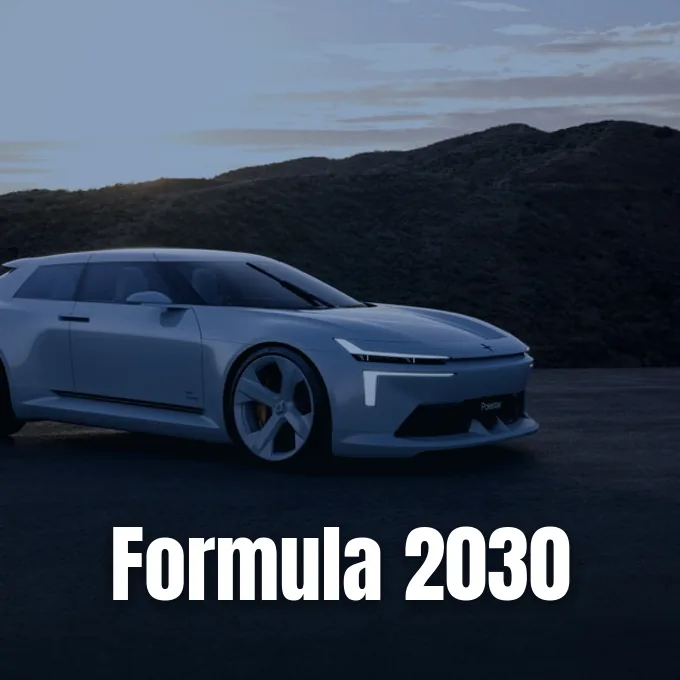
Polestar unveiled the Formula 2030 concept during a media drive for its Polestar 4 SUV, showing a low four-door electric sports car that outlines the styling direction for upcoming showroom models. The Swedish electric carmaker privately previewed the design to investors and retailers in Gothenburg in September before releasing full exterior pictures [2]. It numbers vehicles chronologically instead of by size, placing this low-slung four-door in its own segment between the upcoming Polestar 2 and the Polestar 7. The company isn’t promising to build this exact hatchback, but key styling features will reach series production [1].
Formula 2030 Concept Dimensions
The Formula 2030 sits just 1,350 mm (53 inches) tall, which makes it roughly five inches lower than the existing Polestar 2 and lower than the Polestar 5 grand tourer. That makes it very low. Its stance gives the four-door proportions similar to a classic sports car, pairing a long hood and short body overhangs with a passenger cabin pushed back over wide rear haunches. Wheels measure 22 inches across. They use center-lock hubs that frame gold Brembo brake calipers [2].
In overall footprint, the vehicle measures 4,680 mm (184.3 inches) from bumper to bumper, spans 2,021 mm (79.6 inches) across its bodywork, and places 2,780 mm (109.4 inches) between its front and rear axles. That length is roughly three inches longer than the current Polestar 2. It is also slightly shorter than a Tesla Model 3 while sitting 3.5 inches closer to the ground. Gold Öhlins dampers sit visible in the rear cargo area [2].
Ars Technica pointed out that the two-box shape evokes the 2008 Saab Aero-X, an experimental vehicle shown in Scott Barbour photography for Getty Images before the Swedish carmaker folded. In many ways, Polestar has adopted Saab’s mantle in Swedish automotive design. Spun out of Volvo, Polestar originally ran as an independent racing team before Geely acquired the business and turned it into an electric brand. Real electric sedans must package adult passengers over a thick lithium-ion battery pack, but this show car was built strictly as a styling study without everyday production compromises. Free from commercial battery constraints, the design team focused entirely on athletic proportions [1].

Exterior Aerodynamics and Lighting
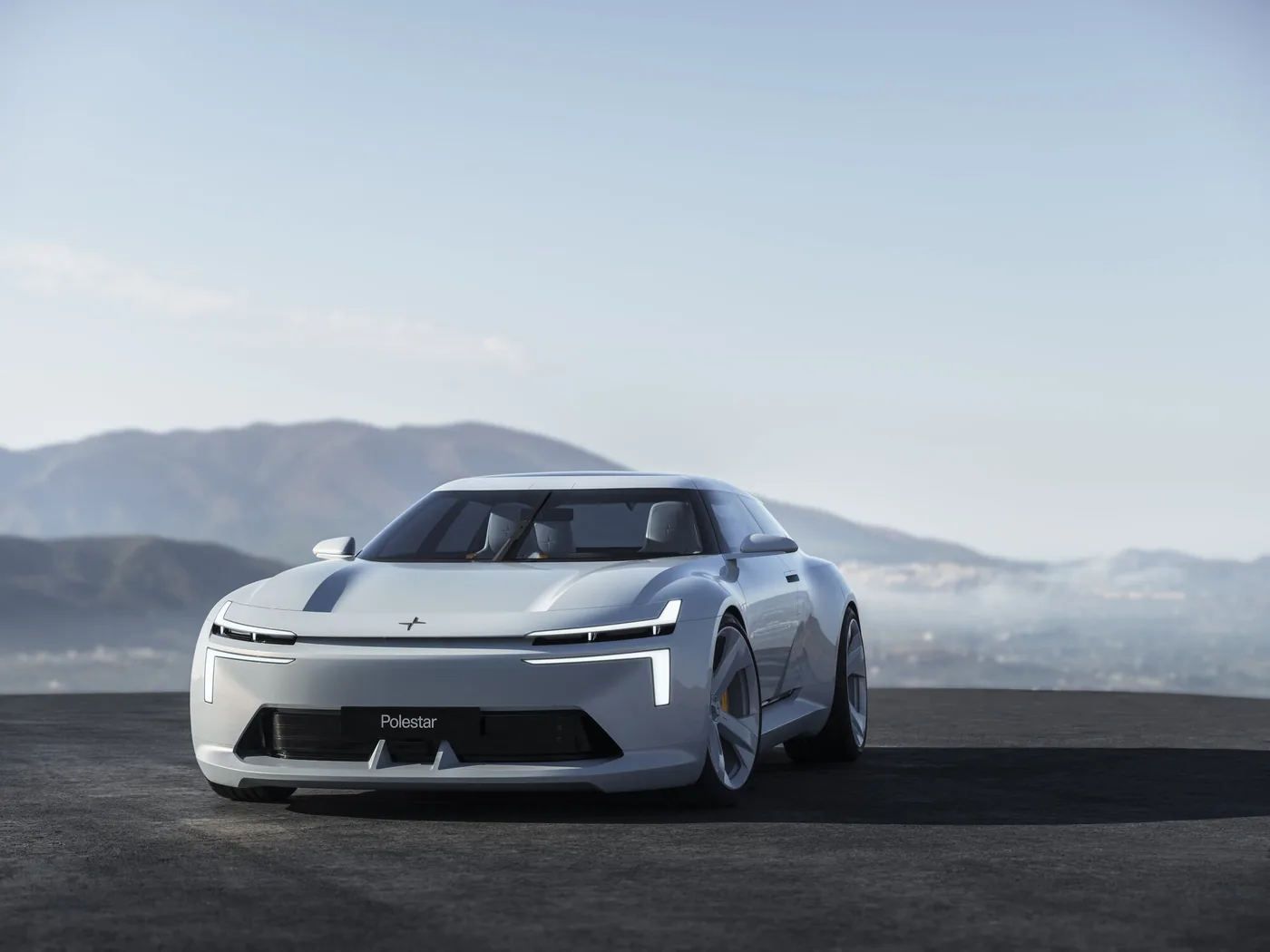
The concept is the first show car created under head of design Philipp Römers, who joined Polestar from Audi in 2024 to oversee future vehicle styling. Römers described the design as an evolution that translates core brand values into sheet metal. “It is a physical embodiment of how we apply Polestar’s core values of design, performance and sustainability to the next production cars,” Römers said. Up front, an aerodynamic wing sits directly over a shark nose and a deep splitter. Polestar integrated its Dual Blade headlights into that wing, confirming that this nose layout reveals the face of the next Polestar 2 arriving in 2027. Designers shaped each duct to channel air cleanly past the front wheels [2].
A single vertical windshield wiper clears the front glass. That racing-style wiper stays upright to cut aerodynamic drag at speed, working with an autonomous LiDAR sensor that hides beneath an aerodynamic roof shroud and only exposes itself when self-driving software engages. It hides when a human drives. Digital video cameras replace standard glass mirrors to smooth side airflow [2].
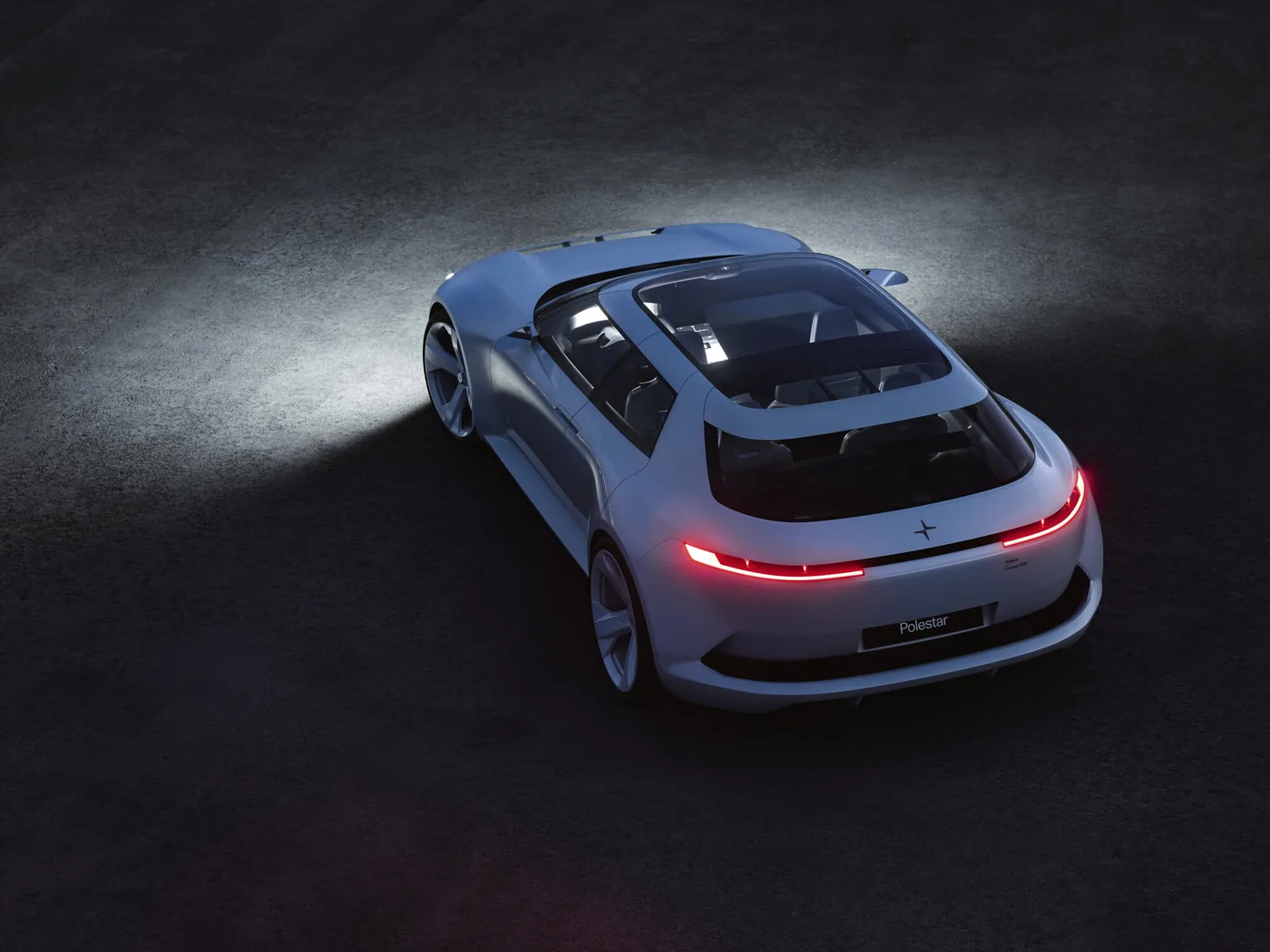
At the rear, Polestar dropped the full-width light bar found on modern electric vehicles in favor of new Single Blade tail lights that will appear on future production cars. The car has no B-pillar. Instead, rear-hinged doors swing backward to open the entire cabin to four individual bucket seats [2].


Physical Cockpit Controls
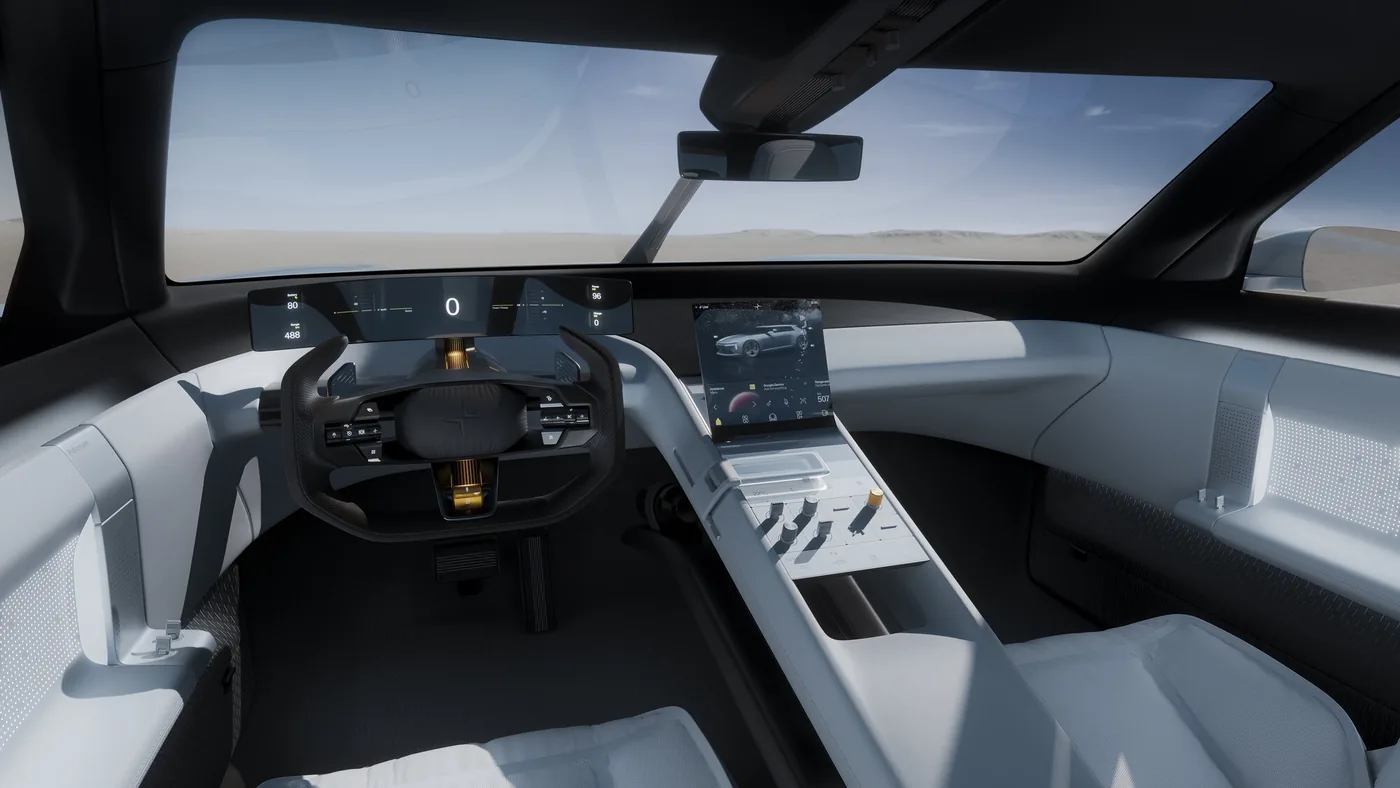
Inside the cockpit, Polestar turned away from the all-touchscreen dashboards common in modern electric cars. A row of eight physical controls sits on the transmission tunnel right beneath the center screen. Drivers can swap switches between rotary knobs and rocker toggles, programming each button for cabin tasks. Polestar stated that it wants to rebalance the relationship between digital screens and tactile physical buttons [2].
Juan Pablo Bernal, Polestar’s head of interior design, explained why the Swedish brand brought buttons back. “As a performance brand, we see a renewed focus on the driver, and so we re-balance the digital and physical. We introduce physical buttons and controls,” Bernal said. A curved 20-inch HyperDIM instrument screen mounts directly to the steering column so the rim never blocks the gauges. A smaller 12.2-inch center screen handles navigation and media [2].
The cockpit alters its layout across Performance, Normal, and Autonomous driving modes. In Performance mode, the center screen sinks flush into the console and the steering wheel pulls closer to the driver. Autonomous mode retracts the wheel while pushing the seats back to give occupants extra legroom. Inflatable bolsters hug each passenger through corners. The seat shells use a lightweight flax composite, and the system runs Google Gemini [2].
Transparent Cargo Compartment
The cargo area is the most unusual piece of the concept car’s architecture. A large rear clamshell lifts to expose a transparent luggage floor made of clear glass. Custom Polestar travel bags sit under this glass deck, held down by bright gold straps. Spectators can look straight through the rear hatch into the rear suspension and chassis components [2].
Polestar described the rear styling as reminiscent of a UFO because of the wrap-around glass hatch and low rear deck. Up front, the front trunk holds two racing helmets and a fire extinguisher framed by a gold strut brace. It reflects track priorities. These accessories show how the Formula 2030 concept focuses on motorsport spirit instead of family road trips [2].
Polestar released no powertrain specifications for the show car. It gave no figures for battery size, driving range, motor count, or horsepower. There is no price [2]. Ars Technica noted that concept cars do not have to solve the packaging challenges of production vehicles, functioning instead as styling exercises to gauge public response [1].
Where the Formula 2030 Concept Leads Next
While this exact two-box hatchback won’t enter series production, Polestar confirmed that key exterior and interior attributes will appear on upcoming showroom models. The front wing, shark nose profile, and Dual Blade lights will form the face of the next-generation Polestar 2 arriving in 2027. In 2028, the company plans to introduce the Polestar 7, a compact electric SUV that will also adopt these styling cues. Polestar plans to launch four new models over three years, building the Polestar 7 in Europe [2].
European manufacturing is vital for the Swedish brand because trade rules have closed off the United States market to Chinese-built connected vehicles [2]. American rules restrict cars that rely on hardware or software from China, and banning Chinese-owned car brands enjoys broad bipartisan backing in Congress. As a result, buyers in the United States currently cannot buy new Polestars in dealer showrooms. Polestar must focus its sales expansion on European and global markets where Geely can sell vehicles freely [1].
New styling alone cannot resolve the automaker’s financial difficulties. Polestar posted an operating loss of $842 million in the first half of this year, struggling with negative gross margins during its product transition. Still, adding physical controls and sharp proportions to the next Polestar 2 gives the brand a distinct identity against electric rivals. The Formula 2030 concept proves that Polestar wants to keep its driver-focused character as its next generation of road cars takes shape [2].
- ONLINE NEWS Ars Technica. (2026). Polestar has a new look with its Formula 2030 concept. [Article Link]
- ONLINE NEWS Lambert, F. (2026, November 10). Polestar unveils Formula 2030 concept, previewing the next Polestar 2. Electrek. [Article Link]


