





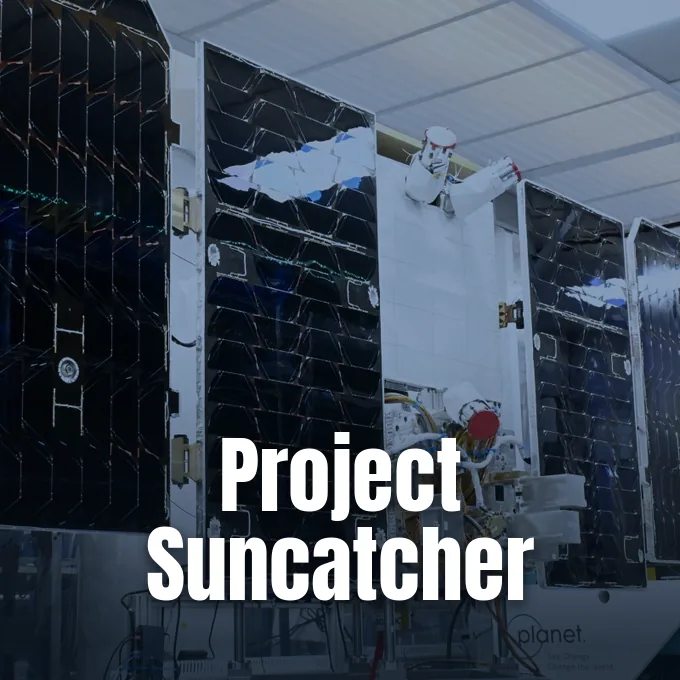
Google confirmed that its Project Suncatcher prototype satellite sent its first response back to Earth after launching into orbit on October 1, 2026. The spacecraft launched on October 1. Travis Beals from Google shared the news on October 30, explaining that the craft completed its checklist and ran early machine learning tests with an onboard chip [1]. Tim Fernholz reported for TechCrunch that the space data center came online earlier in the month and began talking with ground stations. The downlinked signal confirmed that the payload could process artificial intelligence jobs while flying in low Earth orbit [2].
Testing Project Suncatcher in Orbit
Google launched Project Suncatcher on October 1 as the opening step in a long research moonshot to test computing hardware in space. The team wants to test chips in orbit. Engineers wanted to see if modern accelerator hardware could survive outside Earth’s atmosphere without breaking down under harsh conditions [1].
Most orbital missions rely on simple, hardened computer chips because building space data centers means solving tough thermal and communication limits. Traditional space chips process data slowly compared to server hardware on Earth, but Google decided to send commercial-grade accelerator silicon into low Earth orbit instead of relying on legacy processors. Putting server-class hardware into orbit lets engineers test how modern machine learning chips handle temperature swings and orbital radiation during real tasks. The team wants to learn whether space-based compute clusters can eventually process satellite data right where it is collected, cutting down the huge volume of raw files that satellites must send down to ground antennas [1].
Tim Fernholz reported for TechCrunch that the experimental space vehicle came online and communicated with the ground after spending weeks in orbit. Google had kept quiet about the flight during most of October while flight engineers checked each system. Ground tracking was steady. Ground teams verified that radio links worked steadily once tracking dishes locked onto the satellite during northern passes [2].
Hardware Trays and Machine Learning Tests
During the first weeks after launch, engineers followed a commissioning checklist to bring the payload online safely. The ground team powered up the host systems and energized the Tensor Processing Unit (TPU) trays. They checked power levels and sensor readings to make sure the cold vacuum of space did not damage the electronic joints [1].
Running machine learning models in orbit brings physical challenges that ground data centers never face. In space, chips can’t shed heat with ordinary air cooling fans, so the payload must push waste heat through conduction paths to radiators that face the dark void. At the same time, cosmic rays and solar particles can flip bits in memory or slowly degrade silicon parts over time. Space radiation is intense. Google built the Project Suncatcher payload to test whether data center class TPUs could run machine learning models reliably without suffering errors or unexpected reboots during active computation cycles. The engineers watched the telemetry closely as the chips handled their first matrix operations [1].
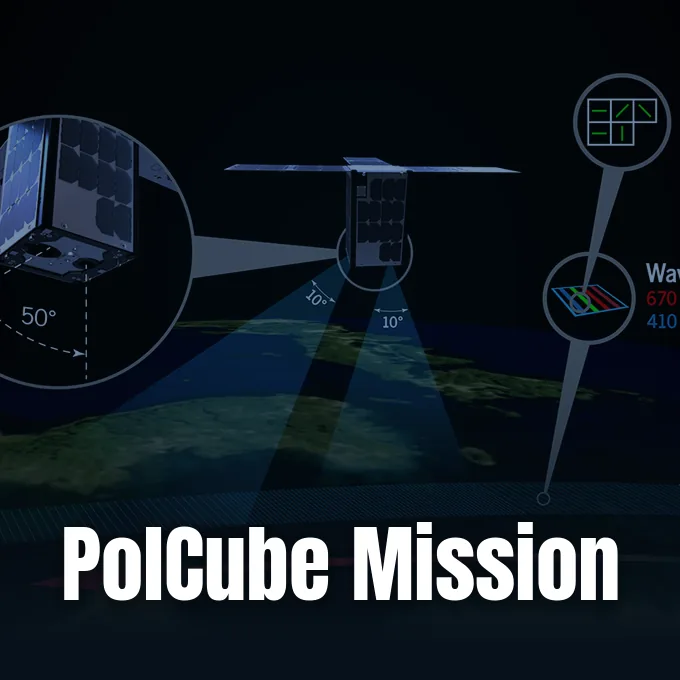
While environmental satellites like the PolCube mission gather sensor data to map atmosphere and ocean trends, Google’s payload acts as an orbiting computing node. The team verified that early test calculations ran cleanly on the TPU hardware without numerical drift or processor faults [1].

Downlinked Haiku from Svalbard Ground Pass
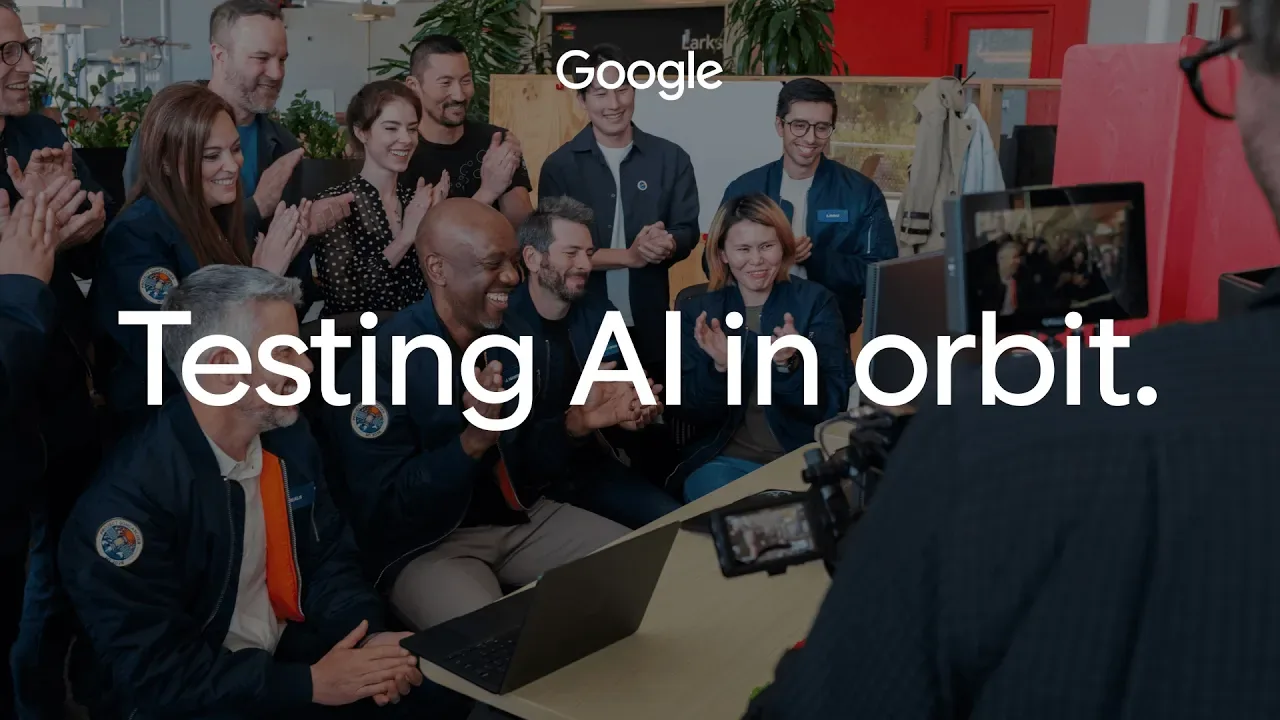
This week, Google reached what Beals called a “Hello World” milestone for orbital artificial intelligence. When the satellite entered the coverage area of a ground station near Svalbard, Norway, operators uplinked a prompt to the onboard Gemma 4 open model, asking it to compose a haiku about being in space [1].
As the satellite passed over Svalbard, Gemma 4 ran the prompt through the orbiting TPU and sent back its poetic reply: “Blue marble below Data streams in silent grace Starlight feeds my core.” Travis Beals said the downlinked poem confirmed that the full communication pipeline worked as planned. The poem had three lines. The test proved that engineers could send an instruction to a spacecraft, run an open weight language model on space-based accelerator chips, and retrieve the generated text on the ground during a single orbital pass. It showed that complex neural networks can execute onboard inferences without ground intervention [1].
Following the haiku test, the team uplinked more prompts to Gemma 4, asking the model to write space-themed limericks and telemetry reports on payload systems. Ground controllers reviewed the returned lines alongside system readings to check internal temperatures and operating voltages. The satellite finished every test prompt without software faults, confirming that model weights remained intact in orbit [1].

Project Suncatcher Next Orbital Milestones
Google now plans a broader set of orbital tests for the prototype. Engineers want to observe how the data center class TPUs hold up under thermal stress and continuous radiation exposure during long stretches in orbit [1].
Checking whether TPUs can handle heavy workloads in space sets up the next stage of Google’s research roadmap. The company plans to launch twin interconnected satellites in 2027 to test cluster networking and distributed processing between spacecraft in orbit. Connecting multiple satellites will let engineers test whether chips on separate craft can divide up machine learning jobs, share memory buffers, and pass intermediate tensors without excessive latency. Doing that in orbit requires fast inter-satellite communications and precise synchronization, which Google hopes to validate with the twin launch next year as it builds toward larger constellations [1].
Beals wrote that the TPUs have officially earned their “space wings,” calling the test an important step on a long road for this cosmic moonshot. Space is unforgiving. While orbital data centers won’t replace server farms on Earth anytime soon, proving that commercial accelerator chips can survive in space gives researchers real data to guide future hardware designs [1].
AI Infrastructure Spending in Context
The orbital trial happens while major technology companies invest huge sums into artificial intelligence computing capacity. As demand for server clusters grows, firms are hunting for cheaper power and novel cooling setups to keep up with model training needs. Brody Ford reported for Bloomberg that Alphabet, Meta, Microsoft, Amazon, and Oracle have together committed more than $3 trillion to infrastructure spending over the coming years, including $1 trillion from Alphabet alone and $800 billion from Meta. Alphabet committed $1 trillion. That spending shows how much capital tech firms are willing to commit to secure computing power for the next generation of artificial intelligence services [2].
This capital boom has reshaped how the largest technology companies handle their cash reserves. Patturaja Murugaboopathy reported for Reuters that Microsoft, Alphabet, Amazon, Meta, and Oracle returned just 9.3% of their cash to shareholders in the first nine months of 2026, marking a 15-year low as money flowed into data center hardware and power agreements instead of share buybacks [2].
While terrestrial server farms will still handle everyday computing tasks, testing chips in space helps researchers explore alternative computing environments. Google’s Project Suncatcher shows how hardware teams can push accelerator silicon beyond normal planetary limits, offering an early look at how future computing infrastructure might operate off the ground [1].
- PRESS RELEASE Beals, T. (2026, October 30). We’ve received our first response from the Project Suncatcher prototype satellite. Google Research. [Article Link]
- ONLINE NEWS Fernholz, T., & Westbrook, T. (2026, October 30). Google says its Suncatcher prototype data center satellite is online after an October 1 launch. Techmeme. [Article Link]


1 comment