





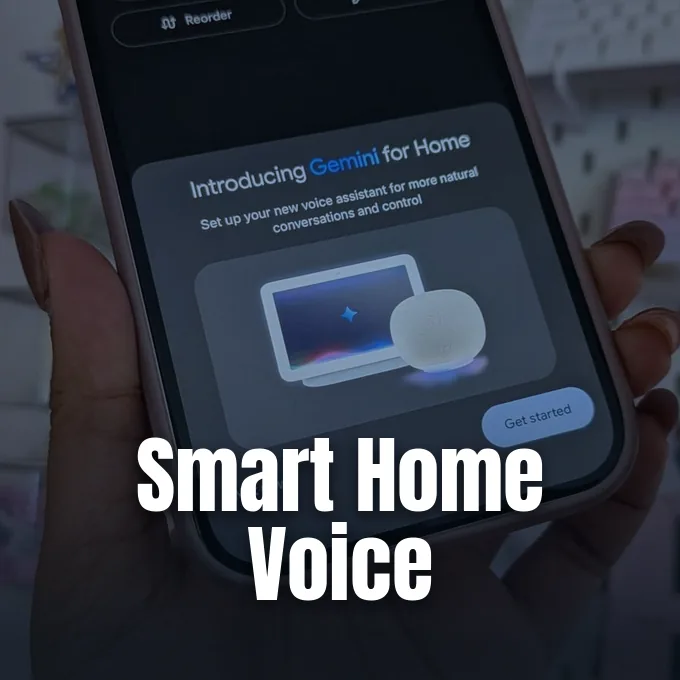
Google replaced the legacy Google Assistant intent engine with the Gemini model on its smart home platform, but smart home owners report that basic everyday tasks have degraded under the new architecture. Instead of switching on specific light switches or setting thermostats, connected devices misinterpret direct spoken commands, trigger multiple-second delays, or report phantom confirmations. Because of these errors, Google Home voice reliability has dropped, prompting power users to move automation logic to local software like Home Assistant to regain deterministic control [1].
Google Home Voice Failures
The architectural transition from rule-based speech recognition to generative artificial intelligence created clear friction for everyday household commands. Google Assistant relied on structured speech patterns mapped to specific device traits through Google Smart Home API integrations, allowing Nest Hub and Nest Mini hardware to execute direct commands reliably. When Google swapped that engine for Gemini, it traded deterministic precision for conversational language generation. That trade-off broke basic controls. In testing published on XDA Developers, Jasmine Mannan discovered that asking the speaker to turn on kitchen light number two caused every light in the kitchen to turn on instead. The voice assistant failed to isolate the requested entity [1].
The voice client reported success even when the underlying action failed or produced the wrong outcome [1]. Explicit automations linked to familiar voice triggers suffered similar regressions after the update. A standard Goodnight routine intended to switch off Philips Hue fixtures and lower the Nest Thermostat began misfiring or skipping steps entirely [3]. Mannan said relinking accounts inside Google Home failed to resolve these entity errors [1].

Similar complaints have surfaced in the smart home community as Google retired legacy voice features in favor of generative models. Discussions on the r/GoogleHome forum describe growing dissatisfaction with routine tasks, with community members saying that roughly a third of spoken commands produce an unexpected response. Writing for How-To Geek, Tim Brookes said the platform lost basic functionality after Google introduced Gemini to replace Assistant. Brookes compared the regressions to recent issues seen in Android Auto, noting that Google speakers often claim they cannot play a song until a user repeats the command [2].
Latency Spikes and Routing Errors
Every spoken command issued to Google Home now travels through a longer cloud pipeline that introduces long delays into simple household routines [1]. Under the legacy Assistant framework, audio was digitized and matched against rule-based intent handlers [4]. Under Gemini, the incoming audio stream must be sent to remote Google servers, processed through a large language model tokenization chain, converted into tool execution payloads, and routed through third-party cloud interfaces before the light or plug reacts [1]. Hands-on benchmarks conducted by Rifat Seniabad for ToolyardHub measured cloud Gemini command latency between 1,400 and 3,200 milliseconds, compared to 220 to 650 milliseconds on local pipelines [4]. Mannan experienced delays exceeding eight seconds while waiting in the dark for lights to turn on [1]. Delays of that scale make voice automation frustrating.
This extended chain leaves household devices vulnerable to network drops and vendor outages. When internet access drops or an upstream cloud server suffers downtime, voice control stops working completely [3]. While enterprise partners have adopted Gemini for Home to handle managed security services, household users need their lights and climate controls to operate without constant cloud dependence. Any disruption along the web route results in repeated “Sorry, I couldn’t reach that device” errors [1].
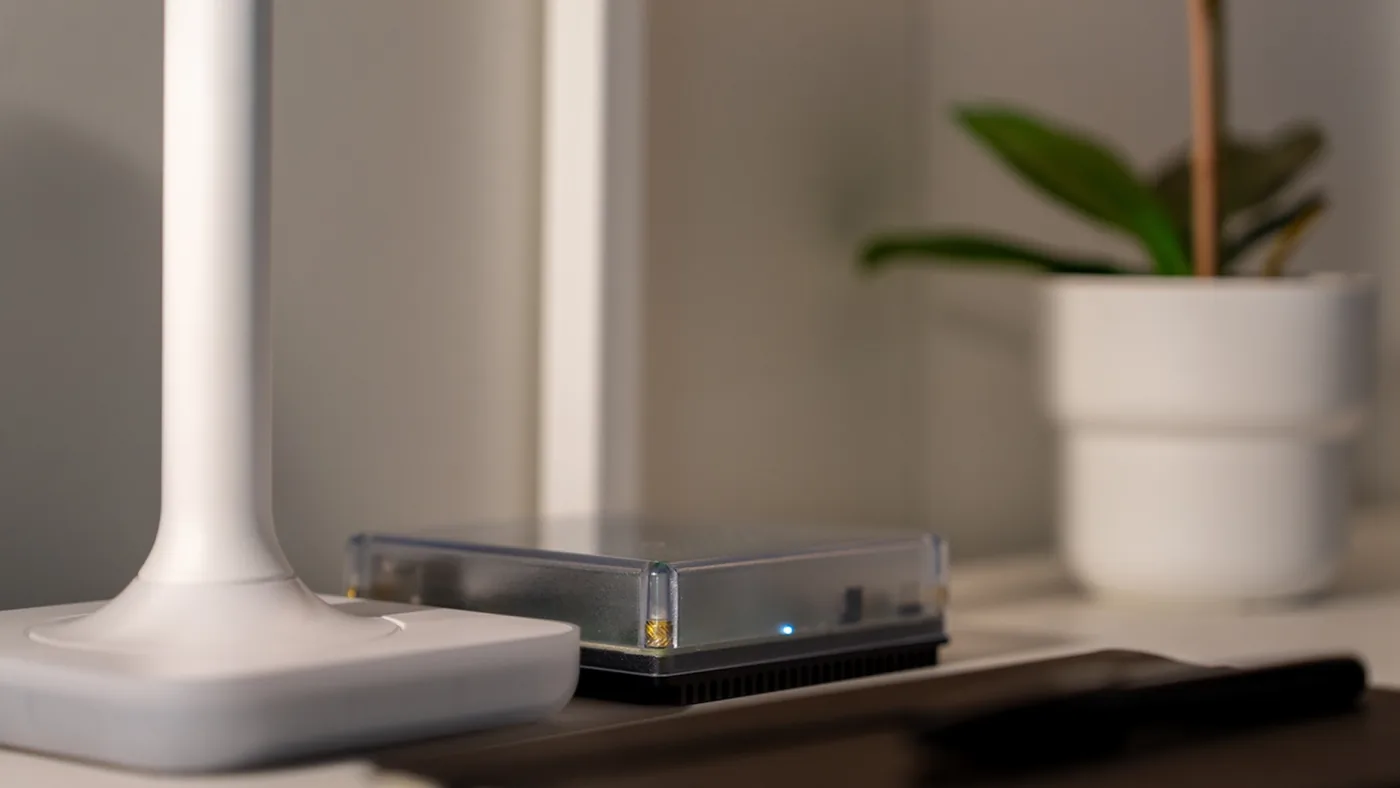
Local smart home platforms avoid these network failures by running an internal state machine directly on local hardware. Home Assistant communicates with smart bulbs, plugs, and wall switches over local wireless protocols, including Zigbee, Z-Wave, Matter, and Thread [1]. Offline commands execute in milliseconds [4].


Local Pipelines for Google Home Voice Users
To fix these latency and reliability issues, many users are moving Google Home voice duties over to Home Assistant Assist [1]. Assist is a built-in voice pipeline designed to run on private local networks without subscriptions, relying on deterministic syntax matching rather than probabilistic cloud tokenization [4]. The engine matches spoken sentences against structured templates, mapping voice triggers straight to explicit entity IDs without guessing. Mannan switched to Assist to regain exact control. While it lacks conversational flair, it toggles switches reliably [1].
The local voice stack uses three modular engines that divide speech processing into discrete steps. Wake word detection runs on local microcontrollers or server backends using microWakeWord, listening for trigger phrases without streaming live audio outside the local area network. Spoken audio then routes over local WebSockets to Faster-Whisper for speech recognition, while Piper handles text-to-speech feedback. Disk requirements remain modest. Seniabad reported that hosting both the Faster-Whisper base model and Piper voice profiles needs roughly 1.2 GB of disk space [4].

Setting up this voice pipeline on local servers is straightforward with Docker containers. The Wyoming Faster-Whisper service listens for speech input on port 10300, while the Wyoming Piper container delivers synthesized speech over port 10200. On multi-core central processing units, Faster-Whisper with quantized int8 precision keeps processing times below 400 milliseconds, removing the need for an expensive graphics card. If a user asks a complex question that exceeds smart home templates, Home Assistant can optionally route the text to a local model or Google Gemini conversation agent for conversational answers [4].
Hardware Options for Local Control
A move from Google Home to a local system requires choosing a small computer to host the Home Assistant operating system. The open-source project, backed by more than 3,000 contributors, runs on several low-power hardware platforms. Beginners often start by running Home Assistant OS on a Raspberry Pi 5 with 4GB of memory and a solid-state drive. Another popular option is the Home Assistant Green, an entry-level hub developed by the core team that includes 32GB of eMMC storage and requires no complex manual assembly. Setup is simple. Users connect Ethernet and complete onboarding through a web browser in minutes [6].
For households managing hundreds of devices or running local voice recognition alongside video feeds, an Intel N100 mini PC with 8GB of RAM and a 256GB NVMe drive provides ideal performance. To connect Zigbee, Thread, or Matter hardware directly to the server, users can plug in a USB coordinator like the SkyConnect or a Sonoff ZBDongle-E. Once these radios are running, standard smart bulbs from Philips Hue, IKEA TRADFRI blinds, or sensors from Aqara and SwitchBot pair to the local coordinator without proprietary vendor hubs [6].

Local voice hardware also offers an easy replacement for Google Nest speakers [6]. Hobbyists can build compact voice satellites using ESP32-S3 microcontrollers running ESPHome firmware [1]. For a ready-to-use option, the $30 ReSpeaker Lite provides an affordable microphone and speaker combination for bedrooms and offices [2]. Another choice is the $59 Home Assistant Voice Preview Edition, which connects over 2.4 GHz Wi-Fi and features a hardware mute switch that cuts power to the microphone for guaranteed privacy [5].
Cloud Fallback with Nabu Casa
A transition away from Google Home does not mean throwing away every existing smart speaker. According to OneDroidyHome of Local Smart Home Guide, many users adopt a hybrid configuration where Home Assistant controls all automations and device states locally, while Google Home serves as a convenient voice interface. The simplest way to link both environments is through a Home Assistant Cloud subscription from Nabu Casa, which costs $6.50 per month or $65 per year. This cloud bridge exposes selected local entities to the Google Home app without opening router ports [5].
In this hybrid setup, voice audio still travels to Google servers, but the resulting instructions are handed off through Nabu Casa to the local server for execution. Because Home Assistant retains ownership of the device state, the home stays functional even if cloud connections hesitate. A minor trade-off is occasional state desync in the Google Home app, where a bulb toggled by a local motion sensor may take a few seconds to update on the mobile screen [5]. Nest Hub displays can also be repurposed as touch dashboards using Chromecast integrations [6].

To prevent cloud outages from disrupting power management, users can install inline smart relays like the Shelly 1PM Gen4 to collect power data locally. With Home Assistant managing presence detection, schedules, and climate rules, the household runs smoothly when Google or internet services stumble. Google Home voice inputs can stay available for casual family requests, but the actual intelligence and automation logic stay firmly inside the home [5].
- ONLINE NEWS Mannan, J. (2026, November 14). Gemini made my Google Home worse at the basics, so I moved my voice control to Home Assistant. XDA Developers. [Article Link]
- ONLINE NEWS Brookes, T. (2026, October 24). Gemini is making your Google smart home slower, it’s time to try Home Assistant. How-To Geek. [Article Link]
- ONLINE NEWS Hitechreports Desk. (2026, November 15). Google Home app broken by Gemini? Users switch to Home Assistant. Hitechreports. [Article Link]
- ONLINE NEWS Seniabad, R. (2026, November 15). Home Assistant Assist vs Gemini Google Home: Voice Control Technical Review. ToolyardHub. [Article Link]
- WEBSITE OneDroidyHome. (2026, May 1). Home Assistant with Google Home fallback. Local Smart Home Guide. [Article Link]
- WEBSITE JoinHomeShift. (2026, January 1). Migrate from Google Home to Home Assistant: Complete 2026 Guide. JoinHomeShift. [Article Link]
- WEBSITE Home Assistant. (2016, February 12). Google Gemini. Home Assistant. [Article Link]


