





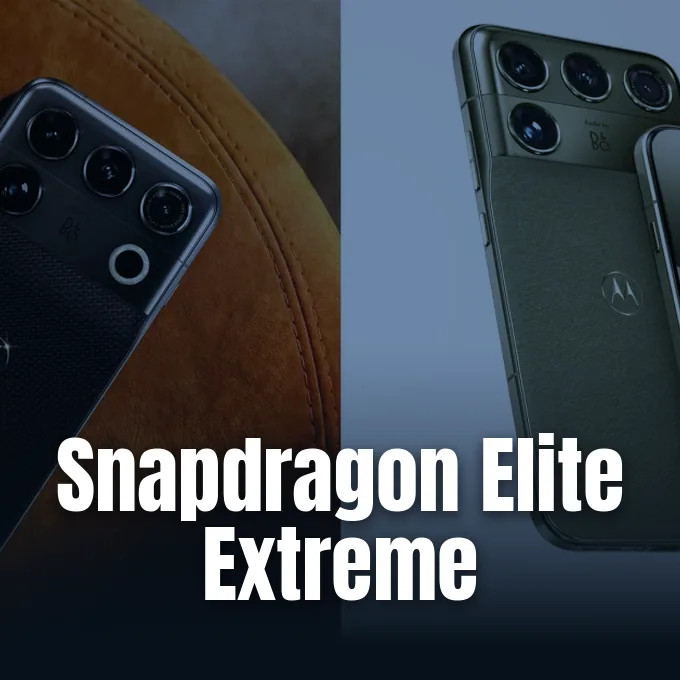
Qualcomm opened its annual Snapdragon Summit 2026 in Hawaii by splitting its premier mobile silicon into two distinct tiers, introducing the standard Snapdragon 8 Elite Gen 6 together with the higher-tier Snapdragon 8 Elite Extreme [1]. Chief executive officer Cristiano Amon took the stage to present an architectural shift aimed at autonomous digital agents, arguing that future user experiences will prioritize automated intent over manual application browsing [4]. Both chipsets transition to TSMC’s 2nm manufacturing process, establishing the highest CPU clock speeds yet recorded in consumer mobile silicon [2].
Qualcomm Divides Snapdragon 8 Elite Gen 6 into Two Tiers
The decision to split the flagship tier marks a departure from Qualcomm’s single-chip release strategy for premium phones. Rising component prices and divergent manufacturer priorities prompted the company to present two different silicon grades. Lekha Motiwala, Qualcomm’s senior director of product management, explained during technical briefings that device makers face starkly different market goals: “Some OEMs are trying to reach the pinnacle of technology, while others are trying to reach broader audiences. We want to give choice and flexibility to the OEMs” [1].
Under this dual-tier arrangement, the standard Snapdragon 8 Elite Gen 6 serves as the direct heir to last year’s Snapdragon 8 Elite Gen 5, aiming at mainstream high-end smartphones scheduled for release across 2027. Meanwhile, the Snapdragon 8 Elite Extreme occupies an elevated category designed exclusively for halo flagships [5]. Qualcomm PR representative Ellie Fortin emphasized that the Extreme variant includes every capability of the baseline processor while integrating specialized hardware accelerators for generative AI and graphics pipelines [1]. Smartphone makers can thus target differing price points without abandoning the 2nm architecture.
Both mobile platforms share the underlying 2nm silicon architecture, yet diverge sharply in graphics execution, video recording capabilities, and specialized on-device intelligence.

Market dynamics and escalating foundry expenses at leading-edge nodes make full-featured silicon prohibitively expensive for standard flagships [2]. By establishing two tiers, Qualcomm allows partners to calibrate thermal budgets and component costs against retail price targets. Premium flagships gain cutting-edge capabilities, while high-volume devices preserve financial viability [4].
CPU Architecture Reaches 5GHz with Oryon FlexCache
At the core of both platforms sits a custom Oryon central processing unit built using a 2+6 core topology. Two prime cores achieve an unprecedented 5.0GHz CPU frequency, while six accompanying performance cores operate at 4.0GHz [2]. Both chips reach 5.0GHz [3].
To sustain these high frequencies without saturating external system memory, Qualcomm engineered a 16MB unified cache subsystem branded as Oryon FlexCache. Rather than isolating cache allocations to predetermined clusters, FlexCache functions as a dynamically shared pool that allows the prime cores to draw upon full memory capacity whenever single-threaded execution demands it [3]. This approach minimizes latency and curtails energy-intensive round trips to system memory, contributing to a claimed 37% gain in CPU power efficiency over the preceding Snapdragon 8 Elite Gen 5 [2]. In raw compute throughput, Qualcomm rates the Extreme model’s CPU as 13% faster than its predecessor, while the standard Gen 6 achieves a 10% generational improvement [5].
TSMC manufactures both mobile platforms [2]. The shared architectural foundation extends to system memory compatibility, with both processors accommodating both LPDDR5X and LPDDR6 standards at clock speeds reaching 5,300MHz, or 10.6Gbps DDR, paired with UFS 5.0 solid-state storage [3]. Device builders can configure systems with up to 24GB of memory. Qualcomm retained standard Scalable Matrix Extension (SME) support on the CPU rather than adopting SME2, noting that demanding machine learning workloads operate more efficiently on dedicated neural hardware [2].

Snapdragon 8 Elite Extreme Expands Graphics and AI Hardware
The graphics processor represents the sharpest architectural divergence between the two silicon siblings. While both variants feature a redesigned Adreno GPU with a three-slice structure clocked at 1.45GHz—delivering a 35% speed uplift and 40% efficiency boost—the Extreme variant incorporates dedicated Adreno Matrix Cores [2]. The standard chip omits HBM [3]. These silicon blocks execute tensor mathematics directly within the graphics pipeline, avoiding round trips through external memory [1].
Matrix Cores power Adreno Neural Fusion, a proprietary rendering system providing neural super-resolution and frame interpolation in real time. Qualcomm claims this hardware-accelerated pipeline reduces gaming power consumption by up to 40% compared to software techniques. Supported gaming titles include Honkai: Star Rail, Diablo Immortal, War Thunder Mobile, and Arena Breakout [2]. The Extreme GPU incorporates 18MB of dedicated high-performance memory to buffer local render tiles, whereas the standard Snapdragon 8 Elite Gen 6 entirely lacks this dedicated memory pool and omits the Matrix Cores [3].
On-device intelligence receives an equivalent hardware expansion through the upgraded Hexagon neural processing unit. The NPU integrates a specialized Hexagon Element Accelerator combined with 12 scalar units, eight vector units, and a dedicated tensor unit to accelerate transformer operations. On the Extreme tier, Qualcomm expanded large shared memory by 50%, enabling the platform to run on-device Mixture-of-Experts models surpassing 30 billion parameters with approximately 3 billion active parameters per token step. A modernized Sensing Hub with dual micro-NPUs handles continuous environmental awareness, processing low-power models up to 200 million parameters [3].
Advanced Camera Pipeline Introduces 8K Recording at 60fps
Qualcomm overhauled the imaging pipeline around its Spectra image signal processor, equipping both platforms with triple 20-bit AI ISPs capable of zero-shutter-lag capture on camera setups up to 108 megapixels [3]. However, the multimedia subsystem on the Snapdragon 8 Elite Extreme introduces video recording capabilities previously unavailable on consumer handsets, headlined by 8K video capture at 60fps [2].
High-speed recording also extends to 4K resolution at 240fps for slow-motion footage, paired with native hardware encoding for the Advanced Professional Video codec. For media playback, the Extreme silicon integrates a hardware decoder for the Versatile Video Coding standard, also known as VVC or H.266, which Qualcomm claims achieves up to 55% power savings over software decoding. The standard Snapdragon 8 Elite Gen 6 omits 8K at 60fps, 4K at 240fps, APV encoding, and VVC hardware decoding [2].
Image processing benefits from a widened direct data pipeline connecting the Hexagon NPU with the Spectra ISP. This connection permits each image pixel to carry 16 bits of real-time AI metadata, representing 256 times more contextual information than prior generations [3]. Qualcomm explained that this high-bandwidth link enables Intelligent Pixel Control to evaluate scene context continuously, distinguishing foreground subjects from complex backgrounds to prevent halo artifacts and lens flares while tracking moving faces [2]. Still photography supports individual sensors up to 320 megapixels [3].

Motorola Signature 27 Adopts Snapdragon 8 Elite Extreme
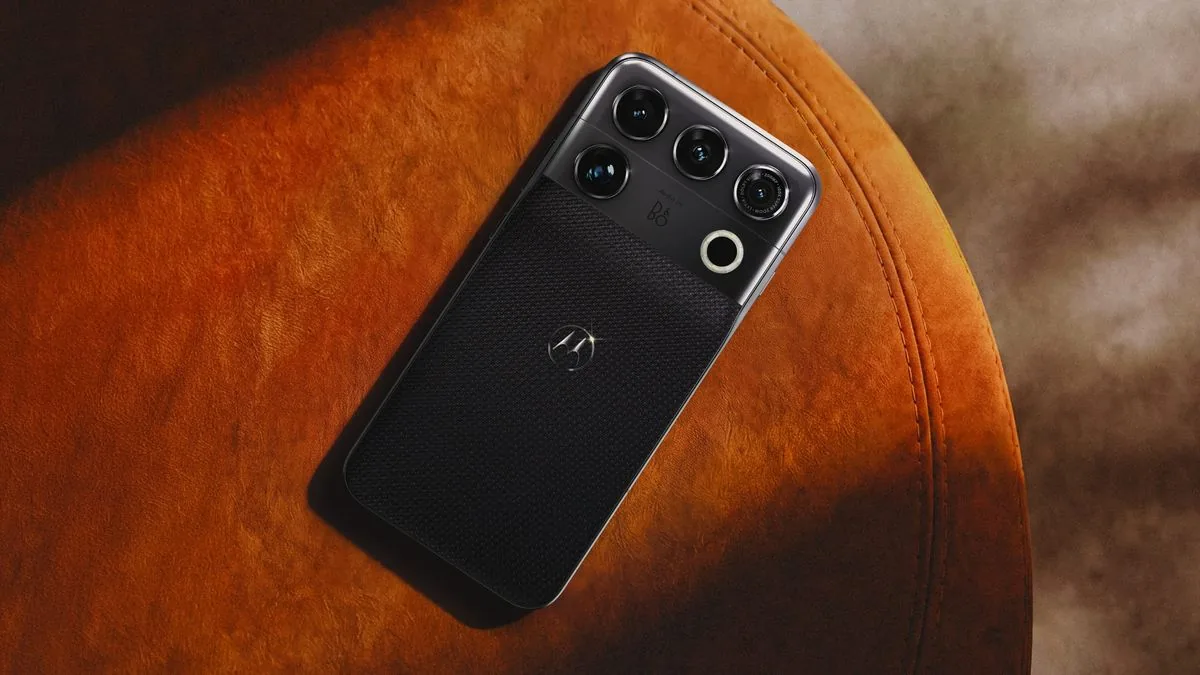
Commercial implementation of the new silicon begins immediately. Motorola unveiled the Motorola Signature 27 at the summit as one of the first commercial smartphones carrying the Snapdragon 8 Elite Extreme [1]. Xiaomi confirmed that its Xiaomi 18 Pro Max will also feature the Extreme platform, while the base Xiaomi 18 Pro employs the standard Gen 6 chip. Xiaomi plans an immediate rollout [4].
The Signature 27 signifies Motorola’s ambition to challenge entrenched rivals after its earlier Signature model used the lower-tier Snapdragon 8 Gen 5 [1]. The new handset incorporates a 50MP Sony LYTIA 910 primary camera paired with a 200MP periscope telephoto sensor and a 3.5° hardware optical stabilization assembly. To control thermals generated by the 5.0GHz silicon, Motorola engineered an ArcticMesh cooling system combining liquid metal, copper mesh, diamond-infused thermal gel, and a 40% enlarged 3D vapor chamber. Motorola committed to seven years [6]. The device launches globally with Pantone Coal Smoke and Pantone Capulet Green finishes, featuring custom audio tuned in partnership with Bang & Olufsen [1].
Both silicon tiers connect via Qualcomm’s X105 5G Modem-RF system, which supports 3GPP Release 19 5G Advanced specifications and achieves theoretical download speeds up to 14.8Gbps. Local networking utilizes the FastConnect 8800 mobile connectivity system, introducing Wi-Fi 8 with peak throughput of 11.6Gbps, Bluetooth 6.0, and Thread 1.4 mesh networking [3]. With manufacturers like Samsung preparing future flagships—as reflected in circulating Galaxy S27 Pro and Ultra battery details—and Motorola pledging seven years of OS and security patches in addition to current Android 17 platform updates, Qualcomm’s dual-tier strategy sets the hardware baseline for next year’s flagship smartphone ecosystem [1].
- ONLINE NEWS Metz, A. (2026, September 22). Snapdragon 8 Elite Gen 6 vs 8 Elite Extreme Gen 6: Qualcomm explains how (and why) its two newest flagship mobile chipsets differ. TechRadar. [Article Link]
- ONLINE NEWS Simons, H. (2026, September 22). The Snapdragon 8 Elite Extreme Gen 6 is a giant upgrade for smartphone video, not so much for names. Android Authority. [Article Link]
- ONLINE NEWS Killian, Z. (2026, September 22). Snapdragon 8 Elite Extreme Gen 6 hits 5GHz with Neural Fusion gaming, Wi-Fi 8. HotHardware. [Article Link]
- ONLINE NEWS O’Rourke, P. (2026, September 22). Qualcomm split its 2026 flagship Snapdragon 8 Elite Gen 6 chip into two tiers, with the Extreme version packing 50% more shared memory. XDA Developers. [Article Link]
- ONLINE NEWS Li, A. (2026, September 22). Qualcomm announces the Snapdragon 8 Elite Gen 6 and 8 Elite Extreme Gen 6. 9to5Google. [Article Link]
- ONLINE NEWS Steele, C. (2026, September 22). Motorola debuts premium Signature 27 flagship with brand-new Snapdragon 8 Elite Extreme. Android Police. [Article Link]


