





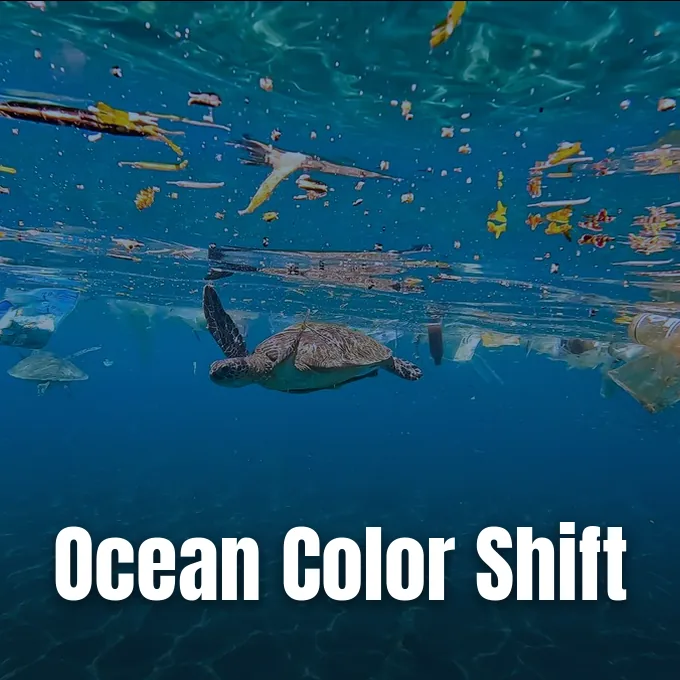
Satellite data spanning 2002 to 2022 reveals a subtle but steady color shift in waters surrounding the Great Pacific Garbage Patch. Researchers from the University of Bergen analyzed three independent satellite records and discovered that surface waters have brightened in both blue and green wavelengths over the twenty-year period [1]. While open oceans elsewhere typically darken from biological growth and agricultural runoff, these subtropical waters display a distinct cyan brightening [6]. Computer simulations indicate that microscopic plastic fragments drifting in high concentrations scatter incoming sunlight, producing an optical signature that could help scientists track marine pollution from orbit [1].
Two Decades of Satellite Observations
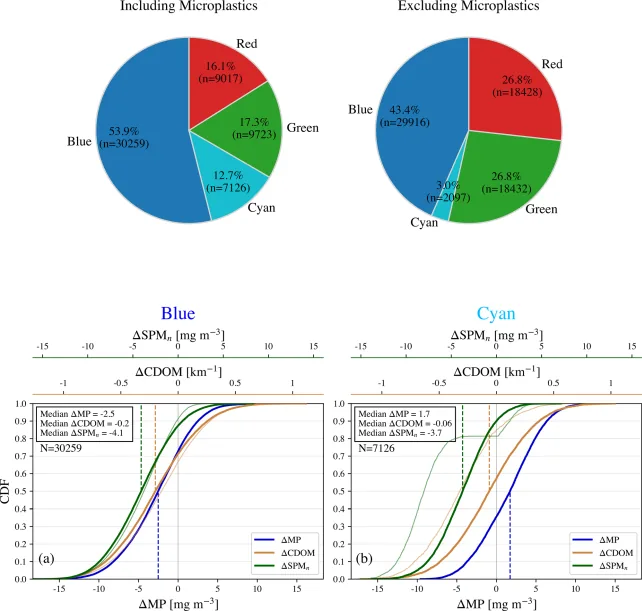
Marine microplastics have long eluded spaceborne sensors because individual fragments remain far too tiny for orbital cameras to detect directly in open water [7]. To investigate whether vast accumulations produce a collective optical signal, doctoral researcher Shea Cheatham and postdoctoral fellow Daniel Koestner at the University of Bergen evaluated twenty years of ocean color measurements collected between 2002 and 2022 [1]. Working with co-author Børge Hamre, the team scrutinized satellite records to track subtle shifts in spectral reflectance [7]. The data showed that surface waters near the accumulation zone saw an estimated 10 percent increase in blue light reflectance and a 2 to 4 percent increase in green light over the study period. Orbital instruments captured that spectral shift. Because incoming sunlight interacts directly with water molecules and suspended matter, long-term changes in reflected wavelengths provide clear clues about what drifts beneath the surface [6].
The authors initially met their own results with caution when the pattern first appeared on their maps. “We were shocked, excited, and a little alarmed to see the same shift in ocean color on the map after we analyzed the first satellite dataset of the garbage patch,” Cheatham said. To confirm the finding, the Bergen team analyzed two additional spaceborne datasets that tracked the same region through different sensor designs. Both instruments recorded identical cyan signatures [7]. While broad areas of the world’s oceans are gradually darkening from nutrient runoff and phytoplankton activity, this remote gyre grew measurably brighter over the same two decades [6].

How Microplastics Alter Ocean Light
Open ocean water appears deep blue because pure water molecules absorb longer wavelengths of light such as red and orange while scattering shorter blue wavelengths back to the surface. Biological components alter that baseline color in predictable ways. For example, phytoplankton cells contain chlorophyll pigments that absorb blue and red light, leaving seawater with an increasingly green appearance. In coastal zones and shelf regions, dissolved organic matter absorbs blue rays and turns water darker or browner [7]. Synthetic polymer particles, including fragments of polystyrene and polyester, alter this optical balance through a different mechanism [5].
Unlike biological matter, common plastic polymers absorb almost no visible light and instead act as powerful scatterers [7]. In laboratory experiments analyzing the inherent optical properties of microplastic suspensions, researchers measured angle-resolved polarized light scattering as well as spectral absorption across different wavelengths. They discovered that microscopic plastic particles scatter blue and green wavelengths simultaneously [2]. “What’s interesting about the optical signature of microplastics is that they generally do not absorb much light at all across the visible spectrum, and are strong scatterers,” Cheatham said [7]. She noted that this dual scattering causes the ocean to brighten most strongly at blue-green wavelengths [6]. It creates a distinct cyan tint that stands apart from standard plankton blooms [7].
Great Pacific Garbage Patch Spectral Shift
To test whether natural oceanographic fluctuations could produce this brightening, the Bergen team carried out extensive computer modeling. They applied a Monte Carlo method to simulate more than 50,000 ocean reflectance spectra, altering concentrations of phytoplankton, dissolved organic compounds, and mineral dust [1]. The simulations showed that natural ecological shifts almost never produce simultaneous brightening in both blue and green bands [6]. But when the scientists introduced microplastic particles into the simulated water column, the likelihood of matching the satellite observations jumped by more than four times. Simulation outcomes mirrored satellite scans [1].
Mineral dust carried by winds can also scatter sunlight, but local monitoring stations in the North Pacific recorded stable dust levels throughout the twenty-year observation window [7]. That leaves floating debris as the leading candidate behind the shift [1]. In central accumulation zones of the Great Pacific Garbage Patch, microplastic densities near the sea surface can reach up to 17 milligrams per cubic meter [6]. While that volume remains diffuse to the naked eye, the cumulative scattering from billions of suspended particles alters the optical properties of surface water [1]. It turns an invisible hazard into a measurable spaceborne signal [6].

Why the North Pacific Gyre Traps Plastic
Why do such dense quantities of plastic assemble in this oceanic expanse? The North Pacific subtropical gyre forms a circular current system rotating clockwise between California and Hawaii. Surface winds push floating debris inward toward a calm central zone covering 1.6 million square kilometers [6]. Researchers estimate this area holds approximately 79,000 metric tons of plastic across 1.8 trillion individual pieces [3].
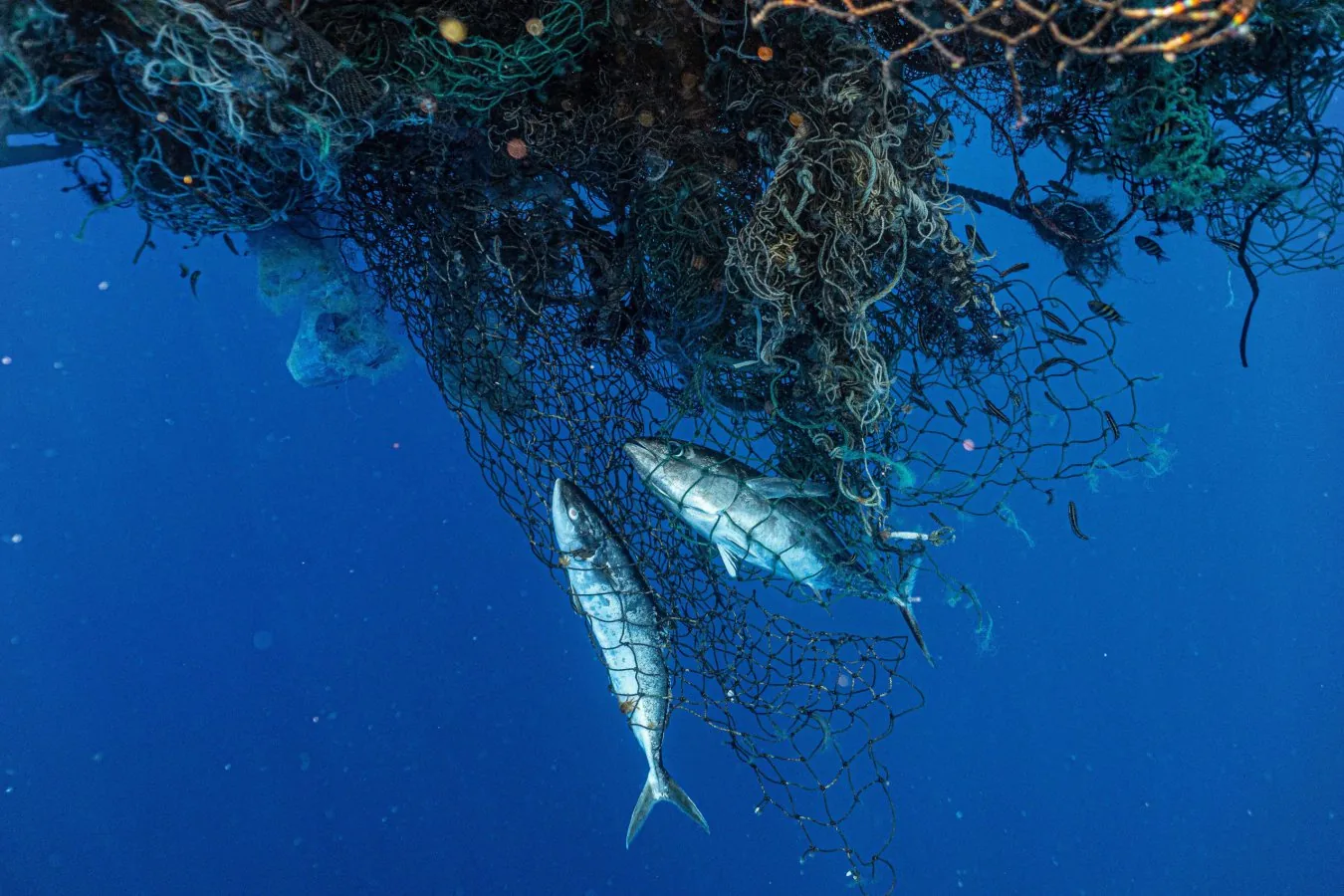
Field sampling in the gyre reveals a striking division between mass and particle count. Discarded commercial fishing gear, including large nets and ropes, accounts for at least 46 percent of the total plastic mass [3]. In a 2019 oceanographic mission that retrieved over 6,000 hard plastic items, researchers traced a majority of identifiable debris back to five industrialized fishing nations: Japan, China, South Korea, Taiwan, and the United States [4]. Yet microplastics under 5 millimeters in size represent 94 percent of all floating items in the gyre [3]. Over decades, sunlight and mechanical wave action break large plastic objects into trillions of microscopic specks that stay trapped in surface waters, while regional circulation patterns interact with equatorial Pacific Ocean warming over multi-decadal cycles.
Testing Water Samples Beyond Models
Despite the strong correlation between satellite measurements and optical models, marine scientists urge caution before declaring the case closed. Tim Smyth, a specialist in marine optics at the Plymouth Marine Laboratory in the United Kingdom, pointed out that orbital radiometers register incoming light rays rather than chemical signatures. “In short, this is compelling evidence for a potential satellite signature of microplastic accumulation, rather than evidence that satellites have actually detected the microplastics themselves,” Smyth said. Satellite sensors observe reflectance changes, but they cannot count individual particles from orbit [6].
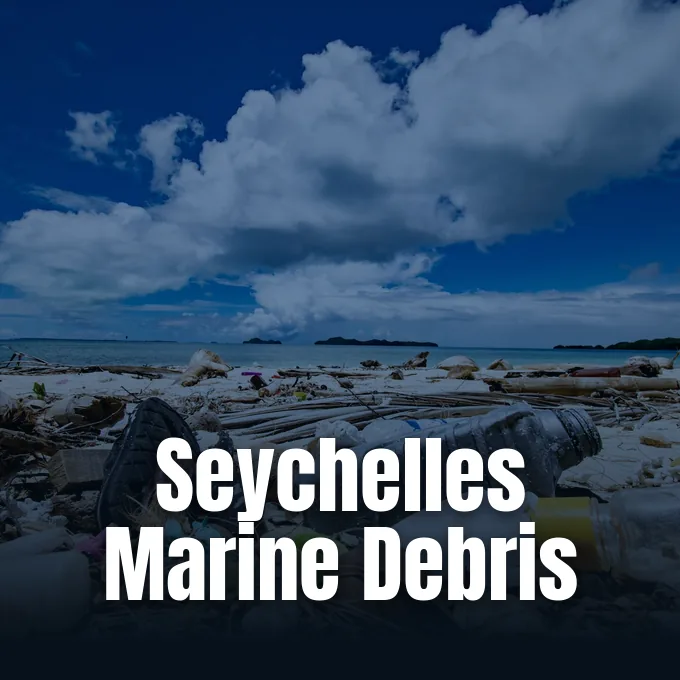
The study authors openly acknowledge that limitation and stress that field expeditions are essential to confirm their findings. “We’re still one step away from proving definitively that microplastics are causing the shift in color that we’re seeing,” Cheatham said [5]. “We just have to get in there to verify.” Abandoned commercial nets and lines mirror patterns documented in studies tracking fishing gear and plastic in Seychelles. To reach certainty, oceanographers will need to collect water samples inside the gyre while satellites pass overhead, measuring microplastic counts and optical properties at the exact same moment [7]. Until direct sampling takes place, researchers cannot completely rule out unusual combinations of natural ocean processes [1].
Monitoring the Great Pacific Garbage Patch
If field testing confirms that microplastics cause this cyan shift, the discovery could change how researchers track global marine debris. Traditional monitoring requires dedicated research vessels that take weeks to cross remote ocean basins, limiting observations to small areas. In contrast, satellite archives offer continuous observations over decades across entire ocean gyres. Postdoctoral fellow Daniel Koestner hopes the optical signature will help pinpoint plastic accumulation zones that have escaped visual detection. “That would mean that we have a target area for cleaning up,” he said [5].
Locating microplastics, however, does not make them easy to remove. Cleanup initiatives can collect floating nets and rigid containers, but skimming trillions of tiny fragments from open water remains nearly impossible. “Removing microplastics from the water column, particularly the smallest plastics we focus on in our study, is essentially impossible, and these plastics are the most likely to enter the base of the marine food web and end up on your plate,” Cheatham said [7]. Because microplastics harm marine microbes, alter fish behavior, and accumulate in seafood, preventing waste from entering ocean basins remains the main way to protect marine life [5].
- ACADEMIC JOURNAL Cheatham, S., Koestner, D., & Hamre, B. (2026). The ocean’s color is changing near the Great Pacific Garbage Patch. Communications Earth & Environment, 7(1). [Article Link]
- ACADEMIC JOURNAL Koestner, D., Foster, R., El‐Habashi, A., & Cheatham, S. (2024). Measurements of the inherent optical properties of aqueous suspensions of microplastics. Limnology and Oceanography Letters, 9(4), 487-497. [Article Link]
- ACADEMIC JOURNAL Lebreton, L., Slat, B., Ferrari, F., Sainte-Rose, B., Aitken, J., Marthouse, R., Hajbane, S., Cunsolo, S., Schwarz, A., Levivier, A., Noble, K., Debeljak, P., Maral, H., Schoeneich-Argent, R., Brambini, R., & Reisser, J. (2018). Evidence that the Great Pacific Garbage Patch is rapidly accumulating plastic. Scientific Reports, 8(1). [Article Link]
- ACADEMIC JOURNAL Lebreton, L., Royer, S., Peytavin, A., Strietman, W. J., Smeding-Zuurendonk, I., & Egger, M. (2022). Industrialised fishing nations largely contribute to floating plastic pollution in the North Pacific subtropical gyre. Scientific Reports, 12(1). [Article Link]
- ONLINE NEWS Mogensen, J. F. (2026). The Great Pacific Garbage Patch is changing the color of the ocean. Scientific American. [Article Link]
- ONLINE NEWS Woodford, J. (2026). Microplastics may be changing the colour of the Pacific Ocean. New Scientist. [Article Link]
- ONLINE NEWS Starr, M. (2026). The Great Pacific Garbage Patch May Be Changing The Color of The Ocean. ScienceAlert. [Article Link]
APA 7: PerEXP Teamworks. (2026, November 6). Microplastics Alter Ocean Color Near the Great Pacific Garbage Patch. PerEXP Teamworks. https://perexpteamworks.com/en/great-pacific-garbage-patch-ocean-color/


