




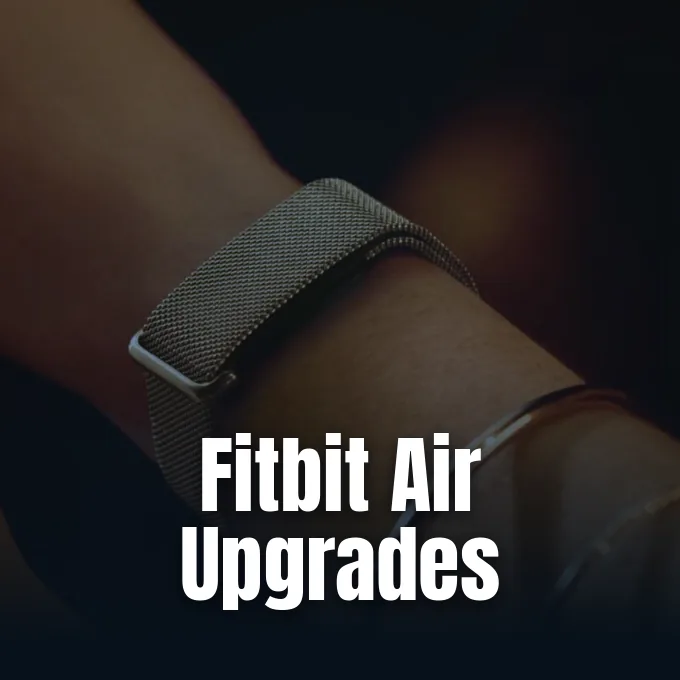
Google refreshed its wearable fitness catalog on October 12 with new metal accessories and clinical monitoring tools. The launch brings stainless steel bands to the wrist. In parallel, the latest Fitbit Air updates add Health Guardian tracking and upgraded workout detection to the companion Google Health app. These additions arrive with the new $179 Fitbit Edge [4].
Fitbit Air Updates Bring Stainless Steel Metal Mesh Bands
The screenless Fitbit Air arrived earlier this year for $99 as a lightweight tracker. It was comfortable. Yet while the silicone straps handled daily gym workouts well, Tom’s Guide editor Jane McGuire explained that she previously removed the pebble when going out because the original casing felt too casual for social gatherings. Google answered that design concern with a woven stainless steel Metal Mesh band in Champagne Gold and Polished Silver. The flexible mesh wraps around the wrist to conceal the small sensor pod entirely. It looks like jewelry, much like an Oura Ring [1].
Buyers can purchase the standalone Metal Mesh strap for $69.99 to dress up a tracker they already own. Standalone orders include both color choices. Google also created an official bundle that packages the Champagne Gold Metal Mesh band with an Obsidian Fitbit Air for $149.99 exclusively at Target and on the Google Store [4]. The bundle provides an attractive alternative for buyers who want a premium metallic finish without strapping a bulky rectangular smartwatch screen to their wrist [1]. Pre-orders open next week. Shipments arrive October 27 [5].
The strap update provides a helpful option for people who want unobtrusive health tracking during dinner parties or office work. McGuire said that the $70 accessory gives the budget tracker an upscale feel that rivals Whoop or Garmin Cirqa bands. These Fitbit Air updates let the pebble blend smoothly with formal wear [1].

Health Guardian Tracks Long-Term Wellness Trends
Software improvements accompany the new bands through the rollout of Health Guardian to both the Fitbit Air and the new Fitbit Edge. The safety toolset debuted on Pixel Watch hardware over the summer. Google says it’s expanding access to tracker owners who hold a Google Health Premium subscription later this month [5]. The system works quietly in the background to monitor subtle body changes rather than sending constant intrusive alerts throughout the day [4].
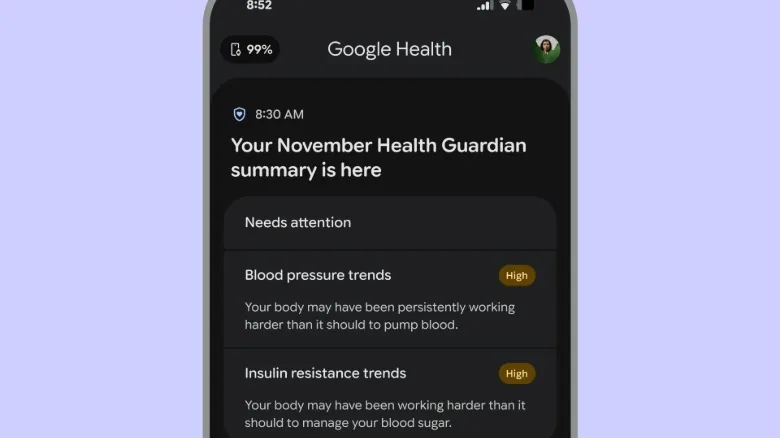
Health Guardian focuses on identifying gradual shifts in cardiovascular and metabolic health over extended periods of time. Subscribers can set up tracking for blood pressure trends and insulin resistance trends inside the mobile application. If users meet monthly wear requirements, the app generates a summary report at the beginning of each calendar month. The in-app Health Coach can then help users interpret these pattern changes and adjust their workout routines, while compiling context to share during doctor visits [4]. Google described the feature as an early warning alert, explaining, “Health Guardian features give you this early indication that something needs attention, kind of like a check engine light for overall well-being” [5].
The feature builds on the redesigned Google Health app, which replaced the old Fitbit app a few months ago. The software acts as a central hub for health, sleep, and activity records. It also links with connected fitness platforms including Peloton [5]. Bringing Health Guardian to screenless devices means Fitbit Air updates let users collect preventive wellness data without checking a watch face all day [4].

Automatic Activity Detection Expands to Over 100 Sports
Logging exercise sessions without manual input is getting a big overhaul across Google’s wearable line. An upcoming software update for automatic activity detection arrives later this month for the Fitbit Air, Fitbit Edge, and Pixel Watch 3, 4, and 5 [4]. Earlier versions of the tracking algorithm recognized only 10 basic exercises. That limited catalog frequently missed gym workouts [5]. These Fitbit Air updates expand the detection list to more than 100 sports, and the software now recognizes strength training, swimming, and racket sports [4].
Google relies on contextual reasoning to make detection more reliable, combining heart rate data with past workout routines, manual user edits, and device location when permission is granted. In official tests, the upgraded algorithm delivered nearly double the detection accuracy and cut missed workouts by more than half [4]. Cheyenne MacDonald said that earlier tracker builds often missed rapid movements during court games and interval routines, which this update seeks to fix. It’s a welcome change. Active users won’t lose credit for hard workouts [5].
The tracker logs activities automatically whenever users sustain a higher heart rate for a set time limit, which defaults to 15 minutes. A summary notification lands in the mobile app within roughly 30 minutes of finishing a session. The software also learns individual exercise habits over time whenever owners review or edit an entry. That machine learning feedback loop refines future predictions so users don’t have to adjust settings before exercising [4].
Google Health Updates Deepen Partner App Integrations
Google is also expanding how its mobile platform exchanges health and nutritional data with outside digital wellness tools. Andy Abramson said on the official company blog that Google has delivered more than 55 new features and fixes since launching the app and its Gemini-powered Health Coach. Beyond deepening its integration with Apple Health, Google announced a multi-year partnership with Flo Health scheduled to begin early next year. The agreement will allow users to sync cycle tracking records with Google Health to receive personalized insights based on cycle phases and life stages, while supporting clinical research in women’s health [4].
Metabolic tracking is gaining similar attention through an agreement with medtech company Abbott [5]. American users will soon be able to connect the over-the-counter Abbott Lingo continuous glucose monitor to the Google Health dashboard. The integration combines glucose readings with logged meals, exercise sessions, and sleep records in a single view. Nutrition tracking is also getting an upgrade through MyFitnessPal. With this revision, MyFitnessPal Premium subscribers can sync detailed, food-specific logs into their daily feed. In addition, users in the US will be able to import clinical lab results from Function Health starting later this fall [4].

These outside data links support Google’s goal to turn its software into an all-in-one health portal rather than a simple step counter. The feature additions arrive as Google reorganizes its connected services, following the scheduled sunset of Pixel Watch Safety Signal in December. Bringing clinical records together helps users see how daily lifestyle habits affect their lab tests [4].
Fitbit Edge Joins the Lineup as a Display Alternative
In addition to the Metal Mesh bands, Google introduced the new $179 Fitbit Edge to replace the Charge 6 in its fitness tracker lineup. Google hadn’t released a Charge model since 2023. The Edge updates that line with softer rounded borders and a body measuring 39.2 by 25.6 millimeters. That compares to dimensions of 36.7 by 23.1 millimeters on the older Charge 6. The Edge costs $180 or £160 and offers a week of battery life, built-in GPS, and active bands in olive green, black, white, and pink, with an olive aluminum or champagne gold casing [2].
The Edge fills a clear niche between basic bands and full smartwatches like the Pixel Watch 5. It has broad compatibility. Unlike the Pixel Watch, the Edge pairs with both Android and iOS devices, so iPhone owners can use Google’s fitness hardware without buying an Apple Watch. It also includes a special edition Stephen Curry active band option for buyers seeking athletic styling. Users who want real-time pacing feedback and onboard navigation during outdoor runs will likely prefer the Edge’s built-in display over screenless hardware [2].
For shoppers who prioritize minimal wrist bulk, the $99 Fitbit Air remains Google’s lightest wearable option. It has no display. The Air lacks built-in GPS and an ECG app, but its low price point and jewelry-style bands appeal to people who want passive health tracking without another screen competing for their attention. Recent Fitbit Air updates give budget buyers a stylish path into Google’s ecosystem ahead of the retail launch on October 27 [2].
- ONLINE NEWS McGuire, J. (2026, October 12). Google just fixed my biggest design complaint about the Fitbit Air — and it looks stunning. Tom’s Guide. [Article Link]
- ONLINE NEWS McGuire, J. (2026, October 12). Google Fitbit Edge vs Fitbit Air: Which should you choose?. Tom’s Guide. [Article Link]
- ONLINE NEWS Android Authority. (2026, October 12). Google’s new Metal Mesh Bands give the Fitbit Air a classy new look. Android Authority. [Article Link]
- PRESS RELEASE Abramson, A. (2026, October 12). How we’re making Google Health and Fitbit Air smarter than ever. Google. [Article Link]
- ONLINE NEWS MacDonald, C. (2026, October 12). Google brings Health Guardian to the Fitbit Air and Edge, and expands automatic activity tracking. Engadget. [Article Link]


