



When a catastrophic glacial collapse struck the Himalayas on August 26, the torrent tore through riverside settlements with the force of an inland tsunami. The mountain catastrophe prompted Nepal to submit a formal request for US$20 million from the international Loss and Damage Fund (officially designated as the Fund for Responding to Loss and Damage). Could a nascent United Nations financial mechanism designed to assist developing nations manage rapid compensation after climate disasters? Nepali officials made clear that the financial claim represents a demand for climate justice rather than humanitarian charity, presenting the fund with its first urgent post-disaster test since its creation at the 2022 climate summit [2].
Mountain Avalanches and Himalayan Destruction
A massive wall of rock and glacier ice sheared away near the summit of Langtang Lirung, hurtling into the river corridors along the border between Nepal and Tibet. The resulting avalanche pulverized steep slopes, sending millions of tons of mud, fractured stone, and freezing water into the Bhote Koshi river basin. Entire riverside villages were engulfed within minutes. Official government data recorded more than 1,400 fatalities across affected districts, while 6,150 people remained missing in the disaster’s aftermath [3].
Critical regional infrastructure suffered catastrophic damage during the deluge. The surge breached over a dozen hydropower dams across the northern valleys, severing power lines and knocking out roughly ten percent of Nepal’s national electricity generation capacity. Downstream in Devighat, residents climbed onto wooden planks to access second-floor windows, digging through packed sediment that buried ground floors under several meters of debris. Nepal’s Finance Minister, Swarnim Wagle, estimated that overall recovery and structural reconstruction will require between US$4 billion and US$5 billion, a figure approaching a tenth of the country’s entire gross domestic product [2].
The destruction unfolded with ferocious speed. Thousands of homes collapsed under shifting gravel, wiping out communal terraces and stranding survivors without clean water or communication. Critical mountain roads collapsed. While international emergency crews provided immediate search operations, local administrators emphasized that standard disaster relief cannot rebuild shattered mountain valleys. Repairing high-altitude links and relocating threatened villages will require sustained financial capital as well as specialized geotechnical engineering. Securing financial backing from the Loss and Damage Fund has become Nepal’s central diplomatic priority [3].

Scientific Evidence Behind the Langtang Lirung Collapse
Attribution scientists quickly mobilized to determine whether greenhouse gas emissions contributed to the collapse. In an extensive rapid assessment, researchers from the World Weather Attribution (WWA) international collaboration evaluated atmospheric records, satellite telemetry, and historical climate datasets across the central Himalayas. The investigators concluded that human-induced climate warming was a direct destabilizing factor. Regional temperatures across the Langtang range in July and August were roughly 1.5 degrees Celsius (2.7 degrees Fahrenheit) higher than pre-industrial averages, accelerating high-altitude permafrost thaw [3].
Climatologist Dr. Friederike Otto of Imperial College London noted that human influence unequivocally preconditioned the catastrophe. Glaciers in the region had been thinning by approximately half a meter (1.6 feet) each year, loosening bedrock support along existing fracture planes. Exceptional snowfall in October and November of the previous year generated enormous volumes of meltwater, saturating geological fault lines beneath Langtang Lirung. Dr. Simon Cook, a glacier specialist at the University of Dundee, observed that while isolating a single trigger remains difficult, thermal warming fundamentally destabilizes high-altitude environments. Cook cautioned that researchers cannot yet specify the exact micro-mechanical trigger that caused the rock wall to fail [3].
Geological vulnerabilities also played a measurable role. The assessment highlighted that a magnitude 7.8 earthquake in 2015 had pre-fractured deep rock masses across central Nepal. Crucially, the World Weather Attribution document and Tarun Gopalakrishnan’s accompanying synthesis were published as unreviewed preprints rather than peer-reviewed journal papers. Although WWA utilizes established methodological protocols, the rapid preprint status means external academic peer review remains incomplete. The broader scientific context shows that cryospheric disruptions parallel impending environmental tipping points where warming permanently alters mountain systems, reinforcing Nepal’s empirical claim for Loss and Damage Fund resources [2].
Testing the UN Loss and Damage Fund
The United Nations established the international Fund for Responding to Loss and Damage during the COP27 summit in 2022 to assist developing countries recovering from climate devastation. For decades, small island states and mountainous developing economies had demanded a specialized financial mechanism distinct from traditional development loans. Nepal’s US$20 million submission represents the first formal test of how the Loss and Damage Fund responds to an acute mountain catastrophe. Maheshwar Dhakal, spokesperson for Nepal’s Ministry of Agriculture, Forest and Environment, confirmed that the government compiled drone surveys, satellite mapping, and the WWA findings to establish an irrefutable empirical link between planetary warming and the collapse [3].
Meeting the evidentiary bar requires rigorous proof of climate attribution. Under current operational rules, applicant countries must demonstrate that documented losses stem directly from climate change rather than routine weather fluctuations. Does the fund’s governing framework provide a realistic pathway for low-income nations facing complex compound disasters? Emerging studies indicate that attribution requirements risk creating bureaucratic hurdles for low-income states lacking extensive domestic meteorological networks [2].

Economic analyses highlight deep structural friction within international climate finance. In an academic study published in Energy Policy, researchers D. B. Silipo, I. S. Yılmaz, and A. Forte examined strategic incentives surrounding compensation for climate-related damages. Silipo and colleagues demonstrated that without binding contribution obligations, wealthy nations systematically minimize disbursements. The voluntary structure creates persistent mismatches between real reconstruction needs and capital pledges. Nepal’s claim directly tests whether the Loss and Damage Fund can transcend these economic disincentives [1].


A Stalled Board and Pledged Millions
Nepal is hardly alone in seeking urgent climate assistance. At least 119 nations have submitted formal funding requests to the Loss and Damage Fund, seeking capital to withstand mounting ecological instability. Approximately 93 percent of these urgent country submissions involve rapid-onset extreme disasters such as floods, while over three-quarters encompass slow-onset shifts including sea-level rise and coastal erosion. Capital demand is staggering. Island states and mountainous countries face comparable fiscal distress. Combined requests have climbed to US$2.8 billion (approaching £2.2 billion), outstripping available assets nearly tenfold [2].
Donor delivery continues to fall far short of promised capital. While affluent countries pledged approximately US$820 million during international summits, actual delivered contributions stand between US$250 million and US$300 million, with less than US$400 million allotted for disbursement. Furthermore, the United States withdrew its support from the fund in 2025, removing a major expected funding stream. The governing board has moved slowly. During its meeting in June 2026, the board evaluated four initial funding requests, yet failed to approve a single payout [2].
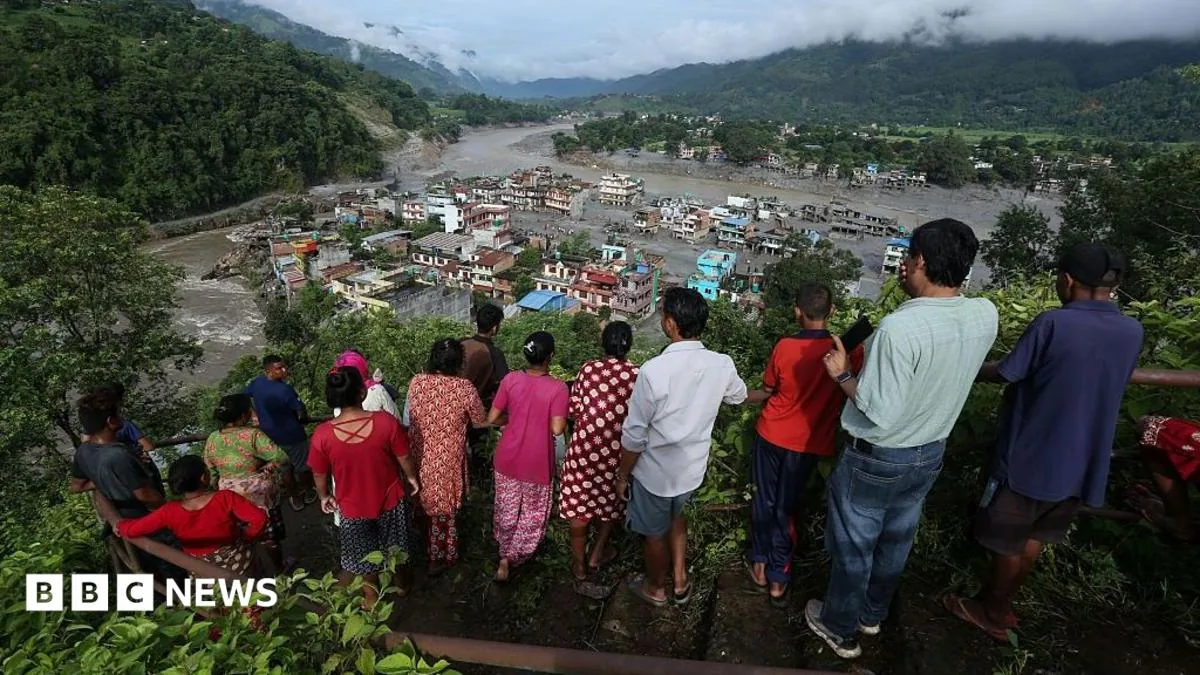
Deliberations over Nepal’s emergency request have revealed deep fissures among board members. Eight of the 26 governing board members formally petitioned for an extraordinary emergency session to process Nepal’s claim ahead of the scheduled December 2026 gathering. Co-chairs acknowledged the petition without confirming an emergency vote. While several members urged immediate disbursement, other delegations insisted on rigid adherence to bureaucratic review protocols [3].
Demanding Compensation Instead of Humanitarian Charity
Nepal’s government has framed its application as an explicit test of international climate justice. Foreign Minister Shisir Khanal told the Kathmandu Post that Nepal’s greenhouse gas emissions are virtually negligible, yet its citizens are paying an unbearable price for a global climate crisis they did not create. Khanal stated that Kathmandu’s claim is an insistence on legal and moral accountability. Moral responsibility rests with high-emitting industrial economies. Shah emphasized that vulnerable mountainous countries cannot finance massive reconstruction independently while enduring ecological damage caused by external fossil fuel consumption. Prime Minister Balendra Shah prepared to deliver the same message directly before the United Nations General Assembly in New York, demanding that major polluters compensate frontline states [2].
The vocabulary surrounding loss and damage remains contentious. Danya Liu, a climate adaptation specialist at BloombergNEF, explained that using the term compensation reflects a polluter-pays principle rather than a charitable aid model. Historically, industrialized nations accepted the creation of the Loss and Damage Fund only on the express condition that voluntary contributions would not imply legal liability. International agreements explicitly separate loss-and-damage payments from court-enforceable compensation claims [3].
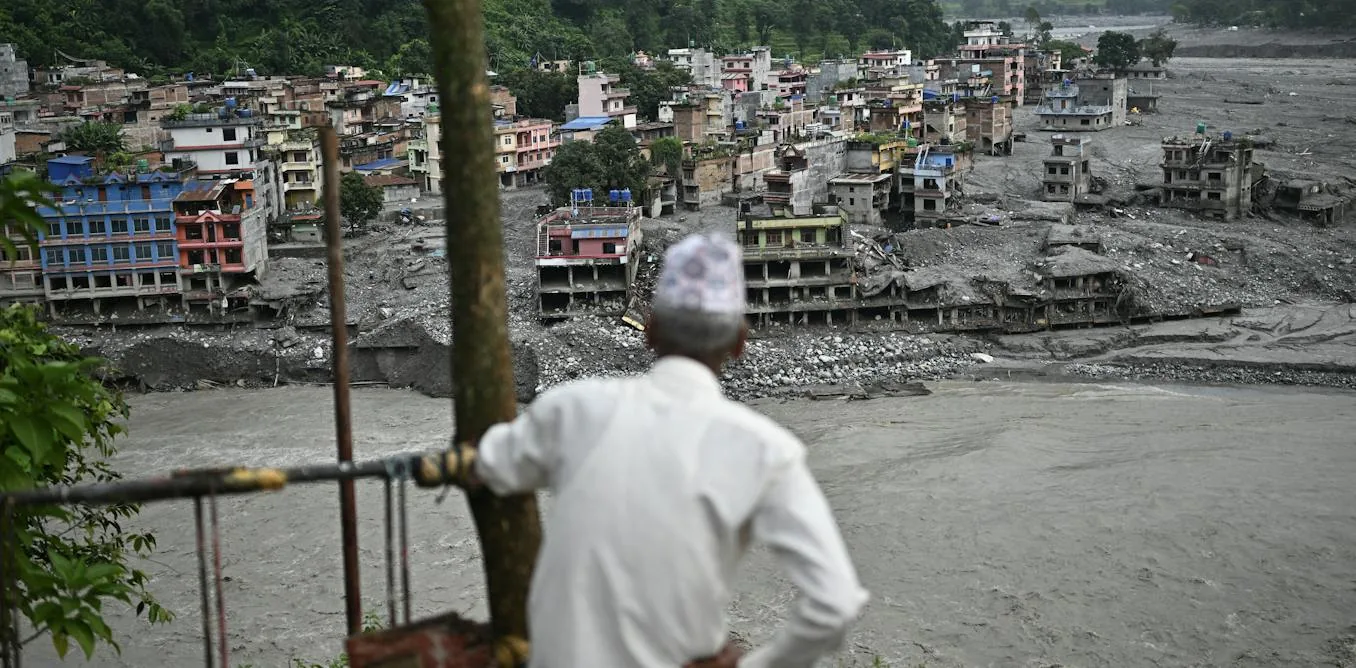
Liability concerns continue to shape diplomatic posture. If voluntary funds fail to deliver relief, developing countries may pursue formal liability claims in international courts [1].
Anticipatory Action and Future Mountain Protection
Himalayan cryospheric instability is accelerating at an alarming pace. The combined ranges of the Himalayas and the neighboring Hindu Kush hold one of the planet’s largest concentrations of glacial ice. Field studies reveal that the regional rate of ice melt has doubled since 2000. A September 2026 report from the United Nations Environment Programme confirmed that global warming exceeding 1.5 degrees Celsius is now practically unavoidable. As high-altitude permafrost thaws and glacial lakes expand, downstream mountain settlements face an escalating frequency of outburst floods and compound avalanches [2].
Policy experts argue that response timelines must shift from post-disaster recovery to anticipatory action. Disaster mitigation coalitions contend that the Loss and Damage Fund should disburse flexible financing within 24 to 48 hours of catastrophic events. Instead of waiting for complex verification after mountain valleys are devastated, deploying resources in advance of extreme weather can safeguard high-risk villages. Anticipatory financing strengthens municipal warning systems, fortifies community shelters, and mitigates systemic health threats driven by climate change among displaced populations [2].
Nepal’s pending petition represents an unavoidable benchmark for global climate finance. If the board continues to stall disbursements while hundreds of riverside families live in emergency shelters, vulnerable nations will question the credibility of multilateral agreements. The mountain disaster in Langtang Lirung revealed the devastating collision of physical warming and human exposure. Prompt action is necessary. Delivering tangible compensation to Himalayan communities would validate years of delicate diplomatic negotiations and demonstrate that multilateral environmental mechanisms can protect frontline populations. As December’s board summit approaches, the international community faces a definitive choice between procedural delay and concrete solidarity [2].
- ACADEMIC JOURNAL Silipo, D. B., Yılmaz, I. S., & Forte, A. (2026). Loss and damage fund and countries’ incentives to compensate for climate-related damages. Energy Policy, 215, 115300. [Article Link]
- PREPRINT Gopalakrishnan, T. (2026). Flood-damaged Nepal wants help from the global climate Loss and Damage Fund – but it’s waiting, along with 118 other countries. Preprint. [Article Link]
- ONLINE NEWS Ewe, K., & Khadka, N. S. (2026, September 17). Nepal to use new flood study to claim millions from UN climate disaster fund. BBC News. [Article Link]
APA 7: TWs Editor. (2026, September 19). Why Flood-Damaged Nepal Is Testing the Global Loss and Damage Fund. PerEXP Teamworks. https://perexpteamworks.com/en/loss-and-damage-fund-nepal/


1 comment