



Clinical psychologists suggest that regular smiling can improve mood and reduce body stress, even when people consciously adopt the look without an outside prompt. For decades, behavioral scientists have tested whether the movement of facial muscles sends direct sensory cues back to the brain to change feelings. Newer reports compiled by Associated Press reporter Terry Tang for Medical Xpress and Ground News show that simple smiles can serve as useful coping tools during stressful moments. Researchers say deliberate facial movements help speed up heart rate recovery after demanding mental tasks [1].
The Facial Feedback Hypothesis
The idea that facial muscle movements shape human feelings began in early psychology and later became known as the facial feedback hypothesis. At Stanford University, psychology professor Jeanne Tsai leads the Culture and Emotion Lab to study how bodily changes affect mental states. Tsai often points to classic experiments from the late 1980s, where researchers asked participants to hold a pencil between their lips or teeth as they watched animated cartoon clips [1].
In those pencil tests, holding the pencil between the teeth forced facial muscles into a grin, but holding it with the lips forced a frown. Participants who formed a smile reported feeling more amused by the cartoons than peers whose lips stayed pursed. Tsai said that simple facial actions can lift mood even outside social settings. “When we’ve done that demonstration in classes, it works,” Tsai said, adding that solitary muscle movements may help people remember pleasant life events [1].
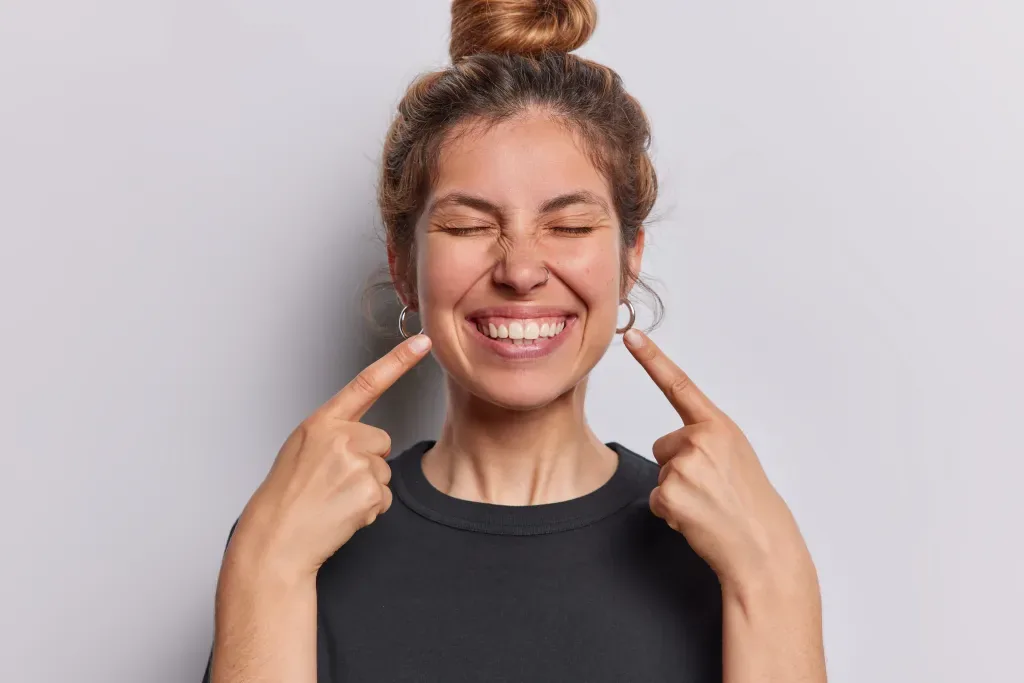
Many adults wait for happy news before smiling, but shifting facial posture can prompt internal sensory loops on its own. Clinical summaries from Medical Xpress show that simple motor habits activate pathways tied to memory recall. Planned smiles do not cure severe mood disorders, but they offer an easy, low-cost behavioral exercise that people can try in quiet settings [1].
How Regular Smiling Affects Stress Hormones
Medical experts study how deliberate facial postures influence hormones and heart health. In Los Angeles, clinical and forensic neuropsychologist Dr. Judy Ho, who teaches at Pepperdine University, uses smiling exercises with patients who face anxiety or depression. “I’m not suggesting that that’s the only way they can fix things,” Ho said. “It’s just like another thing that you can add to your toolbox.” Ho said that regular smiling alters cortisol, a hormone released by the adrenal gland to regulate stress [1].
Facial muscle changes also adjust brain chemistry by triggering the release of dopamine, serotonin, and endorphins. “People who smile during stressful tasks generally demonstrated lower heart rates during recovery than those maintaining neutral expressions,” Ho said. “Smiling also reduced aspects of the body’s physiological stress response.” Ho said that keeping a smile during tough tasks provides a mediating effect that can help the body calm down faster [1].

Cardiovascular data confirms that intentional facial postures can speed up autonomic recovery after acute mental strain. A physical grin cannot erase external difficulties, but quicker heart rate recovery protects blood vessels from sustained tension. Dr. Judy Ho at Pepperdine University said that these physical adjustments give people a useful daily habit to ease sudden distress [1].
Classroom Culture in Southern California
Educational leaders have started bringing psychological insights about facial expressions into school policy. At the Orange County Academy of Sciences and Arts, a charter school network in Southern California, staff treat facial warmth as a helpful tool for student learning. A section on the charter group’s website outlines its core philosophy, stating that purposeful smiling creates a relaxed, active, and motivated classroom culture. Guidelines published by the network state that smiles increase well-being, lower stress, and give students confidence when facing hard lessons [2].
School leaders say visual warmth helps children feel seen and safe in busy classrooms. At the OCASA charter schools, regular smiling forms part of an effort to support student growth. “I’ve always believed in wanting school to be a happy place for kids,” said principal RaNae Posey of OCASA Capistrano Elementary School. Posey said encouraging friendly looks helps young pupils build lasting habits of looking at the bright side of things. Leaders at the Orange County Academy of Sciences and Arts rely on this approach to keep classrooms supportive and active [2].


Cultural Differences in Facial Expressions
In American society, popular culture often treats broad grins as universal signs of warmth, but social meanings differ across global cultures. Stanford University psychology professor Jeanne Tsai studies how emotional values diverge between American and East Asian communities. In American culture, social habits prioritize feeling positive and minimizing sadness. By contrast, East Asian traditions focus on balance. “It’s like the positive and the negative emotions are braided together, and so you don’t want to feel too positive or too negative,” Tsai said. “You want more of a balance between the two.” [1]
Tsai studied how European Americans and East Asians—including Taiwanese, South Koreans, Japanese, and Hong Kong Chinese—view different smiles. Participants rated calm, closed-mouth faces against wide, toothy grins on scales of warmth and trust. American participants viewed wide smiles as friendly, but East Asian participants viewed those same faces as emotionally unstable or unreliable. “What kind of smile matters—whether it’s a calm, closed-mouth smile more like the Dalai Lama or a big toothy excited smile like Julia Roberts,” Tsai said. In Taiwan and other East Asian settings, people dislike big toothy smiles unless the setting fits. Her research shows that cultural ideals determine whether an open grin signals social connection or personal instability [1].
Customs also shape facial expression in Southeast Asia. Thailand is known worldwide as The Land of Smiles, with nearly 30 Thai words describing different nuances of a smile. Cultural programs documented on DNYUZ note that festivals like Songkran celebrate shared cheer, while language programs that place teachers in Thailand point out that smiling in class and among co-workers demonstrates courtesy, self-control, and social respect [2].

Why Mandatory Smiles Backfire at Work
Despite the health benefits of smiling, forcing smiles in workplaces often sparks worker anger. In recent years, female employees have pushed back against unspoken rules that require women to project cheer while men face no such demand. For women and people of color, smiling can feel like a Catch-22, as they risk being judged as cold or unapproachable if they maintain neutral expressions. Retailer Target faced social media ridicule last year after instituting a customer service policy that forced retail workers to smile and make eye contact within 10 feet (3 meters) of shoppers, and greet guests within 4 feet (1.2 meters). Critics pointed out that mandatory smiles leave workers feeling stripped of dignity on the sales floor [1].
Researchers argue that forced cheerfulness robs workers of emotional autonomy. At the University of Florida in Gainesville, assistant professor Nicholas Coles directs the Social Science Collaboratory to study facial feedback. Coles said enforced smiles undermine the benefits found in voluntary tests. “In those scenarios, what we find is that it’s more that you’re smiling your way to misery,” Coles said. “It’s only when it feels authentic and voluntary that I think it’ll have any real effect.” Coles said that regular smiling helps health only when people keep personal control over their facial habits [1].
Using Regular Smiling in Difficult Conversations
Family gatherings during holidays often lead to tough talks about politics or religion. Neuropsychologist Dr. Judy Ho of Pepperdine University suggests that regular smiling during tense family moments can help soften conflict before tempers flare. “If we were able to just smile and be like ’Look, this is somebody that historically cares about you and loves you,’ maybe that would change the way that we respond to them even in a moment of tough conversation,” Ho said, describing smiling as a helpful tool to signal care [1].
A media analysis by Ground News tracked coverage across 27 news articles on how smiling impacts health, finding that 52% of reporting came from center-rated publications [3]. Ground News highlighted that across these 27 articles, researchers say authenticity remains the key factor separating beneficial smiles from stressful emotional labor. Syndicated reporting by the New York Post on DNYUZ and health summaries on start.localnet.com confirm that smiling alters heart recovery and stress hormones, but researchers say the habit works best when people smile freely and respect cultural norms [4].
- ONLINE NEWS Tang, T. (2026, October 25). Cracking a smile regularly may be good not just for your mood but for your health. Medical Xpress. [Article Link]
- ONLINE NEWS New York Post. (2026, October 25). Cracking a smile regularly may be good not just for your mood but for your health. DNYUZ. [Article Link]
- ONLINE NEWS Ground News. (2026, October 26). Smiling May Improve Mood and Health, Researchers Say. [Article Link]
- ONLINE NEWS Start Localnet. (2026, January 1). Cracking a smile regularly may be good not just for your mood but for your health. [Article Link]
APA 7: PerEXP Teamworks. (2026, October 26). Psychologists Link Regular Smiling to Faster Stress Recovery. PerEXP Teamworks. https://perexpteamworks.com/en/regular-smiling-health-stress-recovery/


