





More than a billion years of planetary history seems to have vanished from the geologic record across multiple continents, leaving researchers with an enduring puzzle about missing rock strata. At ancient formations worldwide, sedimentary layers dating to roughly 540 million years ago rest on top of crystalline basement rocks that formed more than a billion years earlier. This stratigraphic puzzle, known to geologists as the missing rock record of the Great Unconformity, appears prominently in the United States at the Grand Canyon, where whole geological eras seem absent from the exposed cliff walls. A research team led by the University of Wollongong in Australia recently presented evidence that slow heat circulation within Earth’s mantle pushed ancient landmasses upward and exposed them to prolonged erosion before later subsidence buried the worn surface [3].
Vanished Strata
Under normal geological conditions on Earth, settling sediments build up sequentially over millions of years, turning into stacked beds of sedimentary rock that chronicle past environmental conditions. Geologists read these stacked layers like pages in an archive, where older strata lie underneath younger deposits. When massive intervals vanish from the geological timeline, the planetary narrative breaks down [2].
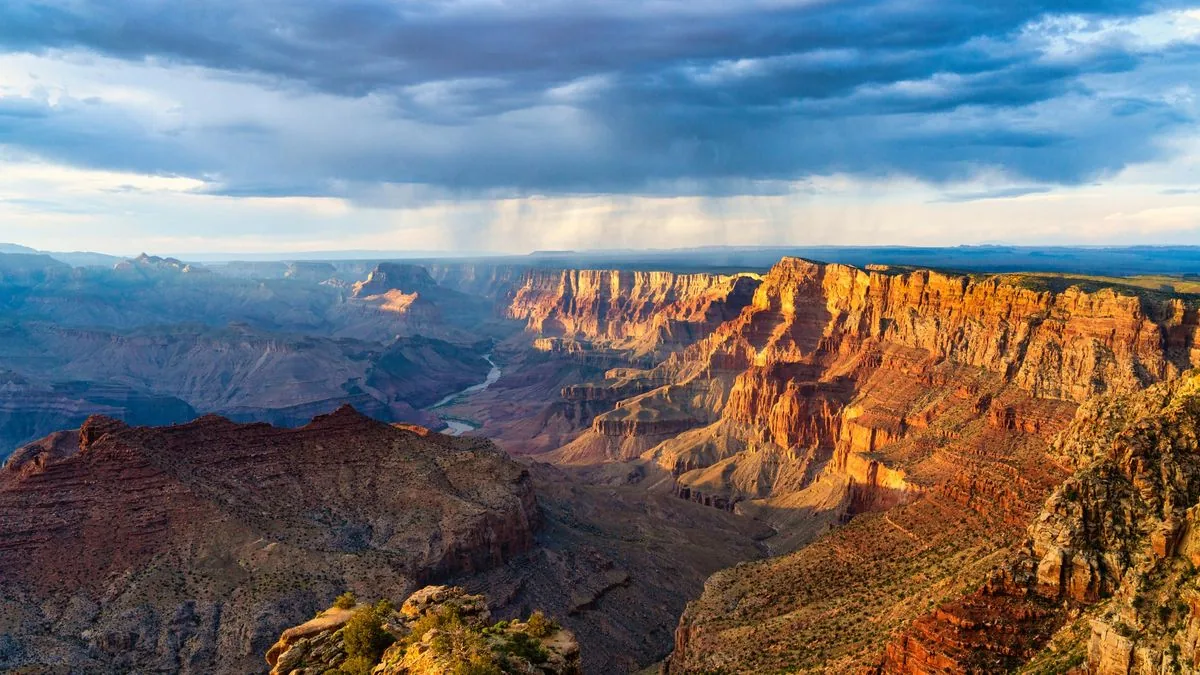
Field surveys across Europe, Australia, Africa, and Asia reveal missing intervals spanning 200 million years to over a billion years. In the United States, the Grand Canyon exposes Cambrian strata resting on ancient granite. Reporting for Space.com from Nottingham, journalist Daisy Dobrijevic, a former All About Space writer who worked at the National Space Centre and completed an editorial stint with BBC Sky at Night Magazine before joining Hurtigruten, documented that gaps appear globally [2]. Lead author Santosh Dhungana, a UOW PhD candidate at the University of Wollongong in Australia, described the strata. “Imagine a book where a huge section in the middle has been ripped out. The Great Unconformity is that gap in Earth’s story, with the narrative jumping from the early chapters straight to a much later part of the story. Our research suggests these pages weren’t lost by chance,” he said [3].
The Missing Rock Record in Ancient Strata
For decades, geologists debated what physical mechanism could remove kilometers of solid rock without shattering the continental crust across North America and Europe. Earlier hypotheses attributed the missing rock to heavy ice scouring during the Neoproterozoic Snowball Earth, while competing models suggested continental rifting, plume activity, or global sea-level fall [1]. Decades of debate surrounded the missing rock record as geologists sought an explanation for the lost strata across ancient Laurentia. None of the earlier ideas explained why erosion struck separate continents simultaneously.
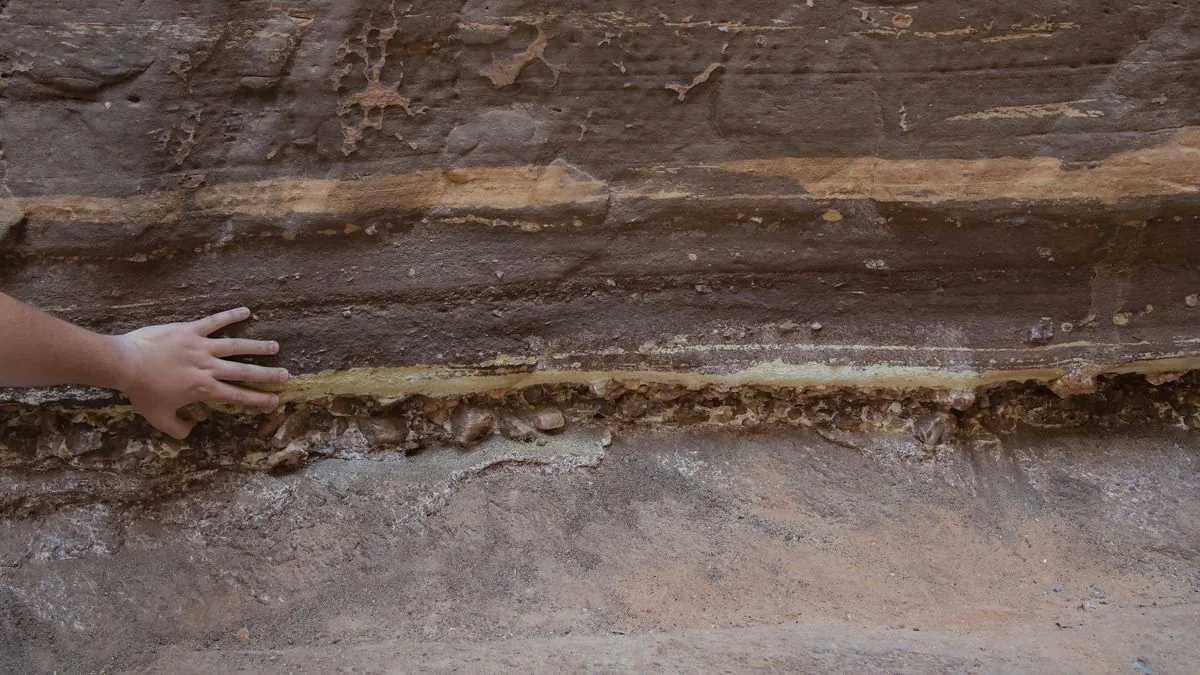
Field geologists tracking the Great Unconformity rock gap observed that rock stripping operated on a continental scale that localized mountain-building events could never adequately explain. At the University of Wollongong in Australia, Dhungana teamed up with Associate Professor Nicolas Flament to test whether deep mantle circulation drove this continental erosion, publishing their findings in volume 659, issue 8139, page 106 of the journal Nature [1]. Where ancient crystalline basement rocks meet Cambrian sandstone, the contact presents an abrupt chronological jump across hundreds of millions of missing years [3]. Cambrian animal life diversified across Laurentia after this missing interval. This biological surge filled ancient seas with complex animal life while sediment accumulated over the eroded continental foundation. Understanding how the land rose and eroded provides valuable context for the chemical wash entering ancient oceans.
How Mantle Convection Moves Continents
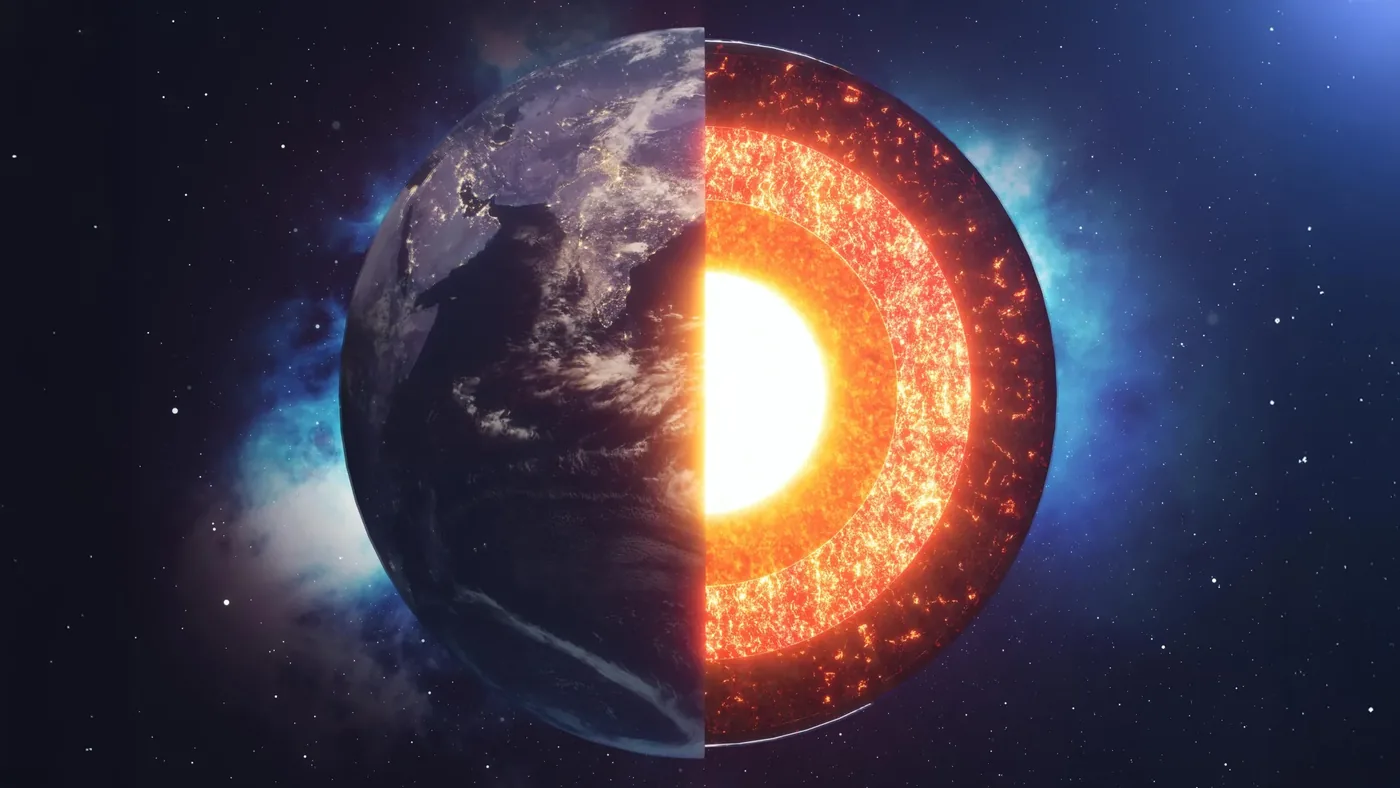
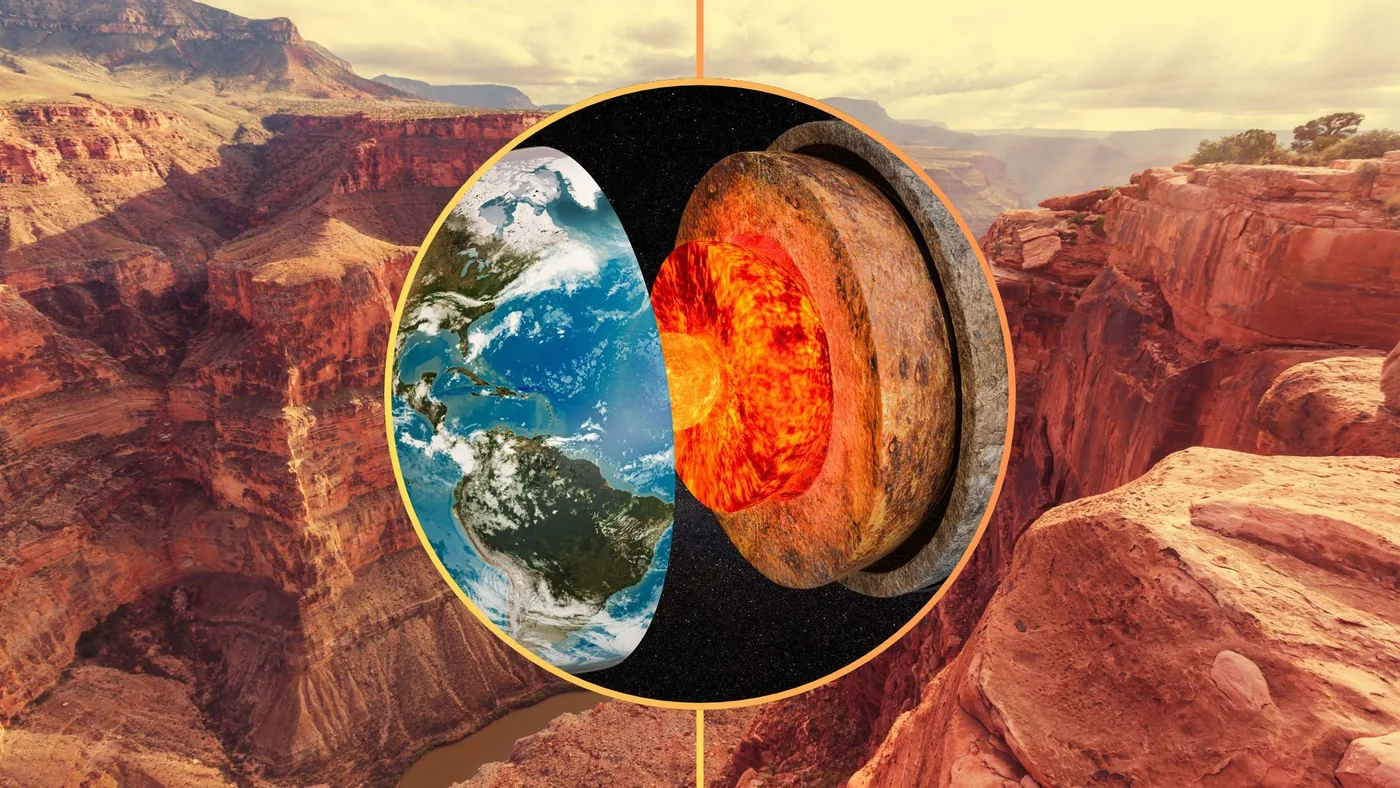
Earth’s mantle is a thick shell of hot rock situated between the outer crust and the molten core. Although this deep stone feels rigid over brief human lifespans, extreme internal temperatures and crushing pressures allow it to deform like a sluggish fluid over geological epochs. Heat from below drives steady circulation cells in a process known as mantle convection [3].
As hot plumes ascend from deep within Earth’s mantle and cooled slabs sink back toward the core, slow convective circulation exerts vertical forces on the crust. Geologists call these broad undulating movements dynamic topography [1]. This vertical motion can lift or lower entire continental landmasses across wavelengths spanning thousands of kilometers. When convective upwelling lifts Laurentia, Baltica, or North China hundreds of meters above sea level, rushing rivers and winds plane down the elevated plateau, stripping away kilometers of ancient sedimentary rock [2]. If mantle currents subsequently cool and pull the crust down, advancing oceans flood the plain, spreading fresh sand and mud over the scarred bedrock surface.


Continental Uplift in Laurentia
The computer models developed by Dhungana and Flament tracked three major ancient landmasses: Laurentia, Baltica, and North China. Laurentia formed the ancestral core of North America, while Baltica comprised northern Europe. All three continental blocks experienced long upward pushes that kept their interiors high and dry for hundreds of millions of years [3].
During the Neoproterozoic Era, which lasted from 1,000 million to 540 million years ago, persistent upwelling kept Laurentia, Baltica, and North China stranded high above sea level for hundreds of millions of years [3]. Ice sheets from Cryogenian glaciers stripped away upper sedimentary layers, carving deep into crystalline granite that had formed more than a billion years earlier [1]. The vast surface area of Laurentia and minimal deformation along its tectonic margins helped preserve the leveled surface. When continental cores rose, erosion tore away ancient strata across North America. Dhungana pointed out that the Great Unconformity is not an anomaly of one isolated valley, but the footprint of deep planetary motion operating over geological ages [2].
The Missing Rock Record in Computer Models
To test their hypothesis, Dhungana and Flament designed complex numerical simulations tracing mantle convection through hundreds of millions of years of continental movement and supercontinent assembly. The models calculated how rising and sinking mantle currents shifted surface elevations across different geological eras [3]. The predicted patterns of uplift matched known geological gaps in North America, northern Europe, and East Asia [2].
Associate Professor Nicolas Flament said that missing rock record gaps could finally be resolved by simulating deep mantle flow beneath ancient continents. “Sometimes what is missing can tell us more about the story of Earth than what we can see. A single, long period of uplift followed by a long period of sinking would have been the ideal recipe for removing the rock and preserving the worn surface,” he said [3]. Instead of requiring disconnected local causes for every continent, the simulation shows that a shared mantle mechanism explains the global pattern across Laurentia and Baltica [1].
Dhungana said that few previous models had been tested against mantle convection. “Many explanations for the Great Unconformity had been proposed but few had been tested against how the Earth actually behaves over time. It is a thrill to be able to propose a solution to this geological puzzle,” he said [3]. By integrating deep mantle dynamics with field stratigraphy across North America and Europe, the University of Wollongong scientists provided a testable framework for long-standing geological observations.
Why the Preserved Boundary Survives
Erosion alone cannot create an unconformity that survives for hundreds of millions of years. If the land had simply remained elevated, surface weathering and runoff would have continued chewing downward indefinitely, obliterating any sharp stratigraphic boundary between ancient and younger rocks. The numerical models revealed that mantle currents shifted during the Phanerozoic eon, pulling Laurentia, Baltica, and North China back down below sea level [1].
As ancient continents subsided, rising seas flooded inland across the eroded platforms. Advancing oceans carried thick beds of sand and mud that settled over crystalline Precambrian granite. This fresh blanket of Cambrian sediment shielded the eroded plain from further weathering, preserving the sharp divide visible at the Grand Canyon in the United States today. The fundamental planetary dynamics shaping Planet Earth show how surface topography directly mirrors thermal convection in the deep interior. In shallow waters spreading across Laurentia and Baltica, early multicellular animals diversified during the Cambrian explosion while thick sedimentation capped the submerged landmasses [3].
Mantle convection alone does not explain every regional detail of the missing strata. Glacial scouring during Cryogenian ice ages and tectonic faulting during the breakup of ancient supercontinents accelerated local erosion across Laurentia [1]. Nevertheless, testing long-wavelength dynamic topography against field stratigraphy provides the University of Wollongong team with a coherent planetary mechanism that accounts for Earth’s lost billion years [3]. Deep mantle circulation unlocked the rock record.
- ACADEMIC JOURNAL Dhungana, S., & Flament, N. (2026). The deep Earth origin of the Great Unconformity. Nature, 659(8139), 106-112. [Article Link]
- ONLINE NEWS Dobrijevic, D. (2026). Earth is missing over a billion years of geological history. Scientists may have discovered why. Space.com. [Article Link]
- ONLINE NEWS University of Wollongong. (2026). More than a billion years of Earth’s history vanished. Scientists may finally know why. ScienceDaily. [Article Link]
APA 7: PerEXP Teamworks. (2026, November 19). Deep Mantle Motion Explains Earth’s Missing Rock Record. PerEXP Teamworks. https://perexpteamworks.com/en/missing-rock-record-deep-mantle-motion/


