






Google launched Google Wallet on iPhone for United States users on November 17, 2026, bringing its standalone digital pass and transaction management tool to Apple devices for the first time. The rollout provides iPhone owners with a single screen to organize airline boarding passes, store loyalty cards, and package delivery notices. It also tracks automated agentic purchases. However, the app can’t handle in-store contactless transactions at retail checkout registers because tap-to-pay is not supported on iOS [4].
Google Wallet on iPhone Stores Digital Passes
Google Wallet lets iPhone owners turn plastic cards into digital passes by scanning barcodes with smartphone cameras. Club cards load in seconds. For unusual items that lack standard templates, 9to5Google reporter Abner Li said Google provides an “Everything else” camera scanner that digitizes custom passes, gym memberships, and paper barcode receipts [3].
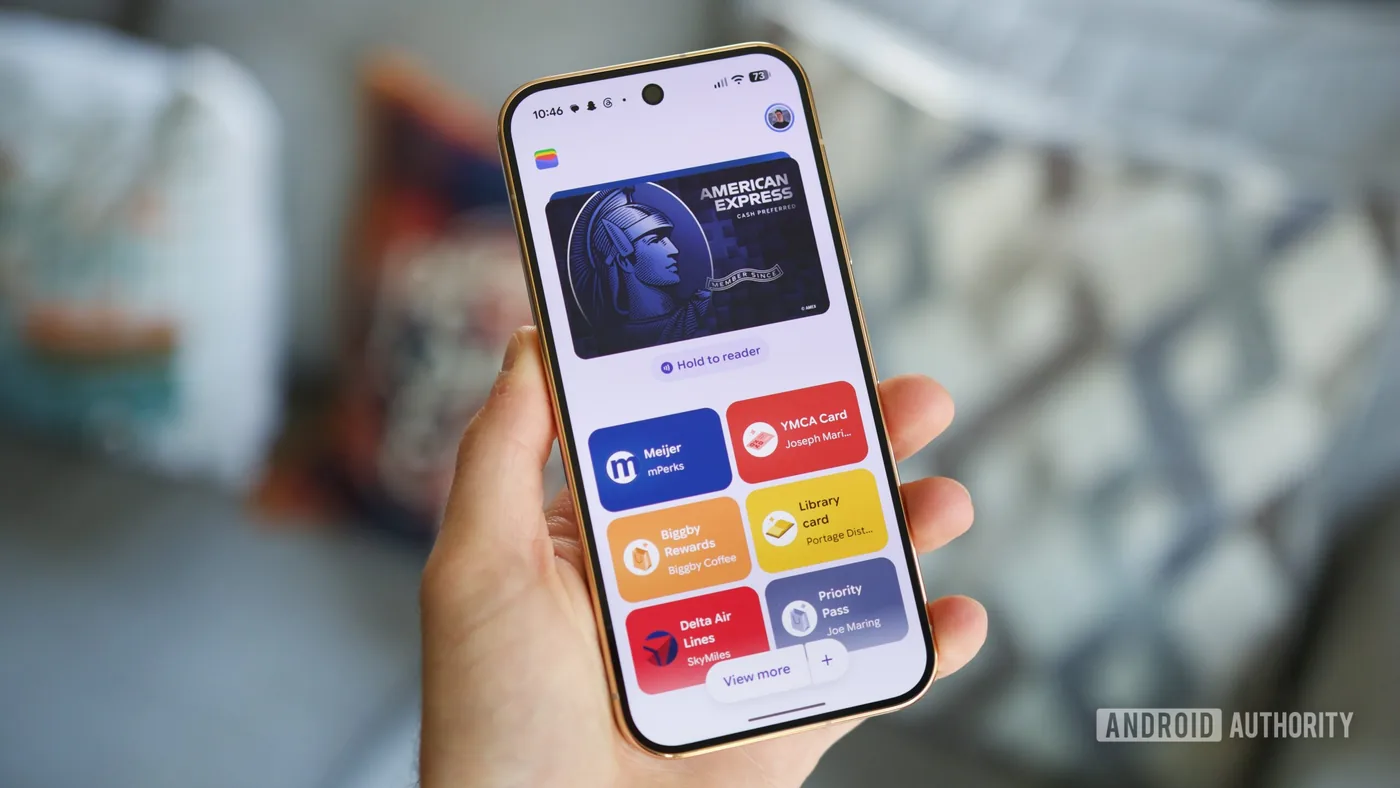
Google Wallet links with Gmail to gather travel tickets and event reservations without manual typing. Flight boarding passes, concert admissions, and package shipping notices show up in the app as soon as incoming confirmation messages arrive in a linked inbox. Google vice president P J Linarducci said the system gathers these everyday passes into one place so travelers can view boarding details quickly while walking through busy airports. The automatic sync tracks package shipments by pulling delivery updates straight from merchant emails. This gives users fast access to tracking numbers and arrival dates without jumping between separate courier websites [4].
Payment card tools work through saved Google Account details to make online shopping faster. Users can add credit or debit cards to complete purchases on websites and apps that accept Google Pay. Ryan McNeal of Android Authority said Google Wallet securely organizes these cards for online checkouts, but it can’t substitute for physical cards at cash registers [1].

A Hub for Agentic Shopping
Google built Google Wallet to serve as a command center for automated shopping tasks that run through conversational artificial intelligence tools. Automated assistants buy products on behalf of shoppers. When these digital helpers look up merchandise, place web orders, and complete checkout screens, Google Wallet records every incoming transaction inside a single organized list so users can track confirmations and arrival dates without searching through cluttered Gmail inboxes [4].
This focus on automated shopping separates Google Wallet from Apple Wallet. Reporter Anna Washenko wrote in Engadget that Apple has taken a cautious approach toward agentic artificial intelligence tools. Google gains room on iOS by supplying an automated shopping dashboard that Apple does not currently match on its devices [2].
The focus on agentic tools aligns with other commerce features Google introduced to simplify online buying. Google launched a universal cart in US Search and the Gemini app to help buyers purchase products from several merchants during a single checkout session. In the new iPhone app, order confirmations from those purchases appear alongside package shipping statuses and electronic receipts. The app summarizes purchase emails automatically so users can see item costs and delivery windows on a single screen without opening merchant portals [3].

Liquid Glass Layout
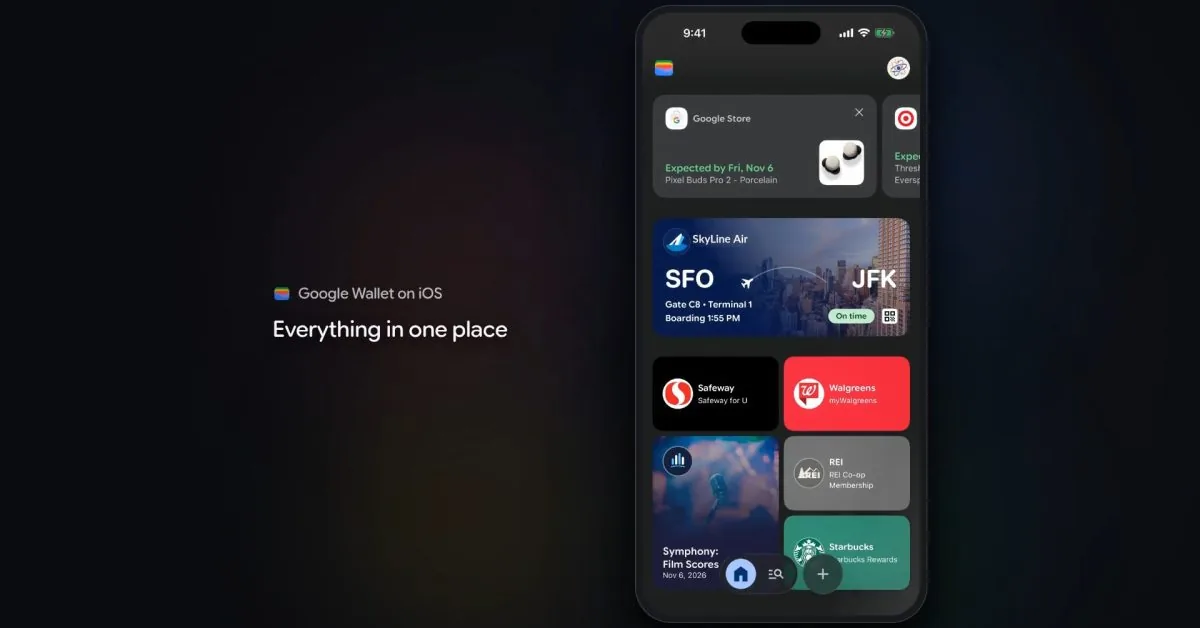
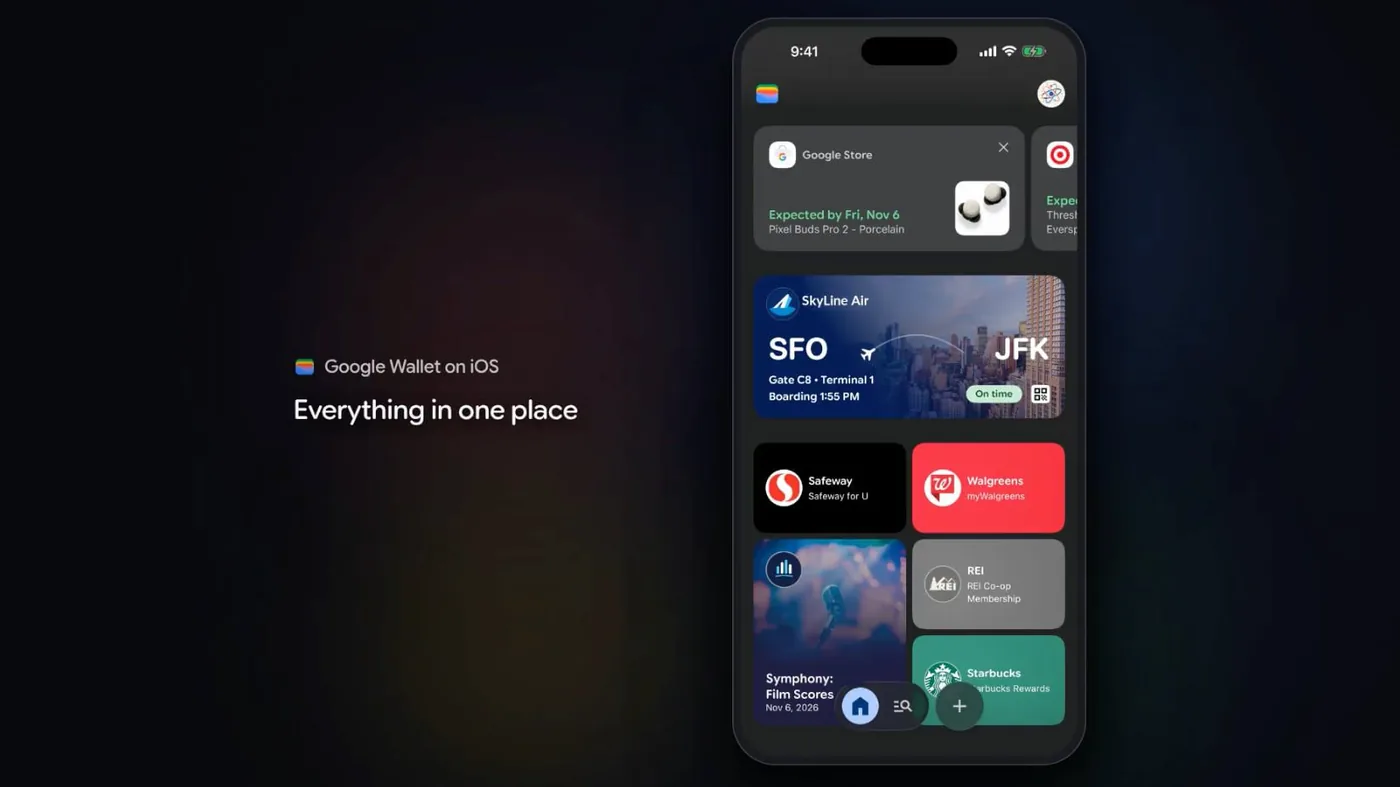
Google Wallet on iPhone uses a floating pill styled with Apple’s Liquid Glass look to divide features into two navigation areas. At the top of the main screen, a carousel shows active purchases slated for delivery, followed by travel passes and an organized grid of membership cards. The layout keeps upcoming tasks visible right away [3].
A second navigation tab lists recent Google transactions and provides an organized index of saved digital passes. A floating action button (FAB) marked with a plus icon lets iPhone users add loyalty cards, gift passes, and payment details for use in Google Chrome. Pinning passes is simple. Users can pin favorite concert tickets or flight passes to the top of the home screen, and older passes unpin instantly with a single tap [3].
Google announced the launch at 2:58 PM ET on November 17, 2026, shortly after an internal update caused an Apple system outage. Digital cards suddenly went offline. The outage interrupted Apple Pay and related cloud services, leaving iPhone users without access to cards until Apple fixed the disruption [1].
Why Google Wallet on iPhone Skips Tap to Pay
The biggest limitation of the new app is that it can’t handle tap-to-pay transactions at physical retail stores. Users can’t tap an iPhone against store payment terminals to pay for groceries. Ryan McNeal reported that Google Wallet does not work with contactless readers on iOS and has no public timetable for adding the feature [1].
The missing tap-to-pay support stems from Apple rules governing third-party access to the near-field communication (NFC) chip inside iPhone hardware. Apple began permitting external developers to access the contactless chip starting with the iOS 18.1 update, opening in-store payment opportunities in Australia, Brazil, Canada, Japan, New Zealand, the United Kingdom, and the United States. However, developers must sign a commercial agreement with Apple and pay fees to build contactless tools on iOS. Juli Clover wrote in MacRumors that this fee agreement explains why Google chose to ship the app without tap-to-pay rather than paying Apple’s required contactless transaction charges [5].
Because tap-to-pay remains unavailable, the app works as an organizer for passes and web orders instead of an in-store payment method. Shoppers must keep using Apple Pay at retail registers. Meanwhile, Google Wallet on iPhone handles saved passes, package tracking, and online checkouts through Google Chrome [5].
US Rollout Limits
Google launched the app only for United States users. The official blog announcement did not state whether Google plans to expand the application to European, Asian, or other overseas markets in the future. Overseas iPhone owners can’t download it from their local App Store [1].
Google adapted its mobile strategy to Apple’s platform to keep its services visible to iPhone owners. While Google previously supported registered app stores for Android outside the US to comply with antitrust regulations, entering iOS means submitting to Apple’s standard App Store distribution rules. Writing for 9to5Google, editor Abner Li said Google designed the program to give consumers one place to supervise automated shopping orders across their devices. App Store distribution gives Google a direct path to stay in front of Apple device owners even without system-level payment privileges [3].
For consumers who use multiple operating systems, the release creates a shared space for passes, loyalty cards, and receipts. A traveler can save a boarding pass on a desktop computer, check package deliveries on an Android tablet, and display loyalty cards on an iPhone. The new app bridges those hardware gaps for United States customers [4].
- ONLINE NEWS McNeal, R. (2026, November 17). Google Wallet expands to iOS, but don’t expect to use tap-to-pay. Android Authority. [Article Link]
- ONLINE NEWS Washenko, A. (2026, November 17). Google Wallet is launching on iOS. Engadget. [Article Link]
- ONLINE NEWS Li, A. (2026, November 17). The Google Wallet app is now available on iOS. 9to5Google. [Article Link]
- PRESS RELEASE Linarducci, P. J. (2026, November 17). Google Wallet is now available on iOS in the U.S. Google. [Article Link]
- ONLINE NEWS Clover, J. (2026, November 17). Google Wallet available on iPhone, but without tap to pay. MacRumors. [Article Link]


