





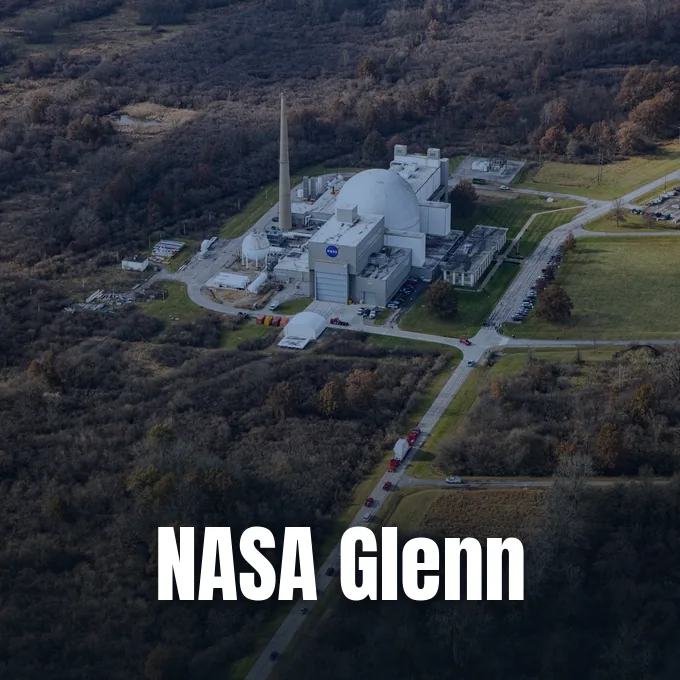
Anyone exploring American flight history may ask what is NASA Glenn and how its work shapes current space missions. Established in northern Ohio, the site serves as one of ten major NASA field hubs with core research programs in jet propulsion, space power systems, and specialized environmental flight simulations. Dawn Schaible leads the center, which employs about 1,650 civil servants and roughly 1,850 support contractors on and near its main campus while directing advanced aerospace research programs for government and commercial partners [3]. Center engineers build rocket hardware, write flight control code, and run tests that power space exploration from Apollo to Artemis [1], [3]. Testing stands run by the team help private firms and defense agencies check flight hardware under orbital cold and high atmospheric heat [1].
What Is NASA Glenn?
NASA Glenn develops flight systems for civil aviation and deep space exploration. The lab opened in 1942 under NACA. In 1958, the installation joined the newly created NASA to expand work on space launch hardware, high-power electronics, and rocket propellants that could withstand harsh launch environments and interplanetary flight. Agency teams study air-breathing engines, in-space propulsion, cryogenic fluids, and heat-resistant metals [3]. By running ground trials before rockets head to space, engineers at Lewis Field ensure that delicate spacecraft parts survive launch shaking, solar radiation, and extreme vacuum pressures encountered during deep space journeys. These ground checks verify system endurance before costly launches occur [1].
In civil aeronautics, team engineers study turbine airflow and fuel burn to cut fuel use, carbon soot, and jet noise. One widely used noise-reduction design from the lab is the serrated exhaust chevron. Chevrons now appear on jet engines powering passenger planes like the Boeing 787 Dreamliner. Scalloped metal edges mix hot engine exhaust with cool bypass air, smoothing shear layers and lowering takeoff noise near busy airport communities to meet strict international civil aviation acoustic regulations [3].
Beyond civil aircraft, the center supplied core propulsion work for early human spaceflight. Wernher von Braun praised liquid hydrogen engine work developed at the Ohio center as “the critical technology that allowed the Apollo Moon landings,” noting its vital role in sending astronauts to the lunar surface [3]. Today, staff build components for the Space Launch System and oversee the European service module for Artemis missions [1], [3]. Glenn continues an unbroken line of testing that links the first Moon landings to current deep-space exploration [1].
Origins in World War II
The lab traces its start to June 1940, when federal leaders funded the Aircraft Engine Research Laboratory in Cleveland [2], [3]. World War II was expanding across Europe. Planners realized that military airplanes needed stronger piston engines and better superchargers to outclimb foreign fighters [2].
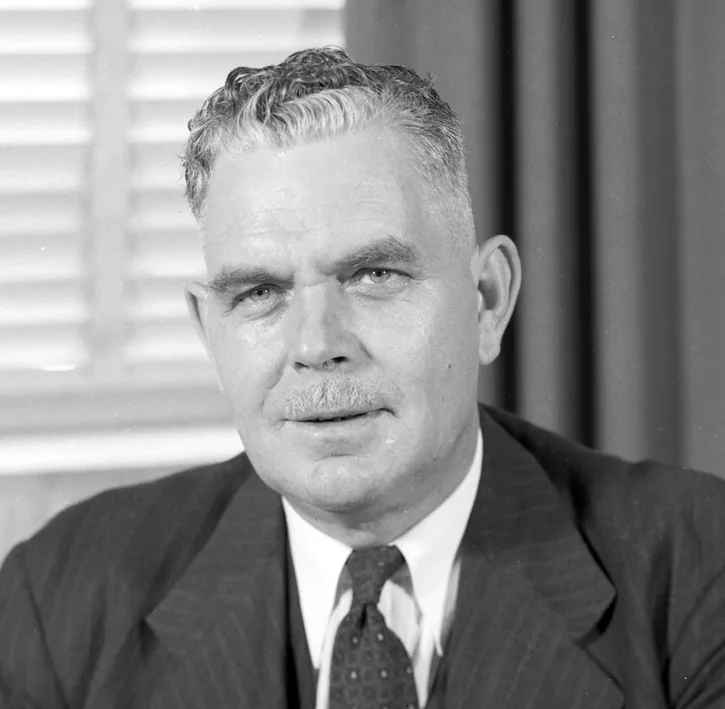
NACA picked northern Ohio because the Cleveland site had deep manufacturing roots, abundant electric power, and direct airport access [2], [3]. To lead construction, NACA sent Edward Raymond Sharp to Cleveland in August 1941. Born in Elizabeth City, Virginia, in 1894, Sharp served on the gunboat USS Sacramento during World War I before becoming NACA’s 54th employee in 1922 and earning a law degree from the College of William and Mary. In 1940, Sharp supervised the construction of the Ames Aeronautical Laboratory in Sunnyvale, California. Sharp guided builder agreements, taking the contract directly to the White House where President Franklin D. Roosevelt approved it on December 31, 1941, to accelerate wartime hangar construction [2].
Builders finished the flight hangar in late 1941, allowing the first group of scientists to transfer from Langley Field in Virginia. Test work began in December 1942, and NACA leaders named Sharp permanent director. To staff test stands during wartime shortages, Sharp set up an Apprentice Program that turned local model builders into capable mechanics and electricians who maintained specialized laboratory test cells. Sharp led the center until December 1960 [2].
Name Changes After 1948
Postwar aviation shifted quickly toward jet engines, prompting changes across the lab [2],. Ray Sharp let research staff regroup test cells around gas turbines, and NACA renamed the lab the Flight Propulsion Research Laboratory in 1947 before renaming it the Lewis Flight Propulsion Laboratory one year later. The name honored George W. Lewis, who headed NACA research from 1919 to 1947. When Congress passed the space act in 1958, the campus became the NASA Lewis Research Center [3]. LFPL staff pushed the center into turbojet and rocket science [2], [3].
On March 1, 1999, NASA renamed the center to honor John Glenn, the Ohio native who served as a military pilot and became the first American to orbit Earth before serving four terms in the Senate. The official name became the NASA John H. Glenn Research Center at Lewis Field. The name celebrates an Ohio hero while keeping Lewis Field on the map [3].
Strong leadership anchored the center through these transitions. In 1949, Sharp appointed Abe Silverstein as chief of research to run wind tunnels and test bays while Sharp dealt with Congress, agency headquarters, and local civic organizations. Earlier research was led by Addison Rothrock. In 1947, President Truman awarded Sharp the U.S. Medal for Merit, and in 1948, Case Institute of Technology awarded Sharp an honorary doctorate. After Sharp died in July 1961, Acting Director Gene Manganiello remembered him with a phrase from Benjamin Disraeli: “Life is too short to be little,” reflecting Sharp’s broad vision for the research campus. In September 2015, Sharp entered the NASA Glenn Hall of Fame [2]. Today, Dawn Schaible directs the center [3].
How NASA Glenn Develops Propulsion
Liquid propellant rocketry was born early at the Ohio center. By studying liquid propellant combustion dynamics in rocket test cells starting in 1951, Lewis researchers proved that liquid hydrogen gave high specific impulse despite freezing liquid temperatures, enabling the development of the Centaur upper stage [3].
In addition to chemical rockets, engineers started electric propulsion research in 1956 [8]. Glenn teams built gridded ion thrusters that shoot charged xenon gas to make steady thrust over months, flying on communications satellites in the early 1990s and powering deep-space travel on the NASA probe Deep Space 1 [3],. Electric thrusters now push satellites between orbits with very little propellant mass. Ion drives save weight for scientific instruments [8].
Power systems form another core duty at Glenn. Engineers designed the solar power grid first drawn for Space Station Freedom, which became the energy backbone for the International Space Station, while also building the Universal Stage Adapter for the Space Launch System. On May 13, 2006, the center secured management of the Crew Exploration Vehicle’s service module [3]. To maintain power facilities, center teams evaluate NASA Glenn research center proposals from aerospace contractors.
Turbine Controls and Extreme Alloys
Flight safety depends on digital engine controls made by the center’s Controls and Dynamics Branch. Control research started in the 1940s. Modern digital codes written at Glenn allow aircraft turbine engines to adjust guide vanes and exhaust nozzles automatically during steep climbs to prevent engine stalls while lowering cruising fuel burn and monitoring system health. Onboard software also spots sensor faults before parts break [5].
Complementing software controls, the Structures and Materials Division invents alloys and coatings that survive intense engine heat [6], [7]. Glenn scientists blend ceramic matrix composites, thermal barrier coatings, and nickel superalloys for turbine blades and combustor liners that must survive temperatures exceeding the melting points of conventional metals [6], [7]. Heat-shield coatings also protect reentry vehicles when rushing through planetary air [6], [7]. Durable liners keep rocket chambers intact under extreme pressure [6].
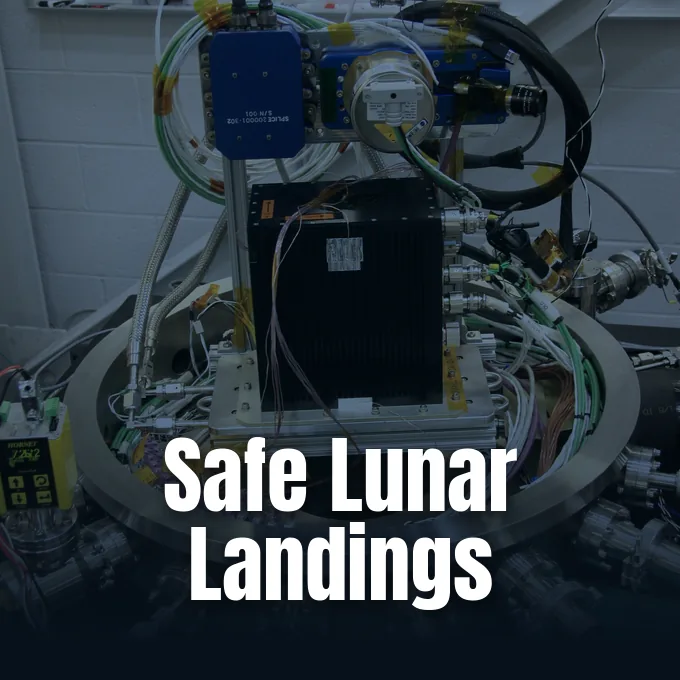
Putting materials into flight tests takes coordinated sensors and landing rigs. This testing ties into agency work on technology for safe lunar landings by measuring ground distance and descent speeds during landing burns. Tough heat shields keep landers safe when rocket flames strike rocky soil [7].
Simulating Microgravity in Drop Towers
Ground drop towers at Lewis Field let scientists run microgravity trials without spaceflights. The main asset is the Zero Gravity Research Facility. Inside the subterranean shaft, an aluminum vacuum chamber drops 470 feet (140 m) within an outer concrete tube 28 feet (8.5 m) in diameter that plunges 510 feet (160 m) below ground level. Pumps drop internal air pressure to 13.3 newtons per square meter (1.3×10⁻⁴ atm). Vacuum conditions stop aerodynamic drag as experiments fall freely. Dropping hardware inside this evacuated chamber allows researchers to observe pure free fall dynamics without atmospheric resistance [3].
Payloads falling down this chamber get 5.15 seconds of clean free fall, making the site the largest microgravity tower in the world since the Japan Microgravity Centre closed in 2003 [3]. Zero-g tests show how liquids and flames act when buoyancy is gone. Drop data improve spacecraft fire alarms and fuel tank baffles for astronaut crews [9]. The drop tower became a National Historic Landmark in 1985. The center also runs a smaller drop tower with a 2.2-second free fall for student contests [3].
Icing research takes place inside the Icing Research Tunnel, a refrigerated wind tunnel that sprays supercooled water clouds [3],. Operators blow chilled mist at aircraft wings, engine inlets, and tail surfaces to see how ice forms during flight. Engineers use test data to tune computer codes like LEWICE and check rubber de-icing boots. Tunnel tests helped regulators write airworthiness rules for flying through freezing moisture [4].
Armstrong Test Facility in Sandusky
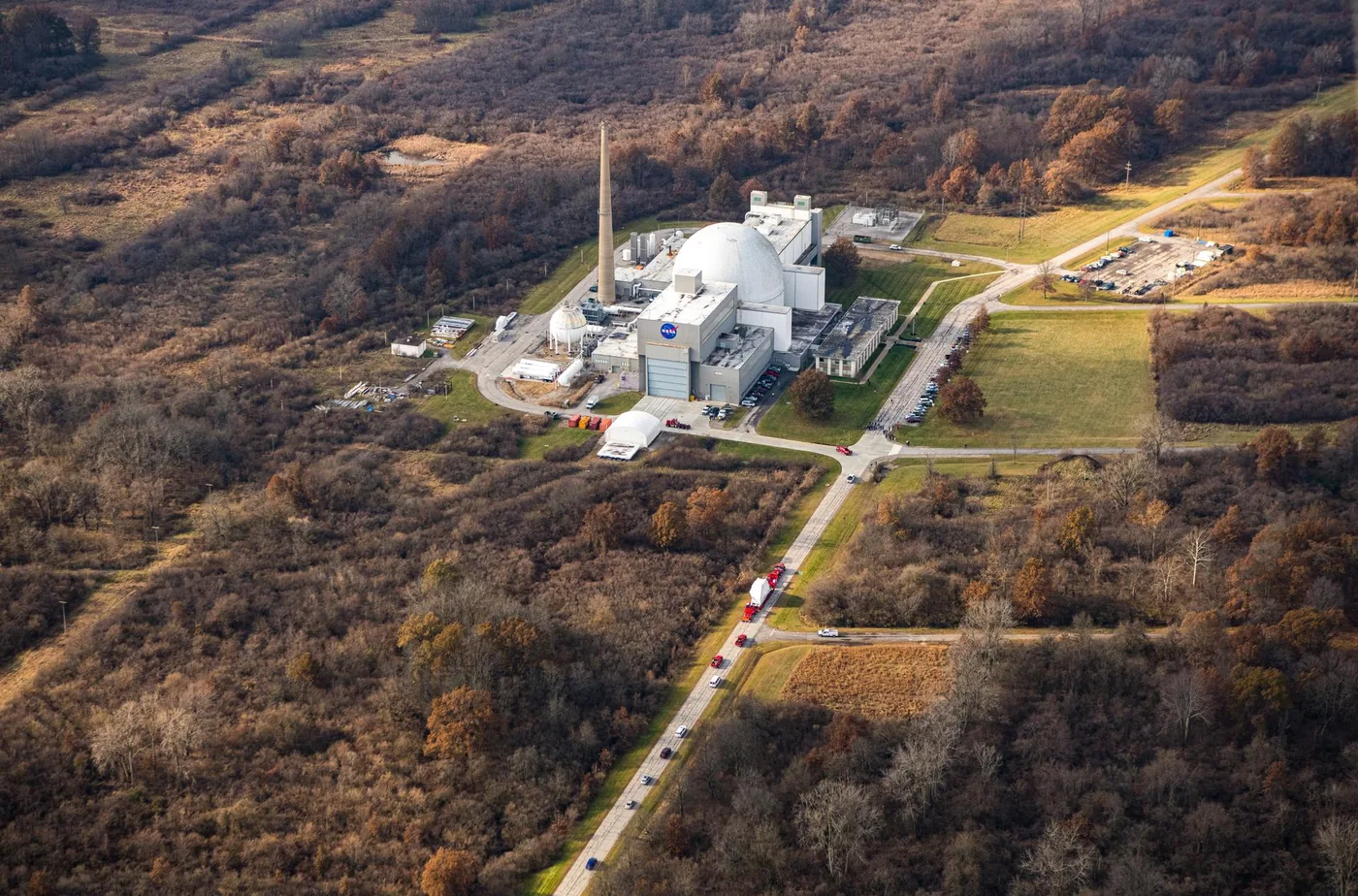
Hazardous aerospace tests take place at the Neil A. Armstrong Test Facility in Sandusky, Ohio [1],. Located 50 miles (80 km) west of Cleveland in Erie County, this remote campus covers 6,400 acres (2,600 ha) and was renamed on December 30, 2020, after Ohio Senators Rob Portman and Sherrod Brown proposed honoring the astronaut Neil Armstrong [3]. Formerly named Plum Brook Station, its wide buffer zone allows tests of rocket firings, explosive separations, and cryogenic fuels [1],. The Plum Brook Reactor on site was decommissioned under a 2008 contract worth over $33.5 million [3].
The Sandusky station houses major test complexes. The Space Environments Complex holds the world’s largest space vacuum chamber, acoustic sound horns, and powerful spacecraft shakers [1], [3]. Next door, the In-Space Propulsion Facility—also known as B-2—is the only test cell that can fire complete upper-stage rockets and space engines in simulated high-altitude vacuums, recently testing Orion spacecraft systems for Artemis [1], [3].
Aviation testing at the Armstrong campus tackles high-speed flight and electric planes. The Hypersonic Tunnel Facility blows Mach 5, 6, and 7 air to test scramjet and ramjet engines. The Combined Effects Chamber tests liquid hydrogen setups inside the Cryogenic Test Complex. For clean flight, the NASA Electric Aircraft Testbed runs megawatt powertrains, and the D-Site testbed checks aviation batteries and electromagnetic noise. Ground testbeds verify low-emission aircraft designs [1].
Visiting the Glenn Research Center Campus
The main campus of NASA Glenn sits between Brook Park and Cleveland in northern Ohio at coordinates 41° 24′ 46″ N and 81° 51′ 44″ W. Bordered by Cleveland Hopkins International Airport and the Rocky River Reservation of Cleveland Metroparks, the laboratory has direct airfield gates that let experimental planes taxi straight onto municipal runways for flight research [3].
Public visits moved in September 2009, when the center closed its on-site visitor center and shifted exhibits to the Great Lakes Science Center in downtown Cleveland, raising annual attendance from 60,000 to 330,000 visitors. Placing displays in North Coast Harbor boosted visitor numbers during the first year while giving urban school groups easier access to space hardware. The center also runs public tours of working research laboratories on the first Saturday of each month with advance reservations. Visitors can inspect flight simulators, engine test stands, and historic wind tunnels [3].
Student programs include the Lewis’ Educational and Research Collaborative Internship Program (LERCIP), offering eight-week summer sessions for Cleveland high schoolers alongside ten-week internships for college students and STEM teachers. High school teams also enter the Dropping In Microgravity Environment and What if No Gravity (WING) contests [3]. Center tracking antennas also connect to lunar ground stations that route Artemis data. Outreach and tracking ensure that Glenn’s legacy inspires new engineers [1], [3].
- WEBSITE NASA. (2023, February 9). Neil Armstrong Test Facility. [Article Link]
- WEBSITE Arrighi, R. S. (2023, June 13). Edward R. Sharp. NASA. [Article Link]
- WEBSITE Wikipedia contributors. (n.d.). Glenn Research Center. In Wikipedia, The Free Encyclopedia. [Article Link]
- ACADEMIC JOURNAL Potapczuk, M. (2013). Aircraft Icing Research at NASA Glenn Research Center. Journal of Aerospace Engineering, 26(2), 260–276. [Article Link]
- ACADEMIC JOURNAL Garg, S. (2013). Aircraft Turbine Engine Control Research at NASA Glenn Research Center. Journal of Aerospace Engineering, 26(2), 422–438. [Article Link]
- ACADEMIC JOURNAL Dever, J. A., Nathal, M. V., & DiCarlo, J. A. (2013). Research on High-Temperature Aerospace Materials at NASA Glenn Research Center. Journal of Aerospace Engineering, 26(2), 500–514. [Article Link]
- ACADEMIC JOURNAL Misra, A. K., & Greenbauer-Seng, L. (2013). Aerospace Propulsion and Power Materials and Structures Research at NASA Glenn Research Center. Journal of Aerospace Engineering, 26(2), 459–490. [Article Link]
- ACADEMIC JOURNAL Patterson, M. J., & Sovey, J. S. (2012). History of Electric Propulsion at NASA Glenn Research Center: 1956 to Present. Journal of Aerospace Engineering, 26(2), 300–316. [Article Link]
- ACADEMIC JOURNAL Sharp, L., Dietrich, D. L., & Motil, B. (2013). Microgravity Fluids and Combustion Research at NASA Glenn Research Center. Journal of Aerospace Engineering, 26(2), 439–450. [Article Link]


