





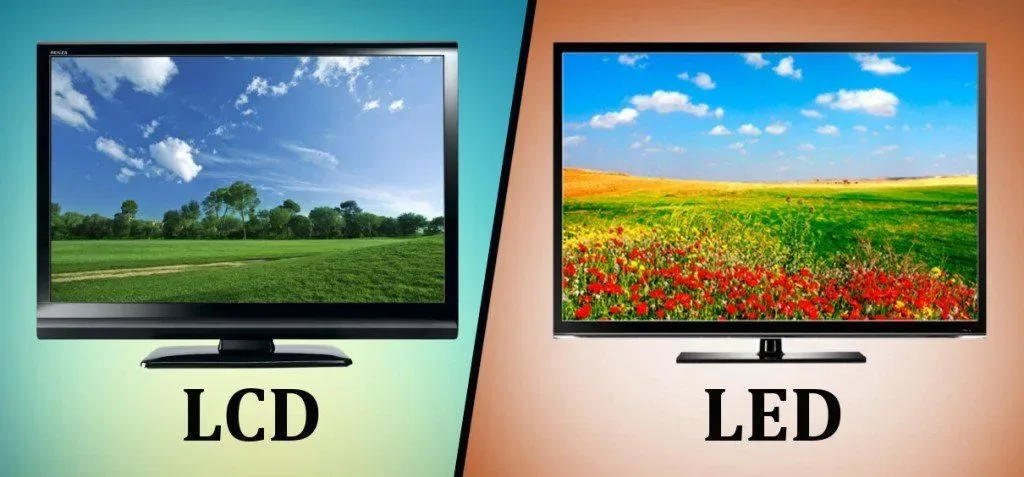
Choosing between an oled vs lcd screen comes down to how each display handles illumination, color accuracy, and pixel switching speeds. Liquid crystal displays rely on separate light-emitting diode backlights shining through microscopic filters, but organic light-emitting diode panels produce illumination independently at each individual pixel. This core architectural divide determines everything from dark-room contrast ratios to sustained peak brightness in bright spaces. For buyers weighing televisions from LG Electronics and Sony, gaming monitors from Asus ROG, or mobile devices from Apple, understanding these physical differences clarifies exactly where each panel technology delivers its greatest real-world performance [2].
- OLED vs LCD Pixel Architecture
- Why Contrast Ratio Favors Emissive Pixels
- Screen Brightness in OLED vs LCD Panels
- Color Gamut Coverage for High Dynamic Range
- Motion Clarity for Fast Gaming
- Viewing Angle Consistency Across Seats
- Lifespan Differences in OLED vs LCD Hardware
- How Manufacturing Costs Shape Screen Sizes
OLED vs LCD Pixel Architecture
Liquid crystal displays operate as transmissive systems that need a separate illumination source placed behind the screen glass. In an LCD panel, light from an array of light-emitting diodes passes through polarizers, liquid crystals, and color filters composed of red, green, and blue subpixels. These crystals shift under electrical voltage to block or transmit light through millions of tiny picture elements. As Whitson Gordon said for Edge Up, ASUS TUF Gaming monitors and ROG Strix laptops implement in-plane switching panels for wide viewing, vertical alignment panels for darker tones, and twisted nematic panels for esports. Premium ROG Strix SCAR laptops feature mini-LED arrays with local dimming zones to simulate deeper black levels [8].
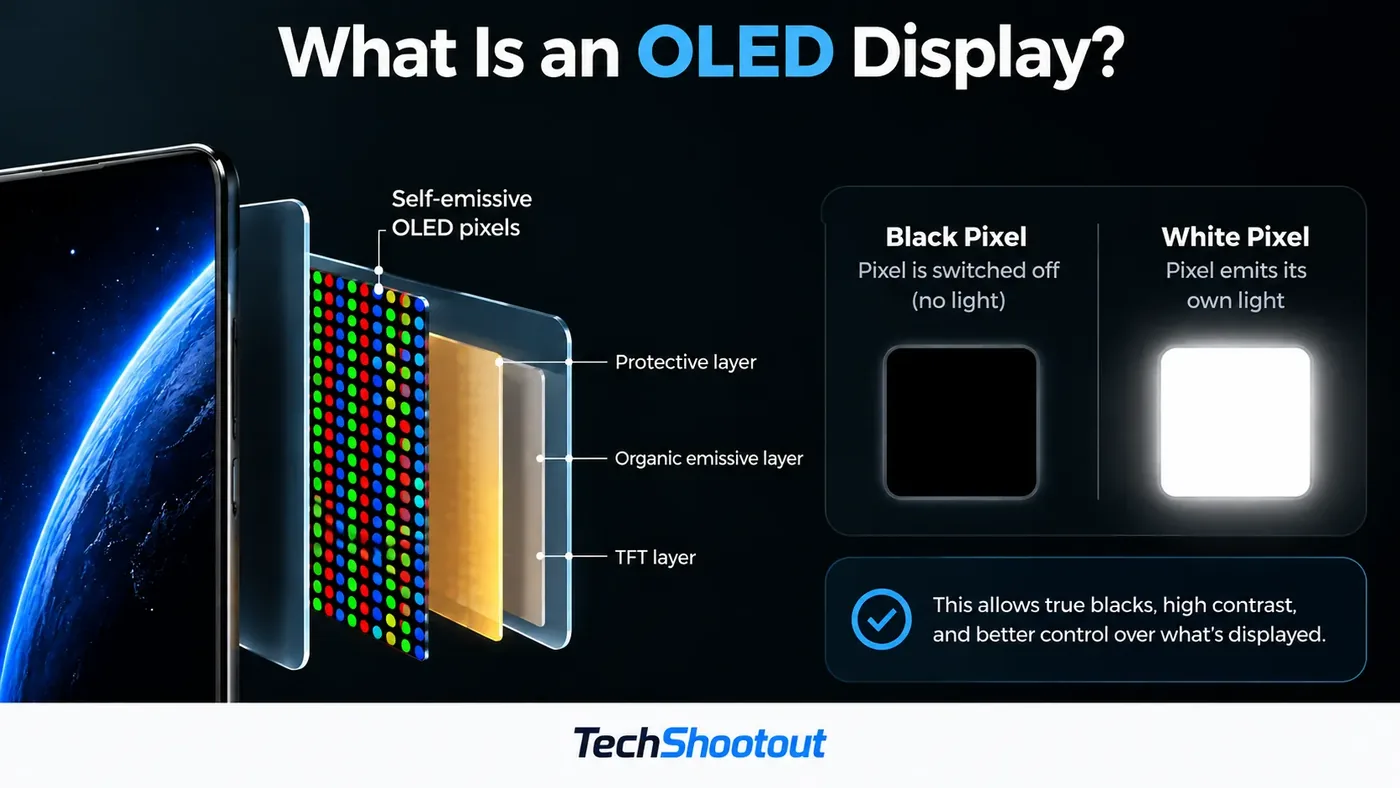
Organic light-emitting diode technology operates on an emissive design where every pixel generates its own light. André Bernanose observed organic electroluminescence at Nancy University in the 1950s, and Martin Pope studied anthracene at New York University in 1960 [9], [14]. In 1987, chemists Ching Wan Tang and Steven Van Slyke built the first practical two-layer OLED device at Eastman Kodak [9]. Inside this stack, an emissive layer and a hole transport layer (HTL) sit between an indium tin oxide (ITO) transparent anode and a metal cathode where electrons in the LUMO level meet holes in the HOMO orbital to emit photons. Pioneer introduced the first commercial OLED car stereo in 1997 [14].
Because emissive pixels eliminate bulky backlight diffusers, OLED panels measure only 0.2 to 0.3 millimeters thick [1]. Kodak launched a full-color OLED digicam in 2003 [14]. This thinness lets manufacturers produce curved mobile screens like the Samsung Galaxy S8, wafer-thin designs like the LG W7 Wallpaper television, and rollable glass panels [3].
Why Contrast Ratio Favors Emissive Pixels
Contrast ratio measures the luminance gap between the brightest whites and the darkest blacks a screen can display. As Geoffrey Morrison said for CNET, contrast ratio is widely recognized by video specialists as the single most important element of perceived picture quality because it anchors depth and realism in every scene [2]. A solid mid-range LCD with an in-plane switching panel typically achieves a static contrast ratio of roughly 1,000:1 or 1,200:1 [13]. At those baseline ratios, dark movie scenes can appear washed out because backlight illumination inevitably bleeds through closed liquid crystal shutters [7].
In an oled vs lcd comparison, black-level performance is where the two technologies diverge most noticeably. When an OLED screen displays deep space or nighttime shadows, the pixels covering those areas switch off completely, producing true black with zero emitted light [5]. Dividing peak brightness by zero emitted light yields an infinite contrast ratio [13]. High-end LCD models from Samsung and Sony use full-array local dimming or mini-LED backlights to dim idle zones, but even TCL’s Halo Control system can’t turn off light on an individual pixel level [4].
Backlight leakage creates blooming around bright highlights displayed against dark backgrounds. Starfields, movie subtitles, and candles reveal noticeable halos on full-array LCD sets as light escapes adjacent dimming zones [8]. OLED displays avoid blooming altogether because each subpixel controls its own luminance. Readers comparing display standards can review our detailed analysis of OLED vs QLED panel differences to see how quantum dot layers interact with backlights [4].
Screen Brightness in OLED vs LCD Panels
Peak brightness is the main category where liquid crystal panels keep a measurable hardware edge. Because an LCD panel relies on a bank of high-output LEDs, it can blast strong illumination through the entire surface of the screen without risk of thermal stress [2]. Budget computer monitors often deliver a modest 350 nits of peak brightness, but premium mini-LED panels like the Asus ROG Swift PG32UQX drive light output to much higher levels [8]. That brute light output makes backlit displays formidable in sunlit rooms with large windows [7].
OLED displays take a conservative approach to sustained illumination to protect organic layers from thermal wear. Automatic brightness limiter circuits automatically dim the screen whenever broad scenes require full-field white illumination. Individual specular highlights in dark scenes shine vividly, but sustained full-screen brightness drops to manage power draw, protect delicate organic compounds, and prevent premature pixel wear during prolonged viewings [2]. In its OLED Basics overview, the U.S. Department of Energy reported panel efficacies of 85 lm/W [1]. LG uses 4-stack panels to raise peak luminance [2].

Room lighting conditions dictate which display behavior serves viewers better. In bright living spaces, a powerful LCD backlight cuts through harsh window reflections with ease [5]. In dim home theaters, OLED displays excel because perfect per-pixel black levels prevent dark film scenes from looking washed out under soft ambient illumination, maintaining superb depth throughout nighttime viewings. Samsung’s S95F television adds Glare-Free matte coating [10].
Color Gamut Coverage for High Dynamic Range
True High Dynamic Range (HDR) performance requires a panel to reproduce subtle shadow gradations together with rich, saturated color tones. Standard dynamic range displays map to narrower color spaces, but HDR content demands Wide Color Gamut (WCG) capabilities that challenge older color filtering methods [2]. Mid-range LCD screens use quantum dot films to widen their color palette, producing saturated reds and greens that rival emissive displays in bright rooms [4]. Yet color accuracy across extreme bright areas still depends on backlighting precision and local dimming calibration [2].
Display manufacturers developed two primary panel architectures to maximize color volume. LG Display produces WOLED panels, which combine yellow and blue organic emitters to create white light that passes through red, green, and blue color filters, accompanied by an unfiltered white subpixel to boost luminance. In 2022, Samsung Display introduced QD-OLED panels, pairing blue organic diodes with printed quantum-dot converters to yield pure primary colors without a dilute white subpixel [11]. Flagship models like the Samsung S90F earn Pantone Validated certification for natural skin tones [10].
Mobile hardware followed this color evolution as yields improved. Handheld devices like the Apple iPhone 13 Pro Max and Google Pixel 5a show how organic subpixels produce rich colors without draining batteries. Wearables like the Apple Watch Series 6 and Fitbit Sense use OLED panels for vivid outdoor readability [3]. Tablets like Apple’s OLED iPad mini bring calibrated wide color spaces to mobile digital creators.

Motion Clarity for Fast Gaming
Pixel response time dictates whether fast motion looks sharp or smeared. On conventional in-plane switching LCD panels, liquid crystal molecules take physical time to rotate under voltage, yielding response times between 4 and 8 milliseconds [13]. High-speed Fast IPS monitors reduce this transition window down to roughly 1 millisecond, but subtle ghosting trails can still appear behind fast-moving enemies in competitive esports titles [8]. OLED pixels switch in microseconds without crystal movement [13].
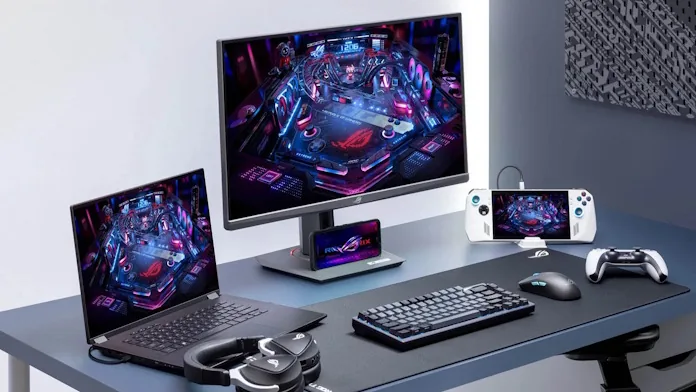
Modern gaming monitors showcase this speed advantage through staggering refresh rates and sub-millisecond response ratings. The Asus ROG Swift OLED PG27AQDP pushes refresh rates to 480Hz while dropping pixel transitions to 0.03 milliseconds. The ROG Strix OLED XG32UCWG offers dual-mode switching between 4K at 165Hz and FHD at 330Hz [8]. In living room setups, the 2024 LG G4 television delivers a 0.1 millisecond response time with 4K 120Hz inputs, providing competitive console and PC gamers with ultra-crisp motion [12]. In an oled vs lcd showdown for competitive gaming, pixel speed clearly favors self-emissive hardware [8].
However, both display types remain subject to human eye tracking blur caused by standard sample-and-hold drive mechanics. Because frames stay illuminated continuously until the next refresh cycle, rapid camera pans can still cause perceived motion blur even on zero-latency OLED panels. Manufacturers address this issue by integrating black-frame insertion, which briefly inserts a black interval between frames to clear retinal persistence [2]. Gaming displays also incorporate HDMI 2.1, Variable Refresh Rate, and Nvidia G-Sync to ensure tear-free visuals during frame rate dips [10].
Viewing Angle Consistency Across Seats
Seating arrangements in living rooms often place viewers off to the side rather than directly centered in front of the screen. Liquid crystal displays suffer noticeable image degradation when viewed from off-axis angles because light must travel through deep polarizing layers and microscopic crystal tunnels [2]. Twisted nematic panels shift shades and darken severely even at slight tilts, but vertical alignment panels lose contrast and wash out blacks when viewed from side chairs [7]. In-plane switching panels offer better off-axis retention, but their native black levels remain relatively weak straight on [2].
OLED displays virtually eliminate off-angle picture degradation because each self-illuminating pixel sits right beneath the outer protective glass [7]. Light radiates evenly in every direction from the organic film, allowing colors and contrast to stay completely uniform even from extreme 80-degree viewing positions. As Samsung US said in its display guides, this wide viewing envelope makes OLED televisions exceptionally practical for wide sectional sofas, family movie nights, and multiplayer split-screen gaming sessions where players sit scattered in the room [10].
Screen uniformity also separates the two display categories during darker viewing material. Inexpensive edge-lit LCD televisions often leak stray illumination from their perimeter bezels, creating distracting cloudy patches along dark letterbox bars during cinema playback [2]. OLED panels maintain near-perfect luminance uniformity across the entire panel area because every pixel receives independent power [4]. For home theater enthusiasts who demand clean picture consistency from edge to edge, emissive screens avoid the blotchy backlight artifacts common on entry-level displays [5].
Lifespan Differences in OLED vs LCD Hardware
Long-term reliability is an area where liquid crystal panels enjoy a proven track record. Because LCD backlights and inorganic crystals don’t suffer from organic molecular fatigue, they can display static imagery indefinitely without developing permanent ghosting [5]. In organic displays, electric current gradually degrades the emissive compounds over tens of thousands of hours of active operation [9]. Blue subpixel materials age faster than red and green organic films, requiring factory color balancing [11]. In its Solid-State Lighting reports, the Department of Energy noted that consumer OLED products target 30,000 to 50,000 hours of use before light output drops to 70 percent of initial luminance [1]. Samsung US similarly rates modern television lifespan at 50,000 to 100,000 hours under typical operating conditions, translating to 10 to 20 years of family viewing [10].
This differential aging of organic subpixels is what causes permanent image retention, commonly known as screen burn-in. Burn-in happens when static graphics—such as cable news banners, sports score tickers, or desktop taskbars—remain on screen in the same position for hours every day. However, David Katzmaier of CNET said that burn-in is rarely an issue for typical consumers who watch varied programming rather than looping static news channels [4]. Manufacturers have also introduced pixel-shifting algorithms, screen savers, and automated background compensation cycles to distribute wear evenly across the pixel matrix [11].
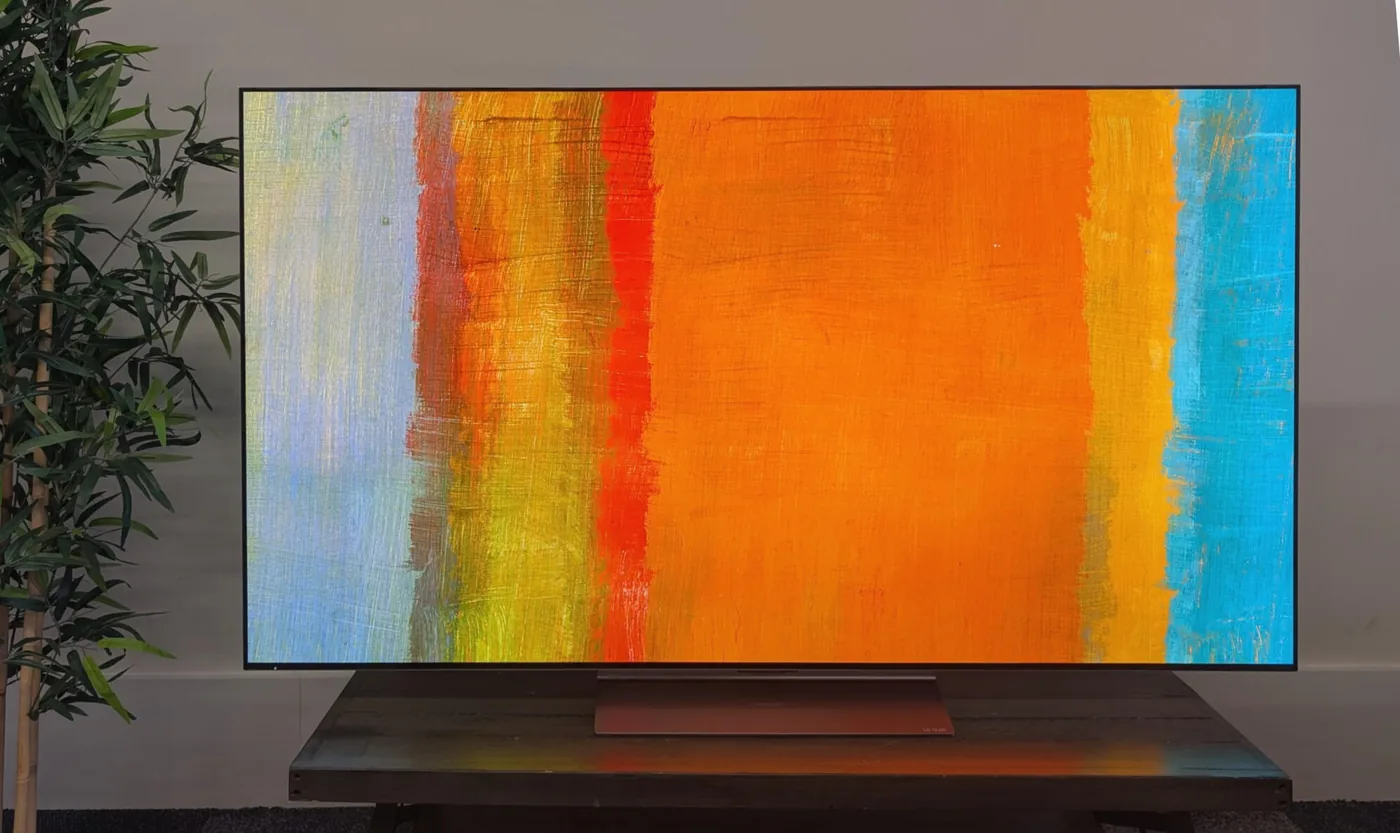
Overall panel longevity has improved in both display categories. LG reports that its modern television panels deliver a lifespan of 100,000 hours to half brightness, which matches premium LED backlights [2]. OLED panels require hermetic encapsulation seals because organic compounds are sensitive to atmospheric moisture and oxygen, whereas inorganic LCD stacks easily tolerate humid air [13].
How Manufacturing Costs Shape Screen Sizes
Manufacturing economics heavily dictate which screen sizes offer consumers the best price-to-performance ratio. Liquid crystal display fabrication is a mature global industry with dozens of operational fabrication lines throughout Asia churning out panels in virtually every conceivable dimension [2]. For mainstream 55-inch and 65-inch living room displays, OLED prices have fallen noticeably, competing closely with premium QLED and mini-LED televisions [12]. Vizio offers competitive pricing in this segment, and budget-conscious shoppers can find promotional pricing as seen during recent Roku OLED TV retail price cuts where 55-inch sets dipped under $1,000.
At giant screen sizes above 75 inches, however, the pricing divide between oled vs lcd hardware widens further. Because fabricating flawless large-format OLED mother glass is exceptionally challenging, manufacturing yields drop and retail prices climb steeply [7]. A massive 98-inch LCD television can be purchased for under $2,000, and television brands like TCL produce sets up to 115 inches for home theaters [4]. In contrast, Kob Monney of Trusted Reviews said that a 97-inch LG OLED television commands a staggering £24,999, and the 83-inch LG G4 retails for $5,800 [7], [12]. That steep price difference makes ultra-large OLED screens a luxury niche [7].
Large-panel manufacturing continues to consolidate around LG Display and Samsung Display, who supply panels to brands like Sony and Panasonic. Sony uses LG panels in its Bravia 8 series and Samsung QD-OLED panels in the flagship Bravia A95L [12]. Meanwhile, alternative fabrication methods like the inkjet printing pioneered commercially by JOLED in 2017 aim to lower production waste by depositing organic materials without fine metal shadow masks [14]. Over the coming years, refined manufacturing techniques will determine how rapidly larger OLED displays reach parity with conventional LCD retail pricing [1].
- REPORT U.S. Department of Energy. (2014). OLED Basics. [Article Link]
- ONLINE NEWS Morrison, G. (2025). LCD vs. OLED: Which Is the Best TV Tech? CNET. [Article Link]
- ONLINE NEWS Reisinger, D. (2021). What Is OLED? Tom’s Guide. [Article Link]
- ONLINE NEWS Katzmaier, D. (2026). QLED vs. OLED: What’s the Difference? CNET. [Article Link]
- ONLINE NEWS Anwar, S. (2026). OLED vs LCD: What’s the Difference, and Which Is Better? Tech Shootout. [Article Link]
- WEBSITE RF Wireless World. (2026). OLED vs LED vs LCD: Which Display is Best? [Article Link]
- ONLINE NEWS Monney, K. (2025). OLED vs LED: What’s the difference and which is better? Trusted Reviews. [Article Link]
- WEBSITE Gordon, W. (2025). LCD vs OLED: What’s the difference between gaming monitors? Edge Up. [Article Link]
- WEBSITE GeeksforGeeks. (2020). What is OLED? [Article Link]
- WEBSITE Samsung US. (2025). What Is An OLED TV: Are They Worth It? [Article Link]
- WEBSITE Ashish. (2017). What Is OLED (Organic LED) And What’s So ‘Organic’ About It? ScienceABC. [Article Link]
- ONLINE NEWS Wolfe, B. M. (2021). What is OLED TV? The premium display technology explained. Digital Trends. [Article Link]
- ONLINE NEWS Zhang, K. (2025). Understanding OLED Displays: How They Work and Why They Matter in Modern Devices. DEV Community. [Article Link]
- WEBSITE Wikipedia contributors. OLED. Wikipedia, The Free Encyclopedia. [Article Link]


