





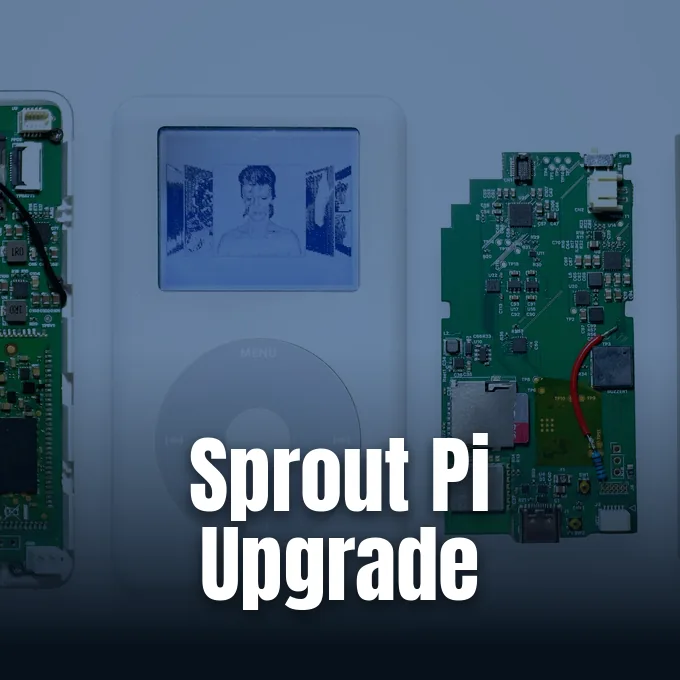
Hardware developer Certain Things Studio revealed the Sprout Pi replacement motherboard on October 14, 2026. The solder-free board gives vintage Apple iPod owners an upgrade that adds Bluetooth audio, Wi-Fi streaming, and USB-C charging [1]. The upgrade swaps out aging circuit boards while keeping the original click wheel, screen, and outer metal casing intact [2]. It lets music fans keep their favorite retro hardware while ditching Apple’s retired 30-pin dock connector for universal cables. Public orders will open through an upcoming crowdfunding campaign on Crowd Supply [1].
Inside the Sprout Pi Hardware Architecture
Dozens of hobbyists build custom iPod modifications each year, but most projects force builders to buy separate pieces for battery expansion, flash storage adapters, and wireless audio antennas [1]. The Sprout board consolidates them all [3]. Certain Things Studio engineered the hardware so builders don’t have to solder tiny pins or cut into original metal frames to complete the installation [2]. Everything connects to the stock cables, so the setup remains reversible if someone ever wants to restore their music player back to factory parts [4].
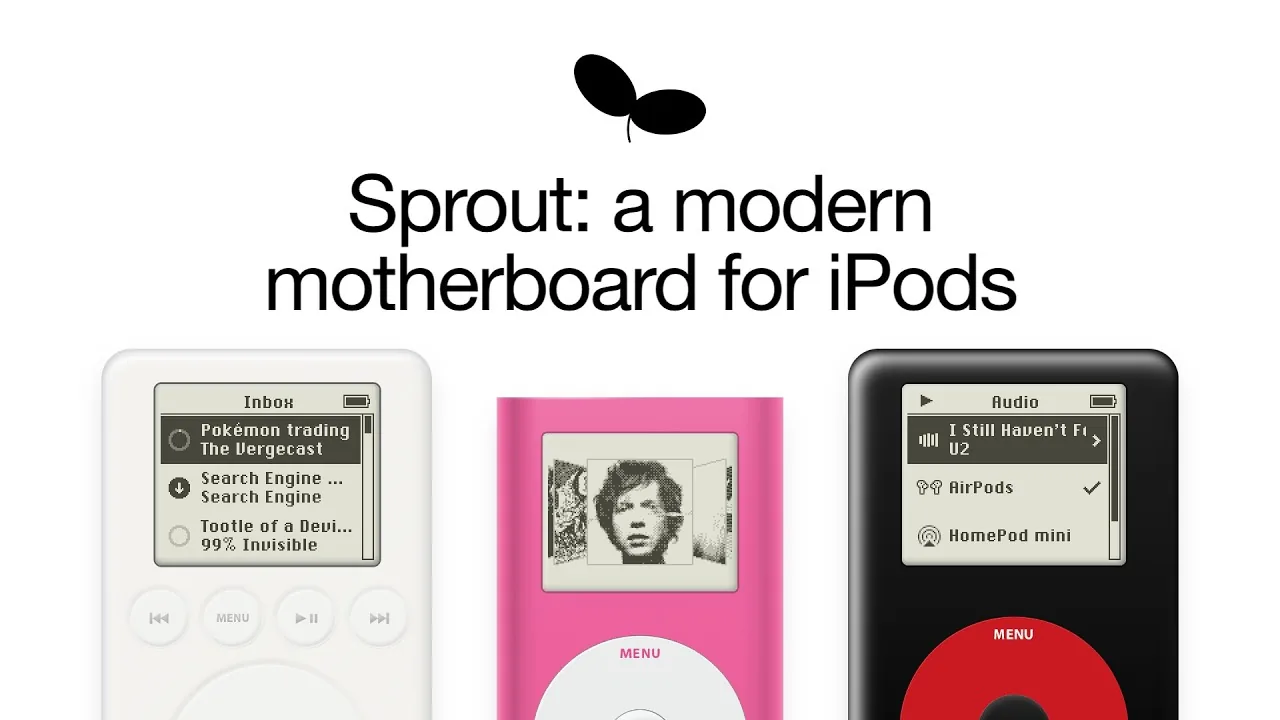
The project arrives in two hardware flavors to meet different listening habits. Sprout Pico uses an RP2350 microcontroller. The base Sprout Pico handles local file decoding and wireless audio output without burning through excess battery power, keeping heat down inside the compact casing. Sitting above that base board is the flagship Sprout Pi, which stacks a Raspberry Pi Compute Module Zero directly onto the Pico foundation to run a full Linux stack [3]. That operating system allows the board to run custom programs, manage network connections, and stream music over the web, though it draws more power than the simpler microcontroller model [4].
Both boards preserve the tactile feel of classic Apple hardware by routing signals through the original click wheel and monochromatic display rather than forcing a touchscreen upgrade. No glass touchscreens are needed [5]. Instead, the developers adapted their custom interface so users can scroll through albums using familiar mechanical clicks [4]. The board also hooks into the player’s top remote connector through two GPIO pins, which gives tinkerers direct hardware access for external accessories [3]. It’s a clean engineering choice that respects the industrial design Steve Jobs unveiled decades ago while quietly replacing everything hidden beneath the aluminum faceplate [1].
Audio Outputs and Lossless Format Support
Audio quality sits at the center of the redesign, especially for listeners who still value high-fidelity wired listening over compressed wireless streams [2]. The board features a CS43131 Hi-Fi DAC (a digital-to-analog converter built for high-resolution sound) that feeds clean audio directly to the original 3.5mm headphone jack [3]. Apple’s 30-pin dock connector is gone [2]. A modern USB-C port takes its place to handle battery charging and digital audio output, letting listeners plug in USB headsets, connect external desktop amplifiers, or control volume with inline cable remotes [4].
On the software side, the boards break free from Apple’s historical file limitations [1]. While original iPod software forced listeners to convert open lossless music into Apple Lossless files or stay with compressed MP3s, both Sprout Pi and Sprout Pico boards natively decode FLAC and Opus audio files alongside standard AAC and MP3 tracks [3]. iTunes transcoding isn’t required anymore. Audiophiles can drop their existing high-resolution music libraries straight onto the device without spending hours converting folders on a desktop computer [2]. It’s a welcome change for people who built large collections of lossless music and want their classic portable player to play every track without errors [1].
Storage capacity jumps with an integrated microSD card slot that replaces Apple’s spinning mechanical hard drives [1]. Storage scales up to 2 TB. That card capacity holds roughly 500,000 songs depending on file compression, so listeners have room for complete discographies in their pockets [4]. Removing the original spinning disk drive eliminates moving parts that often broke when vintage iPods tumbled onto hard pavement, while flash memory cuts read latency so browsing through thousands of artists feels much faster than it did on original retail hardware [5].


Wireless Audio on the Sprout Pi Mod
Wireless streaming brings a major functional shift to vintage Apple hardware [2]. Built-in Bluetooth allows the Sprout Pi mod to pair with modern wireless earbuds like AirPods or portable Bluetooth speakers such as the UE Boom [1]. Tangled headphone cords are no longer mandatory [2]. The pairing process runs through the custom user interface, showing available Bluetooth devices on the classic monochrome screen so listeners don’t need a smartphone nearby to establish an audio connection [4].
Wi-Fi connectivity expands what these classic devices can do over a home network [2]. Podcasts download over the air [1]. The firmware also lets users cast music to AirPlay speakers around the house, while developers work on Google Cast support ahead of the final hardware release [4]. Dedicated physical connectivity still matters for enthusiasts who dislike wireless dropouts or smart home limitations, such as changes seen when Echo speaker auxiliary inputs dropped voice controls, which renewed interest in standalone audio gear [2].
The Compute Module Zero on the Sprout Pi gives programmers room to experiment beyond simple music playback. The underlying system runs Linux. Because the board runs an open Linux stack, hobbyists can write small utilities, design custom themes, or test command-line scripts directly on the portable player [3]. Paulo Montenegro of Ubergizmo said the open Linux base means the community can build extra third-party software after the project reaches backers [5]. It turns a dormant twenty-year-old music player into an open-source handheld computer [3].

Supported Generations and Battery Targets
Compatibility focuses on a select group of older models rather than later releases [2]. The Sprout motherboard fits the first- and second-generation iPod mini, the third-generation iPod, and fourth-generation models that feature monochrome displays [5]. Later video iPods won’t work. Owners of fifth-generation video iPods or later classic revisions can’t install the board because Apple changed chassis dimensions and display ribbon connectors across later product cycles [2]. While this limitation excludes later iPods, installing Sprout Pi in early generations revives devices that suffered most from dead internal batteries and dead miniature hard drives [1].
Battery life targets vary depending on the iPod shell and battery capacity installed [3]. That mini target hits 20 hours. Certain Things Studio designed the board to deliver up to 20 hours of continuous playback over Bluetooth on an iPod mini using a 1,200 mAh replacement battery. Larger players reach 40 hours. Larger third- and fourth-generation players accommodate a beefier 2,500 mAh cell. Target playback reaches 40 hours over Bluetooth connections during prototype testing. Actual battery longevity might shift based on screen brightness, volume levels, and whether users stream over Wi-Fi instead of playing local files from storage [4].
Installing the new board requires no soldering, which lowers the barrier for casual hobbyists who don’t own soldering irons [1]. Careful prying is still necessary [2]. Older iPod casings use stiff metal clips that bend easily if forced with improper pry tools, and fragile ribbon cables can tear during disassembly [1]. For owners willing to spend thirty minutes working carefully at a desk, the upgrade offers a straightforward way to revive an unused music player without paying a repair shop [2].

Crowd Supply Campaign and Streaming Debate
While hardware upgrades like USB-C and Bluetooth enjoy broad praise, the addition of online music streaming sparks lively discussion among portable audio fans [2]. The high-end Sprout Pi supports both Spotify and Apple Music, and users can access cloud music catalogs over Wi-Fi. Some critics feel streaming “kind of misses the point” on retro hardware. Terrence O’Brien from The Verge said that adding streaming to an iPod runs counter to the main reason listeners return to classic players, which is to escape algorithms, notification alerts, and digital distractions [1]. For many enthusiasts, the whole charm of an iPod lies in sitting down with a curated personal music library rather than endless streaming feeds [2].
Streaming features also bring software maintenance risks that standalone players rarely face [3]. Online music APIs change often. The studio created working proofs of concept for streaming services in September 2026, but the developers openly warn that service availability at launch might differ from current prototypes [4]. If a streaming platform alters its login rules or encryption protocols, users could lose access until developers release updated firmware patches. That risk makes local playback on Sprout Pico a safer choice for long-term reliability [3].
Certain Things Studio plans to launch an official crowdfunding campaign on Crowd Supply to finance production, though the team hasn’t announced pricing or an exact shipping schedule yet. Crowd Supply will host orders [1]. Prospective buyers will need to weigh the eventual board cost against simply buying a modern digital audio player. For collectors who already own a compatible third-generation, fourth-generation, or mini model sitting forgotten in a drawer, the Sprout Pi provides a clean path to keep classic Apple hardware relevant on modern desks [2].
- ONLINE NEWS O’Brien, T. (2026, October 14). Sprout Pi adds Bluetooth, streaming, and USB-C to your aging iPod. The Verge. [Article Link]
- ONLINE NEWS Mendoza, K. (2026, October 14). USB-C iPod upgrade brings modern connectivity to vintage music players. REMOVU. [Article Link]
- WEBSITE Bitroot. (2026, October 7). Sprout adds Bluetooth, Wi‑Fi and streaming to classic iPods. Bitroot. [Article Link]
- WEBSITE Certain Things Studio. (2026, July 20). A modern motherboard for old iPods. certainthings.studio. [Article Link]
- ONLINE NEWS Montenegro, P. (2026, October 14). Retro Apple iPods get modern Wi-Fi, Bluetooth, and USB-C upgrades. Ubergizmo. [Article Link]
- ONLINE NEWS Feedzop. (2026, October 14). iPod reimagined: Bluetooth, USB-C, and Wi-Fi arrive. Feedzop. [Article Link]


