





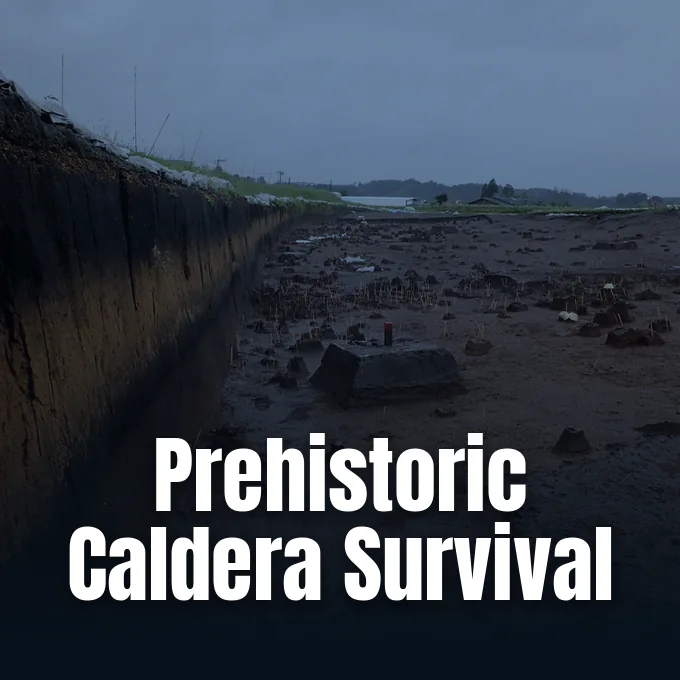
Archaeologists have long debated how prehistoric people survived the catastrophic Kikai-Akahoya volcanic eruption that rocked southern Japan around 5,250 BCE. The blast exploded from the seabed near Kyushu with a rating of seven on the Volcanic Explosivity Index, which only reaches eight, and buried vast tracts of land under meters of volcanic ash [2]. Rather than triggering total cultural loss in the islands, the disaster prompted resilient hunter-gatherers of the Jomon culture to relocate and reorganize their livelihoods along coastal zones where marine food remained intact [1].
How Prehistoric People Survived the Caldera Blast
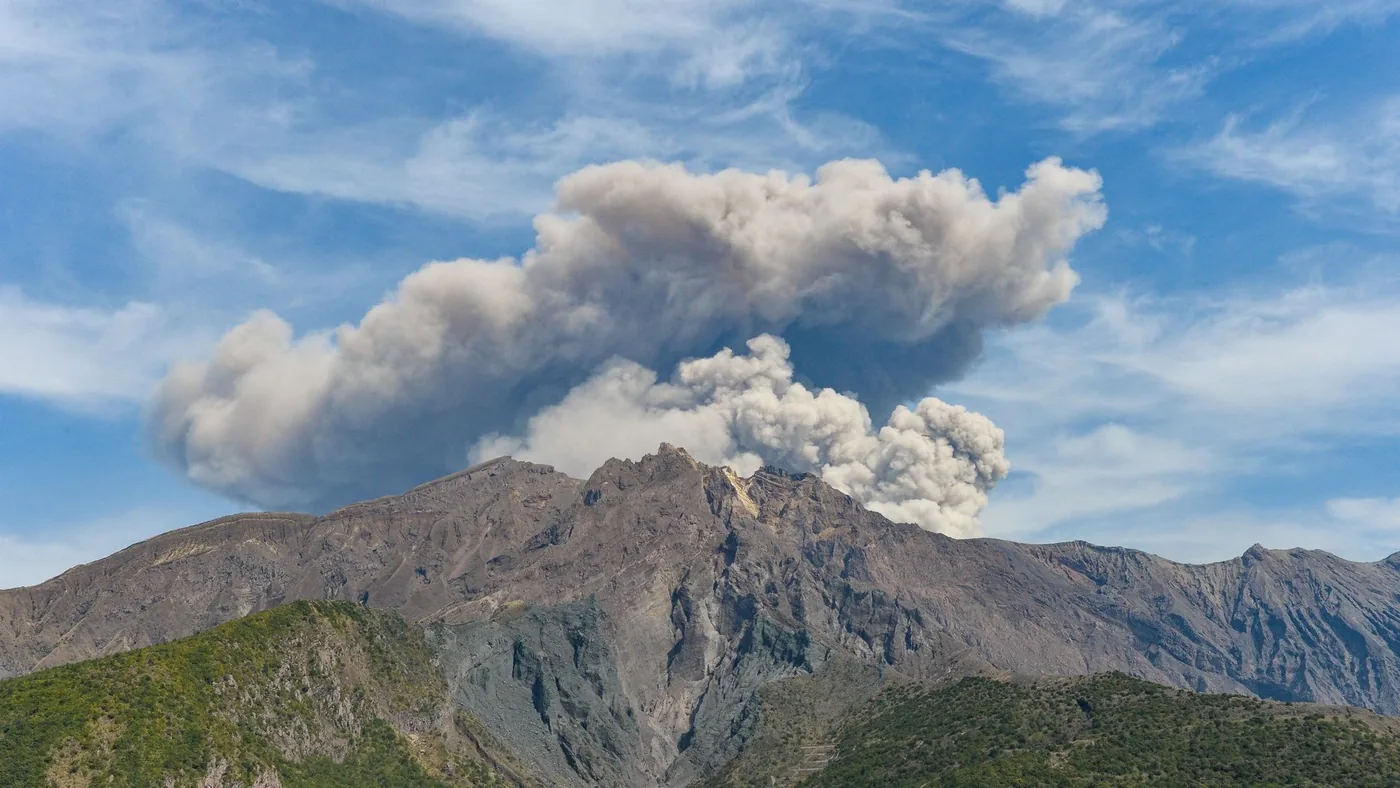
Seven thousand three hundred years ago, a massive underwater volcano erupted off the southern coast of Japan with a force ranking among the largest geologic events of the entire Holocene. The explosion unleashed devastating pyroclastic flows and powerful tsunamis that battered islands around the archipelago before smothering the terrain in volcanic ash [3]. Lund University archaeologist Peter Jordan explained in a statement: “This eruption must have been devastating, exploding out of the seabed with little warning. It battered the Japanese islands with powerful earthquakes and enormous tsunamis, and then blanketed the landscape with meters of volcanic ash.” For early foraging bands living in the direct path of the fallout, the ruin was widespread [2].
How could small foraging bands endure such an overwhelming environmental shock? For decades, two opposing views dominated the archaeological literature about post-disaster outcomes. Older accounts argued that the eruption annihilated local communities on Kyushu, cutting their cultural lineages until settlers repopulated the vacant territory centuries later [3]. A competing view suggested that several local groups proved tough enough to weather the fallout, pointing to particular pottery styles that managed to persist on Kyushu. These conflicting views formed a long-standing academic division between an apocalypse scenario and continuity theories [2].
Why Did Prehistoric People Migrate?
Prehistoric people migrated away from southern Kyushu because thick volcanic ash and pyroclastic flows destroyed inland plants and displaced wild game in their hunting territories. Dense ash layers smothered vegetation, which caused terrestrial food webs to collapse and forced surviving families to abandon inland camps in search of viable food [3]. Unlike geological records where a devastating volcanic eruption preserved clues to Andes uplift, this archaeological study tracks the mobile responses of human foragers adapting to habitat loss [1]. Survivors gathered what they could carry and pushed to northern coastlines where marine life proved far more durable [2].
Study author Enrico Crema of Cambridge University said: “The disaster caused major loss of life. However, survivors migrated, forged new social relations, innovated new kinds of economy, and appear to have found creative ways to exist and later thrive in the new post-disaster conditions.” Documenting how prehistoric people survived such volcanic shocks reveals the importance of mobile social ties. By forming new alliances and trading ties with northern neighbors, displaced bands secured access to stable coastal foraging grounds. Survival was not an accident of geography, but a clear choice to cooperate, travel long distances, and build fresh lives amid deep ecological disruption [2].
Divergent Population Trends Across Ancient Kyushu
To evaluate whether the disaster wiped out ancient communities or allowed unbroken continuity, an international team analyzed time-frequency data from radiocarbon dates gathered from digs throughout Japan. Because higher amounts of dated cultural artifacts reflect higher human population density, statistical modeling can trace population trends through prehistoric centuries [2]. The scientists modeled the frequency of radiocarbon dates over 61 hexagonal regions spanning the Japanese islands, using the thickness of volcanic ash deposits as a proxy for localized environmental destruction (where an increase in recovered material indicates higher population density) [3].
The resulting population models revealed a striking divergence between southern and northern Kyushu rather than a uniform catastrophe. In southern Kyushu, closest to the volcanic epicenter, human numbers had already been in steady decline long before the caldera exploded. Highly mobile foraging groups occupied a sparsely populated landscape, meaning the eruption accelerated an existing contraction rather than destroying a flourishing society. The disaster delivered a heavy blow to remaining residents, but it did not extinguish a thriving heartland [3].
Northern Kyushu revealed a different demographic path during the disaster years. Population counts in northern areas had been steadily growing before the volcanic blast, and that upward momentum continued through the catastrophe and its aftermath. Researchers suggest this counterintuitive growth points to an influx of refugees fleeing the ruined southern districts [3]. Northern villages welcomed displaced groups, showing how prehistoric people survived by absorbing mobile survivors into growing regional communities [1].

Resilience of Coastal Environments Over Inland Forests
Inland survivors adapted to the volcanic aftermath by shifting their entire food economy to shoreline ecosystems. While falling ash poisoned terrestrial vegetation and wiped out inland plant gathering, northern shorelines and marine ecosystems recovered relatively quickly from the fallout [2, 3]. Coastal waters supplied steady harvests of fish, shellfish, and marine mammals that proved far more resilient to atmospheric volcanic ash than delicate forest plants (such as fish, shellfish, and marine mammals). Archaeological digs confirm that displaced groups built new villages near fertile estuaries and bays to secure dependable animal protein. Records indicate prehistoric people survived inland resource scarcity by establishing permanent fisheries along northern shores [3].
The most unexpected pattern emerged in distant areas located hundreds of kilometers away from the volcanic crater. Regions of Japan that had enjoyed sustained population growth before the eruption experienced stagnation or outright demographic decline in subsequent decades. Scientists suggest that fine ash particles injected into the atmosphere triggered temporary climate cooling that disrupted fragile inland plant cycles far beyond the blast zone. Cooler seasonal temperatures also reduced numbers of wild boar and deer, shrinking the primary animal game that sustained distant foragers [3]. When assessing ancient population drops, researchers studying Neanderthal extinction causes similarly observe that climate shifts can disrupt wildlife food sources over wide areas.
How Early Humans Survived Through Archaeological Records
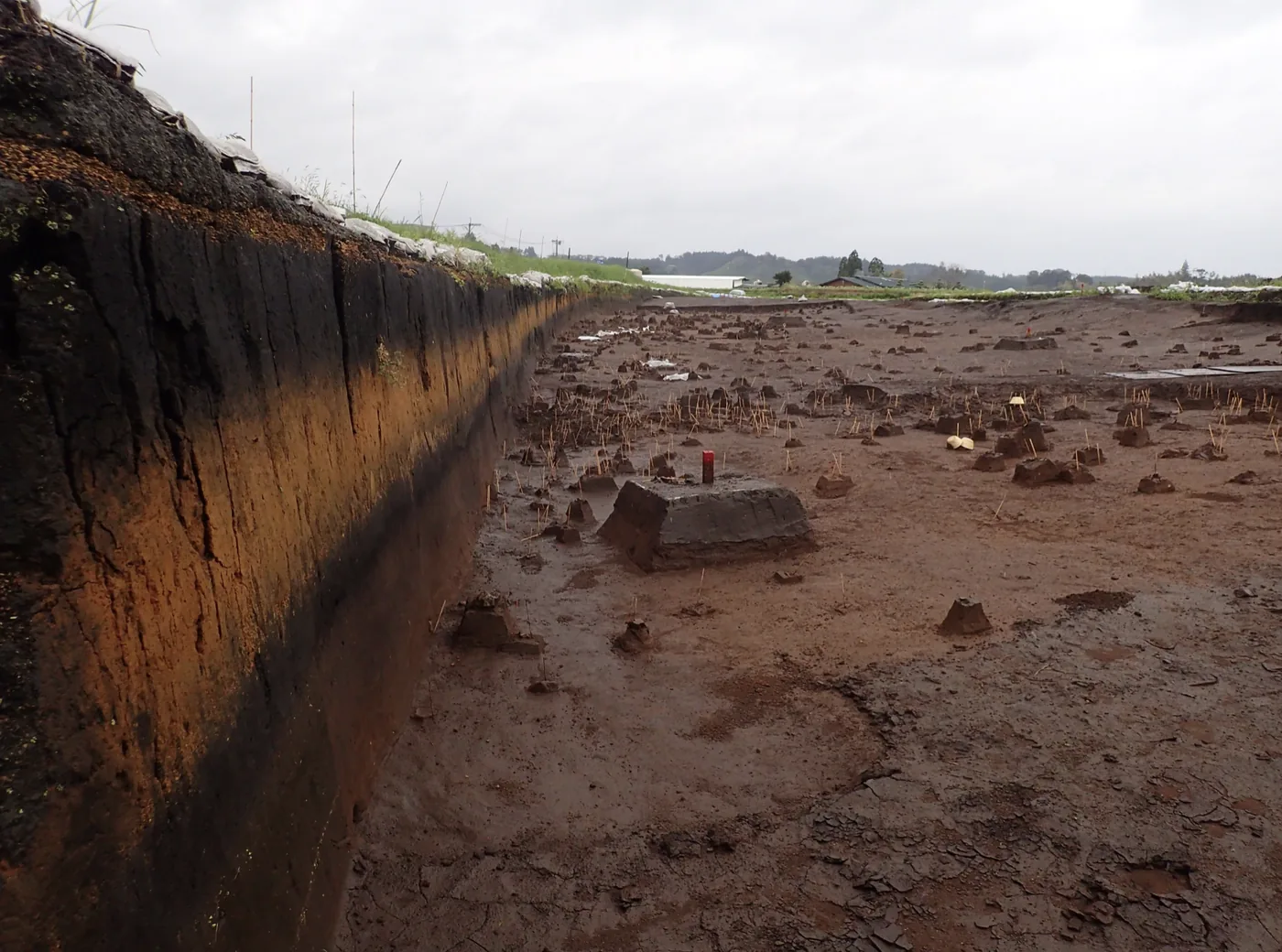
Tracking prehistoric human activity over thousands of years requires truly precise chronological markers. In Japan, elaborate pottery sequences provide archaeologists with one of the most detailed cultural timelines in the world. Because styles of ceramic vessels changed steadily over time, excavators can date occupation layers with high precision. The Kikai-Akahoya eruption (often designated as K-Ah by geologists) deposited a clear ash layer that divides older ceramic traditions from younger styles within stratified site profiles [3].
A collaborative team led by Enrico Crema from the University of Cambridge and Peter Jordan from Lund University examined these pottery sequences with radiocarbon records to clarify how early humans survived. Their findings, published in the journal Science Advances, prove that post-eruption history was neither complete annihilation nor simple, uninterrupted survival [1, 3]. By applying rigorous statistical modeling to thousands of archaeological dates, the authors showed that human communities experienced the catastrophe in divergent ways depending on their geographic position and local resource base [1].
Lessons in Prehistoric Survival and Community Adaptation
The population patterns emerging from ancient Japan offer broader insights into prehistoric survival following large natural shocks [3]. Rather than acting as passive victims of geologic destruction, Jomon communities displayed practical flexibility in the face of environmental crisis [2]. Peter Jordan of Lund University explained: “This study helps in creating a deeper understanding of the contingent ways in which cultures and societies cope with sudden shocks and catastrophes. Even in the most impossible situations, survivors and communities have choices, however limited. They need to act and make decisions, they need to adjust, collaborate and find new connections and social networks.” [3]
By forming shared social networks, moving to resilient coastlines, and adopting flexible foraging habits, ancient communities overcame the destruction of one of the largest eruptions in the Holocene [2, 3]. The research shows that prehistoric people survived deep environmental upheaval by adapting their economic habits and forging connections with surrounding villages [1]. These ancient hunter-gatherers reveal that cultural survival relies on human cooperation, mobility, and the capacity to rebuild community life under altered ecological realities [2].
- ACADEMIC JOURNAL Crema, E. R., Kuwahata, M., Uchiyama, J., Junno, A., Riede, F., & Jordan, P. D. (2026). Divergent demographic responses to the Kikai-Akahoya volcanic catastrophe in mid-Holocene Japan. Science Advances, 12(42). [Article Link]
- ONLINE NEWS Currie, J. (2026, October 15). How Prehistoric People Survived After One of the Worst Volcanic Eruptions in History. Nautilus. [Article Link]
- ONLINE NEWS Ionescu, A., & Ralls, E. (2026, October 15). How people survived one of the largest volcanic eruptions in history. Earth.com. [Article Link]
APA 7: TWs Editor. (2026, October 16). How Prehistoric People Survived Japan’s Caldera Eruption. PerEXP Teamworks. https://perexpteamworks.com/en/prehistoric-people-survived-caldera-blast/


