






Thirty years after its release, Space Jam 1996 stands as an unusual entry in cinema because it solved an alien invasion on a basketball floor instead of relying on military strikes [1]. When tiny extraterrestrials landed on Earth to enslave cartoon characters for an amusement park, the dispute was settled through sportsmanship, teamwork, and athletic talent [2]. That approach turned typical science fiction conventions upside down by replacing planetary destruction with a full-court pickup game [5].
Space Jam 1996 Begins with an Alien Threat
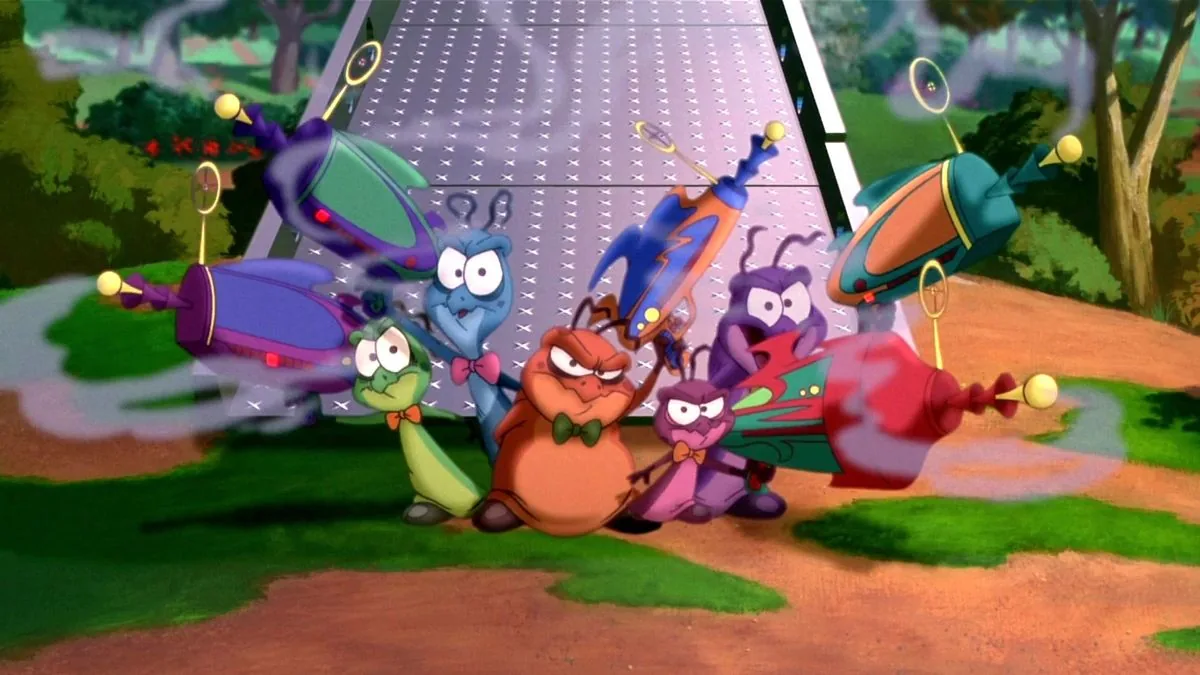
The narrative of Space Jam begins with an unexpected threat from outer space aimed directly at the Looney Tunes. A group of tiny alien minions known as the Nerdlucks travels to Earth on orders from Mr. Swackhammer, the owner of a declining intergalactic amusement park called Moron Mountain who plans to enslave the cartoon cast to boost ticket sales [1]. Bugs Bunny notices the small stature of the invaders [3]. He tricks them into accepting a winner-takes-all basketball challenge to decide their freedom, betting that cartoon agility can easily overcome small extraterrestrials [2].
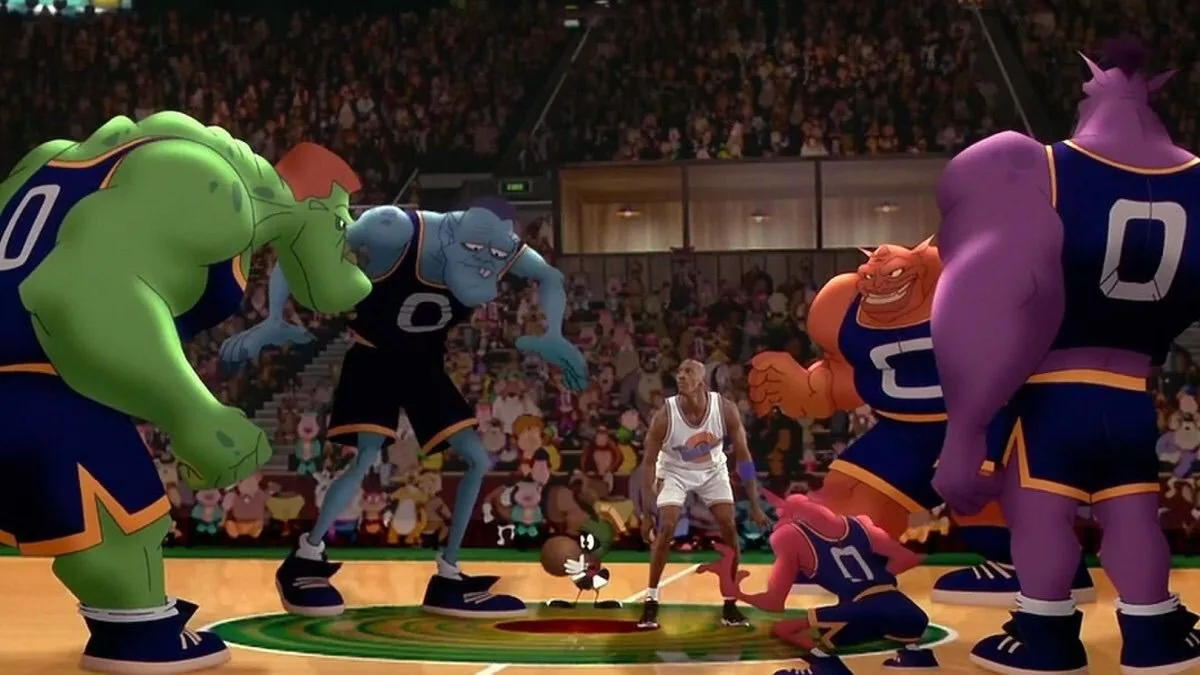
The simple wager collapses when the extraterrestrials discover the National Basketball Association and execute a cunning countermeasure [1]. The aliens slip into games around the country to steal the athletic capabilities of Charles Barkley, Shawn Bradley, Patrick Ewing, Larry Johnson, and Muggsy Bogues, leaving those professional players completely powerless [3]. That stolen power turns the tiny invaders into towering, purple monsters known as the Monstars [1]. Bugs Bunny and Daffy Duck pull Michael Jordan into their animated universe while he is golfing with Bill Murray and Larry Bird. Jordan had stepped away from basketball to pursue a baseball career with the Birmingham Barons, but he agrees to lead the Tune Squad after confronting the alien bullies in their cartoon gym [3].
Court Competition Versus Military Annihilation
The film moved the confrontation to the court, altering the sci-fi formula that dominated movie theaters during that era [1]. In 1996, major Hollywood releases addressed extraterrestrial threats with explosive violence [2]. The movie Independence Day followed human pilots attempting to blow up an alien mothership before world capitals were leveled, while Mars Attacks showed terrified crowds running away from ray guns wielded by chaotic invaders [1]. Space Jam sidestepped that grim warfare by turning athletic competition into a binding diplomatic mechanism between two species [2].
Planetary conflicts settled through athletic contests had deep roots in science fiction cinema long before 1996. In 1975, the dystopian movie Death Race 2000 introduced drivers scoring points by striking pedestrians, and Rollerball showed a violent arena sport run by cartels to suppress political rebellion. The animated match between the Tune Squad and the Monstars stayed bloodless [1]. A basketball game enforces clear boundaries where collective teamwork and passing matter far more than weapon arsenals or heavy spacecraft [5]. If humanity faced an actual space fleet in open combat, political divisions and infighting would lead to swift defeat within seconds [1]. On a basketball court, each team operates under visible rules that give even an outmatched squad a fair path to victory without firing a single missile [2].
Why Was Space Jam Made?
The concept of pairing Looney Tunes with a basketball superstar originated not from a Hollywood studio pitch, but from a television marketing campaign. In 1992, Nike creative director Jim Riswold conceived the “Hare Jordan” commercial for Super Bowl XXVI to advertise the Air Jordan 7 sneakers, choosing Bugs Bunny because the animated rabbit was his “childhood hero”. Riswold had previously paired Jordan with Spike Lee’s character Mars Blackmon. Joe Pytka directed the commercial with a $1 million budget over six months, paving the way for the “Aerospace Jordan” follow-up in 1993 [3].
The wide popularity of those advertisements convinced Warner Bros. that Bugs Bunny maintained strong cultural relevance among younger consumers. During an airplane flight shared by an executive from Nike and producer Ivan Reitman, the concept for a full-length feature film took shape. Jordan’s business manager, David Falk, had rejected movie pitches for years. He believed Jordan should only act as himself on screen, so he pitched the live-action animation project to major studios without an existing screenplay. Falk then called Dan Romanelli, the head of Warner Bros. consumer products, who quickly recognized the vast retail licensing potential of combining Looney Tunes with athletic footwear [3].


Production Logistics Inside the Jordan Dome
The production of Space Jam 1996 faced unique challenges because live actors had to interact with hand-drawn animation on green-screen soundstages. Director Joe Pytka was hired only months before principal photography began, and he revised the screenplay written by Leo Benvenuti, Steve Rudnick, Timothy Harris, and Herschel Weingrod. Many performers hesitated to work with animated drawings and professional athletes. Regarding that resistance, Pytka said: “I mean, they’re going to work with an animated character and an athlete — are you serious? They just didn’t want to do it”. Wayne Knight took the role of Jordan’s publicist Stan Podolak, while Danny DeVito signed on to provide the voice of Swackhammer [3].
The shooting schedule required an unusual accommodation because Michael Jordan had just returned to the NBA following his baseball stint. Jordan had suffered a playoff exit against the Orlando Magic in 1995, which led critics to question if his basketball dominance had ended. To keep him in game condition, Warner Bros. built a private athletic facility known as the Jordan Dome on the studio lot. Jordan maintained a rigorous daily routine, filming on green screens from 7 a.m. to 7 p.m. before hosting three hours of pickup games with NBA peers and rivals. In that private gym, Jordan rebuilt his stamina and perfected his signature fadeaway jump shot. That rigorous summer preparation paid off when Jordan led the Chicago Bulls to a record 72-10 regular-season record and captured his fourth NBA championship [4].
Marketing Space Jam 1996 Beyond the Box Office
Warner Bros. released the film on November 15, 1996, and the production achieved quick financial success. The movie was produced on an $80 million budget and ran 87 minutes, generating $250.2 million worldwide at the box office. It became the tenth highest-grossing film of 1996 [3]. In addition to theatrical ticket receipts, home video rentals generated another $209 million through VHS sales at retail chains like Blockbuster [4].
The cultural footprint of Space Jam 1996 extended far past theater screens into streetwear and music retail. Jordan wore the Air Jordan 11 sneaker during the climax of the film, featuring a patent leather mudguard, black upper, white midsole, and an icy translucent sole. Those shoes earned the nickname “Space Jam Jordans” among collectors. The official soundtrack earned a six-time platinum certification. The album featured Seal’s cover of “Fly Like an Eagle,” which peaked at number 10 on the Billboard charts, alongside R. Kelly’s ballad “I Believe I Can Fly”. Bugs Bunny also entered the hip-hop charts with the track “Buggin’,” which featured lyrics written by a young Brooklyn rapper named Jay-Z [4].
Diplomatic Resolution and the Legacy
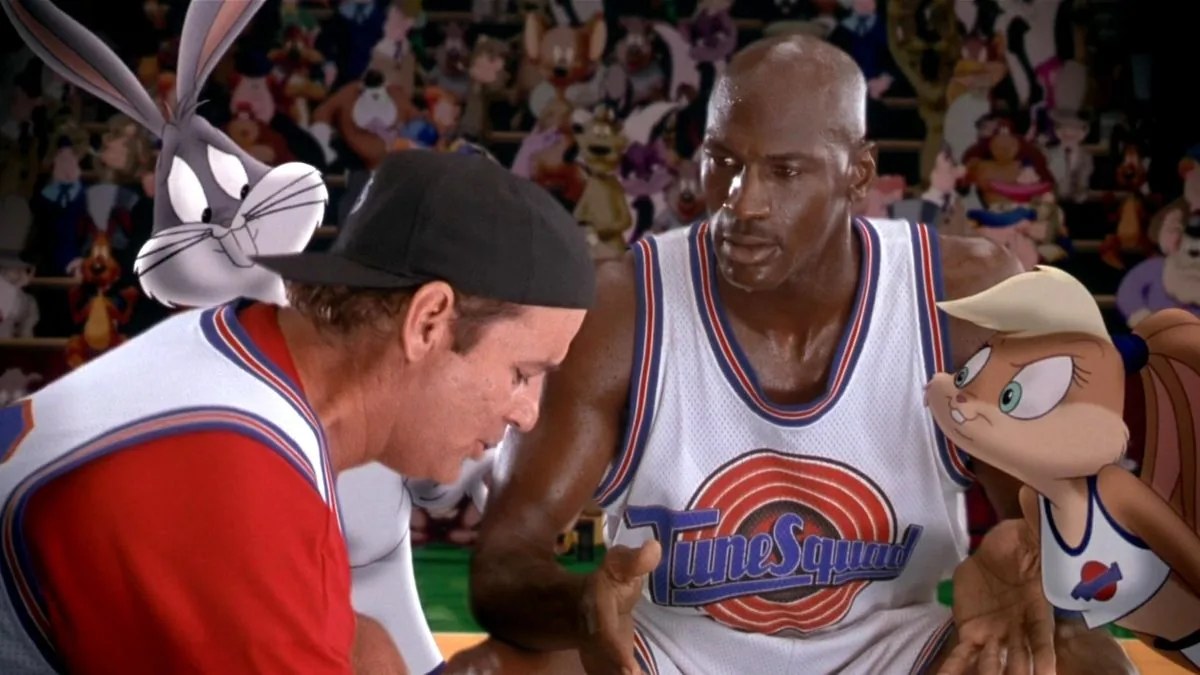
The basketball matchup in Space Jam concluded with an unexpected resolution to the extraterrestrial crisis [1]. Jordan received an assist from Bill Murray in the final seconds of the game and stretched his cartoon arm across the court to score a buzzer-beating slam dunk [3]. The Tune Squad won their freedom without destroying their alien foes [2]. Instead of vaporizing the Monstars, Jordan convinced them that they had only obeyed orders because Mr. Swackhammer bullied them [1]. The Monstars revolted against their abusive boss, trapped him inside a rocket, and launched him to the moon [3].
The Monstars sent Swackhammer into exile, gave up the basketball skills they had stolen, and returned to their small Nerdluck forms [3]. The aliens befriended the Looney Tunes and chose to stay in the cartoon world peacefully [1]. Jordan returned to Earth with his assistant Stan Podolak and delivered the stolen abilities back to Barkley, Ewing, Bogues, Johnson, and Bradley, sparking Jordan’s decision to resume his NBA career [3]. Director Joe Pytka recalled Jordan’s professionalism, telling Entertainment Weekly: “He played himself, and remember, a lot of the film is based on his life, so there were realistic references there. He was very professional; he showed up, he knew his lines, and we made it as easy as possible” [1].
Thirty years later, the enduring appeal of Space Jam 1996 shows that creative sportsmanship can outshine standard Hollywood spectacle [1]. While other alien invasion movies from the 1990s faded from memory, this cartoon hybrid proved that an athletic arena could offer a peaceful alternative to warfare [2]. The film favored athletic competition over weapons and reconciliation over vengeance, delivering a lasting lesson in conflict resolution [5].
- ONLINE NEWS Pereira, S. (2026, November 15). 30 years ago, ‘Space Jam’ proposed the best way to resolve interplanetary disputes. Space.com. [Article Link]
- ONLINE NEWS WireUnwired Editorial Team. (2026, November 15). Space Jam at 30: How the 1996 movie reinvented alien diplomacy. WireUnwired Research. [Article Link]
- WEBSITE Wikimedia Foundation. (2026). Space Jam. Wikipedia. [Article Link]
- ONLINE NEWS Dennis, D., Jr. (2026, November 13). Michael Jordan, Bugs Bunny and the lasting legacy of ‘Space Jam’ at 30. ESPN.com. [Article Link]
- ONLINE NEWS Pereira, S. (2026, November 15). Space Jam turned an interplanetary dispute into a basketball game. RobotToday. [Article Link]
APA 7: PerEXP Teamworks. (2026, November 16). Space Jam 1996 Framed Alien Diplomacy on the Basketball Court. PerEXP Teamworks. https://perexpteamworks.com/en/space-jam-1996-alien-disputes/


