





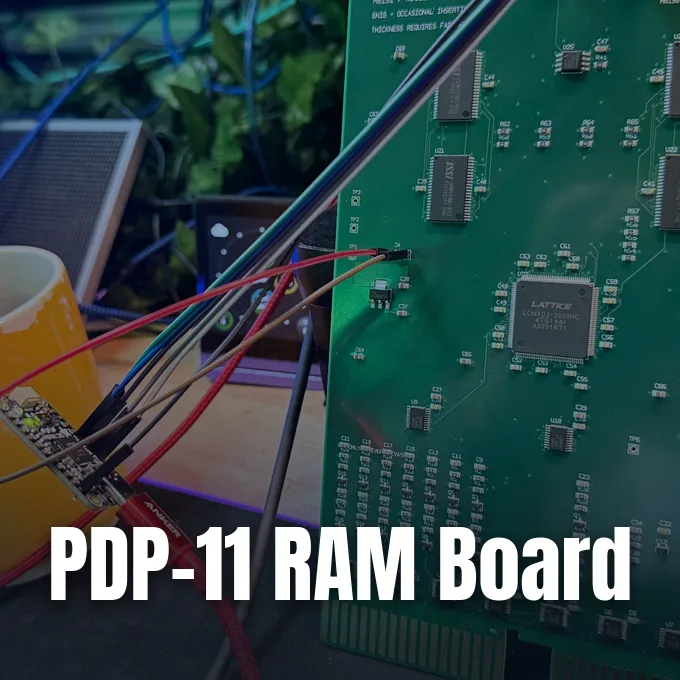
Former Microsoft engineer Dave Plummer built a custom memory board for his vintage DEC PDP-11 computer after market prices for original components climbed out of reach. Plummer, recognized for creating Task Manager and Windows Pinball at Microsoft, turned to AI tools to assist his home laboratory work. The new Dave Plummer RAM project combined the EasyEDA circuit layout tool with a Lattice FPGA controller to restore the classic DEC minicomputer without paying collectors exorbitant sums [1].
The Dave Plummer RAM Project
Plummer hit immediate financial obstacles when searching for authentic memory hardware for his PDP-11, a computer line introduced in 1970. Later PDP-11 revisions accepted up to 4MB of memory. Original boards are exceedingly rare today. Plummer decided to solder his own board [1].
To design the circuit layout without extensive background in complex electronics, Plummer paired ChatGPT with the EasyEDA online editor to arrange the required bus lines and logic gates. The conversational model helped him structure the logic gates and pin connections step by step, allowing him to map out trace routes on a virtual canvas before ordering raw circuit boards. While enterprise discussions often focus on cloud architectures where OpenAI CEO Sam Altman defended moving RAM to data centers, Plummer tackled hardware constraints on a private workbench. His DEC PDP-11 build shows how developers can resurrect vintage 1970 computers by combining artificial intelligence prompts with budget board fabrication [1].
Plummer documents these vintage computing experiments on his YouTube channel TMOG [1]. At Microsoft, veteran engineer Raymond Chen recently examined system resource bottlenecks on Dev Blogs. As reported by Windows Latest, Chen said internal diagnostic tools struggle whenever core system resources run dry [2].
Hardware Components and Circuit Wiring
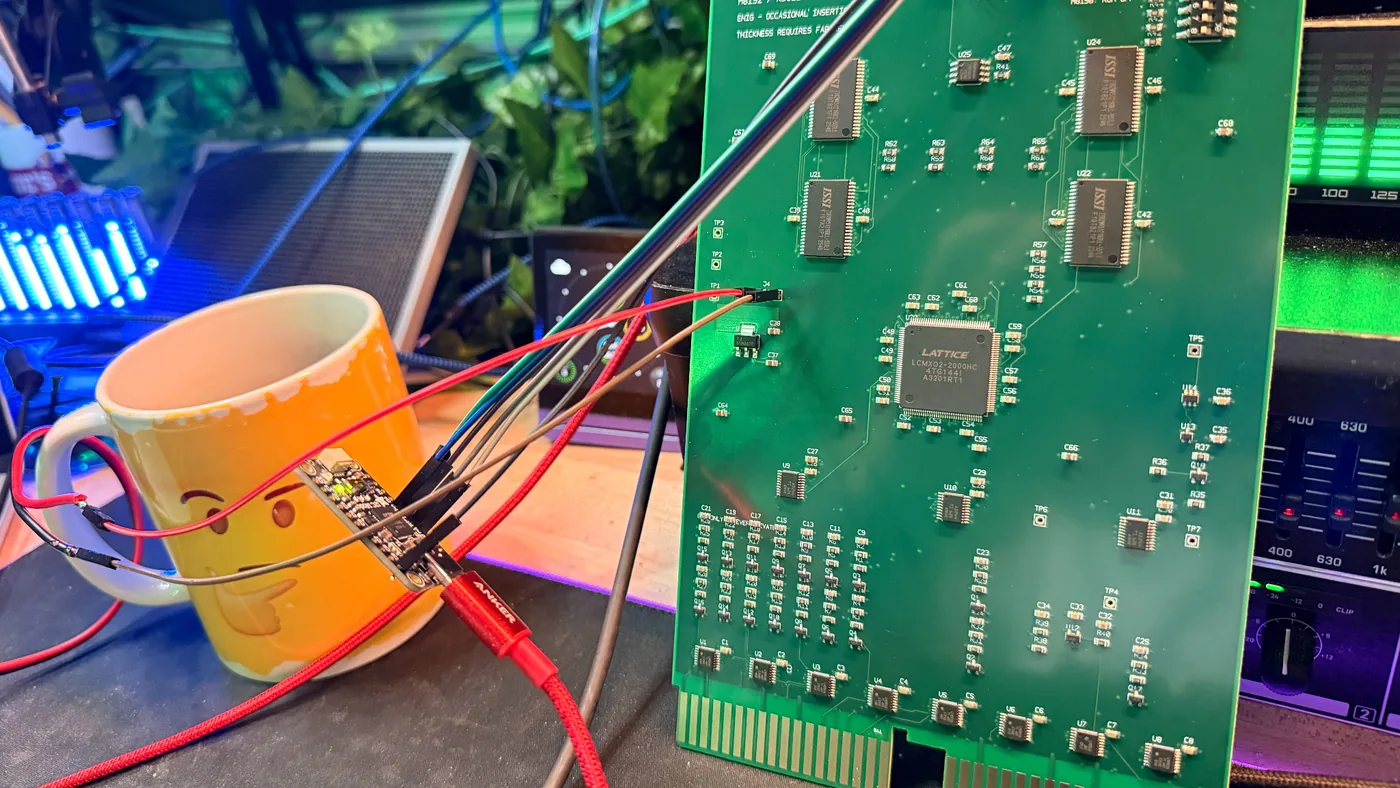
The new memory board plugs directly into the vintage DEC Q-Bus backplane to interface with an M8190 CPU card. DEC engineered the M8190 processor with a 22-bit bus structure. Rather than exposing the full range to user programs, the M8190 configuration reserves its highest 256 KB memory block strictly for input-output functions and ROM routines [1].
At the center of the card, Plummer mounted a Lattice MachXO2 FPGA (model 2000HC) to serve as a memory controller. He linked the Lattice MachXO2 FPGA to four separate ISSI 1 MB memory chips, establishing the main storage bank for the PDP-11. To finish the layout, he placed a U2S I/O chip, added a bank of DIP switches, routed communication ports, and soldered several capacitors to keep the board voltages steady across all active lines [1].
Managing signals across the Q-Bus demands tight timing synchronization between read pulses and write gates. On Dev Blogs, Raymond Chen said software thread schedulers encounter comparable delays when multiple workers contend for shared memory addresses. If one thread claims a lock, other threads must stop [2].


Dave Plummer RAM Bus Traps
The board didn’t run right away. Plummer struggled through several abortive attempts because he had never flash-programmed an FPGA before. After flashing the Lattice chip, testing the Dave Plummer RAM board revealed a classic PDP-11 bus quirk [1].
The PDP-11 memory bus architecture only reads and writes full two-byte words, using the lowest address bit as a lane selector to distinguish between the low and high byte. When the DEC processor executes a read instruction, it pulls the complete word and isolates the desired byte internally, meaning Plummer’s FPGA controller had to supply two bytes on every access cycle. During memory write cycles, the FPGA had to evaluate that selector bit to prevent unselected bytes from being corrupted by incoming bus data. Plummer had overlooked that PDP-11 design detail in his early logic code. One commenter joked that he had “built 4MB of memory that turned out to be 2MB”, prompting Plummer to confirm that the board “only returns every second word” [1].
One forum user suggested bypassing the hardware build by wiring a Raspberry Pi to simulate memory across the PDP-11 bus lines. Plummer answered that he had already tried that approach using a modern QBone DEC interface board equipped with a Beaglebone Black. He preferred an authentic hardware board [1].
Task Manager Behavior Under Heavy Load
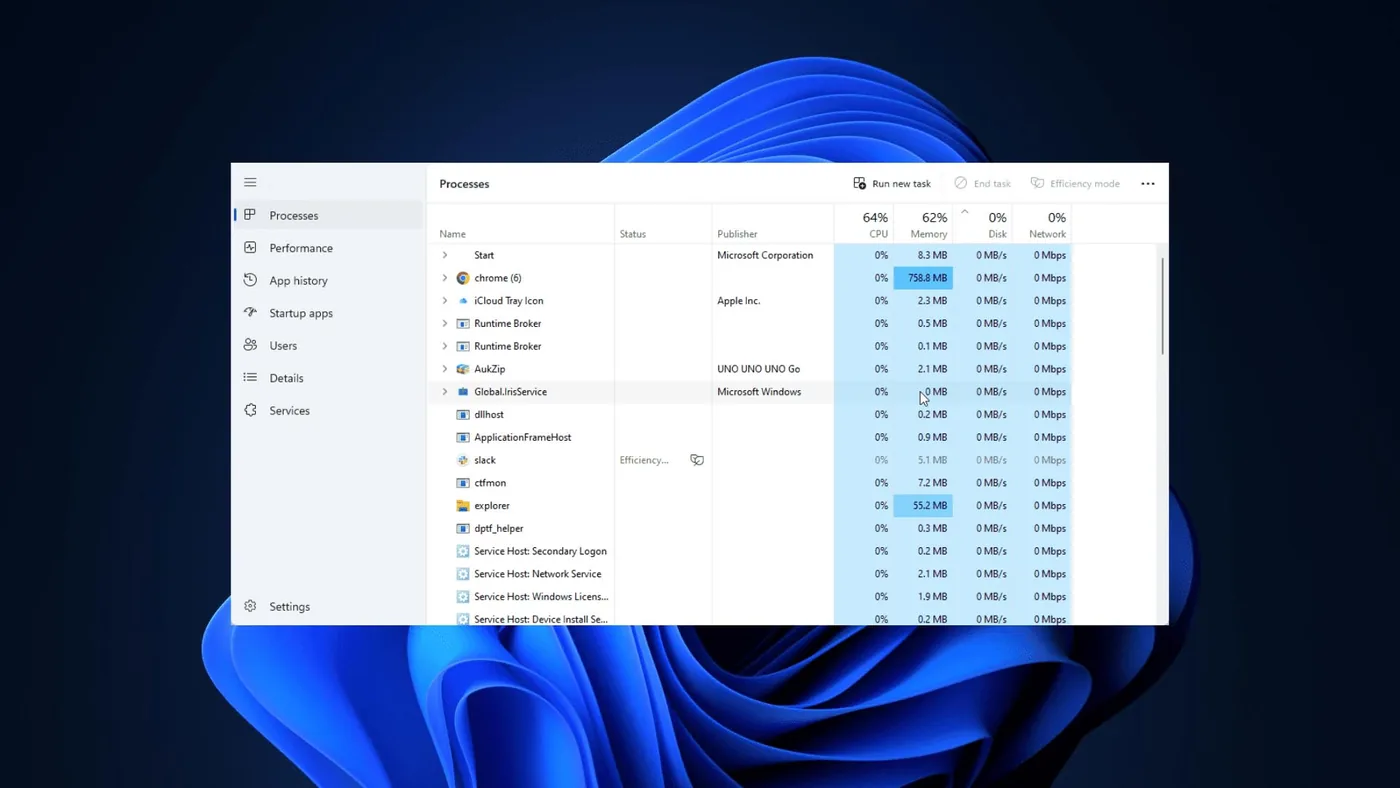
Plummer is best known among PC enthusiasts for authoring Windows Task Manager during his tenure at Microsoft. He wrote the original utility for Windows NT, giving administrators a clear window into CPU cycles and RAM allocation. Even on Windows 11, users rely on Task Manager daily. Yet when a demanding video game, endless browser tabs, or heavy background processes saturate system hardware, the utility often stutters or freezes completely [2].
Microsoft engineer Raymond Chen said Windows 11 can’t shield Task Manager from system-wide resource starvation. While setting Task Manager to high priority sounds like an easy fix, Chen said that adjustment rarely helps. When a thread runs with boosted scheduler priority, it still halts whenever it must wait for an unmanaged shared lock or busy device driver [2].
Chen compared high-priority processes to a shopper holding a VIP express lane pass at a grocery store counter. The special ticket moves the customer straight to the register, but the shopper still waits in place if the cashier is scanning an overflowing grocery cart ahead. On Microsoft Dev Blogs, a developer noted that pegging all 24 cores on a PC rendered Task Manager almost unusable. Raising the application priority provided no noticeable relief, proving Chen’s point about bottlenecked system dependencies [2].
Resource Contention and System Priorities
Windows 11 implements priority inheritance to prevent priority inversion, boosting the priority of any lower thread that holds a locked resource until that thread finishes its work. Chen explained that while this logic resolves basic synchronization jams, it can’t accelerate operations when a blocking thread waits on slow network storage. Priority boosts can’t speed up physical I/O [2].
User interface code faces worse congestion because every desktop application must call into the shared graphics subsystem, competing with every other window for draw time. Windows gives preferential scheduling treatment to whichever app holds user focus. As Chen summarized: “The problem is that it’s hard to fix a runaway system from within that same system. The tools which you can use to try to fix the system may already have been compromised” [2].
If an unresponsive game captures the display and ignores “Ctrl + Shift + Esc”, users can still press “Ctrl + Alt + Delete” to launch the secure desktop. That separate interface isolates Task Manager from clogged application queues. Both Plummer’s PDP-11 memory experiments and Chen’s Windows 11 deep dives show how system architecture boundaries dictate computing performance across eras [1, 2].
- ONLINE NEWS Ferreira, B. (2026, October 31). Veteran Microsoft engineer makes his own RAM from scratch using AI — custom FPGA board dodges extreme 1970s PDP-11 memory prices. Tom’s Hardware. [Article Link]
- ONLINE NEWS Sohail, O. (2026, October 31). Microsoft Veteran Engineer Explains Windows 11 Task Manager Lag Under Heavy CPU Load, Saying It’s “Hard To Fix A Runaway System From Within That Same System”. Wccftech. [Article Link]


