



SpaceX announced plans this week to turn Starlink Mobile into a major carrier in the United States after acquiring new low-band wireless spectrum licenses [2]. The company aims to pair satellite connections with ground towers so mobile phones can connect inside buildings as well as in outdoor locations. That move signals a direct effort to compete with AT&T, Verizon, and T-Mobile in the consumer phone market [3]. Regulators have also cleared thousands of new satellites, giving the company a clear path to nationwide phone service [2].
SpaceX Acquires Low-Band Spectrum for Starlink Mobile
SpaceX revealed two separate developments this week to advance its mobile network goals [2]. The company bought licenses covering 14 MHz of paired wireless frequencies in the 800 MHz band [3]. In its regulatory filing, SpaceX called the transaction a nationwide low-band spectrum license portfolio designed to support customer handsets [2]. Industry publication The Register reported that these low-band frequencies can reach devices inside buildings while satellite orbiters extend signals beyond standard ground masts [1]. That purchase provides the frequency foundation so Starlink Mobile can reach standard smartphones even when users don’t have satellite dishes [2].
Securing low-band frequencies solves one of the biggest physics problems in satellite communications because higher frequencies struggle to pass through solid materials. In its official announcement, SpaceX explained that this low-band spectrum will “provide a coverage layer that ensures Starlink Mobile’s signal penetrates through obstacles, such as walls, and can provide service to customers’ devices even when they are in buildings.” SpaceX said that most existing mobile phones already support this 800MHz band, so users won’t need new hardware to access the network. That compatibility gives the project an immediate path to millions of devices, including Apple’s iPhone, as soon as transmitters go live [2].
Until now, Starlink Mobile has operated in the United States through a partnership with T-Mobile, offering text messaging and limited data on satellite-ready phones. That system relies on satellite beams alone, which leaves dead zones whenever users enter basements, parking garages, or dense urban buildings. Tom Pritchard wrote for Tom’s Guide that SpaceX now plans to combine satellite links with ground mobile masts to build a complete network. It isn’t just an emergency messaging tool anymore [3].
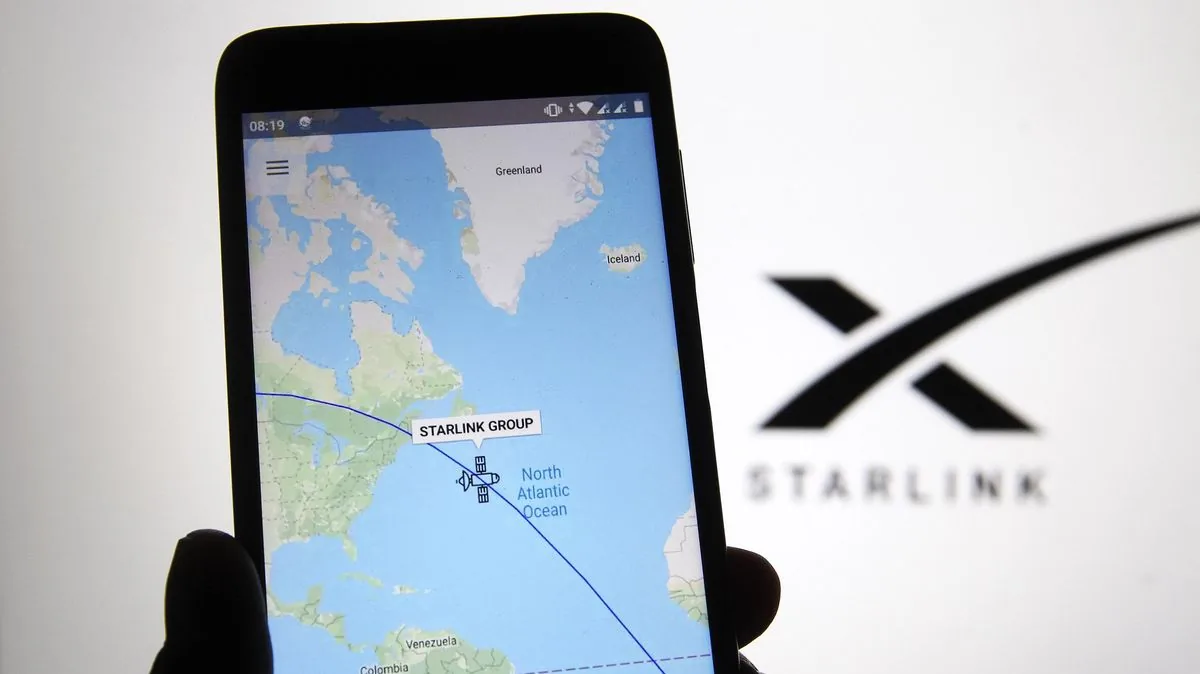
Pairing Low-Band Frequencies with Mid-Band Signals
The newly acquired 800 MHz frequencies won’t operate in isolation. SpaceX already owns 2 GHz of mid-band spectrum that it acquired from EchoStar last year [3]. While mid-band signals provide high bandwidth and fast data speeds, they degrade quickly when passing through walls and roofs. Low-band signals travel much farther and slip through building materials with far less signal loss [2]. By blending both bands, SpaceX wants to balance speed with broad geographical reach [3].
Wireless network engineers often divide radio spectrum between coverage layers and capacity layers because no single frequency band performs well in every environment [3]. Low-band spectrum in the 800 MHz range acts as the coverage layer, maintaining a stable signal when a user walks into a warehouse or drives through a valley. Mid-band frequencies at 2 GHz serve as the capacity layer, carrying heavy internet traffic when many subscribers stream video or download files at the same time. SpaceX plans to use both bands to create what it calls “a flexible architecture combining our satellite-to-mobile constellation in space with an advanced terrestrial deployment.” [2] The company said that this design will give customers “a reliable service indoors, outdoors, in cellular dead zones, and everywhere in between.” [3]
Yet acquiring the licenses doesn’t mean the signals can broadcast right away. SpaceX is still waiting for final approval from the Federal Communications Commission before it can deploy the 800 MHz frequencies on its phone network. The company anticipates that the agency will grant regulatory clearance, but until the paperwork is signed, transmitters must stay silent [2]. It can’t deploy ground-based hardware on these channels without that final green light [3].


FCC Clears 15,000 Satellites for Starlink Mobile Network
While final approval for the 800 MHz license transfer is still pending, SpaceX already secured a major victory from federal regulators for its space fleet. The Federal Communications Commission approved the company’s Gen2 constellation application, granting permission to launch 15,000 satellites optimized for 2 GHz spectrum worldwide. These upgraded spacecraft, known as V2 Starlink Mobile satellites, represent a huge jump in communication capability over earlier orbital hardware. SpaceX said that these new satellites deliver “more than 100 times” the bandwidth of current-generation orbiters, boosting connection speeds for mobile users around the world [2].
Launching 15,000 satellites into low orbit needs a busy flight schedule that SpaceX plans to support with its reusable rocket fleet. The company regularly flies Falcon 9 rockets for government and private customers, including a Falcon 9 launch for NASA’s StarBurst mission, but filling out the Gen2 constellation will take hundreds of rocket flights. Each V2 satellite carries larger phased-array antennas and cellular routing equipment capable of linking straight to standard phones on the ground [2]. That orbital density helps multiple spacecraft remain visible from any open location, preventing dropped calls when users move between cells. The constellation forms the backbone of the Starlink mobile network, handling traffic over vast expanses where building tall towers isn’t practical [3].
Reporting from TechRadar confirms that the FCC approval clears SpaceX to provide high-speed mobile data connections to users worldwide once the satellites reach orbit. James Rogerson explained in TechRadar that the combination of upgraded satellites and low-band frequencies could pave the way for SpaceX to create what the company describes as “the world’s most advanced mobile network.” But the satellites can’t solve every reception problem on their own [4].

Cell Tower Demands and Spectrum Limits
Despite the excitement surrounding satellite bandwidth, analysts caution that 14 MHz is a relatively narrow slice of radio spectrum. Writing for Tom’s Guide, Pritchard pointed out that major carriers hold much larger spectrum portfolios to run their mobile networks. AT&T added 50 MHz of spectrum earlier this year to expand 5G service, split between the 3.45 GHz and 600 MHz bands. By comparison, 14 MHz provides modest total throughput in crowded cities where thousands of users share the same sector [3].
Industry analysts warn that building a carrier requires much more than placing satellites in orbit. Tim Farrar, an industry analyst at TMF Associates, told CNBC that the purchase highlights practical limits. Farrar said: “This adds fuel to the fire in the battle between SpaceX and the mobile operators, but it’s still a very limited amount of spectrum, and to get reliable building penetration in urban areas, SpaceX would have to deploy towers on the ground.” To overcome those constraints, SpaceX must deploy or lease terrestrial cell towers, acquire fiber backhaul, and install base stations throughout major cities [4]. That construction takes years and substantial capital [3].
Because ground infrastructure takes time to construct, industry observers don’t expect Starlink Mobile to launch as a full standalone carrier overnight. Most smaller wireless brands in the United States operate as mobile virtual network operators, or MVNOs, leasing capacity from existing towers. Starlink Mobile could sign roaming pacts with major carriers as a short-term bridge, or it might delay a full service rollout until its own towers stand ready. That choice will decide how fast consumers can sign up [3].
Competing Against Established Wireless Carriers
The entry of SpaceX into terrestrial mobile service presents a direct challenge for AT&T, Verizon, and T-Mobile, often called the Big Three carriers [3]. Just a week before the spectrum deal surfaced, AT&T’s chief executive publicly claimed that SpaceX’s Starlink Mobile ambitions weren’t viable. This sudden spectrum filing suggests that SpaceX intends to prove that skepticism wrong by combining orbital links with ground-level hardware [4]. The incumbent carriers have spent decades assembling tower sites and purchasing billions in spectrum licenses to maintain their market positions [3].
The dynamic between satellite operators and cellular carriers is shifting as space technology matures [4]. Until recently, traditional carriers treated satellite connectivity as a niche backup feature designed solely for wilderness hikers or offshore ships [3]. Now that SpaceX holds 14 MHz of low-band spectrum alongside its 2 GHz mid-band rights and 15,000 approved satellites, it possesses the building blocks for an integrated consumer carrier [2]. If Starlink Mobile succeeds in delivering reliable voice and data inside buildings and along rural highways, it could erode the coverage advantages that terrestrial carriers have long advertised [4]. But building ground infrastructure in hundreds of cities is a daunting hurdle that SpaceX must solve before it can challenge the market leaders [3].
For smartphone owners, the prospect of an integrated satellite and cellular network promises fewer dropped calls and better coverage in remote areas. Whether Starlink Mobile launches its service through carrier roaming agreements or waits until its ground towers are finished, SpaceX has signaled that it plans to compete for everyday cell phone users [3]. The coming months will reveal how quickly the company can secure final FCC clearance and begin deploying hardware on the ground [2].
- ONLINE NEWS Robinson, D. (2026, October 9). SpaceX to buy key spectrum that could help Starlink Mobile become major US cell carrier. The Register. [Article Link]
- ONLINE NEWS Christoffel, R. (2026, October 9). SpaceX to become ‘major mobile carrier’ in US with Starlink Mobile upgrades. 9to5Mac. [Article Link]
- ONLINE NEWS Pritchard, T. (2026, October 9). SpaceX just announced plans to make Starlink a ‘major’ US mobile carrier. Tom’s Guide. [Article Link]
- ONLINE NEWS Rogerson, J. (2026, October 9). Starlink Mobile just acquired additional spectrum, which could set it on the path to becoming a ‘major’ US carrier — but there are still some big obstacles. TechRadar. [Article Link]


