




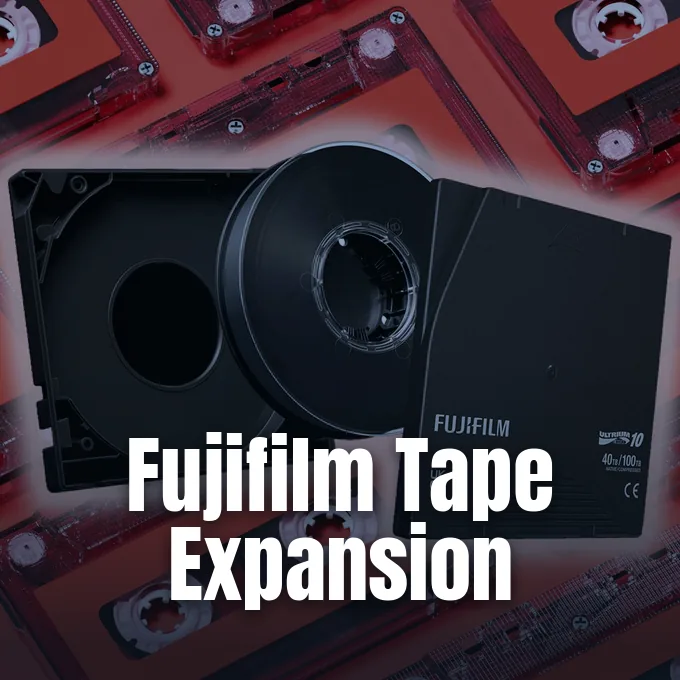
Fujifilm announced plans on Thursday to boost its tape production capacity fivefold by fiscal 2028, responding to rising demand for data archiving from generative artificial intelligence. The Japanese company will spend 10 billion yen (about $63 million) to expand facilities at its Kanagawa Factory in the city of Odawara as data centers seek cheaper cold storage [1].
The Odawara Tape Production Plan
The project targets factory capacity. Work at the Kanagawa Factory Odawara site will run from fiscal 2026 through fiscal 2028, funding extra tape production space and the hiring of additional manufacturing personnel. Fujifilm described the effort as “the largest investment Fujifilm has made to date in dedicated LTO tape facilities”. Most of the added factory lines will turn out latest-generation FUJIFILM LTO Ultrium 10 recording media for enterprise customers [1].
Fujifilm measures this fivefold target against tape shipments from fiscal 2025. Rather than multiplying the data volume packed into an individual cartridge, the buildout expands total factory throughput to supply more physical cartridges to enterprise customers [5]. In foreign currencies, the 10 billion yen outlay equals roughly $63.3 million, about €56 million, or around £47 million [3]. It stands as the company’s biggest tape investment in around two decades, supporting a stated goal to build a “stable supply system for magnetic tape in response to growing data archiving demand accompanying the spread of generative AI” [4].
Fujifilm’s long history with magnetic tape began long before modern data centers. The company first began developing magnetic tape back in 1954 to supply reels for television broadcast equipment [2]. Decades later, Fujifilm released its first Linear Tape-Open cartridge in 2000, claiming the global market’s leading position according to internal company assessments [3].
Cold Storage Economics in AI Data Centers
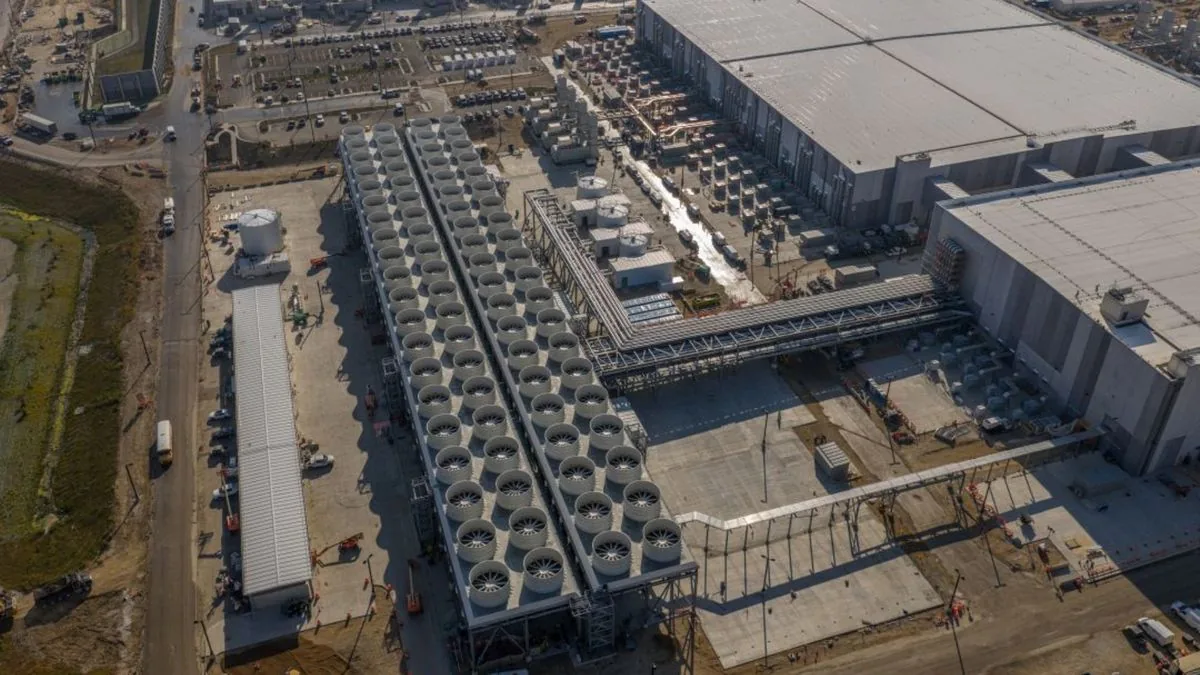
AI training creates massive archives. Once an algorithm finishes training, engineering teams rarely pull those raw datasets back into working memory [4]. Information that sits untouched for months is called cold data [2]. Because keeping petabytes of cold files on active solid-state drives strains computing budgets, data center managers rely on Fujifilm tape production lines to supply offline LTO cartridges [4].
Storage costs explain why tape is so compelling for large data center operators. Storing data on magnetic tape can cost as little as one-quarter the price of spinning hard disks, and the savings widen further when compared with high-speed solid-state drives [2]. A single 30TB Ultrium 10 cartridge costs £297.99 before value-added tax in the United Kingdom, delivering a much lower cost per terabyte than spinning platters or flash memory at current retail prices. Flash chips provide fast read speeds for live queries, but keeping dormant archives on flash drives wastes budget [4]. Tape drives read data sequentially, but when an archive is accessed only rarely, waiting a couple of minutes to load a spool is an easy trade-off for data managers [2].
Tape cartridges also cut server room energy costs. While spinning hard drives consume electricity non-stop because their mechanical platters spin constantly inside server racks, a tape cartridge resting on a shelf draws zero power [5]. Independent research shows that magnetic tape storage generates less carbon pollution than hard disks and solid-state drives over its full working lifespan [2].



Offline Protection Against Ransomware
Security risks are another factor pushing data center managers back toward magnetic tape. Recent ransomware attacks often target networked backup servers first, encrypting secondary copies before locking down primary production systems [3]. Magnetic tape creates an offline barrier known as an air gap. When an LTO cartridge is ejected from a tape drive and placed in a storage rack, it has no electrical or network connection to the outside world [5]. Malicious software can’t reach across empty air to alter or encrypt stored bits [4].
This offline isolation gives IT directors a clean recovery route if business networks are breached. In a worst-case ransomware incident, an attacker would have to break into the facility and steal the plastic tape cartridges to prevent recovery [4]. Major cloud providers and data center operators are leaning on this air-gap protection to guarantee data preservation [6]. Toshinari Fujii, senior vice president of the advanced materials division at Fujifilm Europe, pointed out that tape is far from an obsolete relic: “Tape may bring to mind cassette audio mixtapes and movies on VHS, but magnetic tape is a proven technology that continues to evolve” [3]. That resilience makes tape attractive as cyber threats multiply [5].
Fujifilm said that cloud providers use tape to protect against increasingly sophisticated cyberattacks that exploit automated network protocols [5]. While restoring petabytes of data from offline tape libraries takes longer than pulling copies from active disk arrays, tape keeps an untampered copy of company history intact [3]. Having an immutable offline archive is worth the wait [4].

Capacity Limits and the LTO Roadmap
Tape density continues to climb. The equipment receiving most of Fujifilm’s investment is the LTO Ultrium 10 format, guiding future tape production at the facility [4]. To pack more data onto thin ribbons of tape, Fujifilm developed proprietary fine hybrid magnetic particles. This material blends chemical formulations designed for barium ferrite and strontium ferrite to write narrower data tracks on the tape surface [5].
Current cartridges already offer plenty of storage volume in a compact plastic case that fits neatly into automated robotic tape libraries. A standard LTO Ultrium 10 cartridge holds 30TB of native, uncompressed data, which can expand to 75TB when storing compressed files [4]. Fujifilm also rolled out a 40TB cartridge version in January, further lifting density for enterprise customers who need denser tape libraries [3]. At an entry cost of £297.99 per unit in the UK, businesses can store dozens of terabytes of training logs at a fraction of the hardware expense involved with enterprise hard drives [4]. Fujifilm Europe vice president Toshinari Fujii said resilient infrastructure must support data creation as well as safe preservation and recovery [3].
Looking ahead, the Linear Tape-Open roadmap outlines steady density gains over the coming decade. Fujifilm plans to manufacture advanced tapes capable of holding up to 100TB each as part of its Odawara expansion, according to Nikkei Asia [2]. The broader LTO industry roadmap points even higher, aiming for cartridge capacities of up to 365TB in future generations, easily surpassing the 256TB ceiling of enterprise solid-state drives [3].
Global Memory Shortages and Tape Production
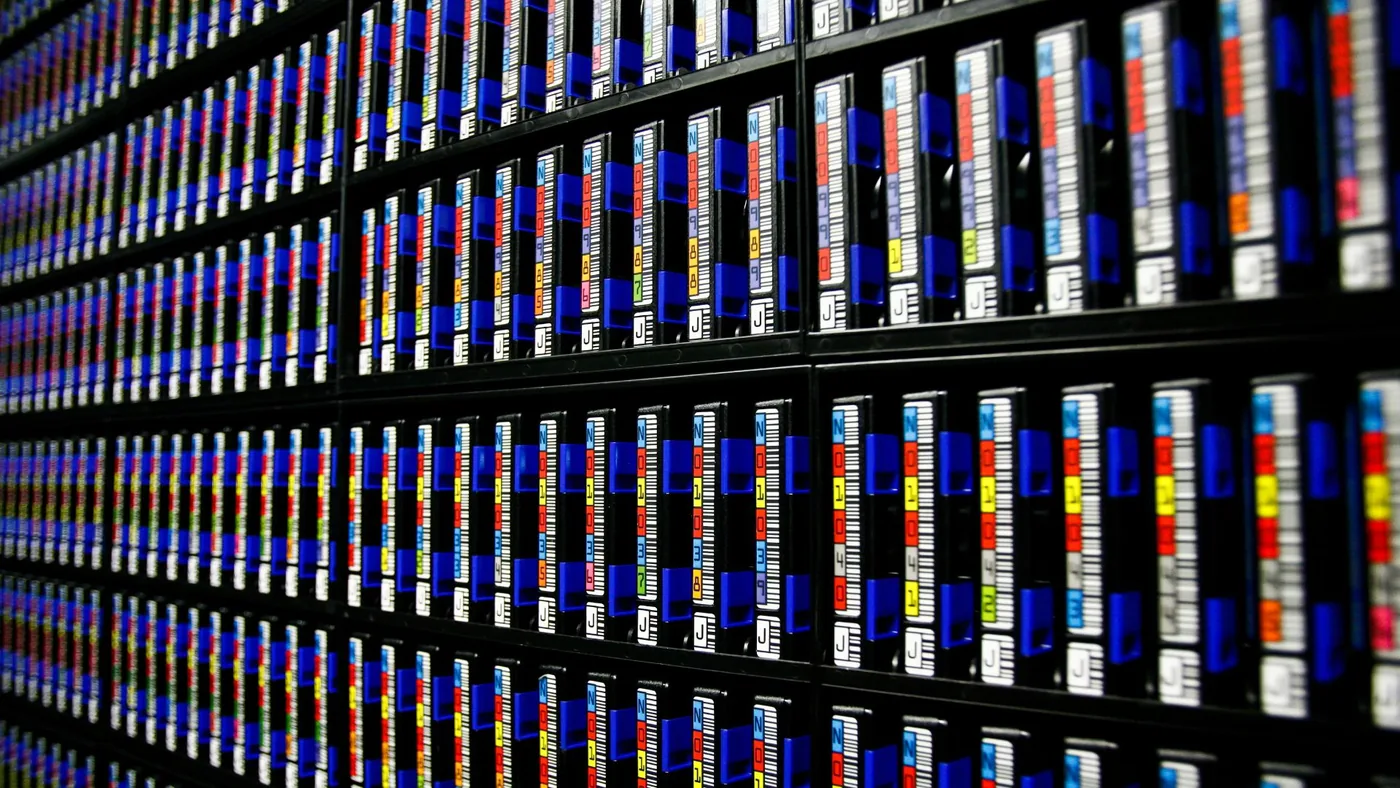
Data centers face tight hardware supplies across computing tiers. Because generative AI workloads divert silicon wafers toward high-bandwidth accelerators, component shortages have worsened, prompting chipmaker SK Hynix to warn that server memory constraints could persist until 2030 [3]. Storage makers like Toshiba, Seagate, and Western Digital are adapting by shifting factory lines away from consumer PCs toward higher-margin enterprise contracts. This hardware scarcity has driven up component prices globally as cloud infrastructure operators compete for limited factory slots [2].
Hardware manufacturers are pushing factory output to keep up with enterprise orders. Toshiba announced plans to double hard disk production capacity amid component squeezes, coordinating with Seagate and Western Digital to meet data center requirements. In solid-state flash memory, Kioxia and SanDisk detailed 332-layer 3D NAND technology in August to pack higher capacities into data center drives [2].
Recent industry shipment figures illustrate how quickly market demand returned to the tape format after a brief pause. Total shipments of Linear Tape-Open media fell 9% in 2025 to 160.3 exabytes, slipping from a record high of 176.5 exabytes set in 2024. However, market demand rebounded in early 2026, with shipments jumping 57% in the first quarter according to data from the LTO Program reported by The Register [3]. By raising its tape production capacity fivefold at Odawara, Fujifilm is positioning its factories to absorb that rebound as AI model training expands over the next several years [1]. Long-term storage needs will only grow as neural networks ingest and generate ever-larger datasets for global cloud platforms [3].
- ONLINE NEWS Ars Technica. (2026). Fujifilm to boost tape production 5x as AI fuels archiving demand. [Article Link]
- ONLINE NEWS Haslam, O. (2026). Fujifilm plans 5x production boost of 100TB magnetic storage tapes driven by skyrocketing AI storage demand. Tom’s Hardware. [Article Link]
- ONLINE NEWS Stanciuc, A.-M. (2026). Fujifilm to raise data tape production fivefold as AI drives storage demand. The Next Web. [Article Link]
- ONLINE NEWS Hardwidge, B. (2026). Tape is back – Fujifilm boosts production by 5x, as AI storage demands boom. Club386. [Article Link]
- ONLINE NEWS Superpower Daily Editorial Desk. (2026). Fujifilm commits 10 billion yen to fivefold tape capacity as AI drives archiving demand. Superpower Daily. [Article Link]
- ONLINE NEWS PiQ Markets Newsdesk. (2026). Fujifilm to quintuple tape production as AI fuels archiving demand. PiQMarkets. [Article Link]


