






A reverse proxy vs forward proxy comparison begins with the direction of network traffic. A forward proxy handles requests for clients, sitting between local user devices and the public web to speed up browsing, save data, and hide client IP details [1]. By comparison, a reverse proxy protects backend web servers, appearing to visitors as the target site while managing connections, terminating TLS encryption, and balancing heavy loads [2]. Both setups guide web traffic, but they defend opposite ends of the wire.
How Traffic Flows
Proxy nodes route web traffic between networks. A proxy can run on a local machine or on remote network gateways located between users and web servers. These systems route data through forwarding paths and HTTP tunnels. When groups of users send their web traffic through a forward proxy, the server caches common web pages and resolves domain names to cut total bandwidth use [1].
Rapid web growth creates major routing and address limits for data centers. In a research study on data center security, Bukhari and Iqbal reported that national cybersecurity traffic anomalies reached 976,429,996 incidents in 2022. Standard 32-bit Internet Protocol (IPv4) addressing provides just over 4 billion unique addresses. Public IPv4 pools are shrinking. By placing an NGINX reverse proxy in front of backend server clusters, data center teams run many independent web apps behind one public IPv4 address. Tests with DNSChecker and whatismyipaddress proved that outside visitors only see the single reverse proxy IP, keeping private backend nodes fully hidden from web scanners [3].
Small edge networks face related routing hurdles when linking low-power sensors to the web. Park and Kang studied data flow in Internet of Things deployments governed by the IETF CoRE working group for the Constrained Application Protocol (CoAP). CoAP supports a forward-proxy mode to translate protocols for small devices. But direct paths in lossy networks suffer from slow response times, URI assignment troubles, and flood attacks. A reverse-proxy design solves these faults by handling URI mapping and resource discovery for smart services [12].
Reverse Proxy vs Forward Proxy Architecture
A forward proxy acts as an outbound gateway for client computers connecting to the web. Users set their browsers or local networks to direct outgoing traffic to the proxy. The proxy checks local rules, fetches assets from web servers, and returns data while keeping user client IPs hidden from remote site logs [1].
The structural gap in reverse proxy vs forward proxy setups depends on who receives protection during a session. A reverse proxy, or surrogate server, stands between internet traffic and origin servers as the public front of a site. Outside visitors send HTTP calls to the proxy domain without knowing that routing takes place behind the scenes. The reverse proxy inspects each request, rewrites URL paths when needed, and hands traffic to backend servers running on separate ports or local host addresses. This design lets system administrators patch, move, or replace backend server clusters without changing public domain records or exposing server IP addresses to the web [2].
Older reverse proxies were difficult to run when software shifted to container clusters. Emile Vauge experienced this challenge while building a Mesosphere microservices platform, finding that existing tools needed tedious manual updates as services moved. In 2015, Vauge created Traefik to query orchestrator APIs in Docker and Kubernetes, updating routes dynamically without restarts. Vauge wrote the project in Go. Released under the MIT License as the Cloud Native Application Proxy, the software follows semantic versioning with releases like 1.1, 1.2, and 1.3 to support changing microservice fleets [8].
Client Privacy in Forward Proxies
Privacy is a key reason to use client-side forward proxies. When users browse websites directly, remote servers record client IPs, browser details, and physical locations. Sending traffic through a proxy replaces the user IP with the proxy address, preventing remote platforms from identifying the visitor [1].
Companies manage forward proxy routing across employee computers by using Proxy Auto-Configuration (PAC) scripts. A PAC file contains a JavaScript function named FindProxyForURL, which tests target web addresses and chooses routing rules for HTTP, HTTPS, and FTP links. Network teams set company DNS servers so that local office domains resolve directly, whereas public sites route through the proxy. The browser runs the PAC script, sending public requests to proxy nodes while keeping direct links to office tools. PAC scripts use JavaScript. Anonymity tools like Tor route traffic through multiple forward proxies in series so that no single node knows both the sender and the target site [1].

Modern systems also pair auth services with proxy directives to verify user logins before passing web traffic. The Caddy web server includes a directive called forward_auth, which sends a clone of an incoming request to an auth gateway like Authelia on port 9091 or Tailscale. The directive makes a GET request to upstream auth points, sending headers like X-Forwarded-Method and X-Forwarded-Uri. If the auth gateway returns a 2xx status code, Caddy copies user headers like Remote-User and Remote-Email to the original request before completing delivery [4].
Security Boundaries
Defensive boundaries separate a reverse proxy vs forward proxy infrastructure. While forward proxies protect office clients from bad web content, reverse proxies shield backend servers from outside attacks. Companies put origin web servers behind private firewalls or Web Application Firewalls (WAF), leaving only the reverse proxy open to the web [2].
Reverse proxy nodes absorb distributed flood attacks that would knock out backend servers. Godinho and fellow researchers analyzed BitTorrent index poisoning floods directed at college networks, discovering that reverse proxy nodes stop poisoned requests before they hit web servers. Torrent floods target web servers [5]. In related security work, He and colleagues developed P2PRPIPS, joining peer firewall nodes with reverse proxy request handlers to balance data flow and stop web intrusions [6]. Fen and Wang showed that an HTTP reverse proxy gateway using a Security Detection and Validate Chain filters hostile traffic through hierarchical rule checks and access lists [7].
Adversaries also deploy proxies for harmful operations. In a study published in Theoretical and Applied Cybersecurity, Vlasenko, Stopochkina, and Ilin showed how attackers use silent reverse proxies to bypass two-factor auth. The hostile proxy steals tokens between users and legitimate sites. The team created a defense tool that tracks client timing changes caused by the proxy. By applying machine learning to client timing metrics, their method spots silent proxies in real time without altering proxy software [11].


Load Balancing Across Backends
Busy web platforms use reverse proxies to split incoming user traffic among server pools. When millions of clients connect at once, a single machine runs out of processor and memory power. A reverse proxy serves as a traffic balancer, checking server loads and sending each connection to an available backend node. Reverse proxies also handle TLS termination, decrypting HTTPS connections at the edge before passing plain HTTP calls to servers on private networks. This task delegation frees server chips to run core app code [2].
Reverse proxies boost web speeds by caching static files and speeding dynamic responses. Proxies save local copies of pictures, scripts, and stylesheets, serving cached files without asking backend servers. In a method called spoon-feeding, a backend server generates a full dynamic page quickly and passes it to the reverse proxy. The proxy holds the finished page and feeds it slowly to dial-up or slow mobile links, letting backend worker processes shut down and take fresh jobs [2].
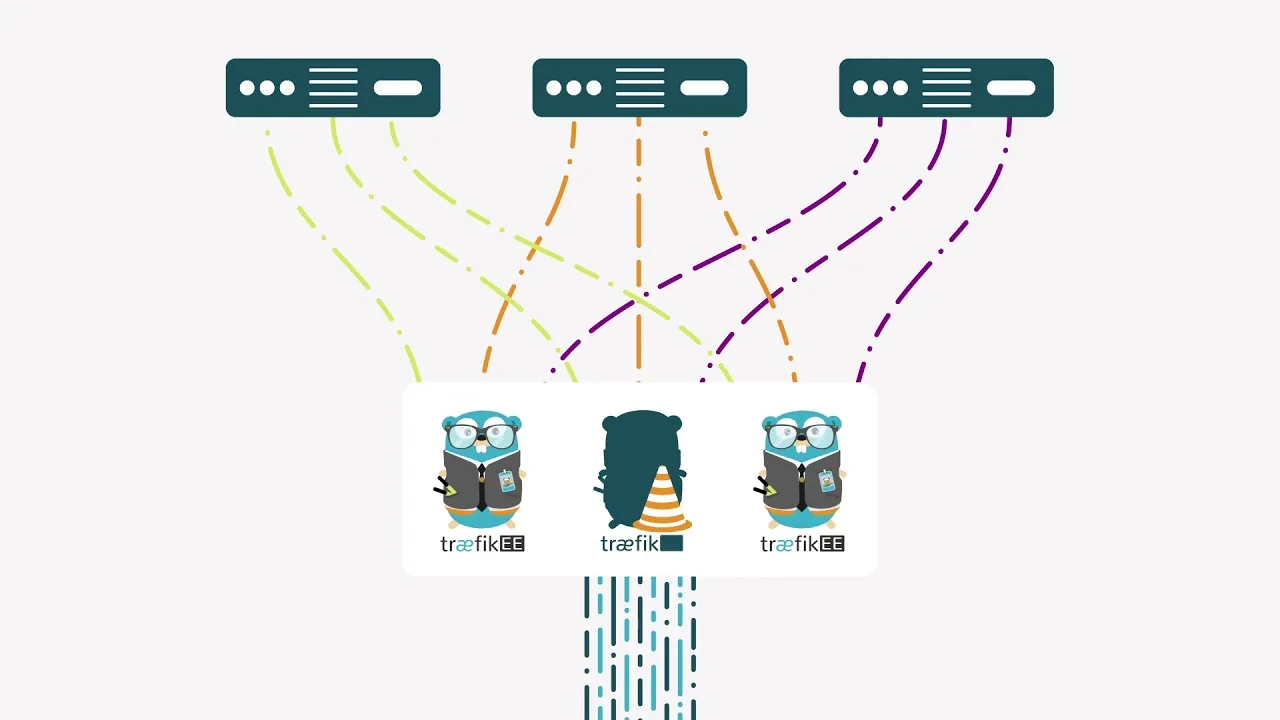
Microservice architectures put reverse proxies at the edge of container clusters as API gateways. Software teams often review GraphQL vs REST API design when planning backend services, using edge proxies to expose clean entry points to outside clients. In 2018, Containous introduced Traefik Enterprise Edition at KubeCon in Seattle to run clustered routing. The enterprise platform distributes proxy instances across nodes using Raft consensus, safely replicating routing rules and TLS certificates to keep services online [8].
HTTP Headers and Tunneling
When a proxy forwards web traffic, destination servers only see the socket link from the proxy node, stripping away user IP addresses and protocol types unless the proxy explicitly passes that connection data. Original client details vanish without headers. The standard Forwarded header groups transit details that would otherwise disappear, while de-facto headers like X-Forwarded-For, X-Forwarded-Host, and X-Forwarded-Proto track client IPs, requested hostnames, and web protocols. Proxies append the Via header [1].
Forward proxies support encrypted web connections through HTTP tunneling. When a client wants to reach an HTTPS site, it sends an HTTP CONNECT call to the forward proxy. The standard port is 443. The CONNECT method opens a two-way TCP pipe between the client and remote host without decrypting traffic. HTTP tunneling lets user machines on private networks reach secure web targets [1].
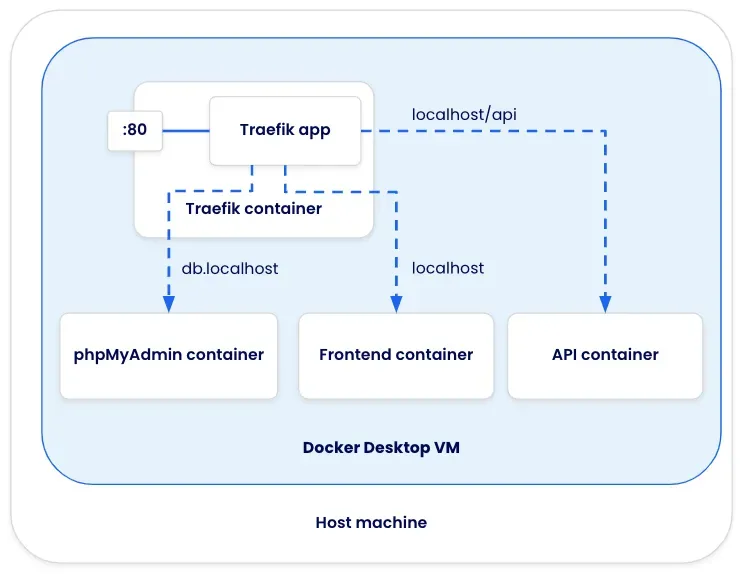
In local software work, reverse proxies manage hostnames and paths to stop port clashes among containers. Docker guides show how Traefik routes calls between app containers using label rules. Instead of opening separate host ports for backend APIs and database tools like phpMyAdmin on port 8080, developers set rules like Host('nginx.localhost'). Traefik listens to the Docker socket, configures HTTP routers on port 80, and passes calls to container ports without host port bindings. When running native services, Traefik routes traffic through a file provider to host.docker.internal on ports 3000 and 5173 [9].
Deployment Risks
Using a reverse proxy as the lone door to backend systems creates real hazards. Because incoming traffic flows through the edge proxy, any software bug or bad setting turns the proxy into a single point of failure. If an edge proxy breaks down, every backend service behind it goes dark for web users [2].
Terminating TLS at proxy nodes creates serious exposure. To inspect, compress, or filter incoming web traffic, the reverse proxy must store private certificates and SSL keys on edge hardware, which widens the attack surface and puts data safety in the hands of proxy operators. Private company apps rarely resist web attacks. If attackers breach an internet-facing reverse proxy, they can use the compromised node to funnel harmful requests into unhardened backend systems. Edge outages disrupt healthy networks. In 2020, an edge routing failure at Cloudflare took down major web services, including Discord [2].

Proxy safety relies on regular updates to threat rules and signature lists. If a company fails to update its filtering engine, zero-day bugs pass through undetected, giving intruders access to backend machines. Leaving traffic filtering to third-party proxies also puts web uptime and data privacy under outside vendor control. Network teams must balance proxy perks against edge security duties [2].
Evaluating Reverse Proxy vs Forward Proxy
How do engineering teams choose between these two proxy models? Choosing between reverse proxy vs forward proxy components depends on whether traffic starts from internal users or arrives from web visitors [1, 2]. Forward proxies fit when firms want to control employee web habits, enforce company rules, and save network bandwidth in local offices [1]. In contrast, reverse proxies are necessary when teams need to run public web apps, balance heavy visitor traffic across server clusters, and manage TLS certificates [2].
Cloud computing has boosted the use of automated reverse proxies in global businesses. Ron Miller reported in TechCrunch that Traefik reached 2 billion downloads by 2020 and passed 3 billion downloads by 2022, backed by 30,000 GitHub stars and 700 open-source contributors. Founder Emile Vauge raised $16 million in venture funding, including a $10 million round led by Balderton Capital and backing from Kima Ventures, 360 Capital, and Elaia. The company employs 40 people. Global firms like Conde Nast, eBay Classifieds, and Mailchimp run Traefik Proxy to handle microservice traffic in production [10].
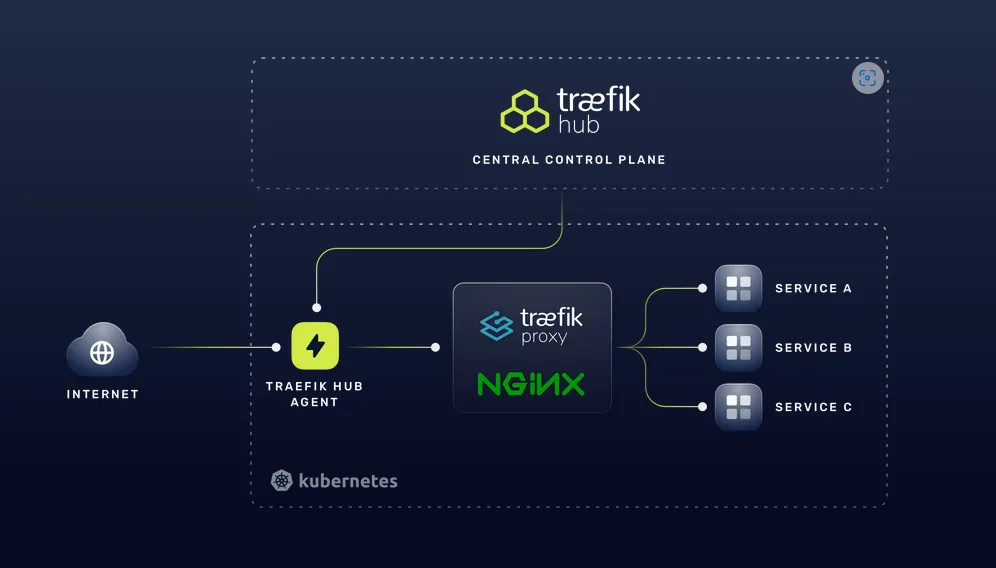
Modern systems often join both proxy models into one network defense strategy. While forward proxies protect office laptops connecting out to cloud services, reverse proxies defend app clusters serving REST and GraphQL endpoints. In 2023, Traefik Labs launched Traefik Hub to simplify API routing and OAuth 2.0 logins on Kubernetes. Choosing the right proxy model keeps data secure at every network border [10].
- WEBSITE MDN Web Docs. (2025). Proxy servers and tunneling. MDN Web Docs. [Article Link]
- WEBSITE Wikipedia contributors. (2026). Reverse proxy. Wikipedia, The Free Encyclopedia. [Article Link]
- ACADEMIC JOURNAL Bukhari, A. S., & Iqbal, M. (2024). Public IP Efficiency and Data Center Security Enhancement with Reverse Proxy Implementation. Journal of Systems Engineering and Information Technology, 3(2), 37-42. [Article Link]
- WEBSITE Caddy Web Server. (2026). forward_auth (Caddyfile directive). Caddy Documentation. [Article Link]
- ACADEMIC JOURNAL Godinho, A., Rosado, J., Sá, F., Caldeira, F., & Cardoso, F. (2022). Torrent Poisoning Protection with a Reverse Proxy Server. Electronics, 12(1), 165. [Article Link]
- ACADEMIC JOURNAL He, Q., Wang, Y., Linlin, Y., & Qin, K. (2013). P2PRPIPS: A P2P and Reverse Proxy Based Web Intrusion Protection System. Research Journal of Applied Sciences Engineering and Technology, 5(7), 2439-2444. [Article Link]
- CONFERENCE PAPER Fen, Y., & Wang, Y. (2017). A Security Web Gateway Based on HTTP Reverse Proxy. DEStech Transactions on Engineering and Technology Research. [Article Link]
- ONLINE NEWS Jackson, J. (2018, December 12). Traefik: A Dynamic Reverse Proxy for Kubernetes and Microservices. The New Stack. [Article Link]
- WEBSITE Docker Documentation. (2026). HTTP routing with Traefik. Docker Documentation. [Article Link]
- ONLINE NEWS Miller, R. (2020, September 23). Five years after creating Traefik application proxy, open-source project hits 2B downloads. TechCrunch. [Article Link]
- ACADEMIC JOURNAL Vlasenko, A., Stopochkina, I., & Ilin, M. (2022). Methods of counteraction of bypassing two-factor authentication using reverse proxy. Theoretical and Applied Cybersecurity, 3(1). [Article Link]
- ACADEMIC JOURNAL Park, J., & Kang, N. (2014). Design of Smart Service based on Reverse-proxy for the Internet of Things. The Journal of The Institute of Internet, Broadcasting and Communication, 14(6), 1-6. [Article Link]


