





South Korea is confronting an intractable cycle of webtoon piracy as unauthorized distribution platforms continuously bypass administrative blocks by launching replacement web addresses. Parliamentary records submitted by the Korea Communications Standards Commission (KCSC) to Democratic Party lawmaker Jung-ah Hwang on September 27 reveal that digital mirror sites represent more than two-thirds of all regulatory corrective actions. While domestic cultural exports expand globally, illicit operators evade internet service provider restrictions within hours of enforcement orders. State regulators issued 24,297 access-blocking requests for copyright-infringing content from 2023 through August 2026, yet administrative takedowns have failed to stem the resurfacing of clone portals [1].
Scale of Webtoon Piracy Replacement Domains
Official enforcement logs illustrate that the primary operational challenge facing South Korean regulators stems not from initial site discoveries, but from the relentless redeployment of duplicate infrastructure. Out of the 24,297 corrective-action requests recorded between 2023 and August 2026, exactly 16,390 cases involved replacement domains created after original portals were blocked [1]. That figure represents 67.5 percent of all access-blocking measures documented by the communications commission.
Replacement domains drove the entire surge. More than 16,000 regulatory reviews since 2023 focused solely on recurring mirror portals [1].
Annual distribution figures underline how shifting web infrastructure complicates copyright protection across the domestic publishing sector. Authorities logged 6,236 replacement site requests in 2023, followed by 5,771 corrective orders in 2024 as operators moved between numerical URL prefixes to circumvent domestic telecom filters [2]. While recorded corrective actions dipped to 1,877 during 2025, enforcement activity rebounded sharply through August 2026 with 2,506 access-blocking requests filed in the first eight months of the year alone. These persistent domain reassignments reflect a calculated operational model where pirate networks retain their digital comic databases and user traffic while discarding penalized domain names at nominal financial expense.
Regulatory Logjams Delaying Enforcement Actions
A striking revelation in the parliamentary disclosure centers on the total absence of formal criminal referrals originating from administrative reviews. Despite logging tens of thousands of copyright violations, government regulators have not forwarded a single infringement case to law enforcement bodies for prosecution [1]. The Korea Communications Standards Commission confirmed that no investigative materials or forensic digital records were transferred to state prosecutors or police detectives between 2023 and August 2026. Administrative warnings brought zero criminal referrals.
This systemic separation between telecommunications oversight and judicial enforcement creates an environment where pirate administrators operate with minimal apprehension of physical legal consequences. Administrative blocking orders merely require internet service providers to restrict domain name server routing, leaving the underlying offshore hosting servers and commercial syndicate operators completely untouched [1]. Without criminal subpoenas or coordinated international police actions, regulatory agencies find themselves engaged in an endless procedural loop that consumes bureaucratic resources without dismantling commercial piracy enterprises.
Similar domain evasion tactics have demonstrated that administrative domain takedowns face severe limitations when unaccompanied by criminal warrants or physical server seizures. International domain-level actions face comparable jurisdiction hurdles, as seen when law enforcement targeted illicit network infrastructure during the DoJ seizure of NightmareStresser domains in Operation PowerOFF, illustrating that address blocking alone rarely deters persistent digital operators.

Newtoki Resurfaces Against Webtoon Piracy Filters
The operational resilience of illicit networks is exemplified by the notorious portal Newtoki, widely recognized as one of South Korea’s largest unauthorized platforms for digital comics and web novels. Prior to the rollout of updated government filtering measures, the original Newtoki domain abruptly ceased operations, but a platform carrying identical branding and serialized content reappeared online shortly after [1]. The original Newtoki domain abruptly vanished. The quick return demonstrated the speed with which pirate syndicates reconstruct public-facing mirrors.
In May, the Ministry of Culture, Sports and Tourism (MCST) implemented a revised infrastructure specifically targeted at accelerating administrative reactions against copyright infringements [1]. State officials declared that the revised infrastructure was engineered to “significantly improve response speed” as the most potent administrative intervention available under prevailing domestic copyright statutes. Yet pirate administrators preempted the government rollout by migrating user redirect scripts across foreign server farms, blunting the intended immediate impact of the ministerial monitoring tools.
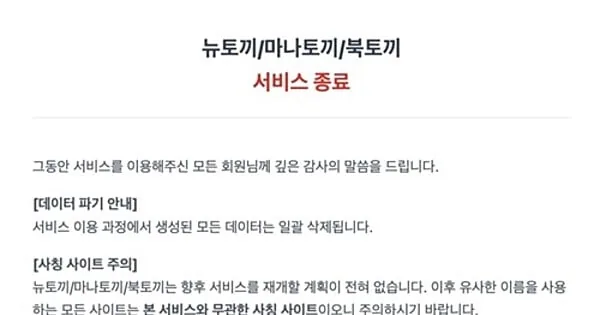
Commercial syndicates operating platforms like Newtoki maintain extensive automated archiving tools that harvest newly uploaded web novel installments and comic chapters seconds after official release [2]. Domain redirection scripts distribute these works to mirrored sites before administrative panels can convene corrective hearings. The official referral count was zero. Consequently, rapid domain turnover neutralizes centralized domain blacklists.
Why Administrative Domain Blocking Falls Short
Why do state corrective measures fail to eliminate illicit reading hubs? The fundamental weakness lies in the technical mechanics of internet service provider access prevention [1]. When the Korea Communications Standards Commission issues a corrective request, domestic network telecommunication carriers block access to specific domain names or numerical internet protocol addresses. However, pirate administrators routinely purchase dozens of backup domain variations in advance, instantly migrating their content databases once a specific URL becomes unreachable for domestic readers.
The procedural lag inherent in administrative governance further exacerbates the disparity between regulators and pirate networks. While telecommunications committees require weeks to review copyright petitions, substantiate intellectual property infringement, and issue formal corrective orders, an illicit webmaster can deploy an operative mirror within minutes [1]. Automated mirroring networks duplicate entire webtoon libraries across alternative top-level domains, allowing illicit reading traffic to continue uninterrupted while state regulators process subsequent enforcement paperwork.
This operational imbalance leaves digital comic creators bearing the financial brunt of persistent webtoon piracy while administrative panels process recurring backlogs. In reporting published by PerEXP Teamworks, legal analysts have underscored how administrative remediation without investigative referrals allows copyright infringement syndicates to profit continuously through offshore digital advertising banners [2]. Telecom firewalls cannot stop digital piracy.
Legislative Scrutiny on Digital Comic Piracy
The disclosure of the communications commission data by lawmaker Jung-ah Hwang on September 27 has intensified parliamentary criticism regarding executive webtoon piracy enforcement strategies [1]. Hwang pointed out that relying strictly on repetitive address blocking without pursuing criminal investigations allows illicit syndicates to treat administrative takedowns as minor operational inconveniences. South Korean creative studios, which have achieved international prominence through serialized webtoon adaptations and domestic animation projects like Studio Lico’s Your Letter and Netflix’s Lost in Starlight, face continuous intellectual property erosion [2].
Parliamentary representatives argue that the Ministry of Culture, Sports and Tourism must bridge the regulatory gap by establishing mandatory referral pipelines connecting administrative monitoring systems directly with judicial investigators [1]. Without active prosecutorial subpoenas and cross-border police collaboration, domestic administrative measures will continue to record rising numbers of replacement URLs without incapacitating the criminal networks profiting from unauthorized distribution.
As legislative committees prepare upcoming regulatory audits, the focus turns to whether South Korea will modernize copyright legislation to penalize replacement site hosts and enforce stricter liability on commercial web hosts [1]. The data submitted to the Democratic Party lawmaker demonstrates that blocking 16,390 replacement domains without criminal consequences has done little to stop unauthorized operators from reopening under new web addresses.
- ONLINE NEWS Anime News Network. (2026, September 28). S. Korean Gov’t Report: Domestic Piracy Webtoon Sites Repeatedly Reopen Under New Addresses. [Article Link]
- ONLINE NEWS Anime News Network Newsroom. (2026, September 28). S. Korean Gov’t Report: Domestic Piracy Webtoon Sites Repeatedly Reopen Under New Addresses. [Article Link]


