





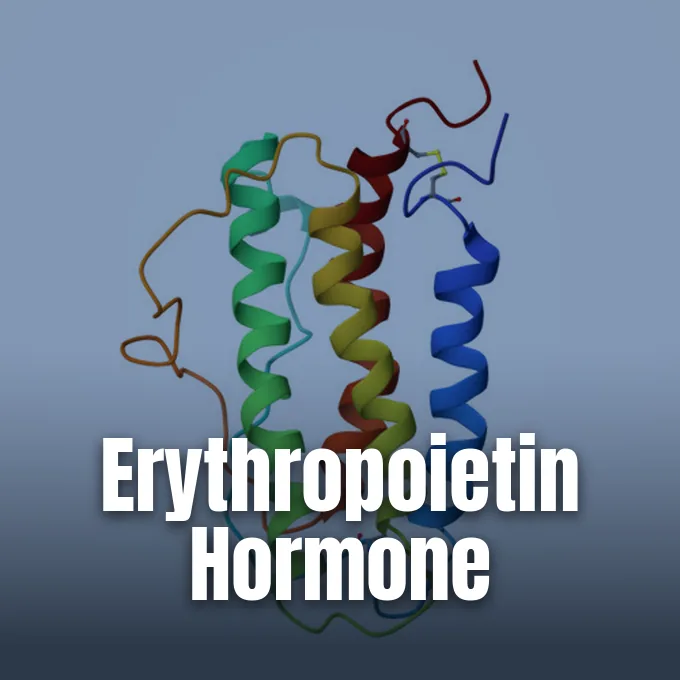
Understanding what is erythropoietin starts with a 30.4 kDa glycoprotein hormone that controls red blood cell growth in bone marrow [5]. Made mainly by peritubular cells in adult kidneys, it moves through the blood to shield early cells from programmed death. When blood oxygen drops, kidney output rises up to a thousandfold to keep tissues supplied with oxygen [2].
- What Is Erythropoietin and How the Kidneys Produce It?
- Oxygen Sensing in the Renal Feedback Loop
- How EPO Signals Bone Marrow Progenitors
- Historical Discovery from Rabbit Blood to Gene Cloning
- Medical Uses of Recombinant ESAs
- Clinical Trials in Neonatal Neuroprotection
- Why Erythropoietin Stimulates Endurance in Sports
- Anti-Doping Detection and Athlete Sanctions
What Is Erythropoietin and How the Kidneys Produce It?
Erythropoietin is a blood-borne cytokine that directs bone marrow stem cells to make mature red blood cells [1]. In adult humans, kidneys handle roughly 90% of total hormone output, while the liver adds the other 10%. The body shifts this duty over time: during fetal life, liver cells make most of the hormone, but kidney peritubular cells take over after birth [2].
In healthy people, resting blood levels stay low near 10 mU/mL, which gives enough signal to replace old cells during daily turnover. When tissue oxygen drops during blood loss, lung trouble, or high mountain travel, hormone levels climb steeply, reaching up to 10 000 mU/mL in circulating human blood [2]. Filtration experiments in the past proved how scarce the substance is in nature, with teams processing 670 gallons of urine to isolate minute amounts of natural hormone [1].
At the molecular scale, the mature human hormone consists of a single chain of 165 amino acids joined to four sugar groups [5]. Structural work in 1998 by J. C. Cheetham, K. H. Aoki, and J. Egrie at Amgen in Thousand Oaks, California, mapped its shape and receptor-binding sites [11]. In 2013, a team led by P. Wang completed the total chemical build of the molecule with consensus sugar branches, showing Procrit-level biological activity in mouse tests [7]. Sugars make up about 40% of its total weight, giving the protein a mass of 30.4 kDa and a clearance half-life of 5 hours in human blood [2, 5].
Oxygen Sensing in the Renal Feedback Loop
The kidney regulates erythropoietin output through an oxygen-sensing network based on hypoxia-inducible factors. In oxygen-rich tissues, these regulatory proteins are broken down by proteasomes before they can turn on genes. When oxygen drops, this breakdown stops, allowing HIF-2α and PGC-1α to bind the hormone promoter and trigger messenger RNA assembly [2].
A second factor called GATA2 helps govern this pathway by blocking the promoter when oxygen is normal. As hypoxia sets in, cellular GATA2 levels drop, releasing the brake so that renal cells can boost hormone output. This negative feedback loop ties red blood cell production to oxygen needs, meaning any fall in blood oxygen sparks a quick rise in kidney release [2].
Beyond hypoxia, other body signals can adjust this renal baseline and shift hematocrit control. In a six-month trial in older men with mobility limits, daily testosterone gel raised hemoglobin and hematocrit by 7% to 10%. That gain was paired with higher erythropoietin levels and lower hepcidin amounts at one and three months, showing that sex hormones can change the renal set point for red cell mass [6].
How EPO Signals Bone Marrow Progenitors
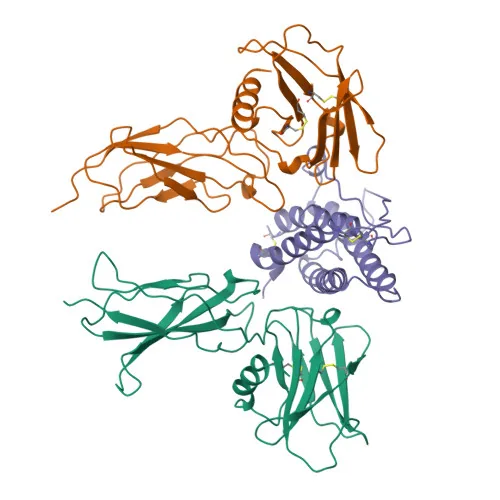
EPO works by binding to cell-surface receptors on early red blood cells in the bone marrow. The erythropoietin receptor is a 52 kDa peptide with a single sugar chain, forming a 56 to 57 kDa protein that rests on the cell membrane as an unliganded homodimer [3]. X-ray crystallography studies resolved at 1.9 angstroms revealed that binding of one EPO molecule locks two receptor arms into a 120-degree angular layout, which correctly aligns pre-associated Jak2 tyrosine kinases. Structural work at Amgen showed that half-maximal receptor binding occurs at a low concentration of about 0.18 nM. Without this precise orientation, cytokine signaling falters, whereas proper docking triggers rapid phosphorylation across intracellular kinase cascades that drive cell survival [12].
Because the receptor lacks intrinsic kinase activity, this movement sparks autophosphorylation of Jak2, which adds phosphate groups to cytoplasmic receptor tyrosines to create docking sites for STAT5, PI3K/Akt, and Ras/MAPK pathways [2, 3]. Working with GATA-1, this network turns on Bcl-xL, a protective protein that rescues immature cells from programmed death [3].

Receptor density changes through each stage of marrow cell growth. Early burst-forming progenitors carry few receptors, but the next colony-forming unit-erythroid stage expresses peak receptor numbers and relies on the hormone to survive. Later erythroblasts gradually lose receptors, and mature red cells carry none [2]. Under severe hypoxic stress, late precursor cells skip cell division to speed red blood cell delivery into the blood [3].
Historical Discovery from Rabbit Blood to Gene Cloning
The idea that a humoral factor directs red blood cell production dates back to 1905, when French physician Paul Carnot and his student Clotilde-Camille Deflandre tested bloodletting in rabbits. They saw that injecting plasma from anemic rabbits into healthy animals increased blood cell counts, naming the active substance hemopoietin. Years later, Finnish researchers Eva Bonsdorff and Eeva Jalavisto renamed this circulating factor erythropoietin [2].
Further physiological proof came from K.R. Reissman and Allan J. Erslev, who proved that circulating plasma agents regulate erythrocyte volume in response to hypoxia. In 1977, Eugene Goldwasser and Charles Kung purified pure human erythropoietin from aplastic anemia patient urine, securing enough protein to map early peptide sequences. That sequence data enabled Fu-Kuen Lin and colleagues in 1985 to clone the human gene from genomic libraries, which allowed Amgen to produce recombinant hormone in mammalian host cells. This breakthrough permitted large-scale biopharmaceutical manufacture, transforming clinical care for patients suffering from end-stage renal failure [2].
Clinical trials began quickly, achieving successful anemia correction in patients in 1987. In 1989, the United States Food and Drug Administration approved recombinant epoetin alfa under the name Epogen for anemia in chronic kidney failure. Thirty years later, Gregg L. Semenza, Peter J. Ratcliffe, and William Kaelin Jr. shared the 2019 Nobel Prize in Physiology or Medicine for discovering how cells sense oxygen through the HIF pathway [2].
Medical Uses of Recombinant ESAs
Recombinant human erythropoietins, called erythropoiesis-stimulating agents, changed kidney medicine. In failing kidneys, damaged endocrine cells cannot produce normal hormone amounts, causing anemia that once demanded regular blood transfusions. Dosing with epoetin alfa or epoetin beta restores marrow cell growth, raising hematocrit and freeing dialysis patients from donor blood reliance [2, 5].
Doctors also use ESAs to treat anemia from myelodysplasia and cancer chemotherapy [2, 10]. A review in the Cochrane Database of Systematic Reviews showed that these drugs curb transfusion needs and raise hemoglobin in oncology patients [10]. To reduce clinic visits, firms engineered longer-lasting drugs: darbepoetin alfa carries extra sugar chains that prolong its lifespan in blood, and European regulators approved epoetin zeta biosimilars named Retacrit and Silapo in December 2007 [2, 5].
However, clinical studies revealed serious heart risks when doctors drove hemoglobin levels too high. Pushing hemoglobin past 11 g/dL to 12 g/dL raises rates of deep vein blood clots, heart attacks, strokes, and death [2, 5]. Because of these vascular hazards, drug labels carry boxed warnings instructing clinicians to use the lowest dose needed to avoid blood transfusions rather than trying to reach normal hematocrit targets [2].

Clinical Trials in Neonatal Neuroprotection
Because erythropoietin receptors were identified in brain tissues, scientists tested whether the hormone could rescue injured nerve cells from hypoxic damage. Animal work suggested that high doses might curb cell death and blunt glutamate toxicity after stroke. Celik and associates saw motor neuron rescue in rabbits with spinal cord ischemia, where animals given recombinant hormone showed improved neurological recovery compared to saline controls [4].
Despite hopeful animal data, large human trials failed to show brain benefits in newborn babies. In a randomized, double-blind trial published in the New England Journal of Medicine, Juul and associates evaluated 941 extremely preterm infants born between 24 and 27 weeks of gestation. The protocol delivered 1000 units per kilogram intravenously every 48 hours for six doses, followed by maintenance injections through 32 weeks postmenstrual age. The primary endpoint measured death or severe neurodevelopmental impairment at 22 to 26 months of age, defined as severe cerebral palsy or a motor or cognitive score below 70, but found no improvement over placebo [8].
Similar negative findings occurred when teams tested the drug in term infants suffering from birth asphyxia. In a multicenter trial led by Wu and colleagues, 501 infants with hypoxic-ischemic encephalopathy received intravenous erythropoietin or saline alongside hypothermia. The trial tracked children to 22 to 36 months, measuring cerebral palsy, motor scale scores, and cognitive marks below 90. High doses failed to lower disability rates and caused a higher rate of adverse events, demonstrating that laboratory nerve protection does not always translate into human clinical success [5, 9].
Why Erythropoietin Stimulates Endurance in Sports
Endurance competitors misuse erythropoietin because expanding red cell volume boosts oxygen delivery to working skeletal muscle. By raising red cell mass and hematocrit, synthetic injections raise maximal aerobic capacity (VO2max), allowing athletes to sustain higher power outputs before fatigue sets in [2, 14]. Jeff Novitzky, vice president of athlete health and performance for the UFC, noted that the substance has no dietary supplement source and requires injection, making its illicit use an intentional doping choice [13].
Sports physiology studies link the drug to clear performance gains during maximal sprints, but submaximal efforts behave differently. A 2007 trial showed that treated cyclists maintained a submaximal pace of 80% of their initial VO2max for longer times because their overall aerobic roof had climbed. But when test pacing was reset to 80% of their new, post-treatment aerobic maximum, the cyclists experienced earlier exhaustion. A 2017 study confirmed that while maximal work jumped, submaximal output was no better than placebo [2].
This performance boost brings grave medical threats when blood becomes too thick. Excess red cells increase blood viscosity, slowing flow through small vessels and raising risks of lethal clots, heart failure, and stroke [2, 5]. In the late 1990s, cycling teams such as Festina and the U.S. Postal Service squad under Lance Armstrong and Johan Bruyneel ran systematic doping routines using the hormone. What was invented to treat renal failure became a notorious doping agent in global sport [2].
Anti-Doping Detection and Athlete Sanctions
Sports bodies banned recombinant erythropoietin in the early 1990s, but reliable testing methods only arrived for the 2000 Summer Olympics in Sydney. Because synthetic epoetin molecules carry distinct sugar branching patterns, lab tests can spot artificial drugs in urine and blood [2]. The first cyclist to return an adverse finding under tests run by the International Cycling Union was Danish rider Bo Hamburger at the 2001 Flèche Wallonne, though the Danish Sports Federation cleared him after a B-sample fell below the 80% proof threshold. Laurent Rivier reportedly told Danish paper Ekstra Bladet that the test was “not 100% trustworthy” [15].
In mixed martial arts, the United States Anti-Doping Agency banned former UFC bantamweight champion TJ Dillashaw for two years in April 2019. Dillashaw tested positive before his bout with Henry Cejudo in New York, and USADA also detected EPO in an earlier sample from December 2018. USADA chief Travis T. Tygart stated that rigorous rules protect clean athletes, and Dillashaw gave up his championship belt without contest [13].
Doping investigations have also uncovered illicit hormone use in harness racing stables. In November 2026, Tasmanian authorities banned trainer Conor Crook for 20 years after he pleaded guilty to 25 charges, including giving EPO to racehorses at Launceston Pacing Club. Swabs found the drug in horses Maebee and Magnetic Terror, leading Tasracing integrity chief Heidi Lester to condemn the threat to animal welfare. Crook was ordered to pay $24,027 in costs and a $1,350 fine as stewards changed race results across six events [14].
- DICTIONARY ENTRY Dictionary.com. (2023). Erythropoietin. In Random House Unabridged Dictionary. Dictionary.com. [Article Link]
- WEBSITE Wikipedia. (2026). Erythropoietin. Wikimedia Foundation. [Article Link]
- WEBSITE Wikipedia. (2026). Erythropoietin receptor. Wikimedia Foundation. [Article Link]
- WEBSITE Wikipedia. (2026). Erythropoietin in neuroprotection. Wikimedia Foundation. [Article Link]
- ACADEMIC JOURNAL Jelkmann, W. E. B. (2013). Physiology and pharmacology of erythropoietin. Transfusion Medicine and Hemotherapy, 40(5), 302-309. [Article Link]
- ACADEMIC JOURNAL Bachman, E. S., Travison, T. G., Basaria, S. S., Davda, M. N., Guo, W., Li, M., Westfall, J. C., Bae, H. T., Gordeuk, V. R., & Bhasin, S. (2013). Testosterone induces erythrocytosis via increased erythropoietin and suppressed hepcidin: Evidence for a new erythropoietin/hemoglobin set point. The Journals of Gerontology Series A, 69(6), 725-735. [Article Link]
- ACADEMIC JOURNAL Wang, P., Dong, S., Shieh, J., Peguero, E., Hendrickson, R. C., Moore, M. A., & Danishefsky, S. J. (2013). Erythropoietin derived by chemical synthesis. Science, 342(6164), 1357-1360. [Article Link]
- ACADEMIC JOURNAL Juul, S. E., Comstock, B. A., Wadhawan, R., Mayock, D. E., Courtney, S. E., Robinson, T., Ahmad, K. A., Bendel-Stenzel, E., Baserga, M., LaGamma, E. F., Downey, L. C., Rao, R., Fahim, N. M., Lampland, A. L., Frantz, I. D., Khan, J. Y., Weiss, M. G., Gilmore, M. M., Ohls, R. K.,. Kuban, K. (2020). A randomized trial of erythropoietin for neuroprotection in preterm infants. New England Journal of Medicine, 382(3), 233-243. [Article Link]
- ACADEMIC JOURNAL Wu, Y. W., Comstock, B. A., Gonzalez, F. F., Mayock, D. E., Goodman, A. M., Maitre, N. L., Chang, T., Meurs, K. P. V., Lampland, A. L., Bendel-Stenzel, E., Mathur, A., Wu, T., Riley, D., Mietzsch, U., Chalak, L. F., Flibotte, J. J., Weitkamp, J., Ahmad, K. A., Yanowitz, T. D.,. O’Shea, T. M. (2022). Trial of erythropoietin for hypoxic-ischemic encephalopathy in newborns. New England Journal of Medicine, 387(2), 148-159. [Article Link]
- ACADEMIC JOURNAL Tonia, T., Mettler, A. C., Robert, N., Schwarzer, G., Seidenfeld, J., Weingart, O., Hyde, C., Engert, A., & Bohlius, J. (2012). Erythropoietin or darbepoetin for patients with cancer. Cochrane Database of Systematic Reviews, 2012(12), CD003407. [Article Link]
- REPORT Cheetham, J., Smith, D., Aoki, K., Stevenson, J., Hoeffel, T., Syed, R., Egrie, J., & Harvey, T. (1998). Human erythropoietin, NMR minimized average structure. Worldwide Protein Data Bank. [Article Link]
- REPORT Stroud, R., & Reid, S. (1998). Erythropoietin complexed with extracellular domains of erythropoietin receptor. Worldwide Protein Data Bank. [Article Link]
- ONLINE NEWS Okamoto, B. (2019, April 9). USADA suspends Dillashaw 2 years for EPO use. ESPN. [Article Link]
- ONLINE NEWS Pulse Tasmania. (2026, November 3). Tasmanian harness trainer Conor Crook banned for 20 years over doping. Pulse Tasmania. [Article Link]
- ONLINE NEWS BBC Sport. (2001, August 10). Hamburger cleared of EPO use. BBC News. [Article Link]


