






Understanding what is shingles begins with the viral journey that follows childhood chickenpox across the human nervous system. Shingles is a painful skin condition caused by the varicella-zoster virus, which wakes up in sensory nerve roots decades after an initial bout of chickenpox. The disease typically creates a localized, blistering band of skin lesions along one side of the body. According to clinical guidance from the Centers for Disease Control and Prevention and the American Academy of Family Physicians, prompt medical care helps relieve acute discomfort, protect eyesight, and prevent lasting nerve complications [6, 15].
What Is Shingles in Human Nerves?
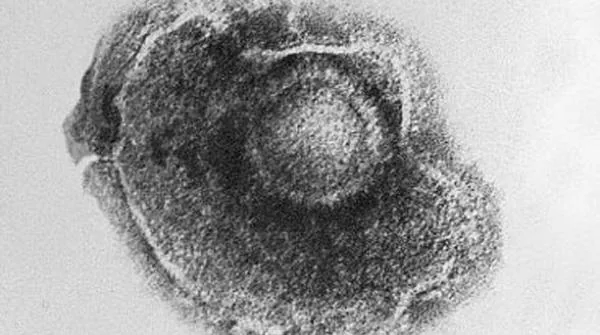
After childhood chickenpox resolves, the varicella-zoster virus avoids complete immune elimination by retreating into sensory ganglia near the spinal cord and skull. The pathogen belongs to the Herpesviridae family and carries a double-stranded DNA genome within an icosahedral capsid [12]. Dr. Anne A. Gershon, a professor of pediatric infectious disease at Columbia University, noted that Takahashi first attenuated the live Oka strain in Japan in 1974 [1]. The virus never leaves the nervous system. It stays quiet inside human sensory nerve cells for decades without making the host feel sick [16].
Nearly all adults carry this latent viral passenger in their nervous system. Health records from the Centers for Disease Control and Prevention indicate that over 99% of Americans born before 1980 had chickenpox during youth, even when they do not recall having a rash. Consequently, about one in three adults will experience shingles during their lifespan, adding up to roughly one million new cases in the United States every single year [6]. Dr. Aaron Saguil and colleagues in American Family Physician reported that an average family practice with 1,500 patients sees three to five cases annually. The illness stems from an inner awakening of an infection acquired decades earlier, when childhood antibodies and specialized T cells gradually lose their strength [15].
In a healthy body, specialized white blood cells constantly suppress viral activity. When cellular defense slips, the dormant virus starts replicating within nerve cell bodies [15]. That viral replication inflames the dorsal root ganglion and neighboring leptomeninges, as documented in Medscape reviews [16]. From that sensory hub, new viral particles travel down peripheral nerve fibers toward the surface of the skin. They produce a band of swollen, blistering lesions along that specific dermatome [18].
How Latent Virus Reactivates
For decades, virologists struggled to explain how the virus remains completely dormant inside human nerve cells without being cleared by immune surveillance. In 2018, an investigative team led by Professor Judith Breuer at University College London and colleagues at Erasmus University identified a crucial biological switch in Nature Communications. Their study showed that in 90% of adults worldwide, a single strand of RNA transcript continues functioning inside sensory neurons. This specialized transcript blocks the expression of a viral gene needed for replication, keeping the virus locked in dormancy until host immune barriers falter. When cellular defenses drop, that natural block dissolves, allowing virions to multiply and travel outward along peripheral nerve paths [7, 16].
Aging is the most common factor behind this immune decline. As people grow older, virus-specific T-cell counts drop naturally over time [15]. Epidemiological surveys from the US National Institutes of Health reveal that shingles incidence rises from 1.2 to 3.4 cases per 1,000 person-years in younger adults to between 3.9 and 11.8 cases per 1,000 person-years among individuals over age 65 [18]. More than half of all unvaccinated adults who survive to age 85 will experience an episode [15].
Other conditions also invite viral reactivation by suppressing cellular defenses. Cancer chemotherapy, organ transplant therapies, and HIV infection increase shingles risk twentyfold to a hundredfold compared to healthy peers [15]. Dr. Therese A. Cvetkovich at the FDA Center for Drug Evaluation and Research explained that immune compromise enables the dormant pathogen to resume rapid reproduction [8]. Weakened immunity lets the sleeping virus escape [15].
Early Warning Signs
Before any rash appears on the skin, shingles almost always signals its arrival with sensory disturbances along a single nerve distribution. This early stage, termed preherpetic neuralgia, usually lasts two to three days but can stretch beyond a full week [16]. Patients experience localized burning, tingling, numbness, itching, or stabbing aches along one side of the torso, neck, or face [5]. Because the skin surface looks completely normal during this prodromal period, doctors often mistake the localized pain for other acute medical emergencies, including pleurisy, gallstones, appendicitis, or a heart attack [8]. Dr. Colin Tidy and Dr. Surangi Mendis at Patient.info emphasize that recognizing unilateral dermatomal tenderness helps clinical teams avoid diagnostic errors [17].
General bodily symptoms often accompany these sharp localized nerve sensations. Many patients develop low-grade fever, chills, headache, fatigue, joint discomfort, or an upset stomach while the virus replicates within nerve tissue [5, 10]. Nearby lymph nodes often swell and become tender during this phase [10]. Medical officer Evelyn Zamula reported in FDA Consumer that patients in Kensington, Maryland, experienced debilitating malaise days before cutaneous marks emerged [8]. Early nerve tenderness on one side of the chest or back provides a warning sign that warrants an early medical evaluation [15].
In uncommon instances, the virus causes sensory nerve pain without ever generating blisters on the skin, a clinical presentation known as zoster sine herpete [15]. Sufferers endure typical burning or aching sensations, yet their skin stays clear [18]. Clinicians confirm zoster sine herpete by detecting viral DNA in cerebrospinal fluid or blood through polymerase chain reaction assays [15].
Rash Patterns in Herpes Zoster
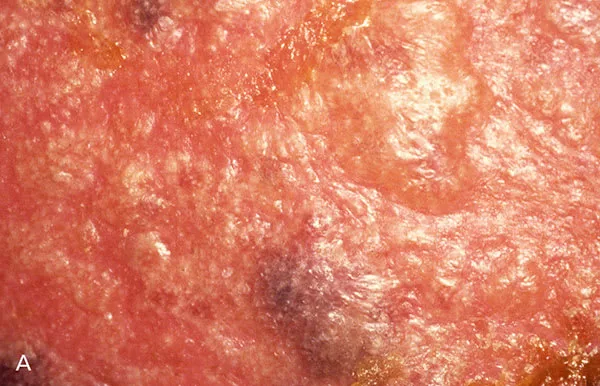
The eruptive cutaneous phase begins when migrating virions reach nerve endings in the skin, creating clusters of red macules and papules. The medical name comes from this appearance, originating from the Greek term zoster and the Latin word cingulum, which both describe a belt or girdle. Evelyn Zamula noted in FDA Consumer that in Italy the disease was historically called St. Anthony’s fire due to its scorching sensation [8]. Because sensory nerve fibers innervate narrow anatomical bands called dermatomes, the rash stops at the midline of the chest, back, or abdomen and rarely crosses the spinal column [15]. It appears on only the left or right side in almost all cases, providing a clear visual hallmark that distinguishes shingles from generalized rashes like poison ivy or hives [5, 8].
Within several days, those red bumps develop into clear fluid-filled blisters (vesicles) that cause stinging or burning pain [15]. New blisters can continue erupting for three to five days [16]. The fluid within these sores contains live virus particles, meaning contact can transmit chickenpox to anyone without prior immunity. The Centers for Disease Control and Prevention advises covering the rash with loose clothing and washing hands for twenty seconds to protect infants and pregnant women. Most people suffer only once [6].
After seven to ten days, the blisters turn cloudy, rupture, and form dry crusts. These crusts drop off over two to four weeks as the skin heals [5]. Heavy blistering may leave permanent scars or pale skin patches [15]. Pathogen safety data from the Public Health Agency of Canada confirm that the virus becomes non-infectious once lesions dry into scabs [12].



Persistent Nerve Pain
For a large portion of patients, clearing the skin rash does not end the ordeal. The most frequent complication of shingles is postherpetic neuralgia (PHN), defined as dermatomal pain that persists for at least 90 days after the acute rash has resolved [15]. Between 10% and 18% of people with shingles develop this chronic syndrome [5]. Risk climbs with age, as more than 80% of all cases occur in adults aged 50 or older, whereas patients under 40 rarely experience sustained discomfort. Dr. Michael Mercado and colleagues noted that PHN inflicts significant disability, disrupting sleep, limiting physical mobility, and causing emotional distress [15].
Postherpetic neuralgia develops because the active viral infection causes inflammation, cell death, and scar tissue inside dorsal root ganglia [16]. Sufferers describe constant burning, throbbing, or electric shock sensations. In many cases, the affected skin becomes so sensitive that even the light touch of clothing or a gentle breeze triggers agony. In FDA Consumer records, 87-year-old Etta Watson Zukerman of Bethesda, Maryland, described enduring excruciating pain for a decade that impaired ordinary household tasks and reduced arm movement [8].
Standard over-the-counter painkillers offer little relief for this kind of neuropathic pain [8]. Doctors focus on calming damaged sensory pathways using oral gabapentin (Neurontin), pregabalin (Lyrica), or tricyclic antidepressants like amitriptyline [15]. Dr. Veronica Mitchell, director of the pain management center at Georgetown University Hospital in Washington, D.C., found that transdermal 5% lidocaine patches (Lidoderm) provide substantial localized pain reduction without systemic toxicity [8]. Topical capsaicin cream (Zostrix) also desensitizes irritable peripheral nerves [10, 15].
Facial Nerve Complications
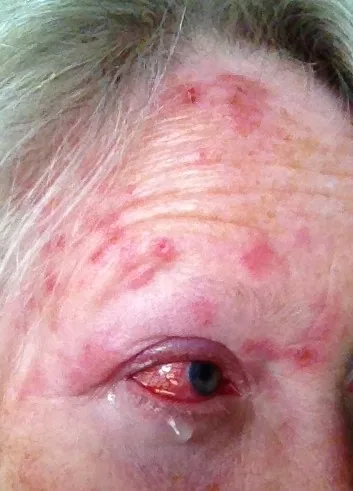
When the virus reactivates in cranial nerves rather than spinal roots, clinical consequences can become dangerous. The ophthalmic branch of the trigeminal nerve is involved in 10% to 20% of all shingles cases, a condition known as herpes zoster ophthalmicus [14, 17]. Dr. Bunya Vatinee in Merck Manual Professional Edition noted that this presentation directly threatens vision because viral inflammation easily travels into the cornea, sclera, iris, and optic nerve. Approximately half of all patients with ophthalmic involvement suffer disease inside the eyeball itself. Left untreated, corneal scarring, secondary glaucoma, cataract, and chronic uveitis can cause permanent partial or total blindness. Urgent ophthalmologic consultation is recommended for every suspected case [14].
Clinicians look for an important physical sign first identified in 1868 by British surgeon Jonathan Hutchinson. Known as Hutchinson’s sign, blisters on the tip or side of the nose show that the nasociliary branch is infected [14, 17]. In Graefes Archive for Clinical and Experimental Ophthalmology, Dr. M. J. Zaal and colleagues demonstrated that patients with nose lesions face a threefold higher risk of ocular damage, with at least 75% experiencing eye complications. Ophthalmologists prescribe oral valacyclovir alongside topical prednisolone acetate eye drops to control corneal inflammation and prevent permanent vision loss [14].
Another cranial complication occurs when the virus reactivates within the facial and auditory nerves, causing Ramsay Hunt syndrome, first described by neurologist J. Ramsay Hunt. Patients suffer ear blisters, facial muscle paralysis, vertigo, and hearing loss [16, 17]. Taste sensations on the tongue may also disappear. Swelling of cranial nerves creates facial weakness [16].
Diagnostic Tests and Antiviral Drugs
In everyday clinical practice, healthcare providers diagnose shingles primarily through a physical examination, recognizing the telltale blistering rash confined to a single unilateral dermatome. When lesions look atypical, or when distinguishing shingles from contact dermatitis and herpes simplex, laboratory testing provides definitive proof. Dr. Rebecca Lauters and coauthors confirmed that polymerase chain reaction (PCR) testing of fluid swabbed from fresh blisters serves as the gold standard diagnostic method, delivering 95% sensitivity and 100% specificity with fast turnaround times [15]. While blood tests can measure rising antibody levels against the virus, MedlinePlus guidelines note they cannot determine whether an active rash originates from shingles or past exposure [10]. Laboratory PCR tests confirm diagnosis [15].
Oral antiviral drugs represent the foundation of medical treatment. Healthcare providers prescribe acyclovir (Zovirax), valacyclovir (Valtrex), or famciclovir (Famvir), which hinder viral DNA replication inside infected cells [8, 15]. Typical adult regimens include acyclovir at 800 milligrams five times daily, valacyclovir at 1,000 milligrams three times daily, or famciclovir at 500 milligrams three times daily for seven days. Starting antiviral therapy within 72 hours of rash onset produces the greatest clinical benefit, shortening blistering time and reducing acute pain severity [15].

Severely immunocompromised patients may need hospitalization for intravenous acyclovir to prevent organ spread. Doctors sometimes add oral prednisone to curb acute inflammation, though clinical studies show steroids do not stop postherpetic neuralgia [15]. Soothing oatmeal baths and cool wet compresses ease skin discomfort at home [6, 10].
Why Shingles Vaccination Matters
Immunization offers the most reliable defense against the pain of shingles and its long-term complications. The Centers for Disease Control and Prevention recommends two doses of the recombinant zoster vaccine (RZV), marketed under the brand name Shingrix, for all adults aged 50 and older. It is also recommended for adults aged 19 and older who have weakened immune systems due to disease or medical therapies [6]. Large clinical trials led by Dr. H. Lal in the New England Journal of Medicine showed that Shingrix provides 97% protection against shingles in adults aged 50 to 69, and 90% protection in adults aged 70 and older [14].
Universal childhood chickenpox vaccination also generates massive benefits in communities. In a study published in Pediatrics, Dr. Sheila Weinmann and colleagues at Kaiser Permanente Northwest in Portland, Oregon, analyzed the health records of 6.4 million American children and discovered that varicella vaccination cut childhood shingles rates by 72% overall, dropping from 170 cases per 100,000 in unvaccinated children down to 38 cases per 100,000 among vaccinated youth [11]. In Canada, Dr. M. L. Russell and researchers in Alberta found that only 4% of shingles cases required hospital admission, with routine childhood immunization continuing to suppress circulating wild virus [3]. Dr. Nathan Boonstra, a pediatrician at Blank Children’s Hospital in Des Moines, Iowa, explained that preventing childhood varicella effectively eliminates the primary viral reservoir needed for later shingles reactivation [11].
Recent medical investigations suggest that vaccination against shingles may also protect cognitive health. In a 2024 study published in Nature Medicine, Dr. M. Taquet and colleagues at the University of Oxford found that the recombinant shingles vaccine was associated with a 17% increase in dementia-free survival time, adding 164 days without a dementia diagnosis [2]. Public health agencies including the National Health Service (NHS) in England and Wales and Public Health England have incorporated routine shingles vaccination to reduce disease burden among older adult populations [9, 13]. Vaccination provides the safest defense [6].
- ACADEMIC JOURNAL Gershon, A. A. (2019). Varicella vaccine: What have you done for me lately?. Pediatrics, 144(1). [Article Link]
- ACADEMIC JOURNAL Taquet, M., Dercon, Q., Todd, J. A., & Harrison, P. J. (2024). The recombinant shingles vaccine is associated with lower risk of dementia. Nature Medicine, 30(10), 2777-2781. [Article Link]
- ACADEMIC JOURNAL Russell, M. L., Dover, D. C., Simmonds, K., & Svenson, L. W. (2013). Shingles in Alberta: Before and after publicly funded varicella vaccination. Vaccine, 32(47), 6319-6324. [Article Link]
- ACADEMIC JOURNAL Pietrzak, M. K., & Pokorska‐Śpiewak, M. (2024). Shingles in children. The Pediatric Infectious Disease Journal, 43(8), e275-e277. [Article Link]
- WEBSITE Centers for Disease Control and Prevention. (2024). Shingles symptoms and complications. [Article Link]
- WEBSITE Centers for Disease Control and Prevention. (2026). About shingles (herpes zoster). [Article Link]
- WEBSITE National Institute for Health and Care Research. (2018). Researchers discover how chickenpox and shingles virus remains dormant. [Article Link]
- ONLINE NEWS Zamula, E. (2001). Shingles: An unwelcome encore. FDA Consumer. [Article Link]
- WEBSITE National Health Service. (2024). Shingles vaccine. [Article Link]
- WEBSITE MedlinePlus. (2024). Shingles. [Article Link]
- ONLINE NEWS Haelle, T. (2019). Two-for-one: Chickenpox vaccine lowers shingles risk in children. Scientific American. [Article Link]
- REPORT Public Health Agency of Canada. (2012). Pathogen safety data sheets: Infectious substances – Varicella-zoster virus. [Article Link]
- REPORT Public Health England. (2017). Herpes zoster (shingles) immunisation programme 2016 to 2017: Evaluation report. [Article Link]
- WEBSITE Vatinee, B. (2026). Herpes zoster ophthalmicus. Merck Manual Professional Edition. [Article Link]
- ACADEMIC JOURNAL Saguil, A., Kane, S., Mercado, M., & Lauters, R. (2017). Herpes zoster and postherpetic neuralgia: Prevention and management. American Family Physician, 96(10), 656-663. [Article Link]
- WEBSITE Medscape. (2026). Herpes zoster: Background, pathophysiology, etiology. [Article Link]
- WEBSITE Mendis, S., & Tidy, C. (2024). Shingles. Patient.info. [Article Link]
- WEBSITE Wikipedia contributors. (n.d.). Shingles. Wikipedia. [Article Link]


