



Could an iconic video game villain find new life on the silver screen under a horror specialist? Director Zach Cregger revealed his dream casting choice for Lady Dimitrescu while promoting his upcoming theatrical reboot. Speaking in an interview with Pedestrian.TV, the filmmaker named Christina Hendricks as the ideal performer to inhabit the towering antagonist from Capcom’s celebrated franchise. The Zach Cregger Resident Evil project arrives in theaters on September 18 without the aristocratic vampire, yet the director already harbors ambitious creative concepts for prospective sequels. [1, 4]
Christina Hendricks as Lady Dimitrescu
Lady Dimitrescu captivated global audiences when Capcom debuted the towering vampire matriarch in 2021’s Resident Evil Village, revolving around protagonist Ethan Winters. When Pedestrian.TV asked Cregger whom he would select to portray the aristocratic villain in a live-action production, the director proposed Christina Hendricks, best known for her celebrated role in Mad Men. “That feels about right to me,” Cregger explained during the discussion, inviting the host to share her perspective. The interviewer proposed comedic veteran Joan Cusack instead, prompting enthusiastic laughter from the filmmaker. “Oh, wow. Okay, great,” Cregger replied. “Dude, I can watch her do anything. Yeah, she’s amazing.” [1, 4]
Lady Dimitrescu does not appear in the upcoming Zach Cregger Resident Evil movie. Her live-action cinematic debut remains hypothetical. [1]
Capcom capitalized heavily on the character’s immense popularity following the launch of Village, distributing life-size cardboard cutouts of Lady Dimitrescu (a towering vampire matriarch with retractable claws) across retail video game storefronts to satisfy enthusiastic fans. Countless pieces of elaborate fan art flooded social platforms, reinforcing her enduring status within modern gaming culture. Players could unlock her ornate costume in this year’s Resident Evil Requiem by purchasing the game’s Deluxe Edition. While some purists expressed skepticism regarding an original narrative direction, robust tracking and early audience enthusiasm encourage Cregger to contemplate introducing legacy figures in future cinematic sequels. [1]

Parallel Timeline Bypasses 1998 Canon
A frequent inquiry among gaming enthusiasts asks: is resident evil zach cregger canon to the mainline Capcom game continuity? The Zach Cregger Resident Evil reboot operates in an alternate timeline set in the modern day rather than reproducing the iconic 1998 Raccoon City incident. Instead of tracking recognizable protagonists from earlier games, the story unfolds on the structural periphery of Resident Evil 2. The plot centers on hospital courier Bryan as routine delivery duties thrust him into an unexpected biological crisis. Bryan arrives at Raccoon City General Hospital right as the deadly T-Virus (the synthetic mutagenic agent engineered by Umbrella) leaks across the metropolitan facility, triggering widespread panic and lethal biological mutations. [3, 4]
Austin Abrams portrays the hapless courier hero caught amidst the catastrophic pathogen outbreak. Bryan possesses no elite tactical combat qualifications or high-level weapons expertise. He runs. Survival hinges on desperate panic rather than tactical military precision. The narrative emphasizes improvisational survival, panic, and raw terror over choreographed gunplay, stripping away superheroic action tropes to place viewers inside an intensely vulnerable perspective. [3]
Balancing terror and tension required precise editorial restraint during post-production. Coverage previously detailed how the creative team cut jokes after test screenings to ensure comedic beats never compromised the overarching dread of the hospital nightmare. Cregger recognized that excessive humor threatened to diffuse suspense, prompting rigorous trims that maintained a razor-sharp focus on mortal danger. The final cut favors visceral tension, ensuring every comedic beat underscores Bryan’s sheer desperation during the Zach Cregger Resident Evil hospital crisis. [3]


Early Praise for Zach Cregger Resident Evil
Critical buzz surrounding the Zach Cregger Resident Evil adaptation turned remarkably enthusiastic following advance press screenings. Perri Nemiroff of Collider praised the production as “one of the best video game adaptations I’ve ever seen,” celebrating its tonal balance as “one of the best horror comedies I’ve ever seen.” Erik Davis of Fandango observed that the release feels “less an adaptation of a game and more a movie that makes you feel like you’re playing one.” Courtney Howard of Variety highlighted the kinetic rhythm and practical effects: “Zach Cregger is cookin’ with napalm. It’s a wild, hilarious, unpredictably bonkers thrill ride from start to finish. Kinetic action leans heavily on demented body horror. Mutant mayhem galore! Austin Abrams is perfect as our doofy, hapless hero.” [3]
The movie avoids legacy storylines entirely. Mark Cassidy observed that while the narrative lacks recognizable game characters, Cregger’s unrelenting pacing delivers the most faithful cinematic interpretation of survival horror to date, cementing early buzz for Zach Cregger Resident Evil. Visceral suspense never falters. [3]
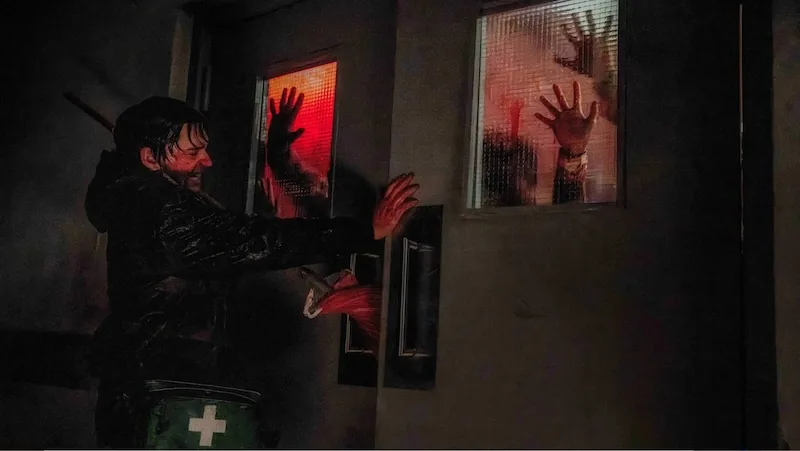
Positive advance reactions provided a welcome vindication for the filmmaking team. Some vocal franchise enthusiasts had initially criticized Cregger’s choice to bypass classic protagonists in favor of a standalone hospital survival story. The overwhelmingly receptive reviews demonstrate that capturing atmospheric tension resonates far more deeply with critics than superficial fan service. Early box office projections look exceptionally strong, positioning the theatrical reboot for significant commercial success as opening day approaches. [1, 3]
Revisiting Two Decades of Film Reboots
Adapting Capcom’s survival horror crown jewel for theatrical distribution has historically yielded turbulent creative transformations. The cinematic franchise originated in 2002 under filmmaker Paul W.S. Anderson, starring Milla Jovovich in an action-heavy interpretation that spawned five major sequels: Resident Evil: Apocalypse in 2004, Resident Evil: Extinction in 2007, Resident Evil: Afterlife in 2010, Resident Evil: Retribution in 2012, and Resident Evil: The Final Chapter in 2016. Johannes Roberts subsequently helmed a cinematic reboot with 2021’s Resident Evil: Welcome to Raccoon City, attempting to compress the sprawling events of the first two video games into a single chaotic evening. [3]
Studio executives initially explored developing a direct sequel to Roberts’ 2021 release before ultimately shelving those plans in favor of Cregger’s vision. In gaming discussions, newcomers frequently ask what is resident evil director’s cut, referencing the classic PlayStation re-release (an expanded edition featuring rearranged item placements, enemy configurations, and alternate camera perspectives). Cregger’s cinematic effort functions as an analogous artistic rethinking for the big screen, distinguishing Zach Cregger Resident Evil from earlier attempts. Rather than remaking a familiar script, the director recalibrated foundational horror mechanics into a contemporary theatrical experience. [3]

The long-running film franchise demonstrated immense commercial durability across two decades of theatrical releases. Anderson’s six cinematic installments grossed significant global revenue, establishing a distinct movie identity that departed sharply from game lore. Roberts attempted strict aesthetic loyalty yet suffered from excessive plot compression across multiple game storylines. Cregger sidesteps both pitfalls by anchoring a standalone crisis within a confined hospital setting, allowing organic survival horror tropes to drive the drama without collapsing under decades of convoluted mythology. [3]
Pacing Mechanics Mirror Classic Capcom Gameplay
Cregger developed his cinematic architecture by studying the psychological rhythms of classic survival horror gameplay. “I happen to worship these Resident Evil games and pull a lot of inspiration from the experience of playing them,” Cregger revealed to GamesRadar+. To emulate the physical sensation of advancing through treacherous game corridors, the filmmaker established strict temporal boundaries for every sequence. “I tried to keep the environment changing every seven or eight minutes, like the games,” Cregger explained. “You’re always moving into another level as it were.” [4]
The shifting environmental design ensures constant momentum throughout the facility. Cregger constructs set pieces where cramped hospital rooms, barricaded wards, and bloodstained corridors force protagonist Bryan to constantly adapt. The structural rhythm directly evokes the design philosophy celebrated when Shinji Mikami games entered the AIAS Hall of Fame, treating architectural space as an active adversary rather than a passive backdrop. [4]
The Zach Cregger Resident Evil reboot arrives on September 18, presenting an ambitious test for video game cinema. Whether moviegoers embrace this unconventional courier perspective as enthusiastically as advance critics remains the ultimate box office question. If theatrical ticket sales match optimistic tracking metrics, Cregger may soon find himself commissioning live-action prosthetic designs for Christina Hendricks’ towering vampire matriarch in an expansive sequel. [1, 4]
- ONLINE NEWS Phillips, T. (2026, September 16). Resident Evil director Zach Cregger reveals his pick to play Lady Dimitrescu. IGN. [Article Link]
- ONLINE NEWS GameSpot. (2026, September 16). Resident Evil director on who should play Lady Dimitrescu in a Resident Evil Village movie. GameSpot. [Article Link]
- ONLINE NEWS Harradence, M. (2026, September 16). Zach Cregger’s Resident Evil movie has been getting some very positive first reactions. PlayStation Universe. [Article Link]
- ONLINE NEWS Edwards, M. (2026, September 16). Lady Dimitrescu might not be in the new Resident Evil movie, but Zach Cregger knows who he’d cast. GamesRadar+. [Article Link]


