





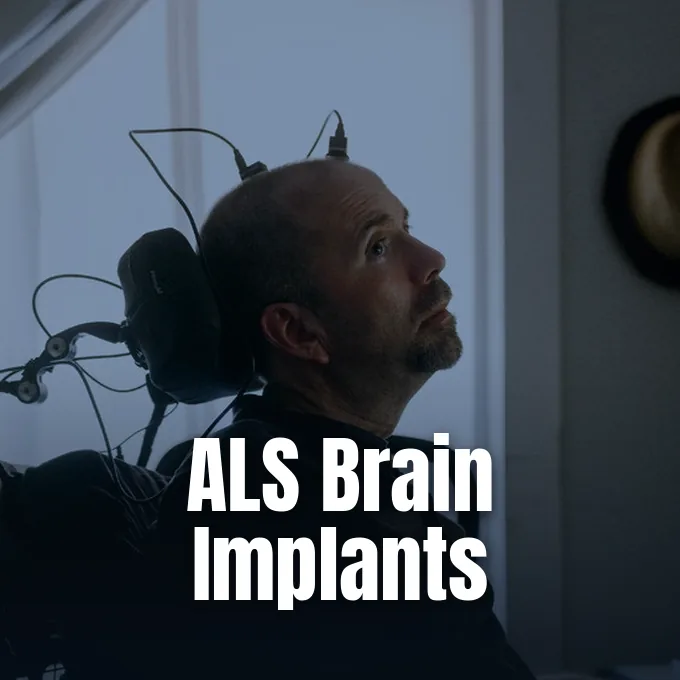
Researchers at the University of California, Davis, and clinical engineers at Neuralink have restored intelligible speech to paralyzed individuals using experimental neural decoders. These advances show that ALS brain implants can translate cortical activity into spoken words, vocal tone, and musical pitch. Earlier neuroprostheses required patients to spell words letter by letter on virtual keyboards or accept robotic voices. Real-time decoders now reconstruct full sentences within milliseconds of neural planning. [1]
From Motor Signals to Audible Words
Speaking feels effortless in daily life, but forming basic words relies on the coordinated actions of more than one hundred muscles in the throat, chest, and mouth. When a person pronounces a simple greeting, the diaphragm pushes air upward through the vocal cords, while the jaw, lips, and tongue shape the escaping airflow into recognizable acoustic patterns. In amyotrophic lateral sclerosis, a motor neuron disorder diagnosed in roughly 35,000 people throughout the country, nerve cells in the brain and spinal cord gradually die. Jessica Pietrowski, a speech-language pathologist at the University of California, Davis, said losing speech often feels far more devastating to patients than losing mobility because spoken interaction maintains personal identity and human connection. [3]
Although motor pathways fail, neurons in the speech motor cortex continue to fire when a person attempts to speak. This cortical strip along the precentral gyrus plans each distinct sound unit, known as a phoneme. American English contains 39 phonemes. Research into how neurons process speech sounds reveals how the brain maps acoustic targets. Microelectrodes detect these electrical pulses, allowing machine learning algorithms to assemble intended phonemes into words. [2]
How Speech BCI Systems Interpret Thought
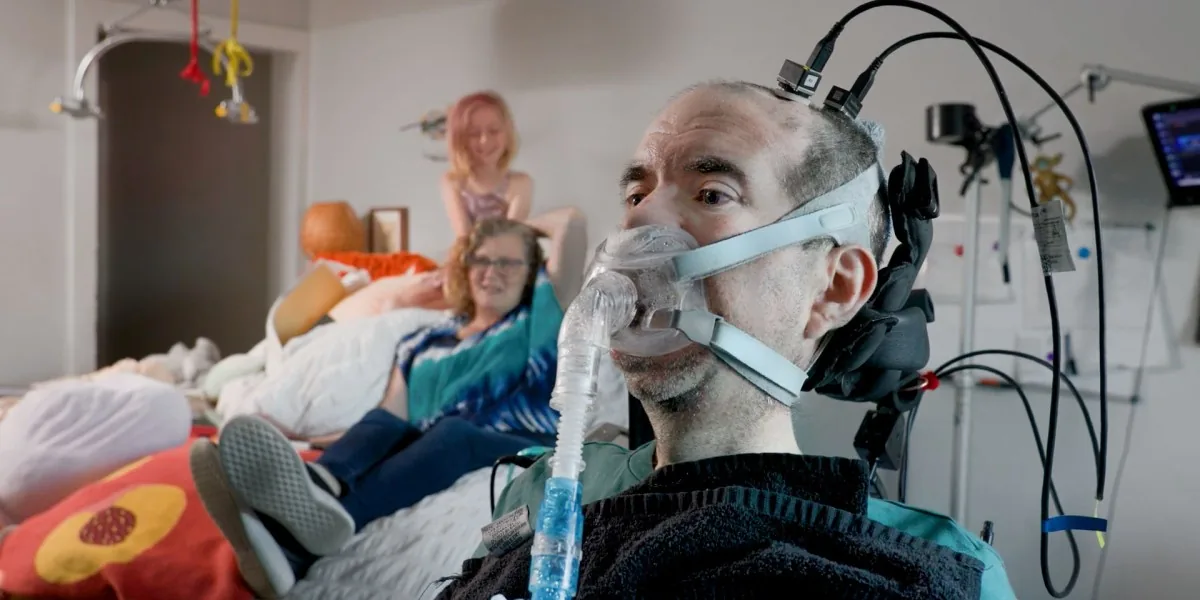
To test cortical decoding, neurosurgeon David Brandman and neuroengineer Sergey Stavisky at the University of California, Davis, enrolled environmental activist Casey Harrell. Harrell was diagnosed with ALS in 2020 and had lost understandable speech. In July 2023, surgeons placed four microelectrode arrays—totaling 256 silicon sensors—into Harrell’s speech motor cortex. The sensors connect through two pedestal ports on his skull to computers on a cart. Harrell tested a 50-word library. On his first day of testing, the decoder matched intended words with 99.6 percent accuracy. [2]
Nicholas Card, a neuroengineer at UC Davis, helped expand the vocabulary from 50 words to more than 125,000 words, preserving a 97.5 percent accuracy rate. Stavisky reported that continued refinements raised overall precision to 99 percent. The system matched planned sounds to words rapidly, displaying text on a monitor and speaking sentences aloud. [2]
Academic groups also designed decoders that bypass fixed vocabularies. At UC Davis, neuroscientist Maitreyee Wairagkar trained deep-learning models on neural signals sampled every 10 milliseconds. Instead of classifying phonemes, her algorithm interprets intended acoustic waveforms. In Nature, this system enabled a participant to generate spontaneous interjections such as “aah,” “ooh,” and “hmm,” alongside unlisted words. [4]
Restoring Pitch and Singing Nuance
Earlier assistive speech devices converted decoded text into flat, robotic audio streams with noticeable delays. By evaluating brain activity in 10-millisecond windows, newer interfaces reproduce vocal cadence, rising pitch for questions, and word emphasis. Christian Herff, a computational neuroscientist at Maastricht University, described this capability as spontaneous continuous speech. Silvia Marchesotti, a neuroengineer at the University of Geneva, said capturing emotional expression represents a practical shift toward tools that patients can comfortably adopt. [4]
Vocal flexibility became apparent during trials at UC Davis when a 58-year-old woman, who was a trained singer before ALS silenced her voice, used an implant to hum a musical scale. She wept after hearing her intended pitches reproduced accurately through the audio monitor. In the same trial series, a 46-year-old man who had lost his ability to speak communicated complete sentences with natural timing. The system decoded his cortical activity directly into intelligible speech without requiring him to spell words on a screen. Cindy Chestek, an independent biomedical engineer at the University of Michigan, said, “This system, for the first time, is good enough. Good enough for real communication. It’s good enough to sing.” The team presented these results at the Society for Neuroscience meeting in Washington. [1]


Using ALS Brain Implants at Home
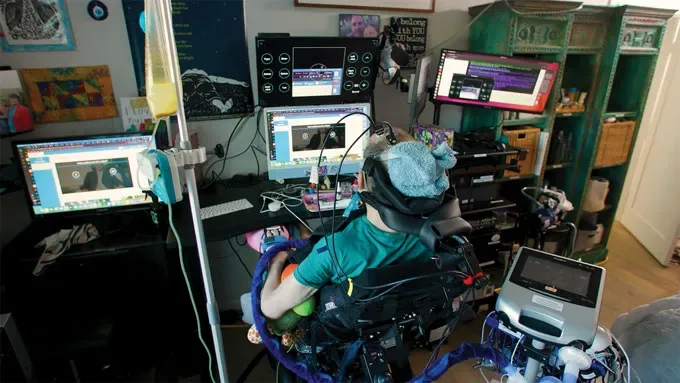
Independent home use provides the practical test for assistive neurotechnology. In Nature Medicine, researchers documented that Casey Harrell logged more than 3,800 hours of independent system use at home during his first 22.6 months with the implant. Visiting technicians no longer needed to manage the hardware in person; Harrell’s care partner learned to connect the external cables each morning, letting him use the interface for 10 to 14 hours daily. Over that period, Harrell used the system to generate nearly 2 million words, using it to hold conversations, browse the web, and continue his professional work as an environmental activist. Harrell told researchers, “Living with a disease like ALS, you are supposed to have diminished dreams. I do not.” [2]
Software engineers customized the interface to give Harrell greater autonomy during family life. They added a privacy mode that immediately wipes decoded transcripts from memory and a profanity filter for when he speaks with his young daughter. Harrell said the ability to speak has allowed him to read books to his child, tell jokes with friends, and share daily parenting duties with his wife. Maintaining social communication and active intellectual engagement strengthens emotional well-being, much as building cognitive reserve helps sustain functional networks across the brain. For Harrell, the interface restored his connection to the people around him. [2]
Clinical Trials by Neuralink and Academic Teams
Commercial groups have expanded wireless human trials. Neuralink registered its VOICE trial on ClinicalTrials.gov under identifier NCT07224256 to test its N1 implant, which uses 3,000 electrode channels placed by a surgical robot. In September 2026, a video showed Terry, the third VOICE participant, using the device to say “I love you” to his wife. That clip drew over 5.4 million views within 48 hours on YouTube. [5]
Terry’s training moved in two stages. He first attempted physical speech gestures to generate labeled neural patterns, then advanced to imagined speech without moving his mouth. Decoded signals were routed through Grok Voice, an xAI synthesis tool that reconstructed his pre-illness vocal tone. Kenneth Shock, a former healthcare worker living with ALS who also joined the VOICE study, said the device provided a direct way to communicate. The N1 holds FDA Breakthrough Device Designation as an investigational system. [6]
Engineering strategies diverge across neurotechnology groups. Neuralink targets a conversational pace of 140 words per minute. Other companies pursue alternative pathways. Earlier, a UCSF team led by Edward Chang reached 18 words per minute with 93 percent accuracy using cortical grids. In earlier company work, the Neuralink PRIME study decoded hand movements for cursor control rather than speech. Synchron threads its Stentrode through jugular veins to avoid craniotomies, while Precision Neuroscience places thin electrode films directly on the cortex. [6]
Biological Constraints Over Extended Use
Despite encouraging clinical results, researchers face unresolved questions regarding how long cortical interfaces remain functional in degenerative conditions. In the New England Journal of Medicine, neuroscientist Mariska Vansteensel and her colleagues at Utrecht Medical Center described a woman with advanced ALS who used an implanted communication device at home for seven years. The participant operated the interface independently for six years, but signal strength eventually faded. Computed tomography scans revealed progressive cortical atrophy caused by disease progression, which degraded signal quality instead of any hardware malfunction. [7]
Long-term stability also depends on the biological response of brain tissue to penetrating electrodes. Scar tissue can encapsulate silicon shanks, dampening their ability to detect subtle voltage fluctuations. In early laboratory trials, such as primate studies led by J. M. Carmena in PLoS Biology, large neuronal ensembles proved necessary to maintain decoding accuracy. Human trials began in 2004 with the BrainGate study, where paralyzed athlete Matthew Nagle controlled a computer cursor with thought alone. Jane Huggins at the University of Michigan noted that many patients show reluctance toward invasive procedures and hospital stays. Matthew Willsey at the University of Michigan in Ann Arbor and Leigh Hochberg at Brown University said durable ALS brain implants will require resilient electrode materials and adaptive decoding algorithms. [3]
- ONLINE NEWS Johnson, C. Y. (2026, November 14). Brain Implants Give A.L.S. Patients the Voice to Speak and Sing. The New York Times. [Article Link]
- ONLINE NEWS Hamzelou, J. (2026, June 15). This man with ALS is “the first power user” of a brain implant that lets him speak. MIT Technology Review. [Article Link]
- ONLINE NEWS Sanders, L. (2026, October 15). Brain implants are helping people who’ve lost their voice. Science News Magazine. [Article Link]
- ONLINE NEWS Naddaf, M. (2025, June 12). Brain Implant Lets Man with ALS Speak and Sing with His ‘Real Voice’. Scientific American. [Article Link]
- WEBSITE BASENOR Editorial Desk. (2026, September 20). Neuralink Gives ALS Patient Terry His Voice Back — Inside the VOICE Trial. BASENOR. [Article Link]
- ONLINE NEWS Zlatev, D. (2026, September 23). Neuralink brain implant brings back the voice of ALS patient with thought-to-speech BCI. Notebookcheck. [Article Link]
- ACADEMIC JOURNAL Vansteensel, M. J., Leinders, S., Branco, M. P., Crone, N. E., Denison, T., Freudenburg, Z. V., Geukes, S. H., Gosselaar, P. H., Raemaekers, M., Schippers, A., Verberne, M., Aarnoutse, E. J., & Ramsey, N. F. (2024). Longevity of a Brain–Computer Interface for Amyotrophic Lateral Sclerosis. New England Journal of Medicine, 391(7), 619–626. [Article Link]
- ACADEMIC JOURNAL Carmena, J. M., Lebedev, M. A., Crist, R. E., O’Doherty, J. E., Santucci, D. M., Dimitrov, D. F., Patil, P. G., Henriquez, C. S., & Nicolelis, M. A. L. (2003). Learning to Control a Brain–Machine Interface for Reaching and Grasping by Primates. PLoS Biology, 1(2), e42. [Article Link]
APA 7: PerEXP Teamworks. (2026, November 15). ALS Brain Implants Restore Speech and Expressive Pitch. PerEXP Teamworks. https://perexpteamworks.com/en/als-brain-implants-restore-speech/


