



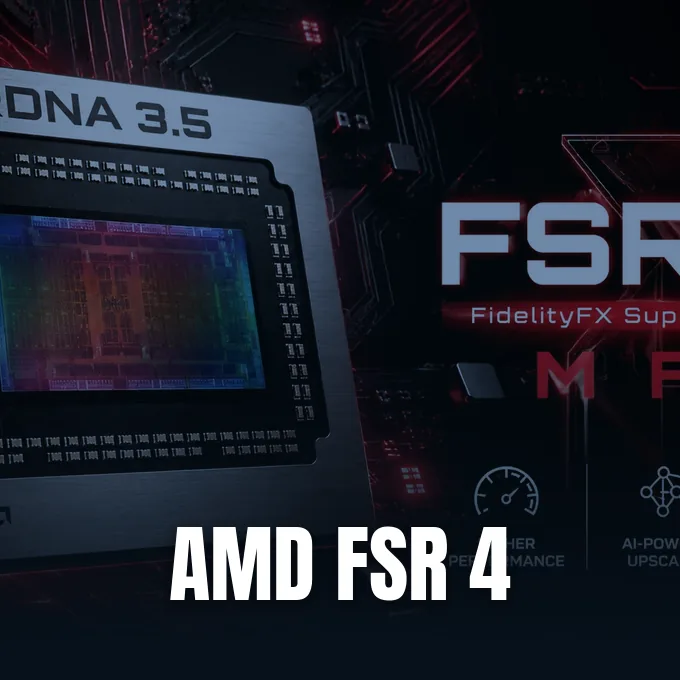
Jack Huynh, Senior Vice President of the Computing Group and Graphics Group at AMD, told South Korean tech publication The Elec on October 8, 2026, that official AMD FSR 4 upscaling will arrive on APUs, gaming handhelds, and laptops before the end of the year. The announcement means portable devices won’t stay locked to older upscaling algorithms while desktop graphics cards move ahead. It’s a quick shift that brings machine learning directly to mobile hardware without extra cost [2].
How FSR 4 Expands Beyond Desktop Cards
For months, AMD kept its latest FidelityFX Super Resolution technology limited to discrete graphics cards like the Radeon RX 9000 lineup. Portable hardware relying on integrated graphics had to settle for older FSR 3. Handhelds faced a tough gap [2].
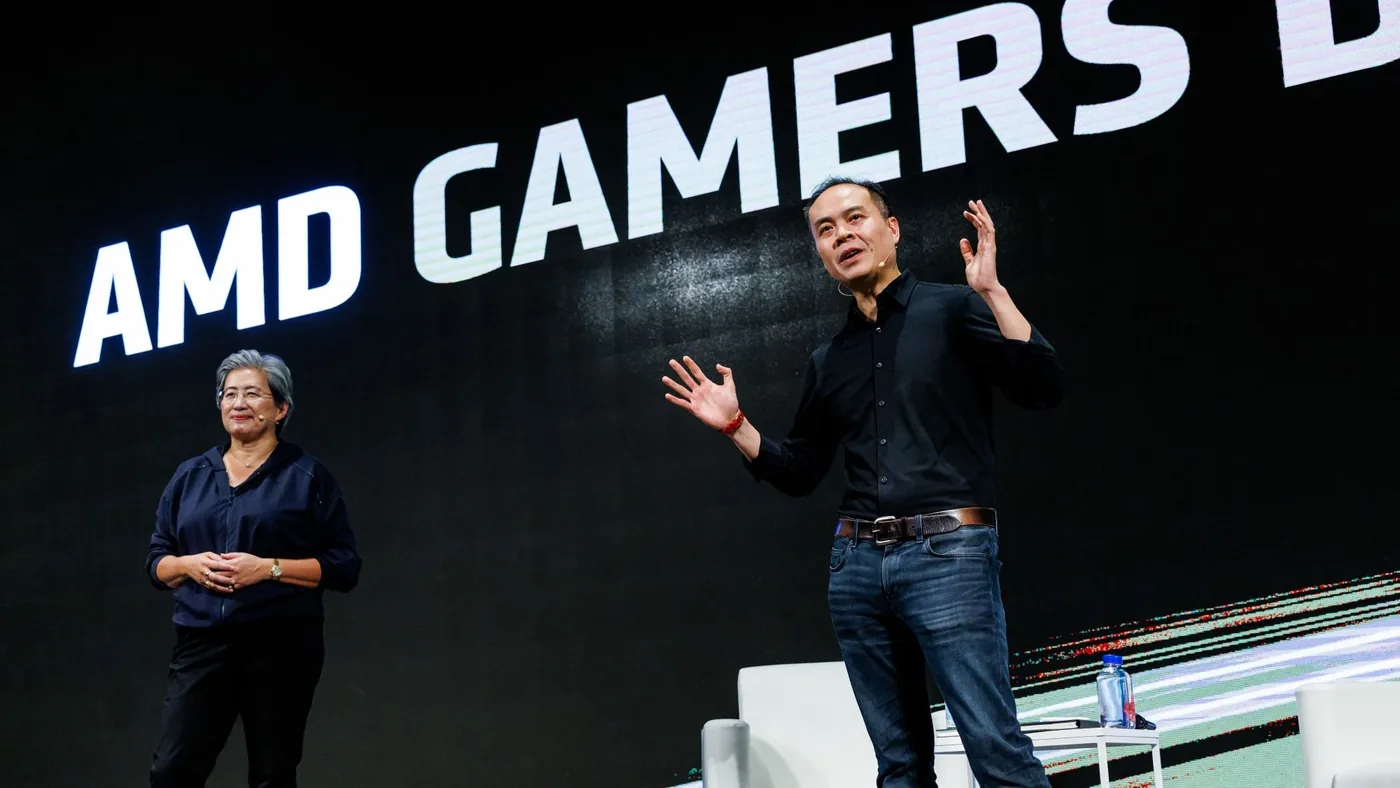
Jack Huynh clarified the company’s portable hardware strategy during an interview with The Elec, confirming that portable gamers will soon see the same machine-learning upscaling technology that previously required desktop silicon. “We will expand the machine-learning-based AI FSR4 technology, which was first introduced in discrete graphics cards, to our entire product lineup, including APUs, gaming laptops, and handheld devices, by the end of this year,” Huynh said. That timeline arrived much sooner than enthusiasts predicted, especially since older discrete graphics cards like the Radeon RX 6000 series aren’t scheduled to receive official support until early 2027 as tech reporter Sarfraz Khan observed for Wccftech [3].
Some PC gamers didn’t wait for AMD to release an official update for their portable systems. Savvy enthusiasts managed to get a leaked build of the upscaler running on older APUs by forcing files through third-party tools like OptiScaler. Community testing ran ahead of schedule as Christopher Harper reported for HotHardware [1]. While that community workaround proved that machine-learning upscaling could function on mobile silicon, it also brought noticeable performance drops and unstable frame times that undermined gameplay on battery power [2].
A Lighter AMD FSR 4 Model for Mobile Chips
Running complex neural networks on small processors with tight thermal limits is tricky because mobile graphics silicon can’t match the raw compute budget of desktop boards. To solve that problem, AMD isn’t simply porting its heavy desktop algorithm down to integrated graphics chips unchanged. Instead, the company plans to build a lighter machine-learning model created specifically for lower-power SoCs and mobile processors [1]. AMD teased this direction earlier this year when it showed FSR 4.1 for Radeon RX 7000 graphics cards, noting that it needed extra development time to finish the lightweight alternative before rolling it out widely across mobile hardware [2]. Christopher Harper reported that technical pivot for HotHardware [1].
The technical strategy resembles the tiny DLSS model that developers use for certain Nintendo Switch 2 titles, where lighter weights preserve battery life while maintaining sharp pixels on Nintendo Switch hardware [1]. Action titles need lower latency on mobile screens. AMD aims to deliver higher image quality and cleaner temporal stability while keeping processing overhead minimal for handheld displays. Even though newer integrated chips like the RDNA 3.5-based Radeon 8060S and Radeon 8050S rely on the INT8 data type, a compact neural model lets them process frames without choking memory bandwidth on slim chassis [3].
That balance between visual fidelity and battery consumption matters deeply on portable machines. Handheld processors run on strict power limits, leaving little room for extra compute work. Demanding games stutter under load [2]. A lightweight AMD FSR 4 model keeps the overhead small so mobile gamers get smoother motion instead of higher heat [1].


Closing the Mobile Graphics Gap with Intel
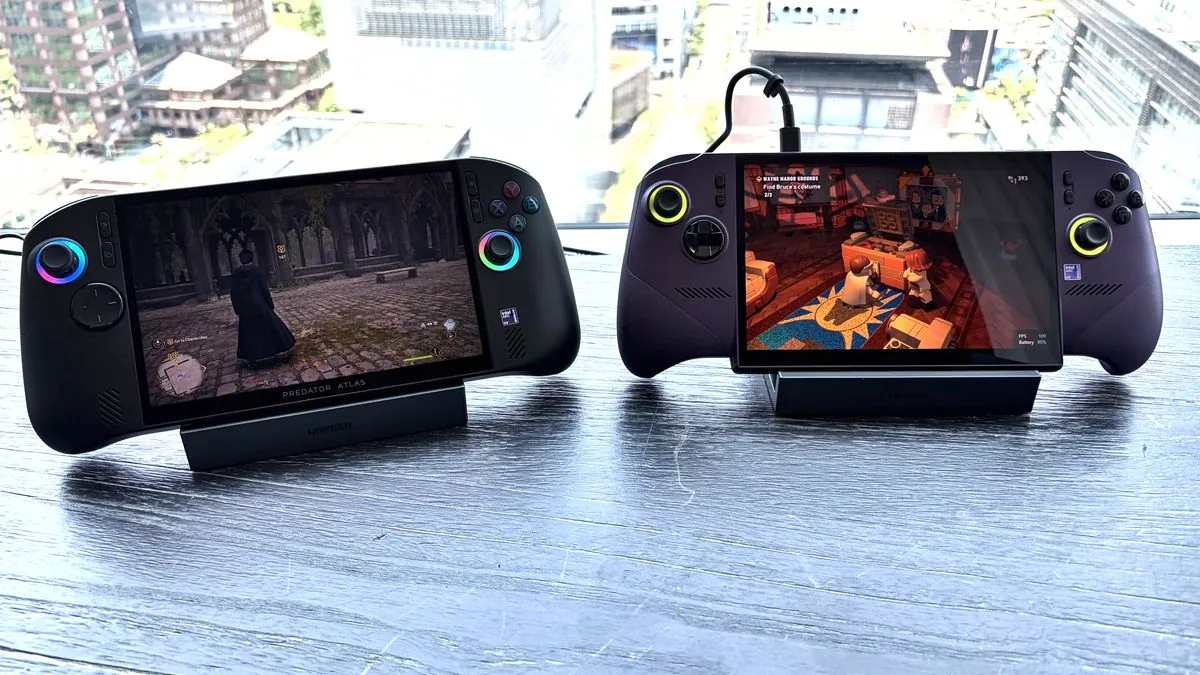
AMD’s move to deploy AMD FSR 4 on handhelds comes as rival hardware makers step up their portable gaming offerings. During Computex this year, Intel showcased fresh handheld gaming devices featuring its G3 and G3 Extreme chipsets. Intel pushed hard at Computex. Testers got hands-on time with new hardware like the MSI Claw 8 EX AI+, the Acer Predator Atlas 8, and the OneXPlayer 3, finding that those devices delivered impressive efficiency in early live gameplay demonstrations [2].
Intel paired those processors with its XeSS 3 technology, combining multi-frame generation with low latency to push high frame counts in demanding titles. Team Blue claimed that its hardware achieved roughly 42% better performance than AMD’s Ryzen Z2 Extreme at 35 watts. Team Blue led benchmark tallies in early testing. In side-by-side showcases, games like Lego Batman reached over 155 frames per second on the MSI Claw 8 EX AI+ using Frame Generation tools. That strong showing raised the competitive pressure on AMD’s engineering teams, as Windows Central editor Cale Hunt observed while testing the newest portable systems during the Computex showcase [2].
Handheld systems built on Intel’s newest silicon generally carry higher price tags, but their graphical edge posed an uncomfortable challenge for AMD’s broader ecosystem. Most popular gaming handhelds on store shelves still run on AMD silicon that only had access to older, hand-tuned FSR 3 algorithms. Intel held the performance crown in Windows Central testing [2].
Hardware Support Across Existing Ryzen Handhelds
The most promising part of Jack Huynh’s statement is that the upcoming update covers existing APUs already in players’ hands, not just unreleased silicon. Popular portable consoles like the ROG Xbox Ally X and the Lenovo Legion Go run on AMD Ryzen APU hardware. Players pay nothing extra. These devices haven’t had official access to machine-learning upscaling since launch, relying instead on earlier software revisions to stretch battery life and frame rates in heavy 3D games [2].
While software developers previously focused on platform-level improvements such as Linux NPU support for AMD Gorgon Halo chips, this handheld rollout focuses squarely on graphics upscaling for players. Jack Huynh said the expansion will span AMD’s “entire product lineup,” though the company hasn’t yet detailed whether older RDNA 2 handhelds like the original Steam Deck or the first Asus ROG Ally will get full access to the lighter model. Valve’s Steam Deck console awaits official confirmation from AMD. If those earlier systems do make the cut, their usable lifespan could stretch out significantly without requiring players to buy a replacement [1].
Rumors and industry leaks also point toward future hardware that could run the upscaler natively from day one. Details surrounding next-generation processors suggest that chips for upcoming systems, including what may be the Steam Deck 2 SoC, will likely feature RDNA 4 architecture with built-in hardware support for AMD FSR 4 [1]. In addition, AMD might already be preparing support for its mobile RDNA 4m architecture to ensure upcoming gaming laptops hit the ground running [3].

What Handheld Players Can Expect Next
When AMD flips the switch before 2026 concludes, millions of handheld players will receive a noticeable visual upgrade without paying a single dollar for new hardware. The shift from FSR 3 to AMD FSR 4 replaces hand-crafted heuristics with machine learning, eliminating much of the shimmering and ghosting that plagued earlier iterations. Fine details like thin lines, foliage, and text will look significantly crisper on compact seven-inch and eight-inch displays [2].
Frame Generation will also play a major role in keeping portable gaming smooth as games push complex geometric assets and dynamic lighting on small screens. By combining cleaner Super Resolution images with generated intermediate frames, the lighter model can push demanding modern games well past thirty frames per second on modest power envelopes [1]. Handheld owners won’t have to dial down graphic presets to minimum settings just to keep their games playable away from a wall outlet. That improvement should help battery-powered hardware maintain enjoyable performance across modern action titles without overheating internal cooling chambers [2].
Jack Huynh hasn’t announced a specific release day yet, but with the end of the year only months away, driver rollouts and game integration patches should begin surfacing soon in reports from The Elec and Windows Central [3]. Handheld makers and game developers will need to update their software to enable the new upscaler cleanly. Portable gamers can look forward to extended hardware longevity on existing Steam Deck and Lenovo Legion devices [2].
- ONLINE NEWS Harper, C. (2026, October 8). AMD vows to bring FSR 4 to gaming handhelds and laptops by year-end. HotHardware. [Article Link]
- ONLINE NEWS Hunt, C. (2026, October 8). ROG Xbox Ally X owners could get a big graphics boost as AMD lays out plans for AI-based FSR 4 on existing Ryzen handhelds. Windows Central. [Article Link]
- ONLINE NEWS Khan, S. (2026, October 8). AMD confirms FSR 4 will ship to APUs, gaming laptops and handhelds by the end of 2026. Wccftech. [Article Link]
- ONLINE NEWS TechSpot. (2026, October 8). AMD says FSR 4 is coming to handhelds and laptops by the end of 2026. TechSpot. [Article Link]


