





Graphics processing units face a heavy computing challenge when rendering high-resolution video games with ray tracing effects. Deep Learning Super Sampling solves this processing bottleneck by rendering scenes at a lower base resolution and using artificial intelligence to reconstruct a sharp output image. Understanding how Nvidia DLSS works explains how neural networks, motion vectors, and math silicon balance visual clarity with high frame rates. The technology has evolved from an experimental upscaler into a multi-frame reconstruction platform.
What Deep Learning Super Sampling Does
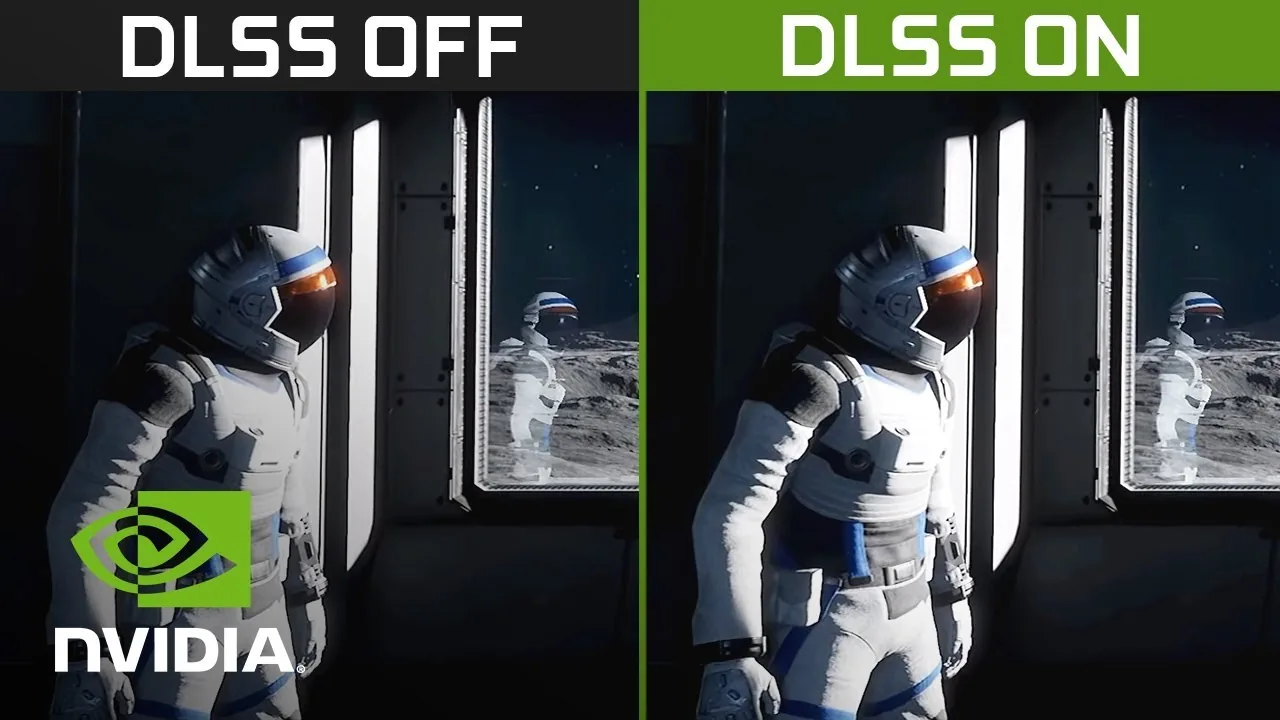
Conventional rasterization forces a graphics card to calculate every pixel on the screen at native display resolution. When a player runs a game at 4K resolution, the graphics hardware must shade more than 8.2 million pixels for every single frame. Turning on ray tracing compounds this workload because the GPU must trace light paths, calculate bouncing reflections, and resolve realistic shadow rays through complex geometry. When millions of light rays bounce through a virtual room, the rendering pipeline can choke, dropping frame rates down to sluggish levels on high-refresh monitors. Rendering every frame natively at high resolutions demands massive computing effort that even expensive graphics cards struggle to sustain during fast action scenes [3].
Deep Learning Super Sampling shifts this workload by rendering games at lower internal resolutions like 1080p. In testing with Remedy Entertainment’s Control, Nvidia showed that frame rates climbed by 75% when players ran ray tracing with DLSS enabled on GeForce RTX hardware [3].
This performance boost lets players turn on demanding ray tracing settings without enduring unplayable frame pacing. By January 2025, Nvidia stated that over 540 games and applications supported DLSS technology. The company also reported that over 80% of GeForce RTX owners turned DLSS on when playing supported titles. What started as a niche upscaling option for a few PC games has grown into an industry standard. Players now expect AI upscaling to deliver sharp 4K visuals from lower-resolution render targets [3, 4].
How Nvidia DLSS Works Under the Hood
Understanding the underlying mechanics of DLSS needs a close look at what happens inside the graphics pipeline during every frame. The game engine first renders the three-dimensional scene at a lower base resolution, producing aliased raw pixel colors before post-processing or interface elements appear on screen. Along with this low-resolution image, the engine extracts two fundamental data feeds: motion vectors and depth buffers [2, 4]. Motion vectors record the exact direction and speed that geometric surfaces and camera angles moved since the preceding frame. The engine also passes exposure and brightness metrics into the DLSS runtime to help the neural network distinguish true surface highlights from visual noise. By combining these spatial and temporal feeds, the algorithm tracks where objects travel across consecutive frames without getting fooled by quick camera swings [2, 4].
At runtime, the DLSS model takes three specific inputs: the aliased low-resolution frame, motion vectors, and the previous high-resolution frame [2]. It applies sub-pixel jittering and temporal anti-aliasing upsampling (TAAU) to reconstruct lost geometric details without smearing fine texture lines [4].
Nvidia trains this neural network offline rather than on individual consumer gaming rigs. The company built the Saturn V supercomputer to process 16K offline rendered images alongside 64-sample supersampled reference scans [2, 3, 4]. By comparing low-resolution inputs against pristine reference frames, the network learns to infer missing pixel information across varied lighting environments [2]. The resulting mathematical weights are distilled down to a compact file measuring only a few megabytes. Nvidia distributes these updated models directly to gamers through regular Game Ready driver updates [2, 3].
Tensor Core Hardware Execution
Running complex neural networks in real time at sixty or one hundred and twenty frames per second needs specialized silicon math hardware built directly onto the graphics card. Standard CUDA cores handle general rasterization, pixel shading, and geometry transformations, but they lack the architecture for massive matrix calculations. Nvidia solved this by adding silicon math blocks called Tensor Cores across its GeForce RTX graphics card lineup, beginning with the Turing GPU architecture [1, 3]. Tensor Cores are engineered specifically to accelerate mixed-precision matrix math operations using formats such as 16-bit floating point (FP16). By computing lower-precision operations without losing the accuracy needed for video game images, Tensor Cores perform neural inference in a fraction of a millisecond while game engines render frames [1, 3].
In February 2021, Nvidia engineer Phillip Singh announced that DLSS was available as a plugin for Unreal Engine 4.26. This plugin allowed developers to bring AI upscaling to major titles like Fortnite, Minecraft, and Cyberpunk 2077 with straightforward setup steps [1].
Engine integration also opened up an ultra performance mode capable of scaling games to 8K resolutions. Because Tensor Cores handle neural reconstruction on their own silicon pathways, the rest of the GPU stays free to compute ray-traced lighting and reflections [1, 3]. Along with upscaling, Nvidia bundled the Nvidia Reflex SDK into Unreal Engine to measure and minimize system latency. Competitive studios like Bungie, Riot Games, and Respawn Entertainment integrated Reflex to keep player inputs responsive even during heavy graphical loads [1].
Evolution Across Early Architectures
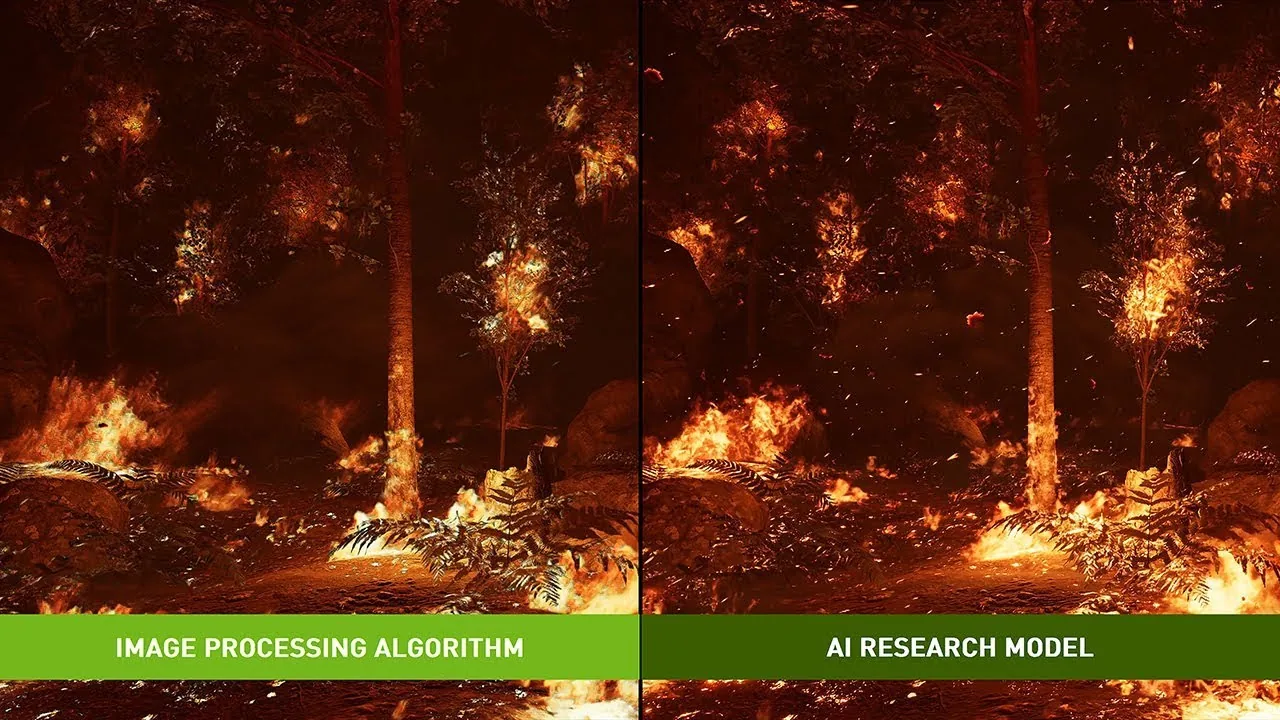
When Nvidia introduced the first iteration of DLSS in September 2018 alongside GeForce RTX 20 series graphics cards, the technology worked as a spatial upscaler. DLSS 1 used a two-stage process based on convolutional auto-encoder neural networks. The first stage applied an image enhancement network that evaluated the current frame and motion vectors to sharpen edges and apply spatial anti-aliasing. The second stage took the raw low-resolution frame and expanded it to the target output resolution. Because DLSS 1 relied on only a single frame for upscaling rather than accumulating temporal history, the neural network had to generate huge amounts of new visual information from scratch. This single-frame reliance often created visual hallucinations, turning distant leaves and thin wires into blurry or distorted shapes [4].
Early adoption stalled because DLSS 1 needed per-game neural network training on supercomputers [3, 4]. Releases like Battlefield V and Metro Exodus showed soft output and smearing artifacts that made standard resolution scaling look more appealing to many players [4].
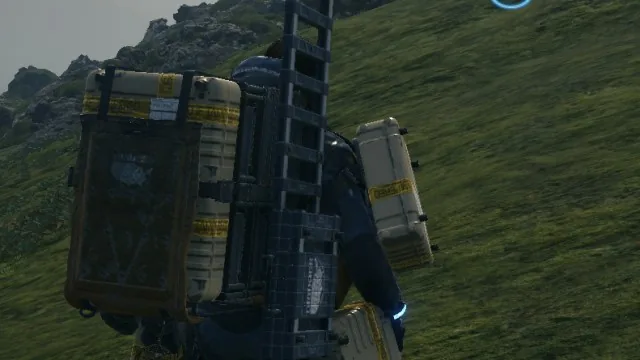
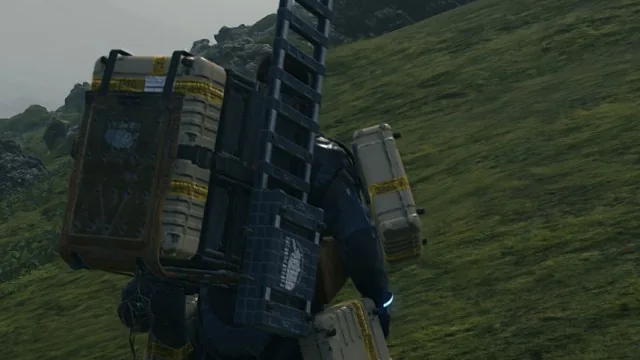
In April 2020, Nvidia launched DLSS 2 through driver version 445.75, replacing per-game training with a universal model that worked across all supported games. DLSS 2 introduced temporal feedback, tracking pixel movement across consecutive frames to resolve sharp texture details [3, 4]. The new implementation reduced processing overhead to roughly 1 to 2 milliseconds, cutting latency in half compared to DLSS 1. Games like Wolfenstein: Youngblood and Death Stranding ran smoothly at 4K using DLSS 2 Quality and Performance modes [3, 4].
Frame Generation Mechanics
With the release of GeForce RTX 40 series graphics cards in 2022, Nvidia transformed DLSS from a super-resolution upscaler into a frame interpolation platform called DLSS 3. The core addition was Frame Generation, an AI feature that synthesizes entirely new video frames between conventionally rendered frames [3, 4]. In graphics rendering, games often encounter CPU bottlenecks where the main processor cannot process game logic, physics, or draw calls fast enough to keep the graphics card saturated. Because Frame Generation runs after the game engine finishes rendering, it bypasses CPU limitations completely [3]. For every conventionally rendered frame, the neural algorithm generates an additional intermediate frame, doubling the displayed frame rate without placing any extra rendering burden on the CPU [4].
Frame Generation relies on an Optical Flow Accelerator built into the Ada Lovelace GPU architecture. This silicon block analyzes pixel motion vectors across two sequential rendered frames, tracking changes in lighting, shadows, and particles [4]. An article detailing how DLSS frame generation inserts extra frames in games shows how interpolation operates smoothly during gameplay. To counter any input latency introduced by holding frames for interpolation, Nvidia combined Frame Generation with Reflex technology to keep gaming controls responsive [3].
In 2023, Nvidia introduced DLSS 3.5 with Ray Reconstruction to enhance path-traced graphics. This AI model replaced multiple hand-coded denoisers with a single neural network trained on five times more data than DLSS 3. Heavy titles like Alan Wake 2 gained cleaner reflections and sharper lighting [4].
Multi Frame Generation in DLSS 4
Nvidia unveiled DLSS 4 alongside its GeForce RTX 50 series graphics cards, expanding support across the RTX 5090, RTX 5080, RTX 5070 Ti, RTX 5070, RTX 5060 Ti, and RTX 5060. The biggest architectural leap in DLSS 4 is the shift from a convolutional neural network to a vision Transformer model. Transformers process visual context across larger frame areas at the same time, improving how the algorithm reconstructs fast-moving edges and complex foliage without visual ghosting [3, 4]. In benchmark testing of Cyberpunk 2077, frame rates nearly quadrupled when DLSS 4 ran with full ray tracing enabled. The model also delivered cleaner image reconstruction across titles like Alan Wake 2, Hogwarts Legacy, and Microsoft Flight Simulator [3].
DLSS 4 introduced Multi Frame Generation, generating up to three AI frames for every conventionally rendered frame [3, 4]. In Warhammer 40,000: Darktide, the AI-driven optical-flow model reduced memory usage by 30%, saving 400 megabytes of video memory at 4K resolution [4].
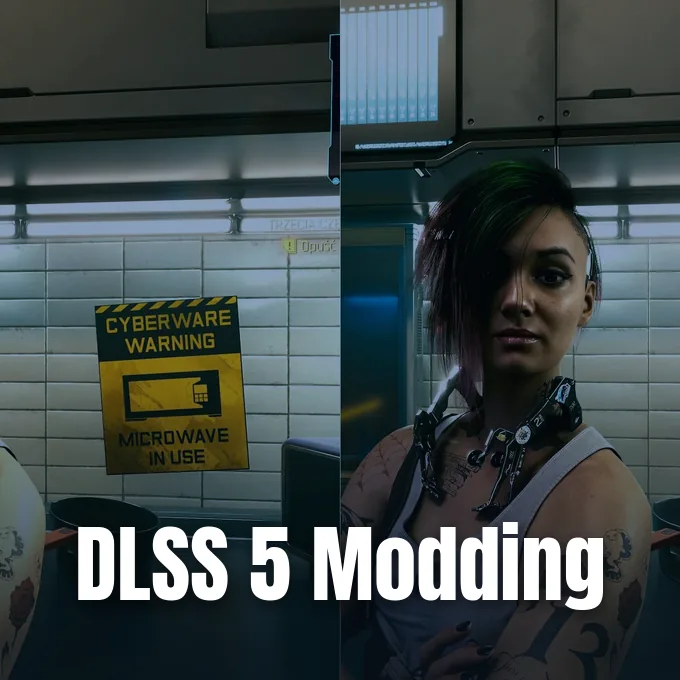
Nvidia confirmed that by May 2025, over 125 games supported DLSS 4, and by January 2026, over 250 titles supported Multi Frame Generation. When asked by Digital Foundry why newer frame generation was restricted to newer hardware, Bryan Catanzaro, Nvidia vice president of Applied Deep Learning Research, cited engineering and optimization factors. Coverage showing how PC modders inject faster NVIDIA DLSS 5 into unsupported games revealed that enthusiasts managed to run modified runtimes on older GPUs. Nvidia told PC Gamer that official backporting would demand extensive testing [4].
Neural Rendering in Version Five
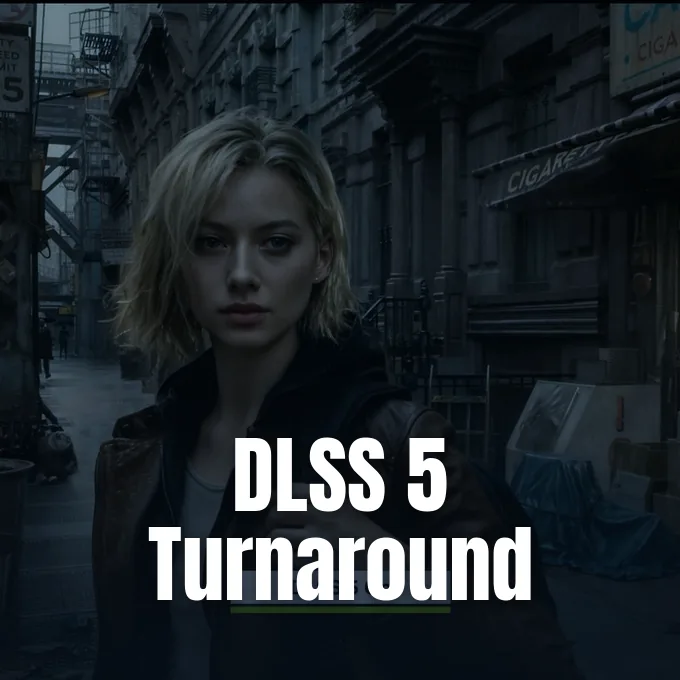
At GTC 2026 on March 16, 2026, Nvidia CEO Jensen Huang presented DLSS 5, moving graphics reconstruction into real-time neural rendering. Unlike earlier iterations that focused on scaling pixels or inserting motion-interpolated frames, DLSS 5 applies a neural model directly to lighting and surface materials up to 4K resolution. Huang explained that the neural renderer realistically calculates material responses and complex ambient lighting while preserving the developer’s original artistic intent. The technology is scheduled to launch in fall 2026 across major releases, including Assassin’s Creed Shadows, Delta Force, Hogwarts Legacy, Naraka: Bladepoint, Phantom Blade Zero, Resident Evil Requiem, Starfield, and The Elder Scrolls IV: Oblivion Remastered. This update transforms game rendering from fixed pixel shaders into dynamic neural synthesis [4].
Although Nvidia first announced DLSS 5 as exclusive to GeForce RTX 50 series cards, the company softened that boundary. In September 2026, Nvidia spokesperson Rajal Maharaj told The Verge that DLSS 5 will arrive on GeForce RTX 40 series cards later [4].
Ahead of DLSS 5, Nvidia shipped an updated version of Ray Reconstruction for DLSS 4.5 on August 25, 2026, following an initial announcement on May 31. This update improved spatial awareness in scenes, analyzing movements and lighting data to produce cleaner, less noisy images on all RTX GPUs. Reporting on how PC gamers embrace DLSS 5 graphics highlights the community shift toward accepting neural rendering. Gamers increasingly welcome AI models that enhance lighting while keeping frame rates high [4].
Academic Research Beyond Video Games
The super-resolution principles powering DLSS have spurred research across varied fields outside computer entertainment [5, 6, 7]. In 2025, E. Warni, A. Alimuddin, A. E. U. Salam, M. Fachri, and M. R. H published a study in Engineering Technology & Applied Science Research evaluating vehicle detection under heavy rain. Traffic control systems in intelligent transportation rely on camera feeds, but stormy weather degrades pixel quality and lowers counting precision. The research team proposed a detection method combining pixel area analysis with Deep Learning Super Sampling to reconstruct wet camera feeds from the AAU RainSnow Traffic Surveillance Dataset. Their DLSS-enhanced model achieved an accuracy of 80.95% under rainy conditions, outperforming standard detection algorithms, though accuracy dropped to 36.58% in extreme thunderstorms [5].
In 2023, researchers M. Hou and Y. Tang published a study in Traitement du signal extracting DLSS visual features from e-commerce product images. They analyzed how image colors and shapes correlate with online shopping sales volume, helping retail platforms guide product marketing strategies [6].
In 2025, scholar A. B. Gass analyzed DLSS through a platform studies perspective in the Journal of Gaming & Virtual Worlds. Focusing on the video game Control, Gass explored how temporal upscaling manipulates player perception of time while introducing visual instabilities like micro-flickering and ghosting [7]. The technology also reached consumer living rooms on June 5, 2025, when Nintendo released the Nintendo Switch 2. The system became the first home video game console to incorporate Nvidia DLSS hardware upscaling, expanding AI super-resolution across millions of living room televisions [4].
- WEBSITE Singh, P. (2021, February 11). NVIDIA DLSS Plugin and Reflex Now Available for Unreal Engine. NVIDIA Technical Blog. [Article Link]
- WEBSITE Einhorn, E. (2021, April 14). NVIDIA DLSS Natively Supported in Unity 2021.2. NVIDIA Technical Blog. [Article Link]
- ONLINE NEWS Martindale, J. (2020, February 14). Nvidia RTX DLSS: everything you need to know. Digital Trends. [Article Link]
- WEBSITE Wikipedia contributors. (2026). Deep Learning Super Sampling. Wikipedia, The Free Encyclopedia. [Article Link]
- ACADEMIC JOURNAL Warni, E., Alimuddin, A., Salam, A. E. U., Fachri, M., & H, M. R. (2025). Enhancing Traffic Counting in Rainy Conditions: A Deep Learning Super Sampling and Multi-ROI Pixel Area Approach. Engineering Technology & Applied Science Research, 15(1), 20095-20101. [Article Link]
- ACADEMIC JOURNAL Hou, M., & Tang, Y. (2023). The Influence of Visual Features in Product Images on Sales Volume: A Machine Learning Approach to Extract Color and Deep Learning Super Sampling Features. Traitement du signal, 40(4), 1469-1477. [Article Link]
- ACADEMIC JOURNAL Gass, A. B. (2025). Worms through time: Deep Learning Super Sampling and temporal manipulation in Control. Journal of Gaming & Virtual Worlds, 17(2), 151-163. [Article Link]


