






Skeletal bones from a classical Mediterranean outpost reveal that mothers introduced solid foods to babies far earlier than ancient physicians recommended in their historical treatises [2]. Chemical tests of children’s remains from the Greek settlement of Himera show that infants began eating solid meals around three months of age while continuing to nurse until nearly age four [3]. The study, titled “A Child-Centred Approach to Cultural Hybridity: Weaning and Childhood Diets in the Greek Colony of Himera”, appeared in the European Journal of Archaeology. Lead author Laurie Reitsema and researchers A. S. Gancz, S. Vassallo, and B. Kyle examined bone collagen to trace ancient Greek weaning in Sicily [1]. Phys.org reporter Sandee Oster reported that mothers adapted feeding choices to infant needs [2].
Chemical Traces in Ancient Himera Bones
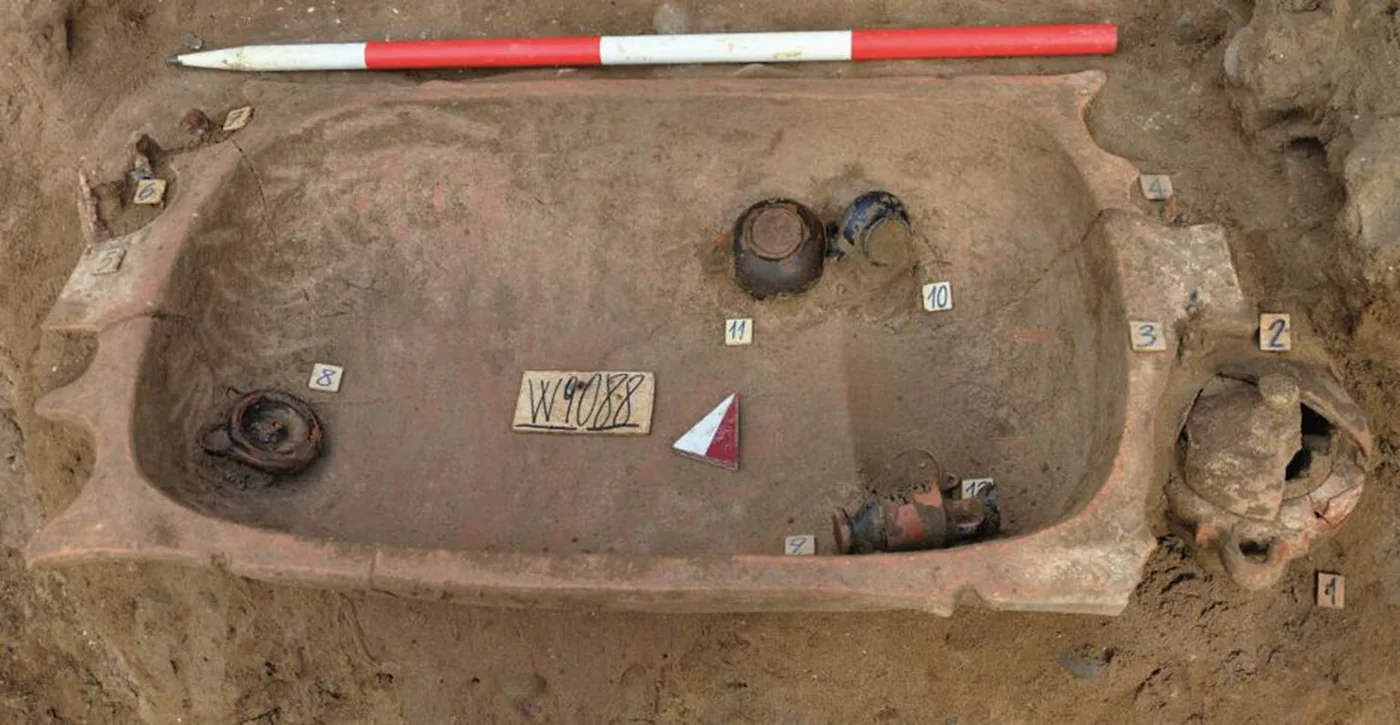
Between the seventh and fifth centuries BCE, Dorian and Chalcidian settlers built the Greek outpost of Himera on Sicily’s northern coast [2]. Settlers built an active town shared by local Sicilians, Phoenician traders, and Greek colonists [3]. Archaeologists have uncovered more than 13,000 burials at the site [2]. Adults filled most graves [3].
To examine early childhood diets, Reitsema and co-authors analyzed bone collagen from 58 subadult individuals under 18 years old and 27 adult women from the Himera cemeteries [1]. Reitsema, a biological anthropologist at the University of Georgia, led the research team [2]. She said child care habits remain difficult to recover from ancient graves, but bone chemistry offered rare chemical evidence of how mothers responded to infant needs in classical Sicily [1]. “It was exciting to see 2,500-year-old evidence of mothers’ responsiveness to infant needs,” Reitsema said [2]. Bone collagen tests confirmed those habits [1].
Burial records from Himera indicated that infant and child mortality was surprisingly low compared with other ancient European populations documented by excavators [2]. Children born in the settlement entered a mixed culture, but they shared similar domestic living spaces [3]. Researchers wanted to know whether feeding habits explained that low mortality [1].
Ancient Greek Weaning Traced Through Bone Isotopes
The investigation tracked stable nitrogen and carbon isotope ratios, designated as δ15N and δ13C, preserved in skeletal collagen [1]. Nitrogen values climb during breastfeeding [2]. Because maternal milk places nursing infants higher on the food chain, babies register isotopically like carnivores relative to the mother’s own diet. Reitsema said that milk consumption creates a unique chemical profile in infant bones. “Breastfed babies look different than weaned babies, isotopically, because their diets consist of milk, which differs isotopically from other foods (babies are top carnivores!),” Reitsema said [3].
Carbon isotope values tracked a different dietary shift by showing when infants began consuming solid plant foods such as cereals and fruits. Carbon ratios changed as solid foods entered meals in addition to maternal milk [2]. Bayesian statistical modeling of both isotopic signatures let researchers reconstruct the precise timing of ancient Greek weaning during several centuries of colonial life at Himera [1].
The chemical tests showed that dietary differences between children and adults lasted long after infancy had ended in the colony. Subadults at Himera consumed a larger share of plant-based foods than adult females did, and those chemical distinctions remained visible in bone collagen until roughly age 10 [2]. This prolonged dietary difference indicates that families prepared specific meals for growing children, so children did not simply eat whatever adults consumed at the table. Dietary habits evolved slowly as children matured toward adolescence [1]. Children ate more cereals during their early growth stages [2].
Early Solids and Prolonged Nursing
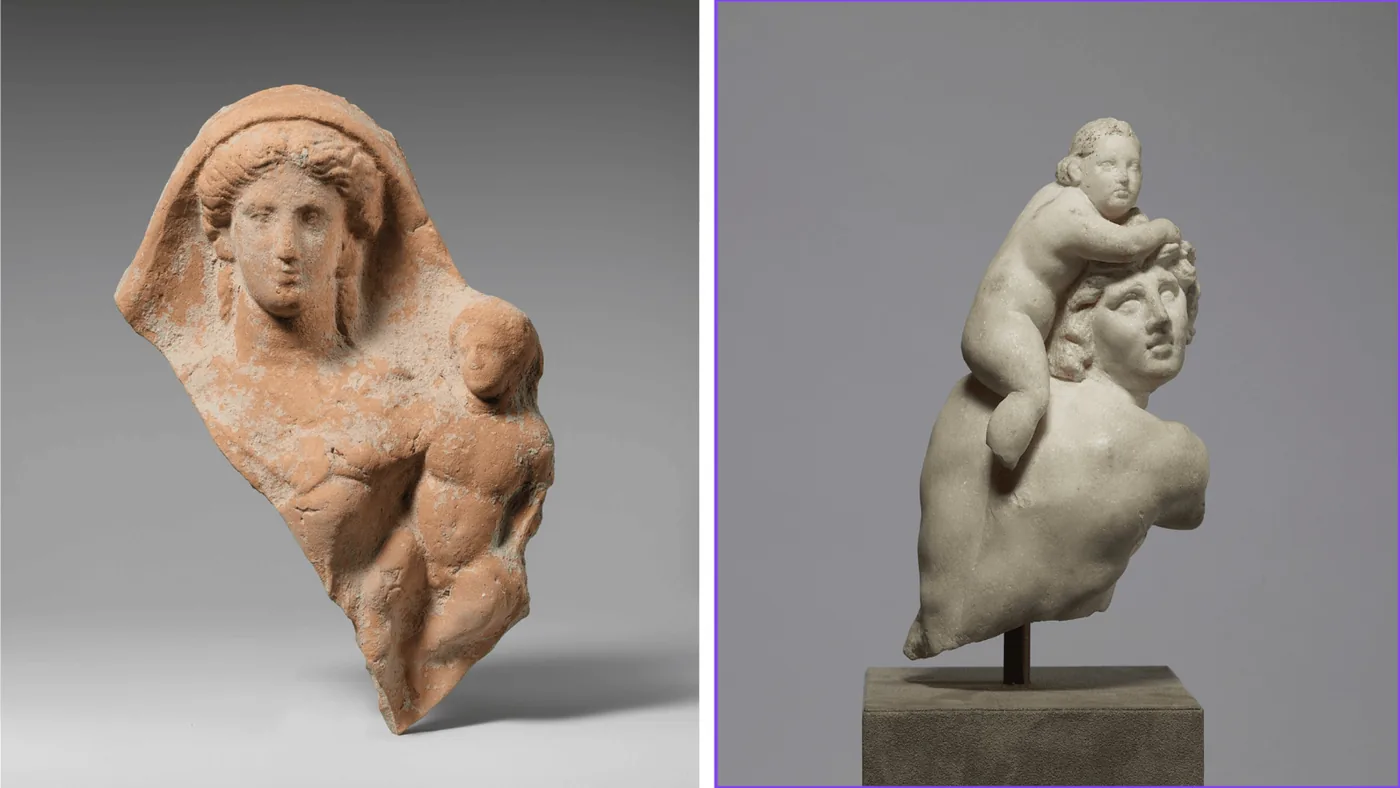
The chemical tests revealed that mothers introduced solid foods when babies reached 3 to 4 months of age [1]. That early supplementation occurred much sooner than classical medical texts suggested [2]. Infants began tasting gruel or soft plant mixtures while continuing to drink maternal milk on a daily schedule [3].
Even though solid food began early, mothers kept nursing [2]. Children at Himera continued to breastfeed until approximately 3.8 years of age, with full weaning finishing between 3.5 and 4 years according to the Bayesian isotopic data [1]. This long nursing span exceeded patterns seen in most preindustrial communities. Maternal milk provided calories and fluids for years after solids started [3]. Children relied on both food sources together for more than three years [1].
Extended nursing may have helped infants survive in an ancient Mediterranean port that lacked clean drinking water supplies [2]. “Breastfeeding is well known to support infant survival,” Reitsema said, “especially in places without reliable access to clean, safe drinking water, which describes most of human history [3].” Breast milk kept babies hydrated and safe from contaminated water [2].


How Ancient Greek Weaning Diverged from Medical Texts
The feeding schedule documented at Himera contrasts with written advice from classical antiquity. Second-century physicians Soranus and Galen urged parents to delay solid food. Soranus advised parents to feed only milk until an infant reached six months of age or cut primary teeth, whereas Galen also favored delayed supplementation [2]. At Himera, babies began eating solid foods two to three months earlier than Soranus and Galen recommended in their classical texts [3]. Families relied on local custom instead of medical treatises [2].
Colonial reality diverged even further from written medicine when physicians addressed nursing duration [3]. Soranus advised weaning between 1.5 and two years, while Galen recommended that mothers stop breastfeeding when a child reached three years of age [2]. Mothers at Himera nursed for 3.8 years, exceeding Soranus’ recommendation by nearly two full years [3]. Real colonial habits outlasted written medical advice [1].
Although Bayesian testing detected a general weaning curve for the town, isotope ratios revealed clear variation among individual children buried in the cemetery grounds. Some infants started solids before three months of age, while others continued nursing beyond four years [1]. This wide spread shows that mothers balanced cultural expectations with the practical needs and physical health of their individual babies [2]. The findings show that ancient Greek weaning allowed personal flexibility within a shared community standard that guided colonial households [1]. Families adapted feeding routines to infant health and household circumstances [2].
Colonial Traditions Across the Mediterranean
Researchers compared the Himera bones with skeletal evidence from other Mediterranean settlements to determine whether extended nursing was typical among distant Greek colonial communities. They found striking similarities at Apollonia Pontica, a Greek settlement located on the Black Sea coast in what is now modern Bulgaria. Both towns showed similar weaning ages and childhood diets despite the great distance separating Sicily from the Black Sea [2].
In contrast, Roman urban centers showed far greater dietary diversity. The study authors suggested that Roman cities may have adhered more closely to the elite medical advice of Soranus, whereas Greek colonies preserved older traditional customs [2]. Science writer Sandee Oster reported on the Himera research for Phys.org, with editorial review by Sadie Harley and Robert Egan. “Child care is deeply personal, and practices within households are often difficult to see in historical records or the archaeological record,” Reitsema said [3]. Family customs persisted [1].
Himera brought local Sicilians, Phoenician traders, and Greek colonists together in daily contact through centuries of trade and settlement [3]. The shared isotopic pattern shows that families from different ethnic backgrounds adopted common infant care routines as they lived together [1]. Reitsema said that ancient infant feeding customs help scholars examine how diverse Mediterranean traditions blended, remained distinct, or coexisted at an intimate household level [3]. Families from different roots shared the same feeding habits [1].
Mortality Caveats in Childhood Remains
The researchers pointed out an important caveat about their findings, because the study sample consisted only of children who died young before reaching adulthood. Because these individuals died in infancy or early childhood, their bone chemistry might not represent the feeding experiences of children who survived into adult life [2]. Prolonged nursing in this sample could have been an attempt to comfort or nourish sick children instead of representing a standard colonial strategy. “Would a baby with an optimal weaning trajectory be dying at age 2 or 3?” Reitsema asked. “It’s possible that the weaning behaviors we see in this study reflect a specifically unsuccessful strategy,” Reitsema said [3]. Sickness may have prolonged breastfeeding in frail infants [2].
To test whether healthy survivors experienced different feeding routines, the research team plans to analyze bone collagen from Himera adults who lived through childhood [3]. Adult skeletal remains preserve long-term chemical records that can reveal whether survivors were weaned earlier or followed different nutritional paths than children who died young [1]. “Adults are children who lived, and they may have had very different childhoods than those who died young,” Reitsema said [3]. Future adult testing will clarify that survival question [1].
- ACADEMIC JOURNAL Reitsema, L., Gancz, A. S., Vassallo, S., & Kyle, B. (2026). A Child-Centred Approach to Cultural Hybridity: Weaning and Childhood Diets in the Greek Colony of Himera. European Journal of Archaeology, 1-20. [Article Link]
- ONLINE NEWS Mocerino, M. (2026). 2,500-Year-Old Bones from Greek Colony Reveal Infant Feeding Practices. Interesting Engineering. [Article Link]
- ONLINE NEWS Oster, S. (2026). Babies in Ancient Greek Colony Started Solid Food at 3 Months but Nursed for Nearly 4 Years, Chemical Signatures Suggest. Phys.org. [Article Link]
APA 7: PerEXP Teamworks. (2026, November 23). Himera Babies Began Ancient Greek Weaning at Three Months. PerEXP Teamworks. https://perexpteamworks.com/en/ancient-greek-weaning-himera-infants/


