




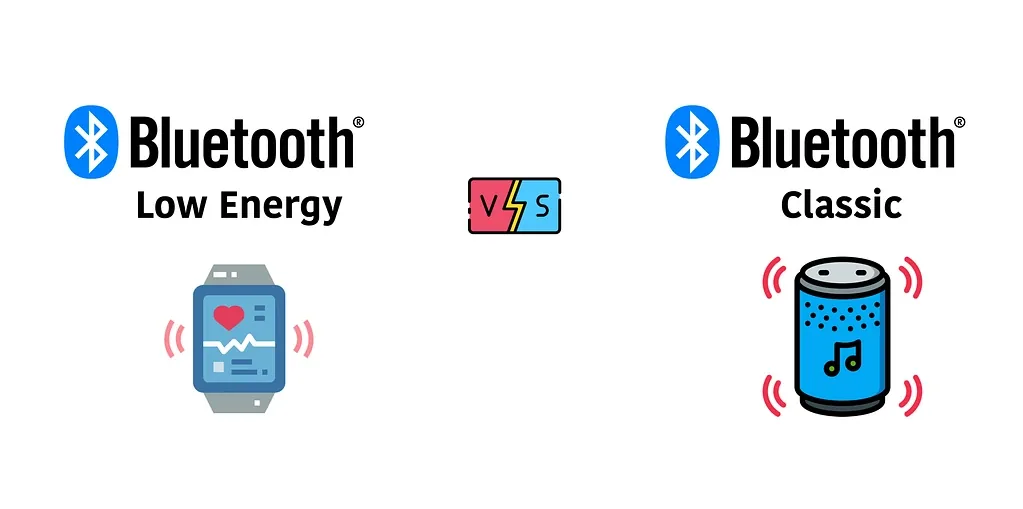
Bluetooth Low Energy is a wireless personal area network standard created by the Bluetooth Special Interest Group to exchange small data packets using minimal battery power [8]. Unlike classic Bluetooth hardware that maintains active radio links for hours during voice calls or music streaming, this low-power system keeps its transmitter asleep until sensor data needs immediate delivery. Radios wake for only a few milliseconds [5]. A compact peripheral running on a single coin cell battery can exchange health metrics with an Apple iPhone or Google Android handset for months or years without recharging [14].
Wibree Roots and Early Prototypes
Research began at Nokia in 2001 when engineers identified wireless applications that contemporary radio standards could not address. Working alongside industry partners like Logitech and STMicroelectronics within the European MIMOSA project, Nokia developed a lightweight radio adapted from the existing Bluetooth standard. The team released this technology in October 2006 as Wibree. In June 2007, the Bluetooth Special Interest Group agreed to absorb Wibree into its open roadmap as an ultra-low-power radio specification. Integration concluded in 2010 when the Bluetooth SIG introduced Bluetooth 4.0 containing Bluetooth Low Energy. Commercial adoption accelerated in October 2011 when Apple unveiled the iPhone 4S, making it the first consumer smartphone capable of talking directly to peripheral Bluetooth Smart gadgets [11].
Early hardware demonstrations proved that compact wristwatches could exchange smartphone alerts without sacrificing the multi-year battery life expected by conventional watch owners. At the Consumer Electronics Show in Las Vegas in 2011, Casio revealed a prototype wristwatch built around the Nordic Semiconductor nRF8001 single-chip radio. The watch paired with Bluetooth 4.0 handsets. Running from a standard CR2032 button cell, it provided twelve hours of wireless activity each day while lasting two full years without battery replacement. “From 1974 when Casio released its very first digital wristwatch, we recognized that long battery life was crucial for end-user convenience and so commercial success,” Nakajima said. Etsuro Nakajima led Casio’s Timepiece Division [9].
How Radio Channels Split Traffic
Transmission takes place within the unlicensed 2.4 GHz industrial, scientific, and medical radio band running from 2400 MHz to 2483.5 MHz [7]. While classic Bluetooth divides this radio spectrum into 79 separate channels of 1 MHz width, low-power links divide the identical frequency space into 40 RF channels spaced 2 MHz apart. Error detection relies on a 24-bit cyclic redundancy check [3].
Engineers divided these 40 frequencies into two distinct operational groups to ensure that unbonded peripheral devices could announce their services without colliding with existing home wireless data streams [3]. Channels 37, 38, and 39 serve as main advertising channels, centered at 2402 MHz, 2426 MHz, and 2480 MHz [8]. The Bluetooth SIG positioned these three advertising bands in gaps between the crowded transmission bands used by standard IEEE 802.11 Wi-Fi networks in typical home routers. The remaining 37 channels carry connected application data [3].

Once two devices finish their initial handshake over advertising frequencies, they switch over to the 37 data channels [3]. To survive in radio environments crowded by microwave ovens and Wi-Fi networks, the link uses frequency hopping spread spectrum to shift between frequencies hundreds of times every second [7]. The central master tracks interference on individual channels and updates a channel map that avoids noisy frequencies [1]. That handshake takes only 3 ms. Because transmissions conclude in a few milliseconds, the radio transceiver stays active for only a tiny fraction of each operating hour [3].
Why Sleep Cycles Cut Power Draw
Power conservation stems from shutting down radio circuitry between transactions rather than merely dropping transmit power during active wireless packet delivery [4]. Classic Bluetooth hardware maintains continuous synchronised polling and draws around 1 watt of power, whereas low-energy components draw between 0.01 watt and 0.5 watt during operation [7]. Transceivers draw roughly 15 mA while transmitting. In deep sleep mode, current consumption plunges to a microscopic 1 µA [3].
Connected devices establish an agreed communication schedule by negotiating a connection interval ranging between 7.5 milliseconds for latency-sensitive applications and 4.0 seconds for slow-moving environmental monitors [8]. Peripheral devices reduce power further by enabling an optional slave latency parameter. This setting allows a peripheral sensor to skip an agreed number of connection events whenever it lacks fresh measurements, preserving its battery without triggering a connection timeout on the central handset. Author Mohammad Afaneh of Novel Bits illustrated this mechanism with a sensor configured with a 15 ms connection interval and a slave latency setting of 3. The sensor skips three scheduled check-ins and activates its radio only after 45 ms to report updated readings. Latency remains under tight software control [6].
Researcher Carles Gómez and his co-authors evaluated these timing variables in an analytical study published in the journal Sensors. Their operational models demonstrated that a sensor operating from a coin cell battery exhibits an operating lifespan ranging between 2.0 days under continuous maximum load and 14.1 years. Minimum latency to wake up and retrieve a sensor reading measured just 676 microseconds in laboratory trials. Proper parameter choices ensure years of autonomous monitoring [14].
Layers in the BLE Protocol Stack
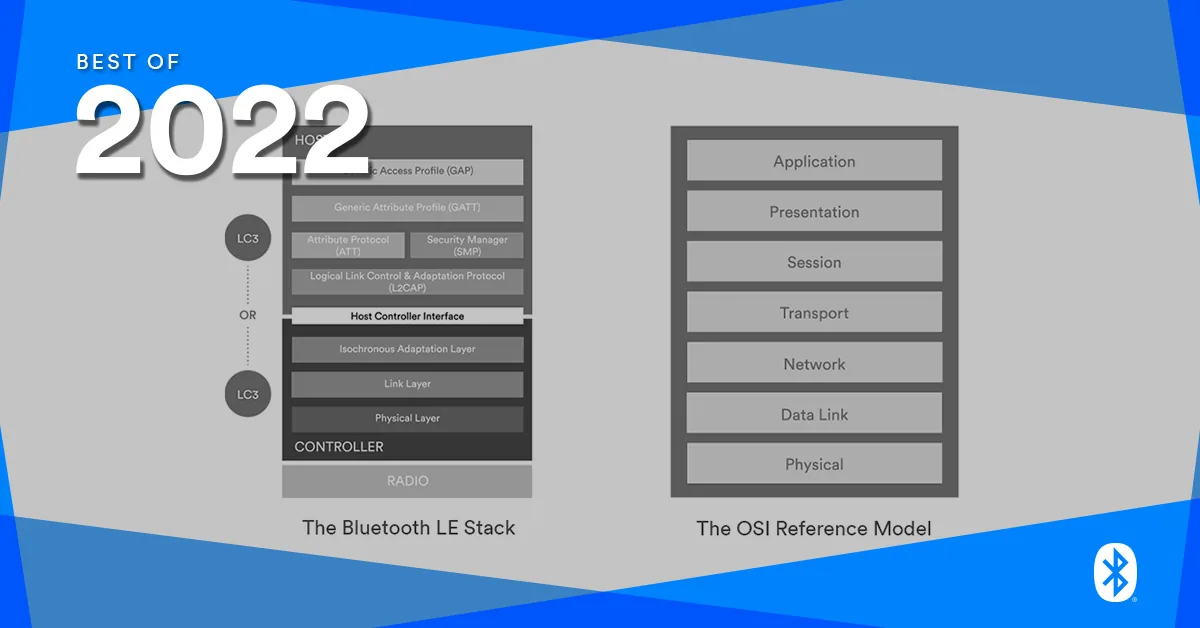
The architecture splits system duties across two major software and silicon modules called the host and the controller. The controller manages the radio physical layer and packet scheduling, running inside dedicated system-on-chip silicon manufactured by suppliers like Nordic Semiconductor, Texas Instruments, or Qualcomm. The host layer executes higher-level networking logic inside operating systems like Google Android, Apple iOS, or Microsoft Windows. Both communicate across the Host Controller Interface (HCI) [1].
At the bottom of the controller sits the radio physical layer, which governs the wireless modulation of binary symbols [1]. The original Bluetooth 4.0 specification implemented a standard 1M PHY transmitting one million symbols per second using Gaussian Frequency Shift Keying [3]. The release of Bluetooth 5 in June 2016 expanded radio choices by introducing two optional physical layers designed for contrasting operating requirements. An optional 2M PHY doubles symbol throughput to deliver application data rates reaching up to 1.4 Mbps over short distances. Conversely, the long-range Coded PHY incorporates forward error correction to dramatically extend wireless range up to 1.5 kilometers line-of-sight without boosting battery drain [6].
Directly above the physical radio, the Link Layer coordinates whether hardware operates as an advertiser, scanner, initiator, or connected node [1]. Moving past the controller boundary into the host, the Logical Link Control and Adaptation Protocol segments application payloads and manages credit-based flow control channels [10]. Security logic within the Security Manager Protocol establishes cryptographic pairing using 128-bit AES CCM keys to protect data from casual eavesdropping. Packets travel across encrypted radio channels [3].

GATT Services and Attributes
Connected peripherals expose their capabilities through the Generic Attribute Profile, known universally across the wireless industry by the acronym GATT [8]. Built upon the lightweight Attribute Protocol, GATT structures device data into an accessible database of attributes that can be discovered and manipulated by client applications. Every attribute is identified by a standardized 128-bit string designated as a universally unique identifier or by a shorthand 16-bit identifier assigned by the Bluetooth SIG [1].
Data inside the GATT database is organized hierarchically into logical services containing individual characteristics and descriptive metadata. A peripheral might advertise an adopted Heart Rate Service containing a specific characteristic holding the user’s pulse in beats per minute. A neighboring Battery Service exposes the current charge level as a percentage, allowing connected software to monitor power reserves without polling hardware sensors directly. Descriptors provide crucial context for characteristics, defining whether values represent degrees Celsius, blood glucose milligrams, or human-readable manufacturer text strings [8].
Devices adopt distinct roles during a communication session to minimize computational overhead on battery-powered accessories. A smartphone running health tracking software acts as a GATT client that requests sensor readings, while a wearable fitness tracker functions as the GATT server hosting data. Peripherals can also initiate unprompted data transfers. Using GATT notifications or indications, a pulse monitor automatically pushes updated measurements to the connected phone whenever heart rate values fluctuate, eliminating the wasteful power consumption of continuous polling queries [8].
Streaming Audio over Bluetooth Low Energy
For ten years following the release of Bluetooth 4.0, low-energy specifications were restricted to exchanging compact sensor readings rather than audio [2]. At the Consumer Electronics Show in January 2020, the Bluetooth Special Interest Group introduced LE Audio, built upon Bluetooth Core Specification versions 5.2 and 5.3. The architecture introduced the LC3 codec, which achieves superior fidelity compared to classic Bluetooth’s legacy SBC codec while consuming roughly half the operational battery power. Transmission latency dropped to an unprecedented 20 to 30 ms [11].
LE Audio introduced synchronized multi-stream connections to resolve historical limitations in wireless earbud hardware like Apple AirPods and Samsung Galaxy Buds. Classic Bluetooth forced a single audio stream to the primary bud, which had to retransmit the signal across the wearer’s head to the secondary earpiece. “With these more recent advancements, developers have really stretched Bluetooth audio to its limits,” Bluetooth SIG vice president of marketing Ken Kolderup said. Multi-stream transmission sends separate synchronized digital streams directly to each individual earbud from the host phone [2]. Our separate investigation covers Bluetooth LE Audio and wireless sound systems for readers interested in multi-stream headphones and broadcast Auracast arenas.
Direct accessibility for hearing instruments represents another major breakthrough enabled by this modernized low-power audio framework [2]. The Android Open Source Project developed the Audio Streaming for Hearing Aid (ASHA) protocol, utilizing connection-oriented L2CAP channels to route audio to left and right hearing instruments. Handsets stream G.722 audio at 16 kHz requiring a 64 kbit/s bitrate, delivering crystal-clear telephone conversations without intermediate streamer pendants [10].
Device Security Weaknesses
Constrained processor speeds and minimal battery budgets force hardware designers to balance cryptographic safeguards against real-world power consumption constraints. Although the Bluetooth standard supports robust 128-bit AES CCM payload encryption, peripheral devices lacking keyboards or screens frequently fall back to an unauthenticated pairing scheme called Just Works. Because Just Works performs no interactive cryptographic verification, an attacker equipped with an inexpensive packet sniffer within radio range can execute a man-in-the-middle exploit during initial bonding. Unauthenticated pairing leaves sensor links vulnerable [8].
Privacy vulnerabilities also arise from cleartext advertising beacons and static hardware identifiers transmitted across open office and retail environments. Older peripheral accessories transmit fixed Media Access Control addresses in their advertising payloads, allowing commercial scanners to track an individual’s physical movements from room to room over extended periods. Modern mobile operating systems counteract this tracking by generating randomized, rotating private addresses for wireless hardware. However, unencrypted advertising data remains readable by third parties [8].
Denial of service vulnerabilities have also demonstrated that unauthenticated advertising packets can cause severe disruptions for modern mobile operating systems. At the DEF CON 31 conference in 2023, security researchers demonstrated that a Raspberry Pi broadcasting counterfeit Apple TV pairing advertisements could freeze nearby Apple iOS 16 devices. Subsequently, attackers weaponized handheld Flipper Zero multi-tools running custom Xtreme firmware to broadcast notification floods that crashed iPhones running iOS 17 and iOS 17.1. Apple shipped iOS 17.2 to mitigate these wireless packet floods. At Midwest FurFest 2023, an attendee reported that an identical packet flood crashed the Android handset controlling their continuous insulin pump, demonstrating how radio spam can imperil medical accessories [13].
Topologies Supported by Bluetooth Low Energy
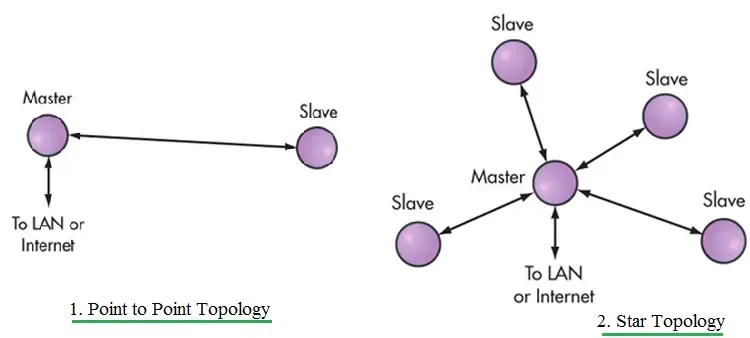
The flexibility of low-power radio links is highlighted by their ability to support several distinct topological configurations for connected hardware [4]. Point-to-point connections establish direct communications between two isolated devices, such as a heart rate monitor transmitting vital signs to a Garmin smartwatch or mobile fitness application [3]. In a star topology, a single central device connects simultaneously to multiple peripheral nodes, allowing a smartphone or smart home hub to collect telemetry from dozens of ambient monitors [4]. Central devices manage smart speaker hubs like those explored in the HomePod Mini acoustic design and wireless streaming architecture.
Broadcast topology permits one-way transmissions where a beacon broadcasts data to an unlimited number of observing devices without requiring formal pairing handshakes or bidirectional channel negotiation [11]. Commercial retail facilities, museums, and transportation terminals deploy compact battery-powered beacons utilizing Apple iBeacon or Google Eddystone formats to trigger contextual notifications on visitor smartphones. Beacons broadcast their universally unique identifiers at regular intervals. Configuring an iBeacon with a rapid 100 ms advertising interval limits coin cell lifespan to three months, whereas increasing the interval to 900 ms extends operation past three years [12].
In July 2017, the Bluetooth SIG officially expanded the standard’s scope by releasing the Bluetooth Mesh Profile and Mesh Model specifications. Mesh networking enables many-to-many communications across tens of thousands of coordinated nodes, allowing industrial facilities to control expansive building lighting networks through relay nodes that pass packets across massive distances. Each node forwards packets to its immediate neighbors [11]. These diverse topological arrangements make low-power wireless communication indispensable across modern Internet of Things deployments [4].
- WEBSITE Bluetooth SIG. (2024). The Bluetooth Low Energy Primer (Version 1.3.0). Bluetooth Technology Website. [Article Link]
- ONLINE NEWS Ashworth, B. (2020, January 6). The New Version of Bluetooth Is Here to Fix Your Headphones. WIRED. [Article Link]
- WEBSITE RF Wireless World. (2026, August 1). Bluetooth Low Energy (BLE) Tutorial: Dive into BLE Protocols and Channels. [Article Link]
- WEBSITE Afaneh, M. (2022, September 6). Bluetooth Low Energy (BLE): A Complete Guide. Novel Bits. [Article Link]
- ONLINE NEWS Nesbo, E. (2021, December 27). What Is BLE (Bluetooth Low Energy) and How Does It Work? MakeUseOf. [Article Link]
- WEBSITE Afaneh, M. (2020, April 28). How Bluetooth Low Energy Works: 21 Interesting Facts. Novel Bits. [Article Link]
- WEBSITE GeeksforGeeks. (2022, May 15). Bluetooth vs Bluetooth Low Energy. [Article Link]
- WEBSITE Maxutov, G. (2026, March 23). What Is Bluetooth Low Energy (BLE)? A Complete Beginner’s Guide. InfiShark Tech. [Article Link]
- WEBSITE Naumann, H. (2011, March 7). Casio Bluetooth Low Energy Watch communicates with smartphones. M2M / IoT Hints and Tips. [Article Link]
- WEBSITE Android Open Source Project. (2026, October 9). Hearing aid audio support using Bluetooth LE. [Article Link]
- WEBSITE Wikipedia contributors. (2026). Bluetooth Low Energy. Wikipedia, The Free Encyclopedia. [Article Link]
- WEBSITE Wikipedia contributors. (2026). Bluetooth Low Energy beacon. Wikipedia, The Free Encyclopedia. [Article Link]
- WEBSITE Wikipedia contributors. (2026). Bluetooth Low Energy denial of service attacks. Wikipedia, The Free Encyclopedia. [Article Link]
- ACADEMIC JOURNAL Gómez, C., Oller, J., & Paradells, J. (2012). Overview and Evaluation of Bluetooth Low Energy: An Emerging Low-Power Wireless Technology. Sensors, 12(9), 11734-11753. [Article Link]


