





Cancer vaccines are entering a coordinated testing phase as federal agencies and biotechnology groups organize a national partnership starting in December. Unlike standard preventative vaccines designed to shield healthy individuals from external viral infections, therapeutic cancer vaccines train immune cells to identify, track down, and eliminate malignant tumors in patients who have already received a formal cancer diagnosis. Scientists at the National Institutes of Health and academic medical centers want to create treatments that recognize distinct protein flags on cancer cells without harming surrounding healthy tissue. The early stage of this collaborative program focuses on pancreatic, liver, and colorectal cancers as well as selected pediatric cases [2].
Federal Push Behind Cancer Vaccines
The planned effort brings together the National Cancer Institute, the Foundation for the National Institutes of Health, pharmaceutical companies, and patient advocacy groups. National Cancer Institute Director Anthony Letai described the project as a chance to test bold ideas through public resources [2]. Leaders at the foundation are working toward a $200M target to back the development pipeline [4].
Federal backing expanded when the National Institutes of Health funded 58 research grants through the High-Risk, High-Reward program to support unconventional biomedical ideas. On an episode of The Cancer Letter Podcast, Director Anthony Letai spoke with Paul Goldberg about his first year guiding the National Cancer Institute and reviewed the grant decisions [4]. News of the December launch spurred quick movement across financial markets, where Novavax rose about 16% near $13, Moderna climbed 14% near $225, Vaxcyte gained 10%, BioNTech rose 5%, and both Merck and Pfizer added about 2% on Friday. Senior Clinical Officer Stacey Adam at the foundation said the collaboration draws inspiration from the joint work that produced coronavirus shots [2].
Under current testing conditions, drug development remains fragmented across independent labs, meaning regulatory approvals often take 8 to 15 years. Foundation Senior Clinical Officer Stacey Adam explained that the foundation aims to shorten that path so patients could receive a shot in a doctor’s clinic within 7 to 10 years. Shared clinical trials could speed up early access [2].

What Are Therapeutic Cancer Vaccines?
Therapeutic cancer vaccines are medical treatments given after a person develops cancer to train their immune system to recognize and attack tumor cells. Preventative shots teach the body to fight off pathogens like viruses before illness occurs, but therapeutic formulations deal with existing disease. Oncologist Cathy Wu, a cancer vaccine researcher at the Dana Farber Cancer Institute, explained that doctors want to stop tumors from returning in patients facing high relapse risks. “We’re using the vaccines to prevent relapse in those patients at high risk of relapse,” she said, noting that lasting immunological memory helps the body defend itself over time [3].
The biological mechanism depends on dendritic cells, which serve as teacher cells within the immune network. When a tumor develops, it often conceals the antigens that T cells need to detect before launching an attack. Vaccines deliver safe versions of these antigen targets into the patient so dendritic cells can present them to T-cell receptors, turning on a defensive reaction against malignant tissue. Because dendritic cells present antigen fragments directly to T-cell receptors in draining lymph nodes, delivering targeted molecular blueprints through bioengineered carriers remains a central objective for immunotherapy researchers developing next-generation cancer treatments [5]. Documentation from PerEXP Teamworks tracks parallel diagnostic screening methods, such as nematode worms for cancer testing, which clinicians evaluate to spot early signs of disease before tumors spread [3].
Scientists divide candidate therapies into off-the-shelf formulas and personalized designs. Off-the-shelf treatments target shared abnormalities that appear across many patients, allowing batches to be produced ahead of time. In contrast, personalized shots require doctors to sequence tumor DNA, and manufacturing costs remain over $100,000 for a single patient [3].
How Do mRNA Cancer Vaccines Work?
Messenger RNA cancer vaccines work by giving cells genetic code that instructs them to make harmless copies of abnormal proteins found on a patient’s tumor. Once cells produce these target proteins, immune detectors inspect the fragments and train killer T cells to seek out matching markers on real cancer cells. Doctors begin by taking a patient biopsy, sequencing tumor tissue and healthy tissue, and finding unique mutations that don’t appear anywhere else in the body. That genetic blueprint is loaded into an mRNA strand for injection into muscle tissue [2].
The furthest along in clinical testing is an individualized mRNA vaccine called intismeran autogene, or V940, developed by Merck and Moderna. In a clinical trial involving 1,137 people with advanced melanoma, researchers paired the mRNA shot with Keytruda, an established immunotherapy drug. Keytruda blocks cellular evasion. In August, the companies announced that this combined treatment lengthened the period before tumors returned or spread, clearing a key bar in Phase 3 trials [2].
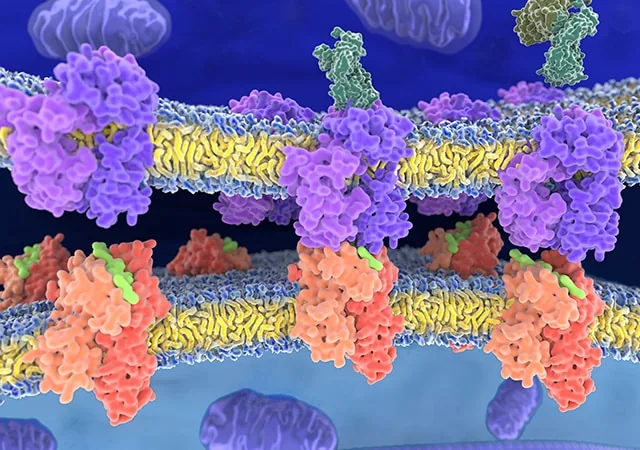
Investigators are testing mRNA formulations against tumors of the lung, bladder, kidney, pancreas, and stomach. Mount Sinai investigator Nina Bhardwaj said newer platforms using DNA, bacterial vectors, or peptides offer broad delivery capacity for diverse cell groups. Several clinical trials have moved into human testing [3].


Clinical Trials Bring Early Remission Results
Real-world clinical trials have produced early successes in patients who had exhausted standard therapies. At age 31, Molly Hones faced stage 4 fibrolamellar carcinoma after a liver tumor spread into her bones and blood. Standard chemotherapy offered little benefit for her rare condition, leading doctors to offer enrollment in an experimental cancer vaccine clinical trial in April 2024. Because fibrolamellar tumors share a consistent mutation among different patients, Hones received an off-the-shelf formulation. By September 2024, only five months after starting the regimen, Molly Hones entered complete remission and has remained cancer-free [3].
Another patient, Ari Nakata, joined a clinical trial after breast cancer spread into her back, lungs, and liver. The Parker Institute for Cancer Immunotherapy helped enroll her at Washington University, where her vaccine was delivered using electroporation. Scans confirmed that 24 of Nakata’s 59 targets responded to the treatment [3].
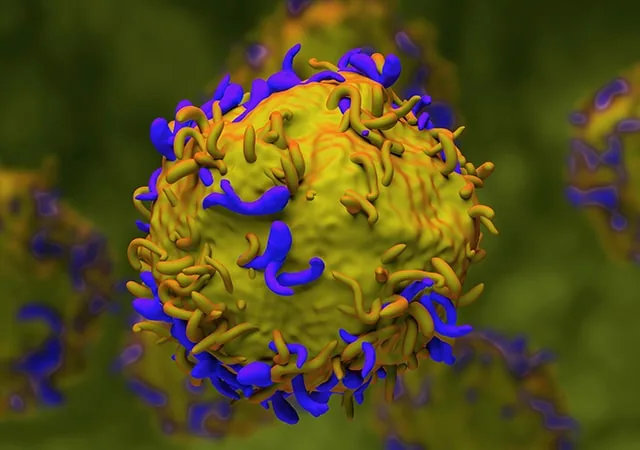
These outcomes have generated optimism among advocacy leaders and clinicians. At the Parker Institute for Cancer Immunotherapy, external affairs officer Kristen Dahlgren, herself a breast cancer survivor, said the field faces a profound turning point. “I think that this is a moment where we really could make cancer curable by using cancer vaccines in addition to other therapies,” she said. For the estimated 18 million Americans living with cancer across the United States, durable immune protection offers hope of living without constant fear of relapse [3].
Nanoparticles and Hitchhiking Platforms Advance Delivery
In laboratory research, bioengineers are finding new ways to deliver vaccine components directly to immune control centers. A study featured in Cell Reports Medicine examined lipid nanoparticles—small spheres made of fat molecules—engineered to carry two distinct immune-stimulating triggers at once. Researchers loaded the spheres with activators for the STING pathway and TLR4, pairing them with melanoma peptides before injecting them into mice. The nanoparticles migrated into lymph nodes where dendritic cells train T cells. In tests running for 250 days, 80% of mice receiving the nanoparticle vaccine stayed tumor-free, while untreated comparison mice survived no longer than 35 days. The dual delivery approach produced a stronger type I interferon response [5].
The same nanoparticle platform also worked when loaded with tumor lysate, a mixture of proteins collected from destroyed cancer cells. This approach protected mice against pancreatic tumors and triple-negative breast cancer. Related trials for RNA-editing treatments show how molecular medicine is developing reprogrammable tools to target difficult malignancies [5].
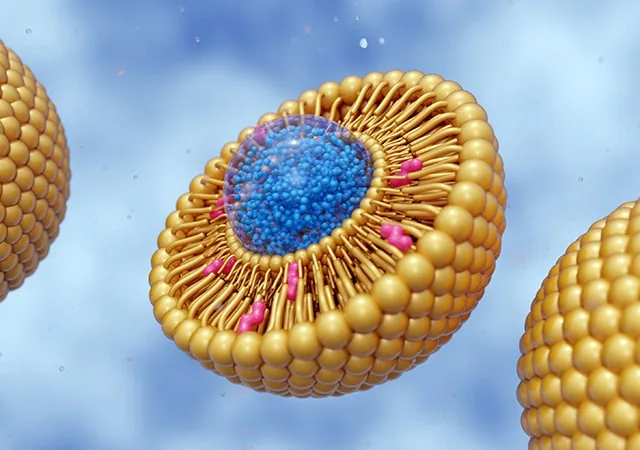
Another delivery advance described in Nature Medicine focuses on ELI-002 2P. The vaccine uses a lipid tail that latches onto albumin, a common protein in human blood. Albumin functions like a biological shuttle, carrying the vaccine into lymph nodes to activate T cells against mutant KRAS proteins, specifically G12D and G12R variants found in pancreatic and colorectal tumors. In a study published in Nature, scientists tagged tumor cells with hepatitis B antigens so pre-existing antiviral T cells would attack them, infecting 30% of tumor tissue within three days without harming healthy cells. This viral tagging approach also triggered epitope spreading as dendritic cells picked up released tumor fragments [5].
Manufacturing Hurdles and the Timeline for Patients
Despite laboratory progress, researchers face dosage hurdles. Studies with lipid nanoparticles revealed a narrow “goldilocks zone” where the immune system reacts optimally. When doses climb too high in the body, protective dampening mechanisms kick in, causing the immune system to pump the brakes to prevent runaway inflammation [5].
Manufacturing logistics present another challenge for personalized therapies. Custom vaccines take weeks to produce and require expensive genomic sequencing, putting treatments out of reach for community clinics. Federal officials hope that the public-private partnership starting in December can address these bottlenecks by funding standardized production hubs. On The Cancer Letter Podcast, National Cancer Institute Director Anthony Letai explained that federal resources can fund high-risk clinical projects that private biotechnology startups can’t tackle alone without public support. Organizers hope to shave years off traditional regulatory schedules through coordinated data sharing [4].
The test for cancer vaccines will occur over the next several years as randomized trials report overall survival data in clinical cohorts. Federal leaders at the National Institutes of Health believe that consistent institutional backing can turn experimental immunotherapies into routine medical tools used across oncology clinics in the United States [2].
- ONLINE NEWS The New York Times. (2026). Cancer vaccines are the N.I.H.’s next ‘big bet’. [Article Link]
- ONLINE NEWS Ashraf, A. (2026). BNTX, NVAX, MRNA lead vaccine rally after report of an NIH cancer-vaccine push. Yahoo! Finance. [Article Link]
- ONLINE NEWS Yang, A. (2026). She was ready to die. Now she’s in remission — cancer vaccines could be the next big thing in medicine. New York Post. [Article Link]
- ONLINE NEWS The Cancer Letter. (2026). Hoping to hit a $200M target, NCI and FNIH develop a plan for advancing cancer vaccines. The Cancer Letter, 52(11). [Article Link]
- WEBSITE Jaufer, A. (2026). From the bench: Innovations in cancer vaccines. American Association for Cancer Research. [Article Link]
APA 7: PerEXP Teamworks. (2026). Cancer Vaccines Enter Massive Clinical Push at NIH.


