





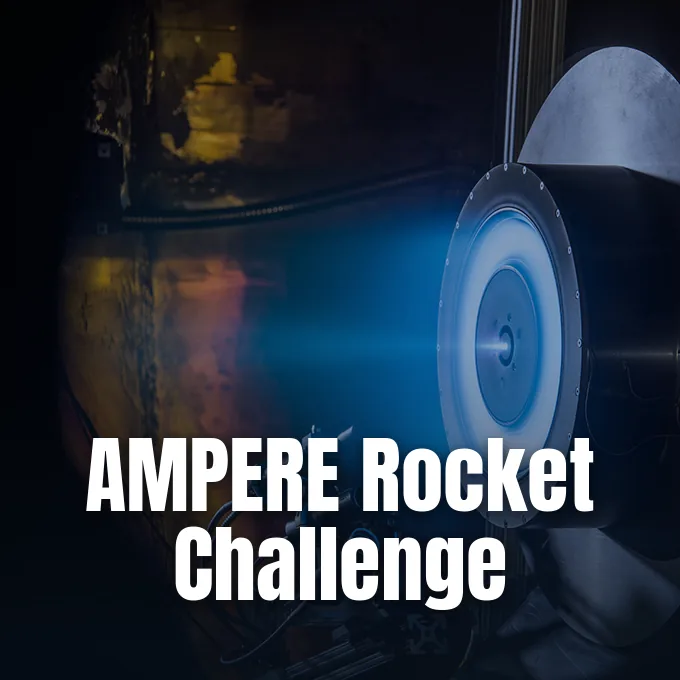
NASA opened registration on November 9, 2026, for the NASA AMPERE Challenge, an initiative that seeks to advance electric space propulsion by funding new thruster designs from American companies. The full project name, the Advanced Mid-Power Electric Rocket Challenge, targets systems that operate between 3 and 7 kilowatts, filling a void between small satellite hardware and deep-space exploration engines. With $500,000 in total prize funding available to top participants, NASA reporter Bailey Light stated that the effort aims to build working prototypes that can fly on future government science missions and private orbital platforms [1].
Why the NASA AMPERE Challenge Began
The competition emerged because NASA identified a gap between rising mission needs for mid-power propulsion and the current capacity of American builders. While low-power units routinely maneuver small orbiters, larger spacecraft bound for geostationary orbits or planetary science need far more push without carrying heavy fuel loads. NASA structured the competition as the first contest under its new Technology Maturation Prize framework, managed by Kimberley Ayers at PRUnderground through the Center of Excellence for Collaborative Innovation (CoECI) within the Space Technology Mission Directorate [6].
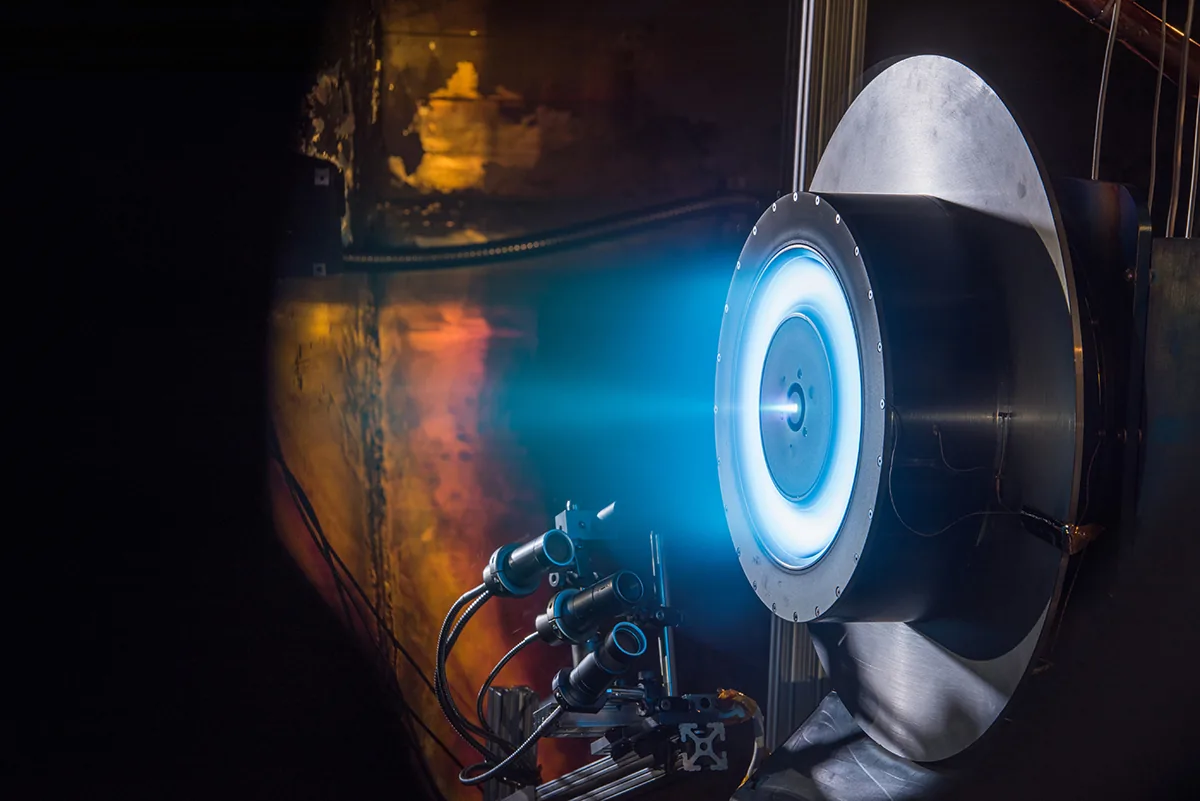
Satellites and science probes increasingly rely on Hall-effect thrusters to maintain stable flight paths over many years. These engines generate push by using electricity to ionize and accelerate an inert gas, producing high exhaust velocities with modest propellant consumption. Previous partnerships proved that federal labs could help private firms refine such systems. In Michigan, Orbion Space Technology worked with NASA Glenn Research Center to adapt thruster concepts for small commercial orbiters [5].
Agency planners now want to scale those earlier successes into the 3 to 7 kilowatt bracket. The target is 5 kilowatts. Three major centers share oversight of this push, uniting NASA Headquarters with the Glenn Research Center in Cleveland and the Jet Propulsion Laboratory (JPL) to foster private manufacturing lines capable of delivering flight-ready hardware for civil and defense missions [2].

Three Competition Phases and Prize Allocations
NASA designed the challenge around three sequential stages that move from paper concepts to live firing inside vacuum chambers. Cash awards total $500,000. Rather than spreading funds among dozens of entrants, the program concentrates its resources on two top performers, granting each winning team up to $250,000 across the competition lifecycle [1].
The opening stage needs registered companies to prepare a concept package that outlines hardware architecture, thruster geometry, predicted operating parameters, and a credible manufacturing pathway. Reviewers evaluate submissions against performance baselines to verify that proposed designs can reliably deliver required thrust levels without excessive mass or cost, after which NASA awards each selected team an interim prize of $125,000 to help finance prototype construction. Those two teams then enter Phase 2, which grants them approximately six months to translate engineering drawings into functioning prototypes. Delivery of that completed test article brings an additional cash award of $125,000 to each team, completing the full financial prize package [6].
Beyond direct payments, advancing teams gain access to federal engineering data that would otherwise take years to develop independently. Winning participants in Phase 2 can incorporate NASA krypton Hall-effect thruster technology into their builds through no-cost licensing agreements. This arrangement lets private engineers study government design choices, benchmark their work against proven aerospace standards, and adapt agency innovations for wider market sale [6].
Testing Prototypes in Vacuum Facility 12
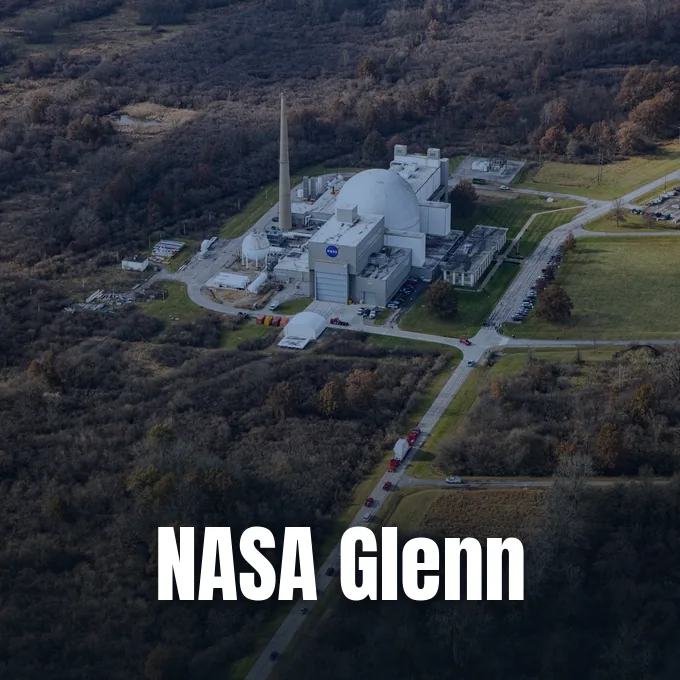
Phase 3 shifts the competition from private workshops into government facilities for ground verification. Qualifying teams will bring their completed thrusters to Vacuum Facility 12 (VF-12), a large low-pressure testing chamber located at the Glenn Research Center. Few private companies possess the capital or infrastructure needed to build chambers capable of simulating the vacuum of space at high continuous power levels, making access to this site a valuable asset. NASA will conduct these firing trials at no cost to the participating teams [6].
During chamber testing, engineers measure beam voltage, discharge current, thrust output, and heat dissipation under sustained operation. High thrust-to-power ratios are vital for missions that demand both fine orbital corrections and sustained velocity changes over months of travel, as reported by the London Globe in its review of Hall Effect Thruster Technology and modern aerospace efforts. Proof that a prototype can operate reliably without eroding discharge channels or suffering electrical breakdown provides the confidence needed to convince mission directors that a new thruster is ready for flight [3].

Evaluation trials will also rely on krypton gas, which NASA plans to supply to teams during their prototype testing. Most older electric thrusters run on xenon, an inert gas that delivers high performance but carries a volatile price tag due to limited worldwide industrial production. Krypton offers a cheaper alternative that keeps mission fuel budgets under control. PressBee noted that such thrusters turn electricity and gas into steady force capable of propelling future deep-space probes [7].

Why Domestic Mid-Power Thrusters Matter
Why has the 3 to 7 kilowatt power range become so essential to aerospace planning? Over the past decade, mid-power electric thrusters have gained wide adoption on military satellites and communication networks because these spacecraft need far more maneuverability than miniature CubeSats can provide without carrying 12-kilowatt power buses. Systems near 5 kilowatts hit that operational balance [2].
American space programs face a vulnerability in this propulsion class. Foreign manufacturers currently dominate the commercial supply of mid-power Hall-effect thrusters, creating supply chain risks and national security concerns for defense payloads and NASA science platforms. Federal managers recognized that relying on overseas vendors for propulsion components leaves sensitive American spacecraft exposed to geopolitical disruptions and sudden export restrictions [2].

A dependable domestic industrial base for mid-power engines complements other propulsion investments across the space agency. While NASA advances dual mode propulsion systems for smaller spacecraft that combine chemical pulses with low-power electric cruising, larger exploration spacecraft require mid-power thrusters that can fire continuously for thousands of hours. Establishing dependable domestic suppliers ensures that future science fleets can launch without depending on foreign hardware or overseas components [4].
Virtual Industry Day Schedule
To brief prospective entrants and explain competition rules, NASA scheduled an online informational session titled the AMPERE Industry Day. The event takes place on November 19, 2026, running from 12:00 to 3:00 PM EST. NASA Glenn Research Center and the Jet Propulsion Laboratory organized the meeting to give aerospace engineers a direct look at the agency roadmap, testing infrastructure, and performance expectations [2].
The three-hour Industry Day Logistics Virtual Event opens with welcoming remarks presented jointly by NASA Headquarters and GRC leadership. Glenn engineers will outline the core motivation, technical targets, and roadmap guiding the AMPERE effort from 12:10 PM to 12:30 PM. At 12:30 PM, JPL specialists will detail modeling and simulation capabilities available to support thruster analysis. After a brief ten-minute break, NASA HQ officials will explain the Center of Excellence for Collaborative Innovation (CoECI) and the Technology Maturation Prize. Commercial challenge administrator yet2 then reviews AMPERE Challenge rules and submission procedures before the session concludes with industry lightning talks [2].
Lindsay MacLeod serves as the designated point of contact for technical inquiries regarding the Industry Day presentations. The virtual gathering also serves to build interest in a mid-power electric propulsion consortium that unites government managers with private aerospace companies. The testing effort builds on wider power laboratory work, where earlier power laboratory proposals at NASA Glenn examined electrical support systems needed to power advanced space thrusters [2].
NASA AMPERE Challenge Rules and Eligibility
Participation in the challenge is strictly limited to commercial entities incorporated in the United States that maintain their primary place of business within the country. In addition, participating project teams must be led by a United States citizen or permanent resident, in compliance with federal guidelines. NASA conducts the contest under the statutory authority of the America COMPETES Reauthorization Act of 2010, as amended by the American Innovation and Competitiveness Act of 2017 (15 U.S.C. § 3719) [6].
Entrants face specific timing milestones. Breaking News Nation noted a Registration Open Date of November 9, 2026, and a Registration Close Date of January 27, 2027 [5]. Teams must submit concept papers by February 10, 2027, through ampere.nasatechmaturation.org. Submissions must detail preliminary design specifications, manufacturing procedures, and projected costs to prove commercial viability [1].
A practical incentive for private participants involves the protection of intellectual property rights throughout the competition. Participating companies retain full ownership of the intellectual property generated during their design and development work. Although NASA preserves the option to negotiate licensing terms for government use of successful thrusters, the program allows winning firms to commercialize their thruster technologies freely on the open aerospace market [6].
- PRESS RELEASE Light, B. (2026). NASA Advanced Mid-Power Electric Rocket Challenge. NASA. [Article Link]
- WEBSITE NASA. (2025). Advanced Mid-Power Electric Rocket (AMPERE) Virtual Industry Day with NASA Glenn Research Center. NASA Technology Transfer Program. [Article Link]
- ONLINE NEWS London Globe. (2026). NASA Launches Exciting Mid-Power Electric Rocket Challenge for Innovative Space Exploration. [Article Link]
- ONLINE NEWS World News Network. (2026). NASA Advanced Mid-Power Electric Rocket Challenge. [Article Link]
- ONLINE NEWS Breaking News Nation. (2026). NASA Opens Challenge for Mid-Power Electric Rocket Thrusters. [Article Link]
- PRESS RELEASE Ayers, K. (2026). NASA AMPERE Challenge Invites U.S. Companies to Advance U.S. Electric Propulsion Technology. PRUnderground. [Article Link]
- ONLINE NEWS PressBee. (2026). NASA Advanced Mid-Power Electric Rocket Challenge. [Article Link]
APA 7: PerEXP Teamworks. (2026, November 10). NASA Launches AMPERE Challenge for Electric Rocket Thrusters. PerEXP Teamworks. https://perexpteamworks.com/en/nasa-ampere-challenge-electric-propulsion/


