




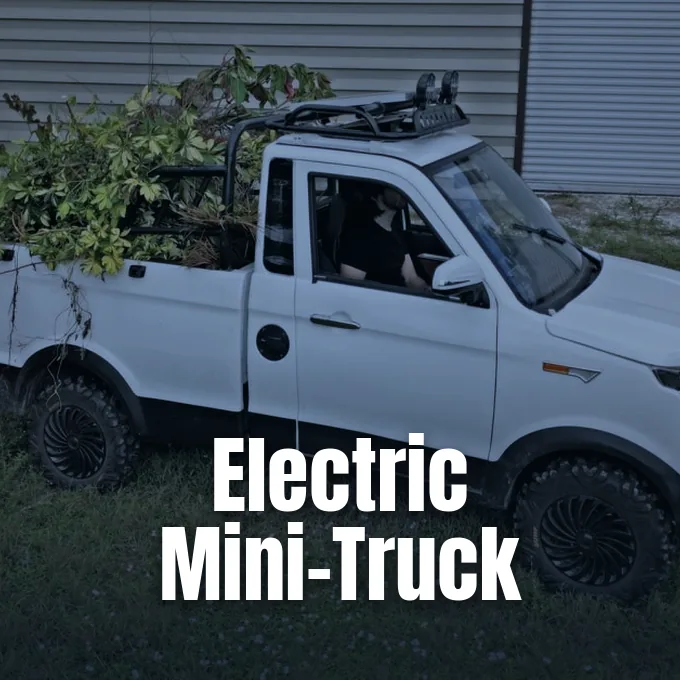
Micah Toll published an evaluation of the Changli electric mini-truck he imported through Alibaba after five full years of daily work on his parents’ Florida homestead [1, 2, 4]. The small utility hauler, purchased from a Chinese factory for $2,080, continues to run with its core mechanical systems and hydraulic dump bed intact. While early online skeptics predicted the budget vehicle would collapse within months, five seasons of heavy labor proved that it still handles routine property chores [1, 2].
Daily Homestead Chores and Load Limits
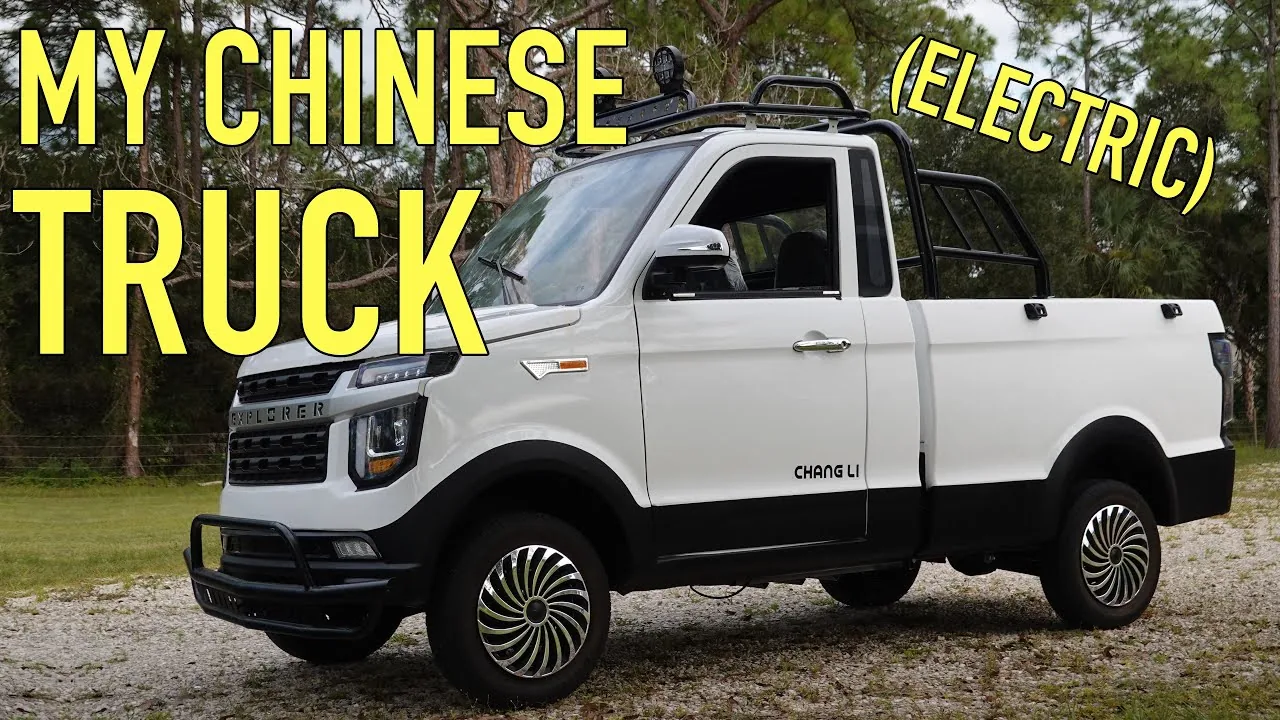
The vehicle spent five years working on a ten-acre homestead in rural Florida rather than sitting as a novelty in a garage. Toll and his father used the truck to haul dirt, gravel, mulch, tree limbs, and lumber [1, 3]. Its design mimics American pickups like a Chevrolet Silverado up front and a Ford F-150 in the rear [3].
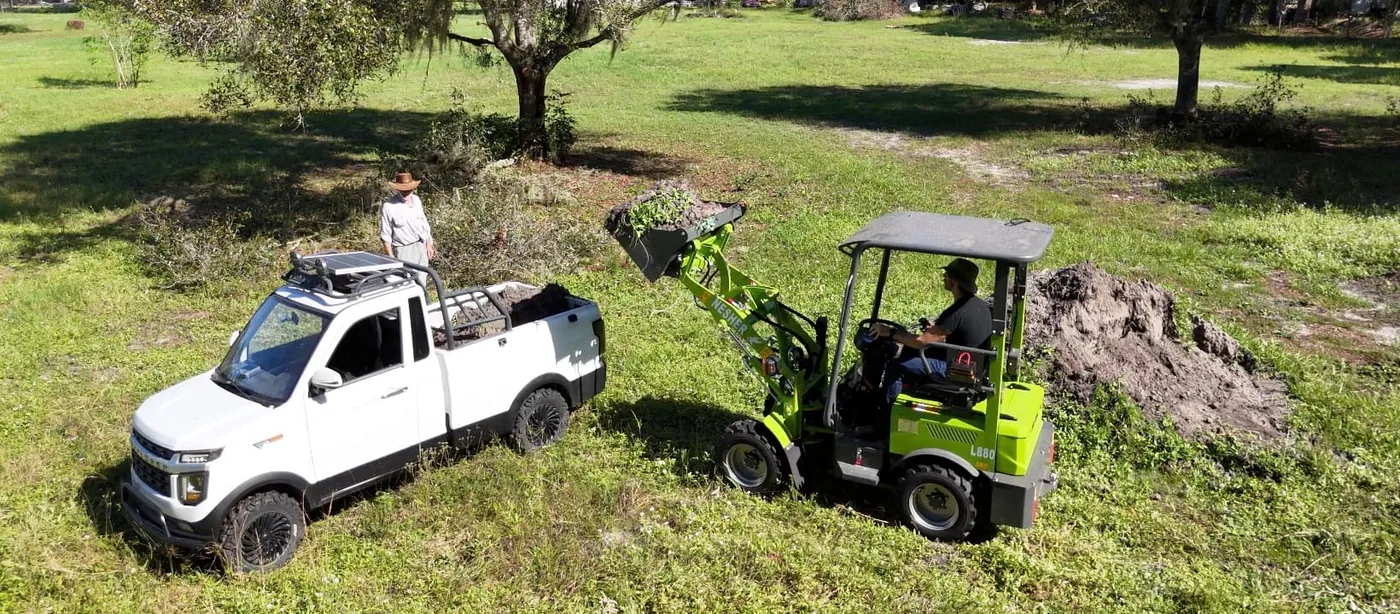
His father also turned the truck into a mobile watering rig during the Florida dry season. To run that setup, Toll built a solar-powered pump that transfers pond water into a storage bladder carried in the rear bed [1, 4]. Because the factory suspension proved excessively rigid on bumpy dirt tracks, Toll replaced the original stiff coil springs with softer 125-pound springs ordered from Amazon to cushion the ride [1, 3]. The modification improved driver comfort. However, whenever cargo loads exceed 500 pounds (220 kg), the rear chassis squats so low that the custom tow hitch welded by Toll almost scrapes the pasture grass [1, 2]. For heavy landscaping chores, Toll often fills the truck bed with sand using a NESHER L880 loader [1].
The vehicle can’t legally operate on public roads because it lacks certified crash structures and highway safety equipment [2, 3]. Toll restricted driving to private trails, though neighbors occasionally spot the Changli cruising along unpaved lanes at its maximum speed of 25 mph (40 km/h) [1]. Top commenter Murray Gudmundson observed on Electrek that compact haulers with hydraulic dump beds could fill a major niche for independent gardeners across North America [3].

Evaluating Electric Mini-Truck Cabin Durability
Five years of exposure to Florida heat failed to disable the cabin electronics or the battery drivetrain [1, 2]. Power windows still drop fast. Headlights remain clear, the backup camera feeds video to the dashboard screen, and electric door locks function normally [1, 2]. EVBytes reporter Maya Navarro pointed out that the vehicle’s electrical reliability surprised many automotive skeptics. During a humid summer inspection on the homestead, Toll pointed a thermal imaging camera directly at the cabin dashboard vents and recorded an airflow temperature of 55°F (12°C) while the factory air conditioning ran [1, 2]. The cold air kept the small cab comfortable during hot afternoons [1].
Minor wear surfaced inside the cabin over seasons of steady work. The inexpensive faux-leather upholstery on the driver seat developed small seam splits from repeated climbing, but the passenger seat still looks fresh. A decorative plastic trim piece popped loose from the driver door handle. Toll stored it safely inside the glove box [1].
The mechanical systems experienced few notable issues. The windshield wiper motor continues to turn, but its mechanical sweep shortened until the wiper blade stopped directly across the driver’s viewing angle [1, 2]. Florida thunderstorms make that reduced wipe path frustrating, requiring future linkage adjustment. In addition, the glued rearview mirror detached from the windshield glass multiple times after days under hot sunshine. Toll resecured it with adhesive [1].


Weather Exposure and Paint Rust
Outdoor parking created visible wear on the rear bodywork of the vehicle. Toll parks the Changli under a lean-to roof constructed between two steel shipping containers, but a skid-steer loader sits in front of it. Because the makeshift shelter is relatively short, the tailgate extends into open air, taking constant rain and intense Florida sunshine every week [1].
Ultraviolet rays oxidized the plastic rear taillight lenses into a foggy haze, while the shielded front headlights remained clear. Surface rust developed where tools scratched the factory enamel [1, 2]. The most pronounced rust line marks the upper edge of the tailgate where workers rest steel shovels, ladders, and branches [1]. During the first year, Toll coated the cargo bed with Durabak-18 polyurethane liner to protect the bare sheet metal [3]. Supercar Blondie automotive writer Alessandro Renesis noted that while budget imports show corrosion earlier than premium cars, Toll’s truck avoided structural rust [4]. Factory paint wore through early. Even so, the thick bed coating preserved the underlying bed floor during four seasons of hauling rough gravel [1, 3].
Underneath the scratched paint, the steel frame and chassis remain structurally rigid [1, 2]. Florida features high humidity, torrential downpours, and salty ocean air that corrode exposed metal quickly. The chassis suffered no perforation or rusted floor pans after five full seasons outside [1, 2]. EV Digest reported that the vehicle delivered surprising structural endurance for an ultra-budget utility platform [5]. It stayed together under load [1].

What Does Long-Term Maintenance Cost?
How much did the vehicle actually cost to maintain over five years on the farm? Toll’s father handles most of the homestead chores and reported that operating expenses stayed close to zero. Recharging the battery from an ordinary outdoor socket costs roughly one dollar per full cycle [1, 2]. It never needed motor repairs [1].
Broader industrial programs in China include efforts where China sets 2030 target for solid-state batteries to modernize transportation fleets. Toll’s farm hauler relies instead on a basic six-kilowatt-hour lead battery bank [2, 3]. To reduce grid charging, Toll added a small cab-mounted solar panel that extends time between charges. The solar trickle charge helped [3].
Because the truck lacks an odometer, the family can’t calculate exact lifetime mileage, but they plug it in every couple of weeks to refresh the six-kilowatt-hour battery pack [2, 3]. To handle lighter daily chores such as rolling neighborhood trash cans down the private driveway to the street, Toll’s parents rely on a Kandi electric utility vehicle equipped with a motorized lowering dump bed. The larger Changli remains their primary hauler. “It still puts a smile on my face every time I drive it,” his father said while reflecting on five years of homestead labor [1]. Both men expect another decade of use [2].
Total Electric Mini-Truck Shipping and Tariff Costs
The factory invoice listed a purchase price of $2,080, but shipping an electric mini-truck from China to Florida requires several separate payments [1, 2]. Toll documented the import process on his EbikeSchool.com YouTube channel to explain the hidden fees to prospective buyers [4]. The import process demanded months of patience. It wasn’t an ordinary vehicle purchase [1].
Ocean freight on a cargo vessel to Miami cost nearly $2,000, which doubled the initial investment before the vehicle reached American shores. Toll also paid customs broker fees to process federal import paperwork and transferred substantial tariffs to the US Treasury Department to clear port authorities [1, 2]. Total delivery expenditures pushed the final bill thousands of dollars past the advertised baseline. Toll welded the hitch himself. That box-tube hitch allowed the hauler to tow an electric boat from the family lake [1, 3, 4]. Local mechanics can easily find replacement hardware at retail stores [1, 3].
Despite those ocean shipping markups and minor cosmetic flaws, Toll concluded that the purchase proved its worth across five seasons of steady farm labor [1, 5]. The small hauler handled tough landscaping without motor breakdowns or dealer repair bills [1]. It showed that a basic direct-import utility truck can deliver years of reliable service when kept on private land [2, 5].
- ONLINE NEWS Toll, M. (2026, November 1). I imported a $2,000 electric truck from China. Five years later, here’s the truth. Electrek. [Article Link]
- ONLINE NEWS Navarro, M. (2026, November 1). Owner Reports Five-Year Durability for $2,000 Chinese Electric Mini-Truck. EVBytes. [Article Link]
- ONLINE NEWS Toll, M. (2023, November 14). Two years after buying my $2,000 electric truck from China, here’s how it looks now. Electrek. [Article Link]
- ONLINE NEWS Renesis, A. (2026, January 7). Man who bought Chinese electric truck for $2,000 shares how it’s faring months after its unboxing left him stunned. Supercar Blondie. [Article Link]
- ONLINE NEWS EV Digest. (2026, November 1). Long-Term Test: Five Years with an Imported $2,000 Chinese Electric Mini-Truck. EV Digest. [Article Link]


