



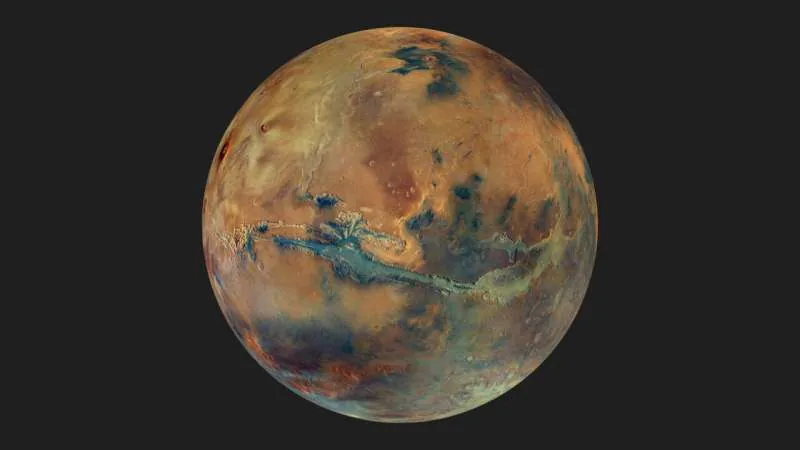
How does humanity track time on an alien world where a single circuit around the Sun takes almost twice as long as our own? Planetary scientists designate the start of each orbital journey as the Mars New Year, establishing a shared calendar to measure climatic shifts across the Red Planet. While terrestrial observers might picture celebratory gatherings or festive songs like Auld Lang Syne, this planetary milestone is a vital coordinate for orbiters and rovers. The European Space Agency recorded the arrival of Orbit 39 at exactly 08:16 UTC on September 30, 2026 [1].
Why Say Happy New Year Today?
Planetary scientists say happy new year today because Mars crossed its northern spring equinox at exactly 08:16 UTC on September 30, 2026, officially launching the planet’s 39th recorded orbital cycle [1]. This milestone occurs whenever the Sun sits directly above the Martian equator, bathing both hemispheres in equivalent amounts of sunlight. Orbit 39 officially commenced. While Earth completes an orbit around our star in 365 days, six hours, and nine minutes, Mars requires approximately 687 terrestrial days to finish its wider celestial path [5]. That extended orbit means seasons develop at a much slower pace than anything experienced on our home planet.
Because the Martian journey around the Sun requires nearly two terrestrial years, seasonal milestones continually wander across our Gregorian calendar. The previous celebration arrived on November 12, 2024, when the planet entered Year 38, and space enthusiasts celebrated an earlier milestone on December 26, 2022 [5], [6]. Year 40 begins on August 17, 2028. Following that milestone, Year 41 arrives on July 5, 2030, and Year 42 commences on May 22, 2032 [1]. These shifting dates demonstrate that planetary timekeeping depends entirely on immutable celestial mechanics rather than human administrative conventions, providing researchers with an objective framework to correlate atmospheric data across decades of continuous robotic exploration.
How Mars New Year Resets Planetary Timekeeping
The standardized system for enumerating each Mars New Year traces back to a foundational research paper published in 2000 by atmospheric scientist Todd Clancy of the Space Science Institute. Clancy established this sequential timeline to help researchers organize atmospheric data and compare seasonal temperature swings across disparate mission archives. Clancy termed the marker arbitrary [2]. Even so, his team selected the northern spring equinox of April 11, 1955, as the official start of Mars Year 1 because an immense planetary dust storm erupted during the second half of that orbital cycle, offering a vivid reference point for subsequent generations of planetary climatologists who needed reliable benchmarks.
To enable historical comparisons, researchers later expanded the timeline backward by creating Mars Year 0, which began on May 24, 1953, mimicking the terrestrial division between historical eras [2]. This retroactively applied system extends across centuries of astronomical records, offering a consistent frame of reference for planetary scientists tracking cyclical weather patterns across multiple terrestrial generations. Astronomers have pushed the calendar back to Mars Year −183, which corresponds to the epoch of 1610 when Galileo Galilei first turned an early telescope toward the reddish disk. Galileo observed Mars in 1610 [4]. Standardizing these observations allows modern teams at NASA and the European Space Agency to match historical sketches against digital images returned by spacecraft orbiting the Red Planet today.
Both Earth and Mars formed 4.5 billion years ago within the primordial solar nebula, yet their differing orbits created radically distinct measures of planetary time [2].
How Many Days Exist in a Mars Year?
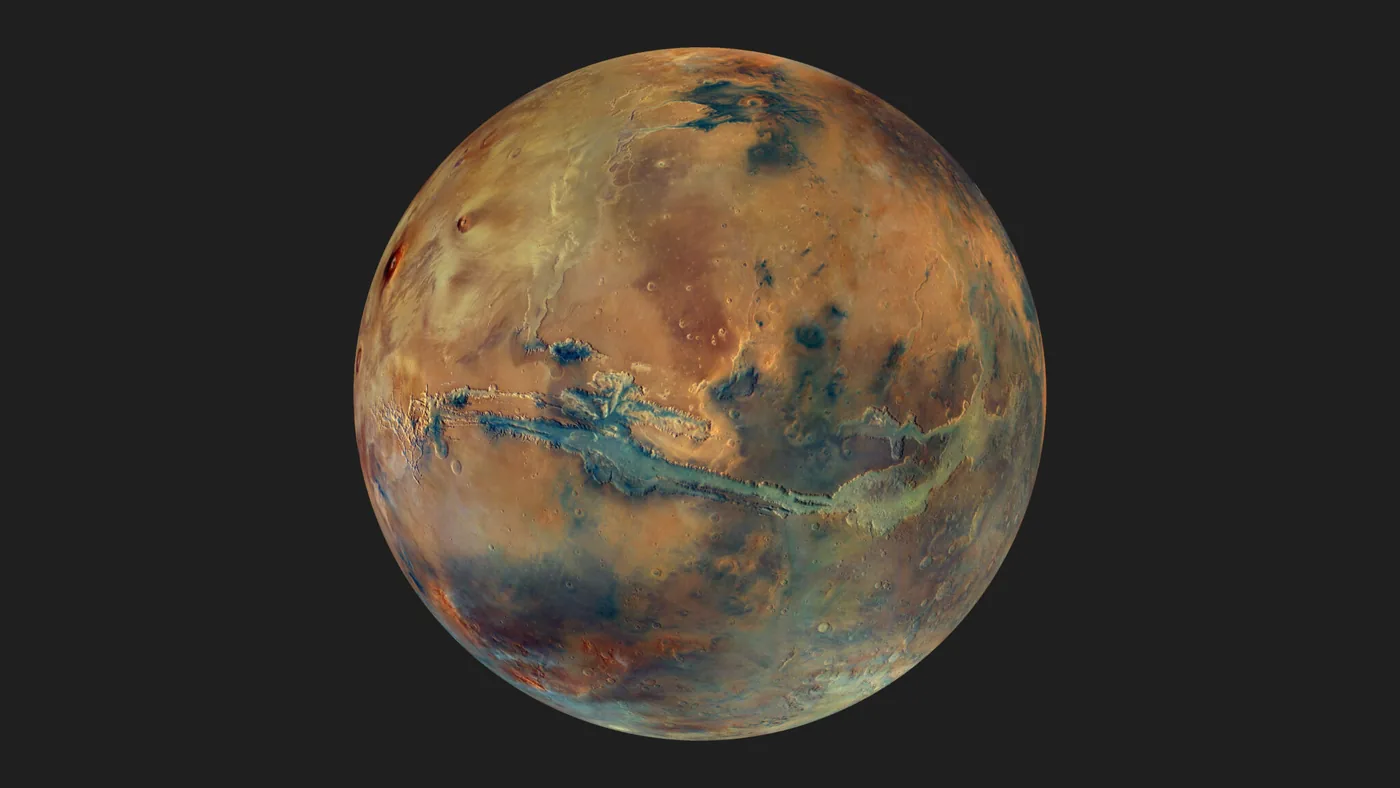
A single year on Mars contains approximately 668 Martian days, known as sols, which equals 687 standard days on Earth. A sol represents the precise duration required for Mars to complete one full revolution on its rotational axis (24 hours, 39 minutes, and 35 seconds), making it just slightly longer than a 24-hour day on Earth. One sol lasts 24 hours [1]. Over weeks and months of mission operations, those surplus 39 minutes accumulate steadily, disorienting human sleep rhythms and forcing surface rovers to adapt their operational schedules to an ever-shifting Martian dawn that slips out of alignment with clocks in mission control.
Because a Martian year lasts nearly twice as long as a terrestrial year, an observer calculating their age on the Red Planet must divide their Earth age by 1.88 [1]. Someone who has celebrated 38 birthdays on Earth has lived through barely 20 Martian years. NASA surface hardware experiences a similar temporal stretching. As Curiosity documenting the Martian day from sunrise to sunset demonstrated over multiple orbits, mechanical hardware must endure longer seasonal extremes between planetary anniversaries, exposing critical battery packs and solar arrays to prolonged periods of bitter cold and dim solar illumination [5].


Why Martian New Year Follows Northern Equinox Cycles
Before scientists standardized the calendar, researchers debated whether the Martian New Year should commence at perihelion (the orbital point closest to the Sun) or at an equinox. Engineers at the Jet Propulsion Laboratory (JPL) favored the northern spring equinox because it provides an unambiguous midpoint for global seasonal observations. The equinox marks equal daylight [7]. During this orbital alignment, solar illumination falls equally across both hemispheres, establishing a dependable baseline for tracking thermal changes across complex geological features like Valles Marineris while ensuring that atmospheric models remain consistent from one orbit to the next.
Unlike Earth’s nearly circular orbit, the trajectory of Mars is markedly eccentric, which creates dramatic variations in orbital speed and seasonal duration [1],. Northern hemisphere spring lasts the longest at 194 sols, while northern autumn represents the shortest season at 142 sols. When Mars approaches perihelion during southern hemisphere spring and summer, solar radiation heats the surface rapidly. This uneven heating alters atmospheric pressure, driving intense thermal updrafts that interact with volcanic formations and canyons, as seen in studies of recent volcanic eruptions on Mars and ancient volcanic provinces across the planet [2].
How Extreme Seasons and Dust Storms Shape Mars
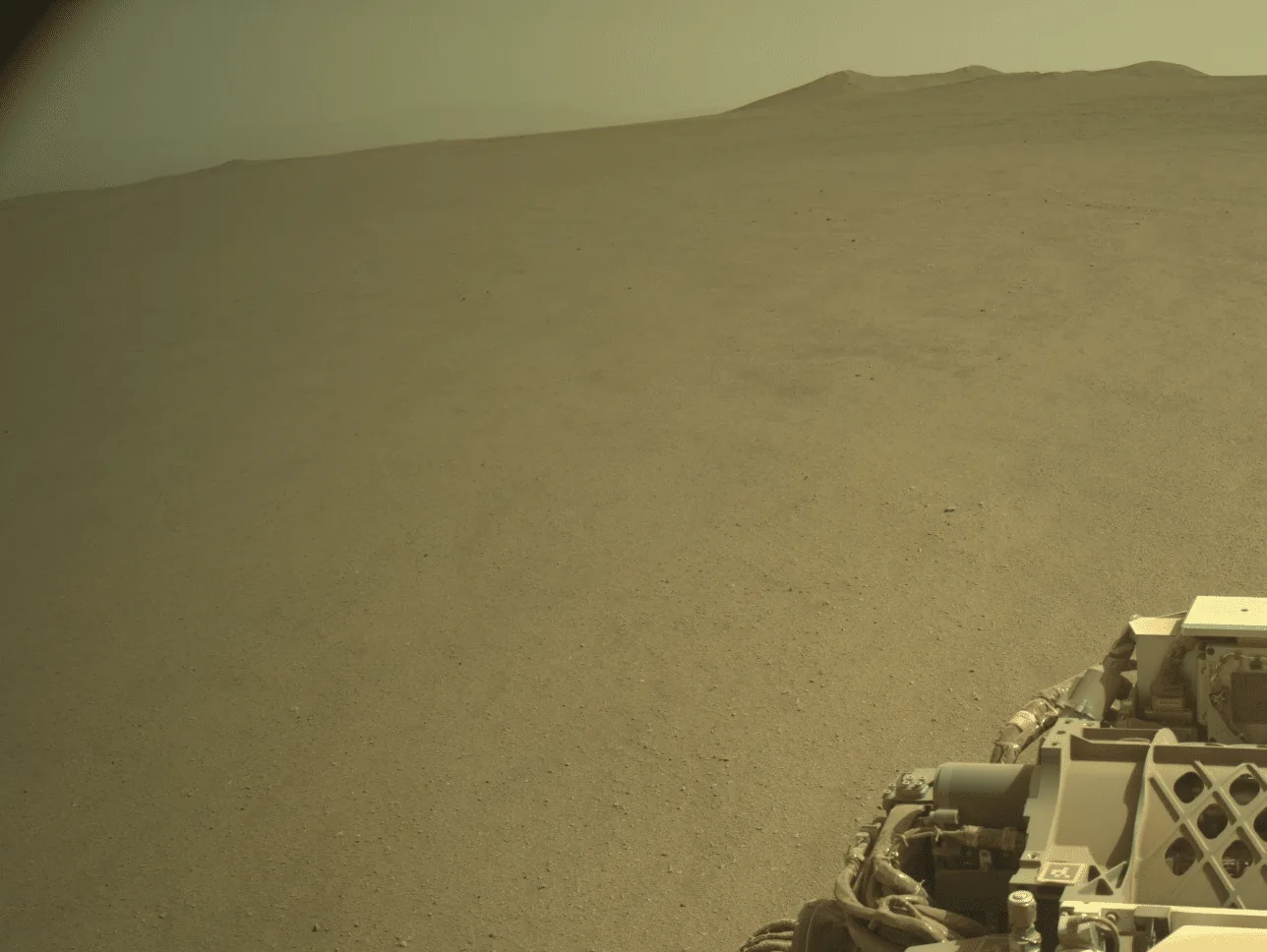
The volatile climate of the Red Planet generates extreme seasonal swings that threaten surface hardware throughout each planetary cycle. At noon during the height of summer, ambient equatorial temperatures can climb to 0 degrees Celsius (32 degrees Fahrenheit), but they plunge precipitously to minus 60 degrees Celsius at night [1], [3]. Winter nights reach minus 110 degrees [1]. Across the entire globe, the planet maintains a frigid yearly average temperature of minus 60 degrees Celsius (-76 degrees Fahrenheit) [2].
During southern summer, rising solar luminosity triggers fierce convective winds that hoist fine mineral grains into the thin carbon dioxide atmosphere. Once suspended, these airborne dust particles absorb sunlight and warm the surrounding air, rapidly multiplying local squalls into catastrophic, planet-wide dust storms [1]. In 1956, such an event, known colloquially as the great dust storm of 1956, completely obscured surface features, providing the historical justification for Clancy’s Year 1 boundary. Ground-based observers, including Patrick Prokop in Savannah, Georgia, have documented how these massive atmospheric dust veils alter telescopic views of the Martian disc [2].
Seasonal shifts also generate recurring meteorological curiosities, most notably the Arsia Mons Elongated Cloud [1], [2]. This colossal plume of atmospheric ice crystals forms over the Arsia Mons volcano during southern spring and can extend across 1,800 kilometers (1,100 miles) of sky [1], [2]. The Arsia Mons cloud reaches 1,800 kilometers. Satellite data from ESA’s Mars Express orbiter confirms that the cloud repeats each morning for at least 80 sols before dissipating as seasonal winds shift [1], [2].

Why Rover Teams Live on Mars New Year Schedules
Operating robotic explorers on the surface requires human engineering teams to sync their daily lives with the Mars New Year and daily sol rotations. The practice of living on Mars time began during the Pathfinder mission in 1997 with the Sojourner rover. Sojourner started the shift in 1997 [4]. Because each sol adds roughly 39 minutes every day, human shift schedules advance steadily, shifting working hours from morning to midnight over consecutive Earth weeks.
Scheduling challenges compounded in 2004 when twin rovers Spirit and Opportunity touched down on opposite sides of the planet. Opportunity operated twelve hours apart. JPL scientist John Callas attempted to support both teams by resting in his office between staggered shifts, but he abandoned the experiment after several days, noting that ‘this is impossible for a human to do’. NASA rover driver Vandi Verma explained that ignoring daylight causes disorientation: ‘If you see the Sun and it’s supposed to be night time for you, it’s very disorienting’. In 2012, flight director David Oh placed his entire family on Mars time for a month in Los Angeles [4].
Robotic explorers also mark these milestones through unique traditions [5], [7]. In Jezero Crater, the Perseverance rover entered its second orbit while climbing the crater rim, following the trail blazed after NASA’s Ingenuity helicopter concluded its three-year Mars mission. Curiosity’s team previously celebrated its longevity: ‘Oh wow, what a throwback to my first extended mission in 2014. And I’m still rollin’ and explorin’.’ [5]. Dutch author Marjolijn van Heemstra dedicated a poem to the occasion, as Goddard Space Flight Center engineers once used Curiosity’s Sample Analysis at Mars (SAM) instrument to play ‘Happy Birthday’ to honor another successful orbit [6], [7].
- PRESS RELEASE European Space Agency. (2026, September 30). Happy New Year on Mars. [Article Link]
- ONLINE NEWS Byrd, D. (2026, September 30). Mars calendar year begins September 30: Happy New Year Mars! EarthSky. [Article Link]
- ONLINE NEWS European Space Agency. (2024, November 12). Happy New Year on Mars. Phys.org. [Article Link]
- ONLINE NEWS Clark, S. (2026, September 29). Happy New Year, Mars! The Red Planet is turning 39. Astronomy Now. [Article Link]
- ONLINE NEWS Singh, A. (2024, November 12). Happy New Year. on Mars! NASA celebrates as rovers join the party. Wion. [Article Link]
- ONLINE NEWS SpaceWeekly. (2026, September 29). Happy New Year on Mars. SpaceWeekly.com. [Article Link]
- ONLINE NEWS Spaceward Bound New Zealand. (2024, November 12). Happy New Year. on Mars! Spaceward Bound New Zealand. [Article Link]
APA 7: PerEXP Teamworks. (2026, September 30). Red Planet Welcomes Mars New Year as Orbit 39 Begins Its Cycle. PerEXP Teamworks.


