





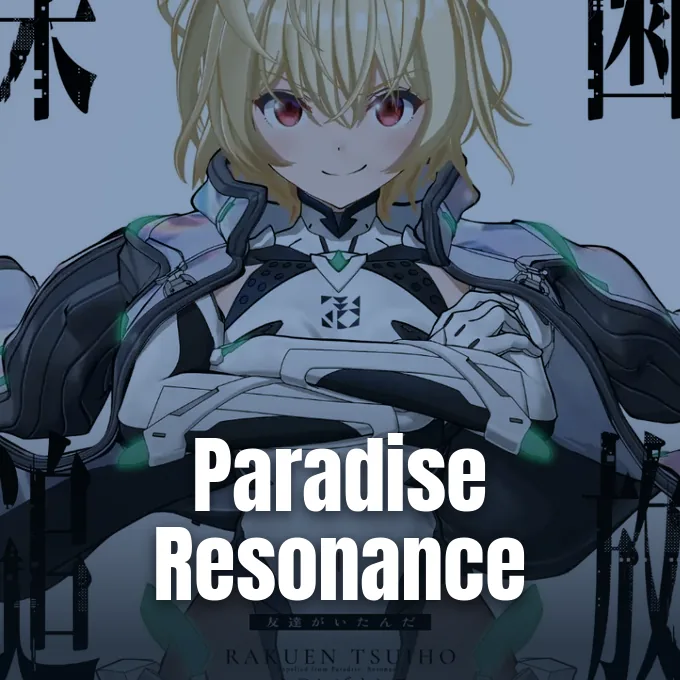
Toei Animation released the science fiction anime film Expelled from Paradise: Resonance of the Heart in Japanese theaters on November 13, 2026. The new theatrical feature arrives twelve years after the original 2014 movie, reuniting director Seiji Mizushima and writer Gen Urobuchi to explore Earth’s recovering surface. The story follows security agents tracking rogue factions in recovering mountain valleys [1].
Story Follows Gabriel in Expelled from Paradise
The plot unfolds decades after agent Angela Balzac helped Frontier Setter fly into deep space during the events of the 2014 theatrical release. Ninety-eight percent of the human species resides as digital records within the orbital megastructure DEVA, leaving Earth’s scarred crust to survivors who chose flesh bodies. Security Bureau Third Officer Agent Gabriel, played by voice actor Ayane Sakura, accepts a hazardous assignment to descend to the surface and track down the Fallen, an outlaw group that Angela established after abandoning orbit [1]. Her field squad includes operatives voiced by Sally Amaki, Yoshino Aoyama, Saori Hayami, and Sumire Morohoshi [4]. The team travels in armed transport mecha.
Gabriel wrestles with personal grief during the mission. She recently learned that her closest companion in DEVA was an artificial sleeper agent, built simply to execute harsh orders without regard for civilian lives. Central command still distrusts her loyalty, so superiors placed another covert program within her landing party [1]. She monitors each squad member during patrols.
The expedition reaches mountainous territory where plant life returned after centuries of environmental ruin. Dialogue explains the ancient nanohazard catastrophe that collapsed human society and forced the creation of cyber habitats in orbit. Angela Balzac encounters the team during their patrol, yet she no longer looks like the young operative who landed in the desert twelve years ago [1]. She transformed into a transhuman entity, adopting the very technological existence that she once questioned during her first field mission with surface dwellers. Veteran tracker Zarik Dingo Kajiwara assists her group while showing gray hair and older habits in his camp [3]. He still plays acoustic guitar.

Creative Team Reunites After Twelve Years
Producer Koichi Noguchi and director Seiji Mizushima began talking about a possible sequel in late 2014, right as the first picture finished its first theatrical run. Noguchi asked to cut an ending trailer scene of Angela and Dingo laughing together because he felt it promised another movie, but Mizushima insisted on keeping the moment to show Angela’s resolve. Mizushima made writer Gen Urobuchi’s participation an absolute requirement for any follow-up, yet Urobuchi initially hesitated because the first ending felt complete. The creators continued meeting every few years to trade concepts until Urobuchi pitched a workable story spark about six years ago [2]. Production schedules soon opened up.
Earlier coverage of the Rakuen Tsuihou sequel setting its November premiere outlined how Toei Animation scheduled the theatrical run for Japanese movie theaters. The studio backed the project with a nationwide distribution budget, moving far beyond the experimental limits of the original 2014 film. Larger budgets allowed the team to build complex action sequences for theater screens [2].
Urobuchi delivered a concise scenario outline that gave animators freedom to invent visual solutions. Mizushima partnered with creator Masaki Takaya to design the Rebuilder, an unidentified slime organism that morphs unpredictably in every camera shot. Because the creature altered shape between takes, directors broke conventional editing rules by inserting short transitional cuts between long takes to prevent visual confusion [2]. Character designer Masatsugu Saitō returned to draw the larger cast, while mecha designers Kanetake Ebikawa, Junya Ishigaki, Makoto Ishiwata, and Takayuki Yanase drafted armored suits and patrol vehicles [1]. If an animator found an appealing rhythm during daily tests, editors shifted the shot sequence to preserve that visual momentum [2].



Building Bismuth Backgrounds for Rakuen Tsuihou
Full computer animation was rare in Japan twelve years ago. The original production drew inspiration from the restrained cel-shading in Knights of Sidonia by Polygon Pictures, while veteran animator Ichiro Itano guided storyboard action at Graphinica. Model tools progressed, but artists still bend digital meshes by hand to achieve convincing facial expressions [2]. Rendering errors still force full restarts.
Producer Noguchi pushed the team to render backgrounds in three dimensions instead of using painted two-dimensional plates. Mizushima agreed that building an expansive location would provide useful performance benchmarks for future Japanese productions, so the studio chose a vertical shaft measuring five kilometers in diameter. Art designers proposed styling the pit after bismuth, a metal known for stepped, rainbow-colored crystal formations. The setting created major data problems because no human has ever stood inside a crystal structure of that scale. Artists combined smaller texture blocks for each camera angle to keep file sizes manageable. The modeling process required constant adjustments to maintain workable render times [2].
Lighting calculations inside the giant bismuth cavity created unexpected visual hurdles for the directors. Simulating realistic sunlight down a five-kilometer chasm plunged the lower depths into total darkness, hiding high-speed combat moves. Mizushima balanced realistic lighting calculations against visual clarity, brightening shadowed crystal facets so audiences could follow aerial choreography [2]. Artistic judgment guided every final cut.

Audience Reception and Thematic Focus
Early reviews praised the sequel’s refined character models while examining its philosophical questions about machine consciousness. Critic Richard Eisenbeis at Anime News Network awarded the movie a B- overall, praising improved facial shading and clear visual differences between virtual spaces and surface valleys. Eisenbeis gave B- scores to story, animation, and art direction, paired with a B for the music produced by NARASAKI. The soundtrack introduces the ending theme “Beyond the Night” by TeddyLoid featuring vocals from Ayane Sakura and Nagi Inoue, and brings back the insert song EONIAN from the first film [1], [4]. The familiar melody anchors key emotional scenes [1].
Online critic Kuro on Note described the screening as an engaging experience for series enthusiasts, praising natural voice acting across the ensemble. Kuro expressed surprise when one featured visual character exited the narrative early, saying that early plot twists match Urobuchi’s signature style. The twist recalled earlier works like Puella Magi Madoka Magica [3].
The movie uses artificial intelligence to explore ethical boundaries in post-human societies. DEVA administrators argue that calculated data management preserves stability, whereas the Fallen insist that humanity must adapt to organic Earth without orbital control. Gabriel rejects both dogmatic extremes, deciding that the affection she felt for synthetic comrades carried genuine emotional reality regardless of underlying software routines. Her personal choice mirrors the moral foundation introduced in Expelled from Paradise, where individual loyalty and human empathy outshine institutional obedience. Characters disagree over her choice. The philosophical dilemma invites viewers to question what truly defines human consciousness in a digitized civilization [1].

Legacy of the 2014 Theatrical Run
The new sequel builds on a surprising theatrical record set twelve years ago. The original film opened quietly in only thirteen Japanese theaters in November 2014, yet word of mouth attracted more than 110,000 attendees during its theatrical run in Japan. Subsequent home releases sold over 70,000 Blu-ray and DVD copies [2]. The small release became profitable.
The original movie earned over 160 million yen at the Japanese box office, equaling roughly 1.3 million dollars. Industry recognition soon followed, with the Japan Movie Critics Awards honoring the production as the Best Animated Film of 2014. Writing for IndieWire, critic Charles Solomon commended director Mizushima for staging energetic mecha combat sequences and contrasting high-tech battles against weathered desert backdrops [5]. Licensor Aniplex of America later brought the movie to English-speaking audiences on Blu-ray, featuring an English dub starring Wendee Lee as Angela Balzac, Steve Blum as Dingo, and Johnny Yong Bosch as Frontier Setter [1], [5], [6]. The cast drew strong praise.
Mitch Jay at Rice Digital praised the original film’s fluid CGI animation and balanced pacing, praising the natural rapport between Angela and Dingo. Jay observed that the ending avoided easy moral answers while leaving room for future storytelling in that ruined world [6]. The new theatrical sequel now invites audiences to witness how that post-apocalyptic story continues twelve years later [1], [2].
- ONLINE NEWS Eisenbeis, R. (2026, November 13). Expelled From Paradise: Resonance Anime Film Review. Anime News Network. [Article Link]
- ONLINE NEWS MANTANWEB. (2026, November 14). Expelled from Paradise: Resonance of the Heart: An interview with director Seiji Mizushima about the challenges of a sequel after 12 years. MANTANWEB. [Article Link]
- WEBSITE Kuro. (2026, November 13). Expelled from Paradise: Resonance of the Heart Review. Note. [Article Link]
- WEBSITE MyAnimeList. (2026, November 13). Rakuen Tsuihou: Kokoro no Resonance. MyAnimeList. [Article Link]
- ONLINE NEWS Solomon, C. (2015, June 8). Anime Review: ‘Expelled from Paradise’. IndieWire. [Article Link]
- ONLINE NEWS Jay, M. (2016, June 23). Expelled from Paradise Review (Anime). Rice Digital. [Article Link]


