





Graph databases explained in simple terms are data engines built to store entities and their links as equal partners instead of splitting them into tables. Older SQL engines put records into tables and use foreign key joins to connect them, but graph setups treat links as direct pointers on disk. Software teams hit performance walls when querying connected networks, social graphs, or tree folders with standard SQL joins. Looking at graph databases explained by Jack Vaughan, Kinza Yasar, and Craig Mullins at TechTarget, these systems link nodes and edges to jump between data points in constant time without scanning entire tables [6].
- Graph Databases Explained Through Connected Models
- Why Relational Joins Struggle with Networked Data
- The Labeled Property Graph Structure
- Gremlin Traversal Machines
- Declarative Query Languages and the ISO GQL Standard
- Clustering Graph Database Systems in Production
- How Hybrid Relational Engines Store Graph Tables
- Why Graph Databases Explained Fit Polyglot Systems
Graph Databases Explained Through Connected Models
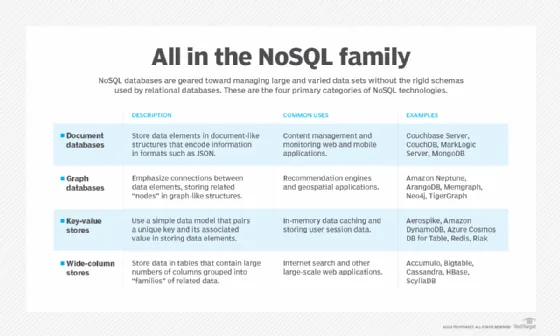
Data architects sort storage engines by how they hold records. When the broader NoSQL movement gained traction around 2009, software developers realized that rigid tabular layouts could not gracefully accommodate every emerging data shape in modern web applications. Johan Oskarsson, then a developer at Last.fm, organized events to discuss non-relational distributed stores like Google Bigtable and Amazon DynamoDB [8]. Instead of forcing every domain into rigid rows and tables, software engineers chose key-value stores, wide-column layouts, documents, or graphs to fit their specific application data structures [6].
In this layout, real-world entities become nodes while links become directed edges with type labels. For instance, a person node links to a company node through an edge labeled employment, and both elements hold property keys for dates or titles. This design forms an attributed multigraph where two nodes can share several links at once. Because the storage engine holds direct memory pointers between linked items, path queries do not scan huge key indexes at run time, keeping read speeds fast as records grow. Peter Neubauer tested these paths in early Neo4j builds. Pointer hops avoid index scans. Neo4j runs on Java [7].
Apps for fraud tracking, access rules, and biology gain speed from this graph layout. Peter Neubauer said that tables slow down when network links grow dense, whereas graph engines keep steady traversal paths. In setups where links matter as much as data items, graph models clean up code by dropping join tables and mapping network connections directly into database vertices [7]. Systems like ArangoDB, Amazon Neptune, and Neo4j apply this design in enterprise production [6]. Developers map real domain concepts straight into graph nodes without losing context.

Why Relational Joins Struggle with Networked Data
Relational engines have led the database world since the 1980s under the normalization rules of E.F. Codd. Normalization cuts out repeated data between tables, but pulling linked records demands multi-table joins that calculate expensive mathematical set intersections between foreign keys and primary keys. When a query walks five or six steps out, the SQL engine must repeatedly scan indexes and calculate intersections to match millions of candidate primary and foreign keys. Query execution times climb steeply as join depth increases through deeply nested records, draining processor memory and stalling backend servers during peak production workloads. E.F. Codd planned normalization for structured ledgers rather than dense webs where records branch out in unpredictable paths. Index scans multiply with each added join step [7]. Tables split connected items into distant rows.
Engineers call this clash the object-relational impedance mismatch. Object code represents domain entities as linked memory references, but table engines force programmers to flatten these references into two-dimensional tables using mapping tools like Hibernate. This bridge layer helps with simple storage, but it outputs heavy SQL queries with deep joins when reading tree data [7].
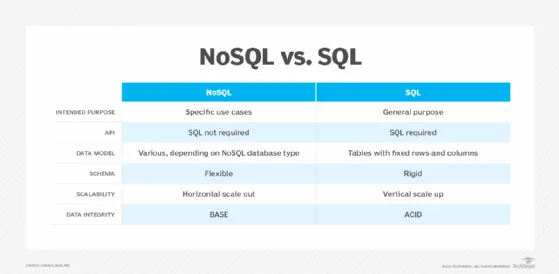
Studying the architectural divergence between SQL and NoSQL shows why focused engines handle deep hierarchies much better than generic tables when processing interconnected records. Peter Neubauer said that wide tables with empty columns often crop up when teams try to model graph items in SQL. Graph stores avoid blank fields by attaching property attributes only to nodes that actively require those fields, which prevents table fragmentation and speeds up record retrieval [7]. Sparse tables waste disk space.
The Labeled Property Graph Structure
The labeled property graph model serves as the core pattern in modern graph stores. In this architectural design, information lives on three primary building blocks: nodes representing entities, directed edges with descriptive type labels, and key-value properties attached to either element [7]. In discussions of graph databases explained by data structures, a node stands for an entity like an account or user [10].
Unlike plain math graphs where edges only carry names, property graphs let teams attach rich data straight to edges. For instance, a bank transfer edge connecting two account nodes can store transaction amounts, currency codes, and timestamps without requiring a separate transaction table in the database. The graph works as a directed multigraph, so two nodes can hold several parallel edges for different interactions over time [7]. Formal standards codified under ISO/IEC 39075 keep edge connections strictly apart from data values, banning storage engines from nesting entire graphs inside individual property attributes. Property graphs stop graph nesting to keep queries clean [10]. Multigraphs allow parallel edges between two nodes [7].
This flexible schema lets graph stores grow without painful database migrations. When a business adds new edge types or attributes, database administrators do not have to alter billions of table rows or plan complex schema downtime for the cluster. New edge labels appear between nodes as software features roll out [6]. Graph designs adjust to changing needs much faster than table schemas that require fixed layouts.
Gremlin Traversal Machines
Graph paths need execution engines that can step through connected nodes step by step. The Apache TinkerPop project built Gremlin as a graph traversal machine and functional path language. Marko A. Rodriguez described its inner mechanics in a foundational research paper distributed as an unreviewed preprint on arXiv in Aug 2015 for the Apache TinkerPop project. Submitted to the Databases category on arXiv at 16:30 UTC, the paper showed how Gremlin runs over an OLTP graph database as well as an OLAP graph processor. Rodriguez wrote that the machine executes through a network graph $G$, an instruction path $\Psi$, and running traversers $T$. The Universal Gremlin Machine unifies diverse storage engines [1].
Traversers act like small software agents walking over the graph along rules set in the query. Each traverser keeps track of its current node location, past path travel history, and temporary side-effect calculation data as it steps along directed edges. When traversers stop at target nodes, the engine gathers their results together. Gremlin runs on one machine or on clustered servers [1].
Because Gremlin works inside languages like Java, coders write path steps without learning alien query syntax. Marko A. Rodriguez said that this automaton engine naturally handles both depth-first and breadth-first search evaluations across single servers or clustered machine environments. Traversal engines treat graph walking as an open building block for deep graph searches [1].


Declarative Query Languages and the ISO GQL Standard
While traversal machines use step-by-step code, declarative tools let coders describe patterns without writing loop code. Renzo Angles, Marcelo Arenas, Pablo Barcelo, Aidan Hogan, Juan Reutter, and Domagoj Vrgoc analyzed these tools in a 2016 unreviewed preprint on arXiv before publishing in ACM Computing Surveys in 2017 [2, 3]. Their survey showed that graph query tools rely on pattern matching and recursive path expressions [3].
Modern declarative syntax builds on Cypher, created for Neo4j, which uses visual ASCII art patterns like (p:Person)-[:FRIENDS_WITH]->(f:Person) to match graph nodes and directed edges [7]. In April 2024, ISO and IEC published ISO/IEC 39075, setting GQL as the global standard for property graph queries. Stefan Plantikow and Stephen Cannan served as editors for the standard within ISO/IEC JTC 1/SC 32 WG3, the international working group in charge of Database Languages since 1987. ISO standards bring vendor-neutral clarity to graph queries. Working group WG3 guided the text [10]. SPARQL remains the standard for RDF graphs [7].
Alin Deutsch, Nadime Francis, Alastair Green, Keith Hare, Bei Li, Leonid Libkin, Tobias Lindaaker, Victor Marsault, Wim Martens, Jan Michels, Filip Murlak, Stefan Plantikow, Petra Selmer, Oskar van Rest, Hannes Voigt, Domagoj Vrgoc, Mingxi Wu, and Fred Zemke analyzed GQL with SQL/PGQ at ACM SIGMOD in Philadelphia between 12 Jun and 17 Jun 2022. The Linked Data Benchmark Council LDBC built the formal semantics for both standards. SQL extensions let relational users run read-only graph queries [4].
Clustering Graph Database Systems in Production
Running connected workloads in production needs solid transaction safety with flexible storage. In 2010, InfoQ reported that the open-source Neo4j project hit version 1.0 after running in production since 2003. Unlike many NoSQL engines that relaxed consistency under BASE principles, Neo4j provides full ACID transaction support. Graph database systems must stop broken links and half-written updates when servers crash. Peter Neubauer said that Neo4j works as an embedded Java library with zero admin overhead or as a standalone server exposing REST APIs for remote client applications. AllegroGraph, Sones, Virtuoso, and HyperGraphDB also offered early graph storage models alongside FlockDB, InfoGrid, and Filament. Enterprise deployments of graph databases explained in industry reports confirm these safety rules [7].
Distributing graphs across server clusters brings hard engineering trade-offs under Eric Brewer’s CAP theorem, which shows that systems cannot simultaneously achieve strong consistency, high availability, and partition tolerance. Splitting dense networks across separate physical machines is difficult because cutting cross-cluster links creates heavy network traffic and coordination latency that degrades overall query throughput. Todd Hoff said that autosharding dense networks is difficult [7].
Todd Hoff and Emil Eifrem studied how network density makes scaling size different from scaling complexity. Real deployments use graph algorithms on node networks to find patterns. Teams run PageRank, shortest path finding, and betweenness centrality to catch bank fraud and study phone traffic. Alex Adai mapped protein homology networks at the Institute for Cellular and Molecular Biology at the University of Texas to study gene links. Centrality scores pinpoint key nodes in big graphs [7].
How Hybrid Relational Engines Store Graph Tables
Seeing the demand for graph queries, SQL vendors built graph models directly into table engines. Microsoft added graph features to SQL Server 2017, Azure SQL Database, and Azure SQL Managed Instance, letting developers create dedicated node and edge tables inside familiar relational database environments. A coder makes node tables with CREATE TABLE Person (ID INT PRIMARY KEY) AS NODE and edge tables with CREATE TABLE friends AS EDGE to establish relationships between people [5].
To query these tables without writing nested joins, Microsoft introduced an ASCII-art MATCH clause to Transact-SQL. For example, finding friends of John uses MATCH(Person1-(Friends)->Person2) in a standard SELECT query. The database engine also provides the SHORTEST_PATH function to discover optimal routes between nodes without requiring developers to write complex recursive stored procedures. Admins can set edge constraints to govern which node tables an edge can connect. Edge constraints keep invalid links out of edge tables. Teams combine graph queries with columnstore indexes and reporting tools in Microsoft Fabric. Transact-SQL MATCH clauses simplify multi-hop searches between tables [5].
This hybrid design shows how the line between table and non-table databases blurs over time. Teams use existing backup tools, access rules, and Power BI dashboards while querying nodes with graph syntax, giving organizations immediate analytical flexibility across their current infrastructure. Hybrid tools help companies explore graph queries without throwing out their SQL databases [5]. Native graph engines still hold an edge in deep path searches [7].
Why Graph Databases Explained Fit Polyglot Systems
In modern software, no single database fits every data model. Carlo Strozzi used the name NoSQL in 1998 for his lightweight relational database that lacked an SQL interface. Johan Oskarsson revived NoSQL in 2009 at Last.fm to describe non-relational distributed stores. Strozzi suggested that modern projects should be called NoREL because they depart from relational rules. Industry teams now practice polyglot persistence, selecting different database engines tailored to specific data models and workload patterns within the same overall platform architecture [7, 8]. Ben Scofield helped group these NoSQL categories by their strengths [8]. Jack Vaughan described how NoSQL systems evolved to support multiple data models [6].
In polyglot setups, teams use document stores like MongoDB and Google Cloud Firestore for semi-structured text, vector databases engineered for high-dimensional search, and graph engines for complex relationship mapping [6, 8]. Systems like Couchbase Server, Apache Cassandra, Apache HBase, Apache Accumulo, and ScyllaDB handle dynamic columns, while Redis and Amazon DynamoDB manage key pairs [6]. Document stores fetch objects by keys, but they lack built-in tools to walk paths across collections without repeated queries [8, 9].
Connecting web clients to these mixed databases highlights the architectural trade-offs between GraphQL and REST APIs when fetching nested graph data across microservices. As data networks grow denser across distributed microservices, graph engines give developers the structural tools needed to query multi-step links without encountering severe relational join latency. The architectural model of graph databases explained in this guide helps teams build scalable systems [7]. Graph technology helps engineering teams build resilient software platforms that scale gracefully as connection complexity rises.
- PREPRINT Rodriguez, M. A. (2015). The Gremlin Graph Traversal Machine and Language. arXiv:1508.03843. [Article Link]
- PREPRINT Angles, R., Arenas, M., Barcelo, P., Hogan, A., Reutter, J., & Vrgoc, D. (2016). Foundations of Modern Query Languages for Graph Databases. arXiv:1610.06264. [Article Link]
- ACADEMIC JOURNAL Angles, R., Arenas, M., Barceló, P., Hogan, A., Reutter, J. L., & Vrgoč, D. (2017). Foundations of Modern Query Languages for Graph Databases. ACM Computing Surveys, 50(5). [Article Link]
- CONFERENCE PAPER Deutsch, A., Francis, N., Green, A., Hare, K., Li, B., Libkin, L., Lindaaker, T., Marsault, V., Martens, W., Michels, J., Murlak, F., Plantikow, S., Selmer, P., van Rest, O., Voigt, H., Vrgoč, D., Wu, M., & Zemke, F. (2022). Graph Pattern Matching in GQL and SQL/PGQ. Proceedings of the 2022 International Conference on Management of Data, 2246-2258. [Article Link]
- WEBSITE MicrosoftLearn. (2025). Graph Processing – SQL Server and Azure SQL Database. [Article Link]
- ONLINE NEWS Vaughan, J., Yasar, K., & Mullins, C. (2024). What is NoSQL (Not Only SQL database)?. TechTarget. [Article Link]
- ONLINE NEWS Neubauer, P. (2010). Graph Databases, NOSQL and Neo4j. InfoQ. [Article Link]
- WEBSITE Wikipedia. (2026). NoSQL. [Article Link]
- WEBSITE Wikipedia. (2026). Document-oriented database. [Article Link]
- WEBSITE Wikipedia. (2026). Graph Query Language. [Article Link]
Cover image: Originally uploaded by Ahzf / Wikimedia Commons, CC0


