




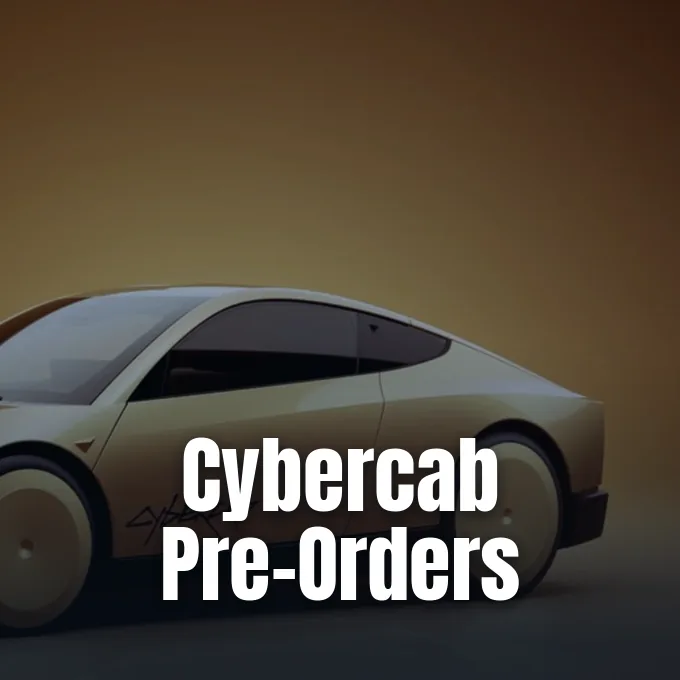
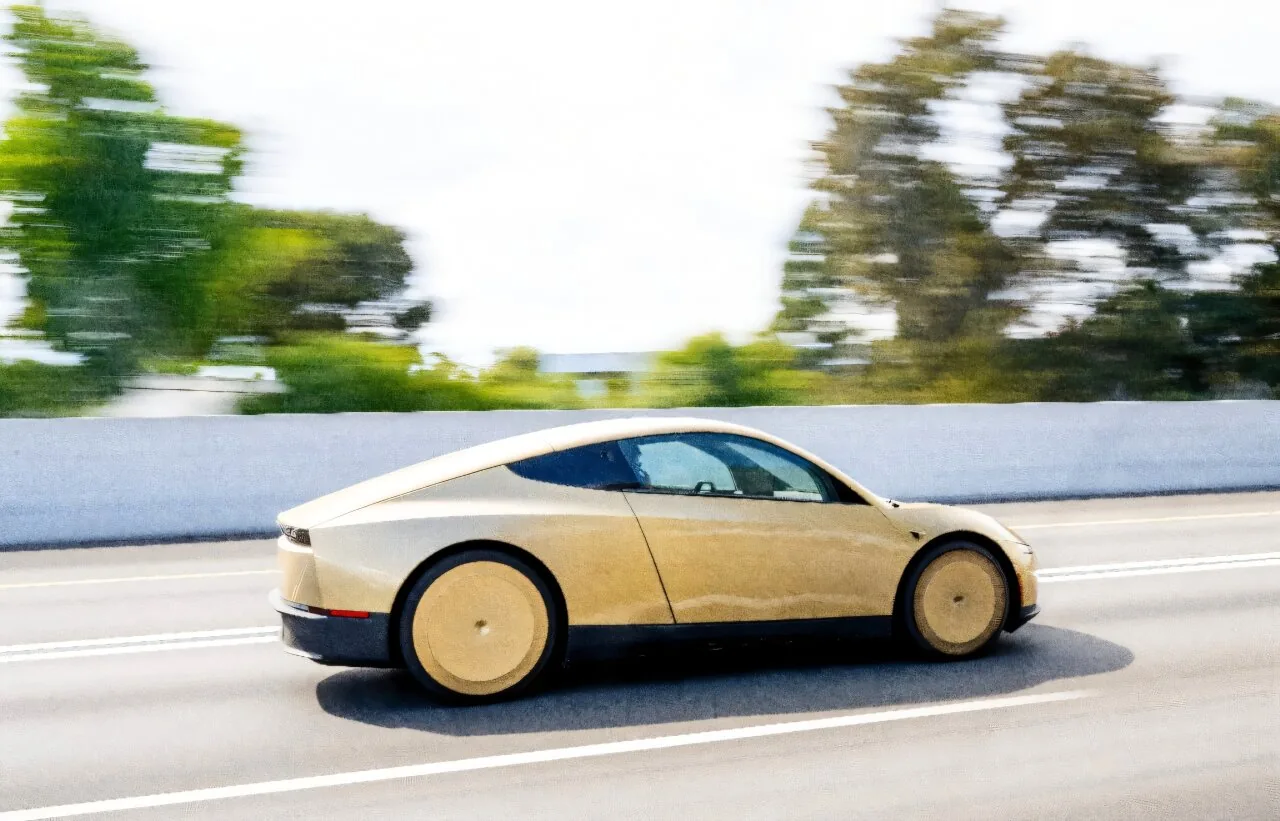
Tesla opened pre-orders for Cybercab personal use on Friday evening, inviting select customers to purchase its two-seat autonomous vehicle for $29,990 [1]. The invitation arrived through the company’s verified @robotaxi account on X with an order page showing an estimated delivery date of December 2026 in Austin, Texas [7]. While the base price meets Elon Musk’s goal of an autonomous car below $30,000, driving it needs an ongoing $299 monthly subscription that adds thousands of dollars in operating costs [3].
Early Buyer Rollout and Cabin Hardware
The early buying program marks the first time Tesla has offered the purpose-built Cybercab to private retail customers instead of keeping the two-seater strictly within a company-owned robotaxi fleet managed through its mobile app [4]. Invited buyers received an email headed “Early Access, Limited Release”. Tesla asks for a $1,000 non-refundable order deposit to secure a reservation on its official website. Placing an order requires agreeing to four agreements: the Cybercab Order Agreement, standard Terms of Use, the Autonomy Subscription Agreement, and Tesla’s Privacy Notice before finalizing the purchase [7]. Buyers must accept delivery in Austin, Dallas, Fort Worth, Houston, or San Antonio. Limit rules restrict buyers to one car each during this initial rollout [5].
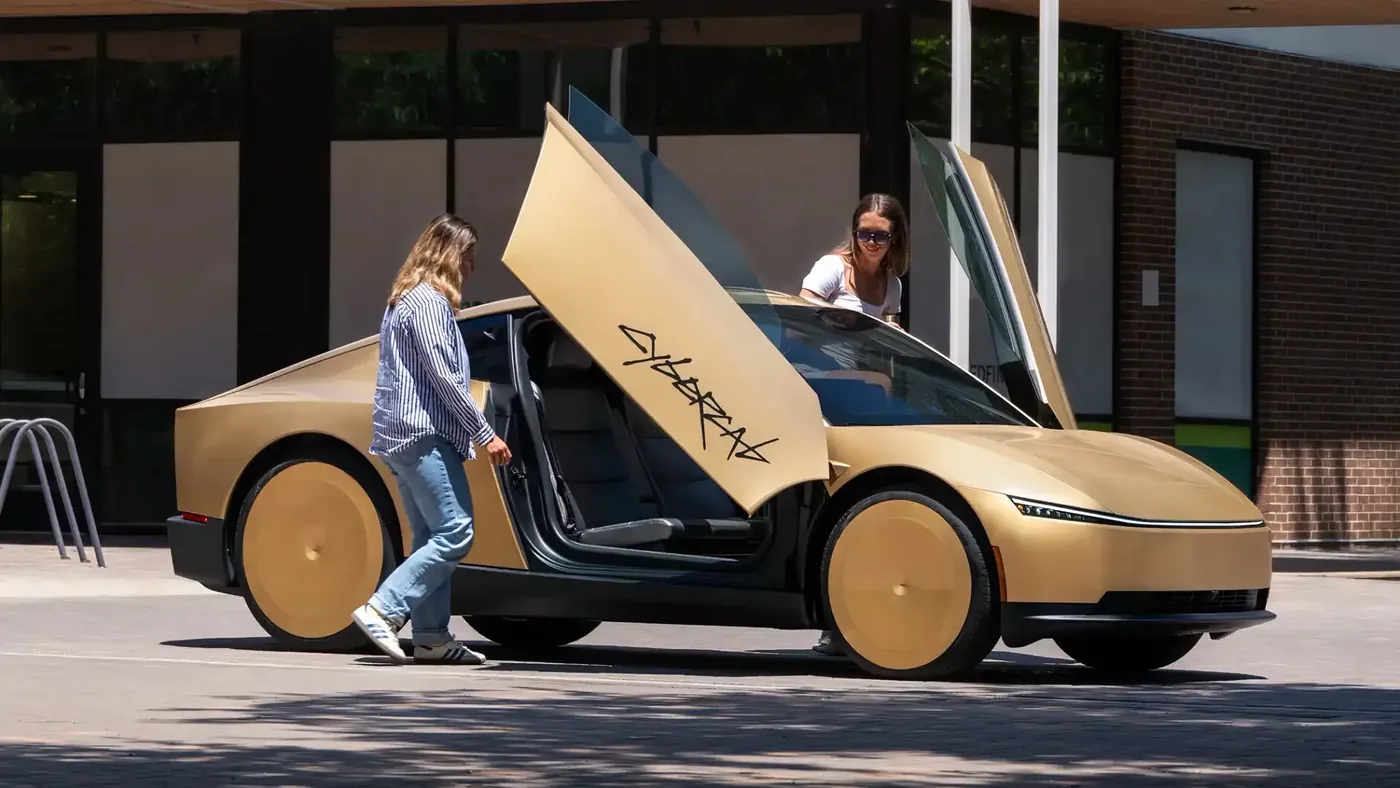
The cabin hardware matches the prototype Tesla displayed in October 2024, featuring two passenger seats, butterfly doors, and a 21-inch center touchscreen [6]. It has no steering wheel or pedals, so passengers can’t take manual control [2]. Rear cargo volume measures 20.1 cubic feet, which is smaller than the 24.1 cubic feet inside a Model 3 [6].
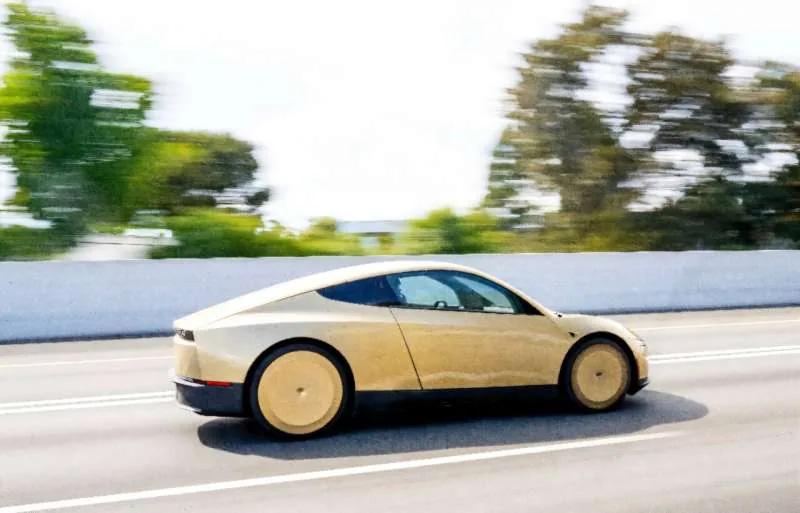
Why is cybercab a 2 seater? Tesla designed the compact cabin around urban transportation data showing that most daily vehicle trips carry only one person. The company collected fleet purchase interest from businesses in September, but it had not opened retail sales until now. On Tesla’s third-quarter 2026 earnings call, executives targeted initial customer deliveries by year’s end while Musk said Tesla still expects to own the vast majority of Cybercabs. Australian automotive outlet Zecar reported that the car visited Sydney in September during its Cybercab Australia tour, but Tesla has not announced pricing outside the United States [6].
Cybercab Personal Use Costs over Five Years
The $29,990 purchase price makes the Cybercab Tesla’s cheapest vehicle, but it won’t move unless owners pay an ongoing software charge [3]. The order page pre-checks an Autonomy Subscription at $299 each month, with only the first month included with the car. If an owner cancels the monthly fee, the vehicle can’t operate [7].
A long-term cost analysis published by Electrek calculates that paying $299 monthly adds $3,588 in software fees each year. That recurring fee lifts cumulative spending to roughly $47,600 for a two-seat commuter car over five years before insurance, maintenance, and charging expenses enter the calculation [3]. First-year costs alone reach about $33,279 before taxes (excluding registration and insurance) [7]. Tech reviewer Marques Brownlee shared screenshots of the checkout screen online, prompting a direct reply from Tesla chief executive Elon Musk. Musk agreed that the $299 rate is “too high” and said it “should match the cost of Tesla [Full Self-Driving] and connectivity for other models, which is more like ~$115/month” [1].
The mandatory subscription creates an unfamiliar ownership model for car buyers [3]. Unlike regular vehicles that run without monthly software fees, the Cybercab needs an ongoing payment to function [5]. While Tesla ended lifetime Full Self-Driving purchases in Australia earlier this year, American buyers are accustomed to one-time purchase options that avoid indefinite monthly charges [6].
Geofence Boundaries and Routing Limits
Owners can’t take the car on unrestricted highway trips between states [3]. Tesla AI lead Ashok Elluswamy said on X that the vehicle will work “unsupervised inside all the same geo locations as @robotaxi, just serving the owners’ needs” within approved municipal boundaries mapped by company engineers [1]. Those service zones currently cover limited parts of Austin, Dallas, Fort Worth, Houston, San Antonio, Miami, Orlando, and Tampa. The rollout follows earlier fleet testing, including the company’s San Antonio robotaxi launch, which established localized operating zones for autonomous Model Y sport utility vehicles [4]. Outside these boundaries, the car can’t drive [3].
Independent testing reveals that actual service borders are noticeably smaller than marketing polygons suggest. Software tester Koby Pierce examined thousands of destination addresses in the official app and discovered that functional pickup and drop-off zones cover only 59% to 78% of advertised boundaries in six cities. In Austin, usable coverage reached only 59% [3].

Route mapping data collected in Houston showed vehicles quoting 40 minutes for a two-block trip to avoid railway crossings, while San Antonio International Airport is unserved despite sitting within Tesla’s published map. A vehicle that won’t leave designated city zones can’t carry owners to rural towns or neighboring suburbs. Electrek reported that the Cybercab uses the same AI4 computer hardware as current Model Y vehicles, which already run unsupervised rides in these Texas zones. Yet Tesla has delayed unsupervised driving for existing retail Model Y owners to roughly the second quarter of 2027, leaving early Cybercab buyers as the sole retail group testing unsupervised trips in these zones [3].
Safety Queries from Federal Regulators
Beyond map restrictions, Tesla faces scrutiny from federal auto regulators over whether a vehicle built without manual pedals or a steering wheel can legally share roads with standard passenger cars [2]. The National Highway Traffic Safety Administration opened an audit query into Tesla’s self-certification. Agency officials wrote: “The vehicles lack permanently attached, conventional manual controls, such as a brake pedal, gas pedal, steering wheel and mirrors”. Regulators want proof showing how Tesla certified the car under federal motor vehicle safety standards that explicitly require conventional mechanical brake controls for passenger vehicles operating on American highways [4]. Tesla says the design is safe and accessible for disabled passengers, but agency officials want verification that it meets existing federal motor vehicle rules [2].
Tesla delivered a written response to the safety agency on October 30, but asked regulators to keep its entire submission confidential. The safety administration hasn’t issued a ruling, leaving legal uncertainty as deliveries approach [3]. State rules also vary; California law requires autonomous test vehicles to carry human safety drivers ready to take manual control. Meanwhile, Alphabet subsidiary Waymo runs driverless passenger trips in 11 American cities with state permits, relying on traditional vehicles retrofitted with sensors [2].
Why Cybercab Personal Use Reshapes Factory Lines
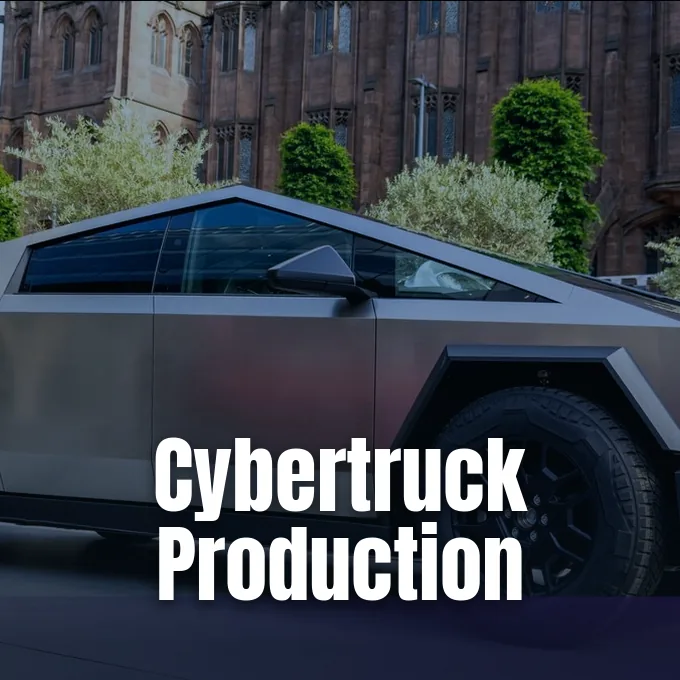
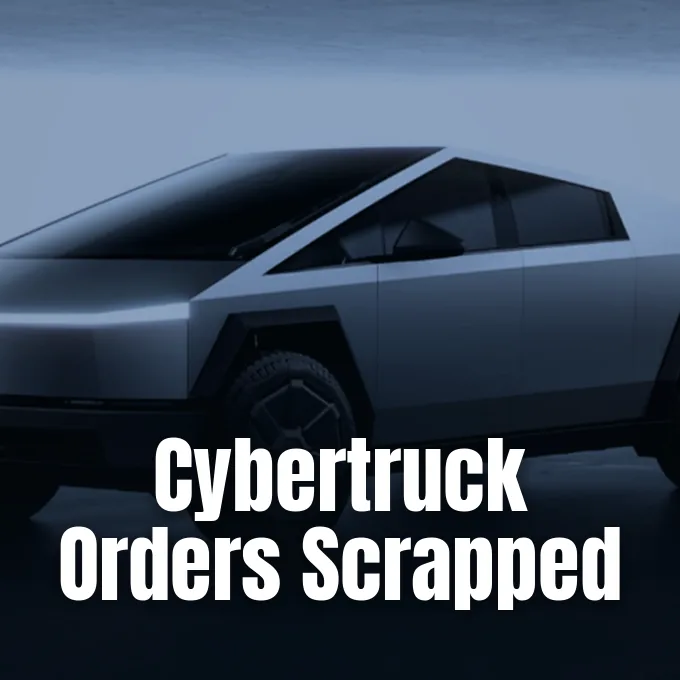
The decision to offer Cybercab personal use directly to buyers coincides with broader manufacturing adjustments at Tesla. The automaker recently confirmed plans for winding down Cybertruck production at Gigafactory Texas within eight months, shifting assembly capacity to the Cybercab program. Musk told investors that although order backlogs exist for the electric truck, pausing production lets Tesla reallocate floor space and manufacturing teams toward high-volume production of autonomous two-seaters. The company has promised to return deposits to customers whose Cybertruck orders won’t be fulfilled before lines close [5].
The factory shift follows quiet catalog trims across Tesla’s vehicle fleet. Automotive reporting from Digital Trends showed that the automaker discontinued its cheapest all-wheel-drive Model Y variant, which previously sold for $41,990, leaving the Premium AWD model at $49,990 as the entry all-wheel-drive option. The cheapest Model Y is now the rear-wheel-drive trim at $39,990, offering 348 miles of range and a top speed of 125 mph. Earlier in 2026, Tesla also dropped the Model S sedan and Model X SUV from its catalog [5].
Why buy cybercab when an established electric car offers nationwide range without map limits? For early retail buyers, the car offers a direct window into autonomous vehicle ownership ahead of broad robotaxi rollouts. Tesla expects early customer feedback in Texas to shape software updates before seeking nationwide regulatory approvals [1]. Until regulators approve driverless passenger cars on open roads, Cybercab personal use remains an exclusive pilot confined to select cities and bound by monthly software fees [7].
- ONLINE NEWS Ha, A. (2026, November 14). Tesla opens Cybercab pre-orders ‘for personal use,’ with geo restrictions and a $299 monthly fee. TechCrunch. [Article Link]
- ONLINE NEWS Zinin, A. (2026, November 14). Tesla opens Cybercab sales to ‘select customers’. Tech Xplore. [Article Link]
- ONLINE NEWS Lambert, F. (2026, November 13). Tesla Cybercab orders open at $29,990 + $299/mo, only in Robotaxi zones. Electrek. [Article Link]
- ONLINE NEWS Moon, M. (2026, November 14). Tesla starts taking Cybercab orders for personal use. Engadget. [Article Link]
- ONLINE NEWS Mangalam, S. K. (2026, November 14). Tesla is finally letting customers buy the Cybercab, but there’s a long list of restrictions. Digital Trends. [Article Link]
- WEBSITE Thai, D. (2026, November 14). Tesla Cybercab Orders Open at US$29,990, US$299/Month. Zecar. [Article Link]
- WEBSITE GetTesla. (2026, November 13). Tesla Cybercab for Personal Use: $29,990 Price and Terms. GetTesla. [Article Link]


