





Every time a phone connects to a cellular tower, a tiny silicon chip verifies who owns the device and which services they can access. Learning how SIM cards work explains how mobile networks tell millions of accounts apart without mixing up billing or call routing. Short for subscriber identity module, the card acts as a secure vault for private keys, holding cryptographic secrets that never leave the chip. Rather than relying on software passwords that malicious apps could steal, cellular systems trust this tamper-resistant hardware to prove user identity over radio waves [9].
- How SIM Cards Work on Cellular Networks
- Data Stored on the Hardware
- What Happens During Network Authentication?
- Manufacturing and Electrical Specifications
- Shrinking the Subscriber Identity Module
- How Dual SIM Cards Work in Phones
- Why Do Network Keys Face Security Risks?
- Registration Policies and Network Access
How SIM Cards Work on Cellular Networks
The core mechanism of how SIM cards work relies on an independent microcomputer embedded inside a plastic card. Classified under telecom specs as a Universal Integrated Circuit Card (UICC), it pairs a silicon chip with non-volatile memory, including electrically erasable programmable read-only memory and flash storage. The chip runs its own basic operating system, isolating security logic from the rest of the handset. Munich smart-card maker Giesecke+Devrient built the first commercial SIM card in 1991, selling an initial batch of 300 units to Finnish wireless operator Radiolinja. That delivery supported the launch of the first 2G GSM network in Finland, establishing smart cards as the foundation of mobile identity verification [9].
The original technical rules, designated TS 11.11 by the European Telecommunications Standards Institute in Sophia Antipolis, France, defined both the shape and logical behaviour of subscriber modules. As wireless technology advanced, the card evolved to host independent mini-applications. Cards support the SIM Application Toolkit under ETSI TS 102 223, letting network operators deliver interactive menu services directly to phone screens [9].
To keep these embedded applications compatible across handset brands, ETSI picked the Java Card platform under spec TS 102 241, while GlobalPlatform added extensions for cryptographic security and RFID contactless use. Standards oversight later split, with 3GPP directing USIM application specs under TS 31.102 and ETSI managing the UICC card body. According to the International Card Manufacturers Association, plants built 5.4 billion SIM cards in 2016, generating over $6.5 billion in revenue, while telecom vendor Ericsson projected that connected cellular gear would reach 20 billion devices. Today, smart-card makers issue over 4.5 billion cards each year, enabling more than 8 billion active handsets, tablets, smartwatches, and cameras to join global networks safely [8, 9].
Data Stored on the Hardware
Every card stores fixed identifiers burned into the silicon during factory setup, giving network systems the data needed to route calls and verify accounts. The main hardware tag is the Integrated Circuit Card Identifier (ICCID), a unique serial number up to 20 digits long defined by ITU-T recommendation E.118. The code begins with industry code 89 for telecoms, followed by a country code under ITU-T E.164, where Canada uses 01, Russia uses 701, and Kazakhstan uses 997. An issuer number and account digits follow, concluding with a check digit calculated with the Luhn algorithm to stop typing mistakes. Central provisioning databases link this printed serial number with customer accounts before carrier line activation [9].
Alongside the serial number, the card holds the International Mobile Subscriber Identity (IMSI), which serves as the user’s routing address on carrier networks. The IMSI starts with a three-digit mobile country code, continues with a two- or three-digit mobile network code under E.212, and finishes with a mobile subscriber identification number. Carriers use these digits to locate users and route phone calls on foreign networks [9].
Storage room on these smart cards ranges from 8 KB to 256 KB, allocating memory between system registers and contact books. All standard cards store up to 250 phone contacts, but larger memory expands how many preferred networks the card tracks while roaming. A 32 KB card holds 33 country codes, while a 64 KB version holds 80 network codes. Carriers program these priority lists so roaming phones link to partner networks that offer lower fees instead of latching onto costly foreign towers. The chip also holds SMS center numbers, service provider names, advice-of-charge data, and passwords like PIN, PUK, PIN2, and PUK2 [9].
What Happens During Network Authentication?
Looking at how SIM cards work during network authentication reveals a challenge-response handshake that protects keys. The core of this system is a 128-bit secret key known as the Ki, assigned during chip production and copied to the carrier Authentication Center (AuC) database. The card interface forbids external gear from reading the Ki over contact pins. Instead, the phone asks for verification via a built-in command called the Run GSM Algorithm, which feeds network challenges into the chip for calculation. This setup ensures that secret keys never enter phone memory, preventing rogue mobile software from stealing logins [9].
During the handshake, the cell tower sends a 128-bit random number called RAND to the phone. The card uses its internal A3 algorithm to combine RAND with the hidden Ki, producing a signed response called SRES. At the same time, the A8 algorithm creates a session cipher key Kc to scramble voice and data traffic [9].
Because older security setups had flaws, researchers analyzed how easily attackers could extract root keys through repeated queries. Indonesian authors N. Anwar, I. Riadi, and A. Luthfi tested card cloning methods in Jurnal Buana Informatika by subjecting test cards to automated trials with cracked random number generators. Their lab trials revealed that 32 KB cards yielded authentication keys with a 100% success rate under repeated querying, while larger 64 KB cards held cloning success between 25% and 50%. These tests proved that newer memory layouts limit fast querying to protect root keys against brute-force extraction tools [1].
Manufacturing and Electrical Specifications
Keeping cellular links stable across millions of handset models requires smart cards to follow strict power rules. Defined under ISO/IEC 7816-3, cards support three voltage classes: Class A at 5 V, Class B at 3 V, and Class C at 1.8 V. Cards made before 1998 worked only at 5 V, but later designs added 3 V and 1.8 V support to cut power drain in portable handsets. Modern cards support all three voltages, adjusting power intake to match what the phone provides. This multi-voltage support lets older phones and new smartphones talk to identical silicon chips without risking heat damage or blown components [9].
The gold pad on each card links the silicon to the phone through eight electrical contact pins [6, 9]. These pins handle power, ground, clock pulses, reset signaling, and bidirectional serial data. Although newer cards trimmed away outer plastic, standards bodies kept this eight-pin layout intact so cards could still run in older gear using passive plastic adapters [6].
Producing these smart cards at scale requires embedding silicon chips into precision-milled plastic cards. Industrial researchers R. O. Vaishya and S. Jain studied factory bottlenecks at a card plant, focusing on die changeovers on module implanting machinery. By using single-minute exchange of dies (SMED) methods, the team eliminated wasted labor steps, cutting setup time from 160 minutes down to 20 minutes. This 87.5% drop in setup time raised overall equipment effectiveness by 4.7%, showing that lean methods help card makers meet global demand at low cost [3].


Shrinking the Subscriber Identity Module
Early mobile phones used full-sized smart cards the exact size of bank credit cards. As makers like Motorola and Nokia pushed toward pocket handsets, standards committees introduced the mini-SIM and micro-SIM formats, trimming outer plastic while keeping electrical pads intact [6, 9]. By 2012, phone makers demanded an even smaller card to reclaim space inside slim smartphone frames [6, 8]. Every millimeter saved on plastic allowed handset builders to pack more circuit boards, camera parts, and battery cells into slim phones [6].
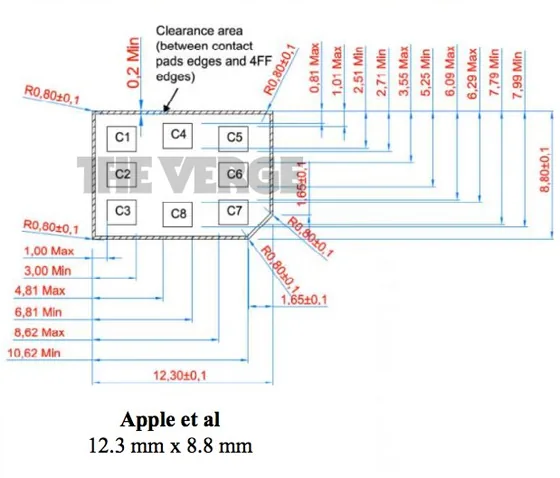
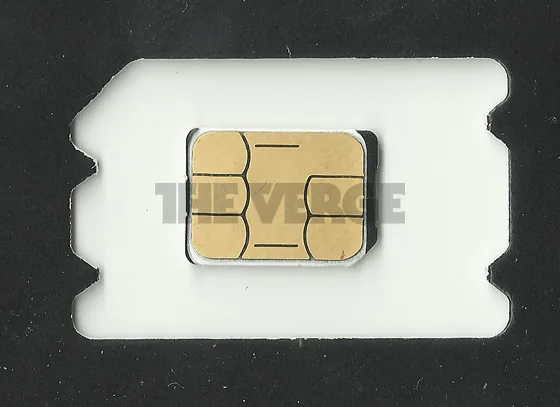
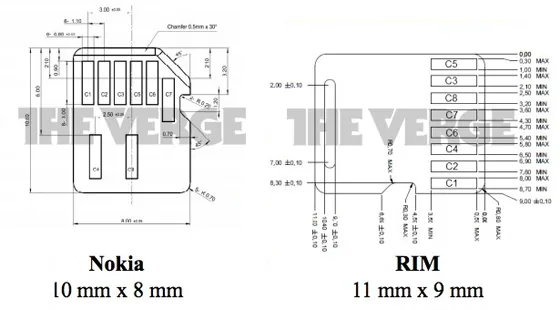
The fourth form factor (4FF) standard sparked a public dispute between Apple and a group uniting Nokia, Research In Motion (RIM), and Motorola. Apple pitched a design that stripped nearly all plastic around the contacts, allowing adapters to fit older micro-SIM slots. Card maker Oberthur Technologies built prototypes of Apple’s card, but Nokia argued the shape broke ETSI rules by risking slot jams [6].
Nokia and RIM backed a competing shape shaped like a microSD card with edge notches, doing away with card trays [6]. However, the European Telecommunications Standards Institute chose Apple’s backward-compatible card. At its 55th meeting in Osaka, Japan, ETSI adopted the nano-SIM standard under spec TS 102 221. Announced by ETSI’s Tonya Lawrence, the card measured 12.3mm wide, 8.8mm high, and 0.67mm thick, making it 40% smaller than micro-SIM while keeping full backwards compatibility [8].

How Dual SIM Cards Work in Phones
Examining how dual SIM cards work in everyday handsets shows that multi-line devices let users balance separate accounts. The first phone to hold two cards was the Benefon Twin, launched by Benefon in 2000. Dual-card tech gained huge ground around 2007 when Chinese firms paired low-cost MediaTek chips with dual trays [10]. As CNET writer Brendon Chase reported from Shanghai tech markets, Shanzhai sellers like Zhu Chenghao sold dual-card phones offering FM radio and miniSD storage years before Western brands embraced dual slots. In 2008, Chinese makers built over 80 million of these phones, exporting units to India, Eastern Europe, Africa, and Southeast Asia [12].
Phones handle two cards using three distinct setups. Passive dual-SIM handsets, like the Nokia C1-00, let users switch between lines by hand, leaving the inactive card offline. Dual SIM Dual Standby (DSDS) phones, like the Samsung Galaxy S Duos, Sony Xperia M2 Dual, and iPhone XS, keep both lines active via time sharing [10, 13]. When a call starts on one number, the modem locks to it, sending other callers to voicemail [10].
Dual SIM Dual Active (DSDA) phones like the HTC Desire 600 maintain two active lines at once using two transceivers, though this setup drains batteries faster. Makers also built triple-card phones like the LG A290 and four-card models like the Cherry Mobile Quad Q70. Other models include the Nokia C2-03, Nokia C2-06, Nokia X1-01, Nokia 101, Sony Xperia Z3 Dual, and Sony Xperia C. When Apple introduced dual-line support with Andrew Gebhart reporting for CNET at Apple’s Sept 12 event, models sold in China had two physical slots, while US versions paired nano-SIMs with eSIMs on carriers like Sprint [10, 13].
Why Do Network Keys Face Security Risks?
Because the Ki key governs cellular login, stealing carrier encryption keys lets attackers listen in on over-the-air phone calls. In 2015, files leaked by Edward Snowden showed that the NSA and GCHQ hacked office networks at Gemalto, the top card maker, to grab encryption keys. TechCrunch reporter Ingrid Lunden reported that while Gemalto saw intrusions in 2010 and 2011, core chip production networks stayed safe. Gemalto said its network was built like “a cross between an onion and an orange,” keeping customer encryption keys separated from regular office computers [7].
The Gemalto review showed that stolen keys mainly threatened older 2G networks, which lacked mutual authentication and let rogue towers snoop on calls. Newer 3G and 4G networks were not vulnerable to this key-theft attack. Furthermore, Gemalto noted that prepaid 2G cards had short lifespans of three to six months, limiting the value of stolen data. Even so, reports showed spies stole 300,000 keys from a carrier in Somalia [7].

To boost protection beyond calls, scientists tested using smart cards to secure mobile banking. Researchers K. Ok, Ş. Şentürk, S. Aktas, and C. Cevikbas built a smartphone framework in Zenodo using the card as a Secure Element. Their framework ran key creation, encryption, decryption, and digital signing inside the tamper-proof card chip. By keeping private keys inside the card rather than on the phone, the system shielded banking transactions from malicious phone apps [4].
Registration Policies and Network Access
Governments often require identity checks for SIM buyers to curb phone crime and boost public safety. Studying SIM registration in Ghana, O. N. Boateng and fellow authors found that criminals buy unregistered or pre-registered cards with fake data to run social engineering scams. The study proposed a cognitive model to make registration safer [2]. In Malawi, policy analyst F. Makoza found that rules faced hurdles due to legal delays and a lack of national identity papers. Without central citizen registries, telecom firms had trouble verifying buyers in regional retail shops [5].
Identity controls also shape internet access, as seen with unfiltered SIMs in Iran. Known as “white SIM cards,” these lines give unblocked web access while regular users face state blocks. The setup expanded under President Hassan Rouhani and Minister Mohammad-Javad Azari Jahromi in 2019, giving unfiltered lines to university staff and reporters. Sharif University of Technology applied a tiered plan in 2022, and by December 2025 around 50,000 unfiltered cards were active. A 2025 feature on X showing account locations sparked public apologies when pro-government figures like Saeed Jalili were caught posting without VPN tools [11].
As cellular tech moves toward embedded chips, physical cards are making way for silicon soldered into phone motherboards. The shift to software-provisioned profiles is covered in our look at how embedded SIMs work in modern handsets. Carrier rollouts also require coordination between phone makers and carriers, as seen when resolving carrier hardware replacements for disrupted cellular devices. Even as digital profiles replace plastic chips, the fundamentals of how SIM cards work still depend on the security principles established decades ago [9].
- ACADEMIC JOURNAL Anwar, N., Riadi, I., & Luthfi, A. (2016). Forensic SIM card cloning using authentication algorithm. International Journal of Electronic and Information Engineering, 4(2). [Article Link]
- ACADEMIC JOURNAL Boateng, O. N., Nkrumah, B., Boafo, V., Amponsah, A., Tetteh, L. A., Aning, J., Kornyo, O., Adekoya, A. F., Nti, I. K., Bawah, F. U., Awarayi, N. S., Boateng, S. T., Mensah, P. K., Nimbe, P., Akoto-Adjepong, V., Agbedanu, R., & Weyori, B. A. (2022). A fraud prevention and secure cognitive SIM card registration model. Indian Journal of Science and Technology, 15(46), 2562-2569. [Article Link]
- ACADEMIC JOURNAL Vaishya, R. O., & Jain, S. (2019). Case study: Application of SMED in SIM card manufacturing company. International Journal of Productivity and Quality Management, 1(1), 1-1. [Article Link]
- ACADEMIC JOURNAL Ok, K., Şentürk, Ş., Aktas, S., & Cevikbas, C. (2016). Secure cryptographic operations on SIM card for mobile financial services. Zenodo. [Article Link]
- ACADEMIC JOURNAL Makoza, F. (2015). An exploratory study on policy transfer for SIM card registration in Malawi. International Journal of Technology Diffusion, 6(1), 33-45. [Article Link]
- ONLINE NEWS Ziegler, C. (2012, March 26). Nano-SIM war: Here’s what Apple and Nokia want to put in your next phone. The Verge. [Article Link]
- ONLINE NEWS Lunden, I. (2015, February 25). Gemalto: NSA/GCHQ hack ‘probably happened’ but didn’t include mass SIM key theft. TechCrunch. [Article Link]
- PRESS RELEASE Lawrence, T. (2012, June 1). New SIM card format for slimmer, smaller phones. ETSI. [Article Link]
- WEBSITE Wikipedia contributors. (2026). SIM card. Wikipedia, The Free Encyclopedia. [Article Link]
- WEBSITE Wikipedia contributors. (2026). Dual SIM. Wikipedia, The Free Encyclopedia. [Article Link]
- WEBSITE Wikipedia contributors. (2026). White SIM Card. Wikipedia, The Free Encyclopedia. [Article Link]
- ONLINE NEWS Chase, B. (2009, July 9). Shanzhai ji: All you need to know about fake phones. CNET. [Article Link]
- ONLINE NEWS Gebhart, A. (2018, September 12). Apple brings dual-SIM support to the iPhone XS and XS Max. CNET. [Article Link]


