





Mobile phone users spent decades relying on tiny plastic subscriber identity cards to connect to cellular towers, carefully ejecting trays with bent paperclips whenever switching phone providers. Today, eSIM technology is replacing those removable chips with an embedded microchip soldered onto device motherboards at the factory. Instead of waiting for a card in the mail or visiting a retail carrier store, consumers download encrypted network credentials over the internet in minutes. The shift gives phone manufacturers extra space for larger battery cells while letting subscribers store multiple mobile lines on a single handset. Telecommunications analyst Roger Entner of Recon Analytics said that “whether we like it or not, it’s coming,” pointing to a future where software replaces plastic cards [9]. The plastic tray is fading.
What Is an eSIM?
An eSIM is a programmable microchip soldered onto a phone motherboard that replaces the removable plastic card. In older mobile hardware, a plastic SIM card provided the secure storage area for the International Mobile Subscriber Identity and secret cryptographic keys that authenticate a handset with cell towers. Nicole Lee reported for CNET that the “e” in eSIM stands for embedded, meaning the silicon stays permanently attached to phone circuitry rather than sliding out on an ejectable tray. Because device firmware manages the component through software, subscribers can switch between network providers without handling delicate plastic edges, carrying tray removal pins, or misplacing tiny parts [1]. The chip stays put. It performs the same network authentication tasks as an older plastic card, but it runs entirely through device code.
The underlying hardware is known as an embedded Universal Integrated Circuit Card, or eUICC. Unlike older plastic cards that permanently bind a handset to a single mobile operator, an eUICC is reprogrammable and can hold multiple operator profiles in separate memory partitions. Digital SIM guides describe how a customer downloads a digital subscription profile over the web, instructing the phone modem how to log into network towers. The setup takes minutes. That quick download removes the need to wait days for postal delivery or search for mobile operator storefronts [13].
Security is another major advantage of the embedded design. If a thief steals a modern smartphone, they can’t simply eject the card to disable cellular tracking or hijack phone numbers for identity theft. The New York Times reported that the Federal Communications Commission favors software-based switching because it makes changing carriers easier for consumers while reducing SIM cloning fraud [9].

How Remote Provisioning Works
Remote SIM Provisioning relies on an architecture created by the GSMA to deliver network credentials over the air. In mobile engineering, eSIM technology connects devices to operators through digital profiles stored in secure elements. Inside the device operating system, a software module called the Local Profile Assistant manages communication between the user interface, the embedded chip, and remote telecom servers. Richard Collins said in eSIMCircle that the setup workflow begins when a subscriber purchases a cellular data plan and receives activation details, most commonly in the form of a quick-response code or a direct network push notification [12]. The Local Profile Assistant acts as the central bridge on the handset, handling each step of profile negotiation automatically without needing network training from the user.
The quick-response code does not contain the actual subscription data; instead, it provides a secure web address pointing to a Subscription Manager Data Preparation Plus server. When the device camera scans the code, the Local Profile Assistant contacts the server over a secure internet connection. The server verifies device credentials, encrypts the network subscription package using public-key cryptography, and downloads the bundle to the secure element on the chip [12].
Once the download finishes, the eUICC decrypts the profile, installs the carrier credentials, and registers with local cellular towers. It connects fast. Industry data published by Esim-Now confirmed that 98 percent of mobile operators worldwide supported remote profile downloads by late 2025, enabling automated network provisioning in global markets [14].
Hardware Design of the eUICC
The foundation of the embedded SIM is a miniature surface-mount chip known as the Machine-to-Machine Form Factor 2, or MFF2. Measuring just 6 millimeters by 5 millimeters, this hardware component uses the standard ISO/IEC 7816 electrical interface while occupying only a fraction of the board area required by a nano-SIM tray. GSMA chief engineer Ian Pannell said that the embedded component is 90 percent smaller than a conventional SIM card, delivering space savings for consumer electronics [2]. That reduction in board footprint gives hardware engineers room to adjust battery shape and device cooling solutions.
Every eUICC receives an unchangeable electronic identifier at the factory, known as the eUICC ID or EID. This 32-digit number allows remote provisioning platforms to identify the target hardware before preparing an encrypted profile. Users can inspect this number by typing *#06# into their smartphone dialer or checking device settings menus [10]. To regulate how these chips function in different markets, the GSMA maintains the SGP.22 standard for consumer devices, SGP.02 for automated machinery, and SGP.32 for large-scale connected hardware [13].

Hardware researchers have examined how profile switching affects power demand and device latency during network transitions. In an experimental demonstration, researchers Apilo, Karhula, and Mäkelä found that cell search routines dominate both delay and energy consumption when switching running operator profiles on smart products. By keeping multiple profiles stored locally on the secure element, devices can switch between private and public cellular networks without repeated over-the-air signaling delays [15].
Benefits of eSIM Technology
The main consumer benefit of eSIM technology is the ability to manage multiple mobile numbers on a single handset without swapping hardware cards. Flagship smartphones can store eight or more carrier profiles simultaneously, keeping two lines running for calls, messages, and cellular data. Android Central editor Andrew Myrick said that dual-line support allows users to separate work and personal numbers without swapping plastic cards [7]. Samsung delivered this functionality to North American owners as part of the broader Samsung Galaxy lineup hardware ecosystem, enabling flexible dual-carrier access on Galaxy S21 devices through the One UI 4 software update.
International travel provides another area where digital profiles outshine older methods. Instead of hunting down local telecommunications shops at foreign airports or paying exorbitant daily roaming rates to home carriers, travelers can browse prepaid data packages online and install them before catching their flights. In an academic analysis of telecommunications pricing, researchers Ramneek, Hosein, and Pack said that seamless switching between cellular providers accelerates provider competition and increases customer mobility in regional markets [14].
Beyond consumer convenience, ditching plastic cards yields environmental advantages for the telecommunications industry. Manufacturing billions of plastic cards each year consumes big quantities of plastic polymers, cardboard packaging, metal trays, and global air freight. Tech Times writer Carl Williams said that transitioning to embedded chips removes millions of tons of manufacturing and shipping waste as mobile operators shift to digital profile delivery [11]. Waste drops significantly.

Trade-Offs and Carrier Control
Despite clear advantages, moving to embedded profiles introduces real friction when subscribers upgrade or replace damaged hardware. With an older plastic card, moving a cellular line to another phone takes twenty seconds: pop out the card tray and slide the chip into the new handset. With digital profiles, transferring a number calls for carrier authorization, account logins, or fresh quick-response codes. When automated transfer tools encounter glitches, subscribers must contact customer support to restore mobile connectivity [6]. Customer service complications of this type also surfaced during carrier disputes involving iPhone 18 Pro Max hardware issues, where line provisioning required manual interventions from network representatives.
Device damage creates another troublesome scenario for subscribers using embedded chips. If a handset suffers a shattered, unresponsive touchscreen or liquid damage that prevents the screen from turning on, the owner can’t access device menus to export their digital profile. Moving the cellular subscription to a replacement phone needs carrier customer service help or a visit to a retail store in person. Stephen Radochia said in Android Police that carrier authorization barriers can lock subscribers out of their mobile service during routine handset swaps [6].
Carrier locking presents an additional hurdle that catches many consumers off guard. A phone with embedded chip hardware won’t accept digital profiles from competing operators if the handset is locked to a specific carrier through an installment financing contract. Furthermore, while major national carriers have built reliable digital provisioning systems, some smaller mobile virtual network operators still lack support for instant profile downloads [6]. Freedom depends on carrier policies.

Adoption Across Consumer Phones
The path toward embedded subscriber modules began in wearable devices before spreading to mass-market smartphones. In February 2016, Samsung introduced the Gear S2 Classic 3G smartwatch as the first commercial consumer product featuring a GSMA-certified embedded SIM [2]. Google followed in October 2017 by launching the Pixel 2, the first smartphone with built-in eSIM technology, where Project Fi product manager Joy Xi stated that getting cellular service was “as quick as connecting your phone to Wi-Fi” [5]. Apple brought the technology to millions of users in 2018 with the iPhone XS and XR before removing the card tray entirely from United States models of the iPhone 14 series in 2022 [4].
Apple widened its cardless strategy with subsequent product generations. Joe Rossignol said in MacRumors that Apple made the iPhone 17 and iPhone 17 Pro eSIM-only in twelve countries and territories, including Canada, Japan, Mexico, Saudi Arabia, and the United Arab Emirates. Apple used the space vacated by the card tray to install a larger battery cell inside those models. While standard iPhones in mainland China still retain dual nano-SIM trays, the ultra-thin iPhone Air launched globally as an eSIM-only device in all international markets [4].
Support for digital profiles has also reached heavy-duty hardware built for demanding environments. Rugged phone maker Ulefone integrated embedded chips into its Armor 22 Pro and Armor 24 Pro handsets. CollinLiu said in Ulefone documentation that field service technicians, construction teams, and logistics drivers can switch cellular networks while working in dusty or wet environments without opening card slots or exposing device parts to moisture [8].
How Does eSIM Technology Benefit Travel?
eSIM technology benefits travelers by letting them download local cellular data plans over the internet before arriving at their destination. In the past, international travelers faced steep roaming surcharges from home carriers or spent valuable vacation time queuing at airport telecom kiosks to buy local plastic cards. Brian X. Chen advised in The New York Times that vacationers should adopt digital travel plans to secure affordable cellular data abroad, avoiding the hassle of swapping tiny cards while traveling through busy transit hubs [9]. That flexibility eliminates the anxiety of arriving in an unfamiliar country without maps, translation tools, or ground transport access.
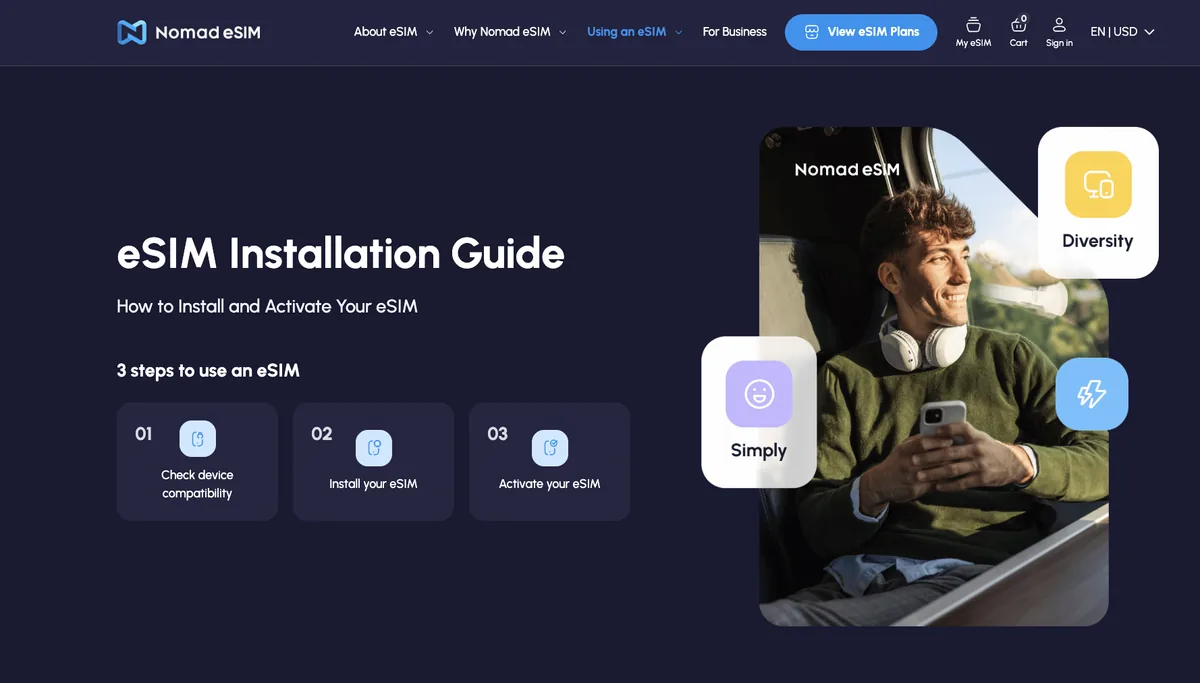
A vibrant ecosystem of digital travel providers has emerged to serve international travelers, including Nomad, Saily, Airalo, and Ubigi. TechRadar writer Pawan Singh reviewed Nomad, which was founded in Santa Clara by LotusFlare in 2020, highlighting prepaid data packages starting at $0.66 per gigabyte in European destinations and $2.20 in North America over AT&T and Verizon networks [8]. Meanwhile, CNBC highlighted Saily, developed by Nord Security, which offers international plans starting at $1.99 with built-in malware defenses and web protection tools [10].

Travelers should keep in mind that most travel packages are data-only subscriptions that do not include a voice phone number for cellular calls or SMS. However, travelers can still use internet-based calling apps like FaceTime, WhatsApp, and Signal over the mobile data connection without issue. CNBC contributor Ryley Amond said that travelers can keep their primary home line live for incoming bank verification codes while routing cellular data through their travel profile [10].
Future of eSIM Technology in Connected Devices
The reach of eSIM technology extends far beyond handheld smartphones into personal computing, consumer transportation, and smart home appliances. Cellular laptops from manufacturers such as Lenovo, Dell, HP, Acer, and Asus use embedded modules to deliver persistent mobile broadband without plug-in USB adapters [3]. In the automotive industry, Samir Makwana said in Guiding Tech that sport utility vehicles use embedded chips to power navigation, emergency panic buttons, and vehicle diagnostics [11]. Similar connectivity innovations continue to surface in household appliances, as observed in recent LG smart home hardware leaks, pointing toward broader adoption across everyday appliances.
Market projections suggest that software-driven connectivity will soon dominate the global telecommunications sector. Carl Williams said in Tech Times that industry analysts expect live eSIM connections to surpass 5 billion connections by 2028 as carriers streamline automated activation systems. The next technological step is the integrated SIM, or iSIM, which embeds cellular identity circuits into a device’s primary system-on-chip rather than using a separate surface-mount component [11].
In industrial operations, the GSMA SGP.32 specification provides server-driven profile management for unattended Internet of Things deployments. Utility companies can deploy millions of smart electrical meters and environmental sensors in remote locations, switching cellular network providers over the air whenever contracts change. By eliminating plastic card swaps, embedded connectivity ensures that infrastructure operates continuously without expensive field technician visits [13]. It keeps machines connected.
- ONLINE NEWS Lee, N. (2025). Everything You Need to Know About eSIMs and Your Phone. CNET. [Article Link]
- ONLINE NEWS Vincent, J. (2016). Samsung’s Gear S2 has the first certified eSIM that lets you choose carriers. The Verge. [Article Link]
- ONLINE NEWS Hollington, J. (2020). What is an eSIM? Here’s everything you need to know. Digital Trends. [Article Link]
- ONLINE NEWS Rossignol, J. (2025). iPhone 17 and iPhone 17 Pro Models Are eSIM-Only in These Countries. MacRumors. [Article Link]
- ONLINE NEWS Statt, N. (2017). Google’s Pixel 2 phones are the first to use built-in eSIM technology. The Verge. [Article Link]
- ONLINE NEWS Radochia, S. (2025). I understand why Google went eSIM-only for the Pixel 10, but I still hate it. Android Police. [Article Link]
- ONLINE NEWS Myrick, A. (2021). One UI 4 (Android 12) brings eSIM support to US Galaxy S21 devices. Android Central. [Article Link]
- ONLINE NEWS Singh, P. (2024). Nomad eSIM Review 2026: The travel SIM that actually works. TechRadar. [Article Link]
- ONLINE NEWS Chen, B. X. (2023). Attention, Travelers: Now Is the Best Time to Switch to eSIM. The New York Times. [Article Link]
- ONLINE NEWS Amond, R. (2024). The best eSIMs for international travel in 2026. CNBC. [Article Link]
- ONLINE NEWS Williams, C. (2026). eSIM Technology Explained: How Embedded SIMs Are Replacing Physical SIM Cards. Tech Times. [Article Link]
- WEBSITE Collins, R. (2026). eSIM Technology: How It Works, Benefits & Setup. eSIMCircle. [Article Link]
- WEBSITE Wikipedia contributors. (2026). ESIM. Wikipedia, The Free Encyclopedia. [Article Link]
- ACADEMIC JOURNAL Ramneek, R., Hosein, P. A., & Pack, S. (2023). Pricing eSIM Services: Ecosystem, Challenges, and Opportunities. IEEE Communications Magazine, 61(7), 18-24. [Article Link]
- ACADEMIC JOURNAL Apilo, O., Karhula, P., & Mäkelä, J. (2022). eSIM-Based Inter-Operator Mobility for Advanced Smart Products. IEEE Internet of Things Magazine, 5(2), 120-126. [Article Link]


