






Plans for an open-air lead azide detonation near Middletown, Iowa, prompted independent scientists and residents to organize emergency environmental testing networks. The U.S. Army intends to destroy 68 barrels of the aging explosive after inspectors determined the material had become too volatile to transport over public highways [1]. Because the resulting plume could carry toxic dust over nearby farms, university researchers began deploying air monitors and soil kits [2]. On Nov. 20, a federal judge temporarily blocked the disposal permit [1].
Why Lead Azide Detonation Cannot Wait
The chemical stockpile cannot remain in storage because aging containers of lead azide turn unpredictable over time, creating a serious hazard for workers and nearby communities [2]. The material at the Middletown facility totals approximately 4,300 kg of primary energetic explosive that has served for decades as an initiator in munitions [1]. The Environmental Protection Agency granted an emergency disposal permit to the U.S. Army after finding that the deteriorating chemical presented an imminent and substantial threat to human health and the environment. Agency officials concluded that an open burn on military grounds offered the safest path to eliminate the hazard without risking transport. As the EPA stated, “In-place detonation allows for minimal human interaction with the containers of waste lead azide, enables the Army to conduct the treatment activity during favorable weather conditions, and allows the Army the opportunity to provide prior notifications to the potentially affected surrounding communities” [2].
The disposal schedule shifted following local pushback. The public first learned about the blast on 15 November, just days before the Army planned to detonate the 68 barrels on Friday, Nov. 20 [2]. Following public outcry, the military moved the operation to Monday, Nov. 23 [1]. Field teams continued assembling equipment to collect pre-blast data in case the court lifted the injunction [2].
Predicted Plume Path Across Midwest Counties
Computer dispersion models generated by the military showed that dust from the blast could travel roughly 100 miles from the Middletown site across eastern Iowa and into neighboring states within hours [2]. The projected drift alarmed community leaders because aerosolized lead acts as a neurotoxin and a probable carcinogen that settles onto pastures, crops, and residential rooftops [1]. Lead dust inhaled into the lungs or washed into cisterns poses lasting hazards for young children and livestock alike. However, the U.S. Army did not release updated dispersion maps after moving the operation from Friday to Monday. Changing wind directions and temperature inversions could alter the path of the fallout cloud, leaving downwind communities uncertain about where dust might fall [2].
Official testing alone would not satisfy local concerns. The Army Corps of Engineers agreed to collect soil samples before and after the explosion for about 150 residents who formally requested testing on private properties. That program, reported by The New York Times, covered only a small fraction of downwind households. Most families living outside the perimeter had no government monitors assigned to their properties [2].
University Air and Soil Sampling Networks
Academic laboratories in Iowa launched independent monitoring campaigns to track airborne particulate matter and ground deposition ahead of the planned lead azide detonation. University of Iowa environmental scientist David Cwiertny mobilized a research team to deploy air quality sensors, surface wipe kits, and topsoil corers around the ammunition plant. The short notice forced researchers to scramble for field gear. As Cwiertny said, “These are tough circumstances to plan sampling campaigns under… But we’ll do what we can” [2].
Cwiertny’s team intends to sample the surrounding territory before and during the scheduled detonation, taking topsoil cores and wiping outdoor surfaces where fine lead dust might settle. Researchers plan to process collections in university laboratories and share chemical data directly with community members as fast as possible. Rather than disputing federal competence, the scientists framed their field work as an open addition to regulatory records. David Cwiertny explained that independent numbers build trust when environmental threats emerge. As Cwiertny said, “We’re doing all of this to add to the public record, not because we have any real doubt in the official monitoring that’s planned by the EPA or the Army. In an unprecedented event with so many unpredictable factors, we believe that having more independent data is always better for public transparency and for public health” [2].
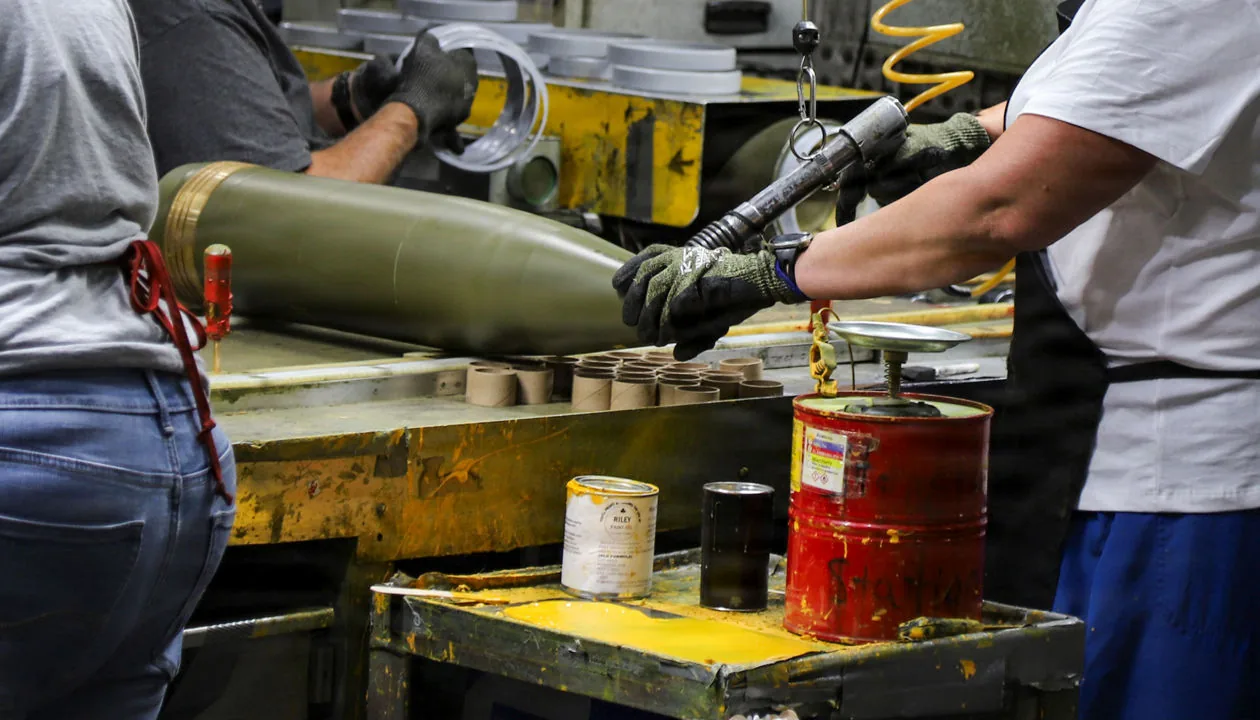


Community Soil Collection for Blast Analysis
To broaden the reach of testing before the lead azide detonation, environmental engineers Shannon Bartelt-Hunt and Kaycie Lane from the University of Nebraska-Lincoln initiated a community science project. In a notice posted on LinkedIn, Bartelt-Hunt invited families living in the blast corridor to collect one cup of topsoil from their yards prior to the event, followed by a second matching sample afterward. Participating residents label each container with location coordinates and mail the pairs to university labs for trace metal analysis [2].
Public engagement turned out to be an important asset under compressed timelines. Bartelt-Hunt said speed mattered above all else. “People are very, very concerned about not having information about what’s happening in their community,” Bartelt-Hunt said. “This is a place where we could offer our expertise”. Crowdsourced sampling provides practical ways to secure real-world observations when state agencies have limited field staff deployed in wide agricultural counties. As Bartelt-Hunt pointed out, recruiting volunteers allows researchers to capture time-critical environmental data that would otherwise vanish. She said, “It’s probably one of the only ways that we can gather [information] when there are these time-critical observations that we’re trying to make” [2].
Residents organized independent testing plans in online spaces as well. Within the r/Iowa discussion board on Reddit, community members shared step-by-step instructions for preserving soil cores in clean glass jars. Contributors discussed preserving baseline evidence in case future lead contamination triggers property damage or toxic tort lawsuits. One forum participant wrote that taking personal soil samples “could be incredibly important a few days or a few years down the road” [2].
Agricultural Baselines for Regional Livestock
Farming organizations issued guidance to protect crops and grazing herds. Iowa State University Extension advised regional agricultural producers to collect soil samples immediately, warning that natural mineral content makes post-detonation attribution difficult without solid reference data. Local radio station Ottumwa Radio reported that extension agents urged farmers to document soil chemistry to “establish a baseline for liability purposes”. Patrick Wall, a beef production specialist at Iowa State University, confirmed the challenge in an email message to Eos. “Since lead already is naturally in the soil, a baseline needs to be established,” Wall wrote [2].
State agricultural officials also stepped in to advise livestock managers on forage safety. The Iowa Department of Agriculture and Land Stewardship recommended that farmers contact the U.S. Army to request baseline testing for pasture soil and forage (vegetation eaten by cattle). The department suggested that producers collect and freeze forage samples themselves if military testing teams could not visit their farms before Monday. Heavy metals deposited onto open pastures can enter the digestive tracts of grazing cattle, accumulating in organ tissues and threatening dairy and beef herds. Establishing pre-blast lead levels offers farmers their only defensive evidence if agricultural products later exceed federal safety thresholds. Without verified baseline records, producers could face catastrophic economic losses if buyers reject regional meat or milk shipments after the military blast [2].
Physics Behind the Lead Azide Detonation
The urgency surrounding the Middletown stockpile stems from the fundamental physics of explosive materials. Detonation (derived from Latin detonare, to thunder forth) differs from deflagration, which is ordinary subsonic combustion that moves through fuel mixtures at flame speeds of about 1 m/sec. In a true lead azide detonation, an exothermic reaction drives a supersonic shock wave through the crystal matrix at speeds exceeding 1 km/sec. Unlike deflagrations, solid-state explosive detonations do not require external oxidizers [3]. In munitions, this shock wave triggers the secondary charge [1].
Scientists have studied supersonic detonation physics since the late nineteenth century. The phenomenon of detonation was first discovered in 1881 by four French scientists: Marcellin Berthelot, Paul Marie Eugène Vieille, Ernest-François Mallard, and Henry Louis Le Chatelier. Mathematical models describing shock front propagation were later advanced by David Chapman in 1899 and by Émile Jouguet in 1905, 1906, and 1917, establishing the Chapman-Jouguet condition. During World War II, researchers Yakov B. Zel’dovich, John von Neumann, and Werner Döring independently formulated ZND theory to describe finite-rate chemical reaction zones. Later work by Aleksandr Solomonovich Kompaneets in the 1960s further clarified how wave structures behave inside explosive materials [3].
Because lead azide crystals react upon mechanical shock or degradation, old barrels present serious hazards if disturbed. Open detonation dismantles the chemical structure completely, but it shatters the lead atoms into a fine aerosol cloud that drifts with prevailing winds [1]. Predicting how the resulting particulate plume disperses through the lower atmosphere depends on real-time weather conditions. The independent air and soil networks established in Iowa represent a direct effort by scientists and residents to document that environmental footprint before the blast occurs [2].
- ONLINE NEWS Samuels, F., & Smith, S. (2026). Army pursues ‘unprecedented’ detonation of lead azide stockpile in Iowa. Chemical & Engineering News. [Article Link]
- ONLINE NEWS van Deelen, G. (2026). With Little Time Before Lead Azide Detonation, Iowa Scientists and Residents Assemble Monitoring Plans. Eos. [Article Link]
- WEBSITE Wikipedia contributors. (2026). Detonation. Wikipedia. [Article Link]
APA 7: PerEXP Teamworks. (2026, November 22). Iowa Researchers Track Planned Lead Azide Detonation Plume. PerEXP Teamworks. https://perexpteamworks.com/en/lead-azide-detonation-iowa-monitoring/


