






Gray skies and steady downpours greeted rowers on the Charles River as the Head of the Charles opened its three-day schedule in blustery autumn weather. More than 12,000 competitors from over 30 countries traveled to the course despite early forecasts of driving rain, launching sculls along tree-lined bends where bright foliage hung over the water. Race announcers mulled how the wet conditions might alter times as crews moved their boats into position on Friday morning, but rowers and spectators who arrived for the launch of the 61st edition seemed undeterred by the chill [1].
Rain Along the Charles River
Wind and rain set a difficult tone for the start of the regatta, yet spirits among the crowds stayed remarkably high along the river paths. Race announcers watched the wet weather with concern. One rower broke into a rendition of Singin’ in the Rain as he pulled his oars through the water, delighting spectators who cheered from the riverbank. The song drew laughter and cheers from family and friends gathered under umbrellas along the riverbank [1].
Autumn weather often forces boat handlers to make fast choices when strong storms move in over open water. Before race day, independent rower NannaK saw forecasts calling for big wind and chose to secure boats the previous night, hauling an Alden craft off the dock to keep it safe from rough water. Calm air arrived the next morning. NannaK put the boat back on the water, only to be met by a sudden downpour that soon settled into a steady shower [2]. On the Charles River, the 61st edition pressed forward through identical gray skies and cold rain, showing that experienced rowers adapt quickly whether they row alone or race in international heats [1], [2].
Preparation at the Newell Boathouse
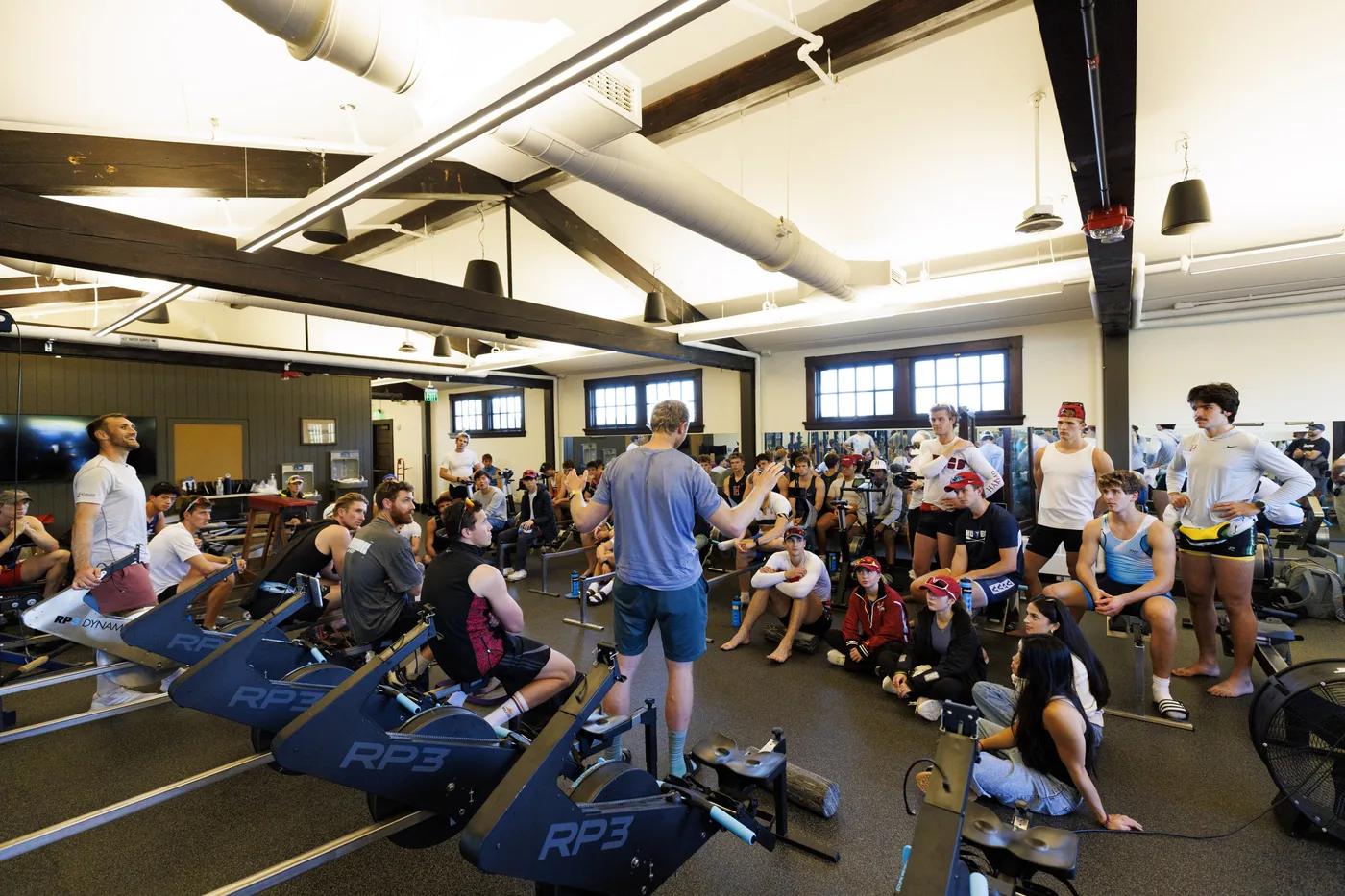
Athletes used their final hours before competition to warm up inside the Newell Boathouse workout room. Visiting athlete Hamish Bond (center), a rower from New Zealand who won three Olympic gold medals, met with Harvard competitors two days prior to racing, offering thoughts on how to handle choppy water. He later walked beside teammates to carry their shell down to the docks [1].
Charley Butt, the Bolles-Parker Head Coach for Harvard Men’s Heavyweight Crew, led a demanding practice session on the water as heavy raindrops began to fall across the water in front of the boathouse. Nearby on the dock, Elam Hughes ’29 slapped a teammate’s hand. They hoisted an eight-man shell down the ramp toward the river steps, keeping spirits buoyant despite the damp chill. Handlers checked foot stretchers, riggers, and oarlocks before every launch [1], [2]. Careful checks on the dock help shells stay stable even when sudden river gusts push against the hull during high-speed turns [1], [2].
Tough Head of the Charles River Conditions
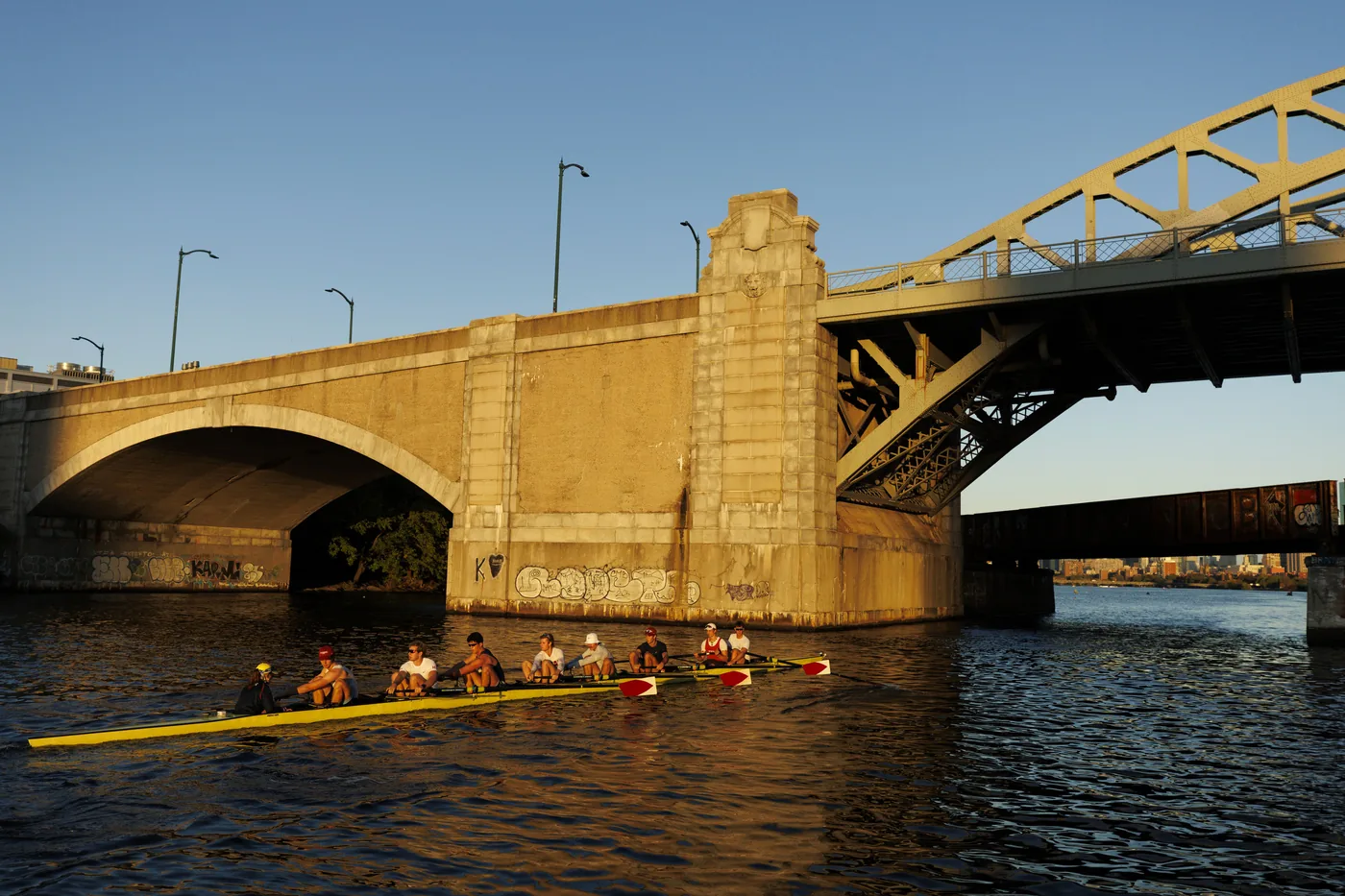
The Charles River demands intense concentration from every racing crew. Members of the Harvard men’s heavyweight rowing team passed under the Boston University Bridge during practice, leaning together into each stroke as dark rain clouds hung low over the river banks and gray water. One racer approached the bridge in driving rain. The athlete struggled against cold spray and choppy current as he worked to keep the slender scull tracking straight down the center line of the racing lane [1].
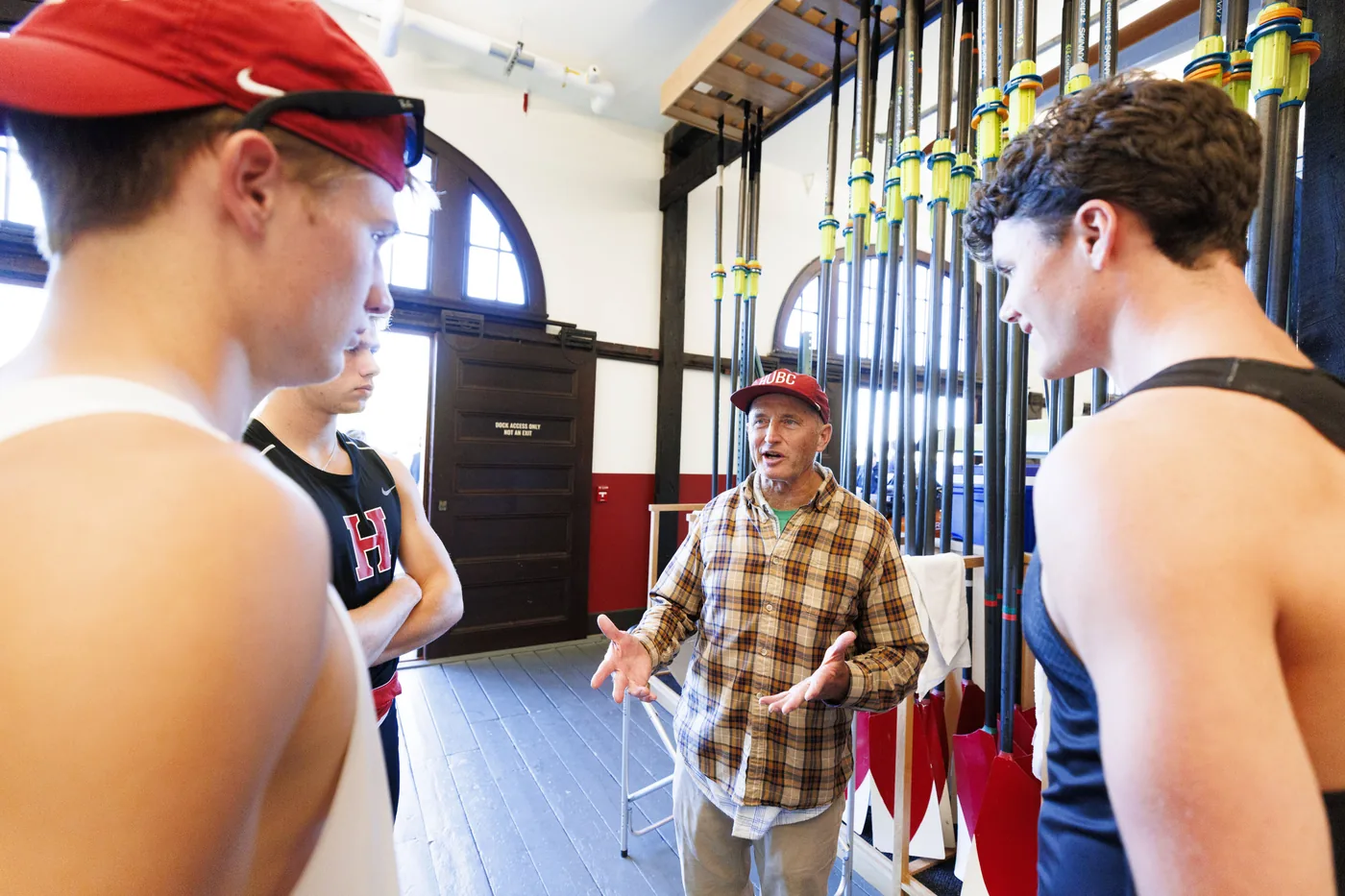
Before pushing off into the river, coxswain Rachel Roberts (right) of the Cork Boat Club of Ireland talked through the tricky turns and low bridges with a teammate to prepare for low visibility. Stone arches leave little room for steering errors. A sudden drift in gusty wind can easily push carbon blades against rough stone abutments or force a shell wide into sluggish water, turning what should have been a clean race into a struggle for position [1]. On coastal waters, independent rowers face similar hazards when squalls sweep through, discovering that calm, measured strokes keep a boat on course far better than rushing through the chop. Balance in rough water takes patience [2]. Crews relied on sharp commands from the stern to stay in rhythm through every bend [1].


Spectators and Bridge Vantage Points
Dedicated spectators lined the stone bridges along the river to cheer on racers who braved the difficult weather. On Eliot Bridge, onlookers watched the race from under umbrellas as a silhouetted rower passed below near the Cambridge Boat Club. Further up the river, two rowers headed toward the John W. Weeks Footbridge with Dunster House visible in the background, drawing shouts of encouragement from preschoolers from the Cambridge-Ellis School who stood waving from the railing. A Head of the Charles staffer sat riverside with a megaphone, helping families find good viewing spots along the wet paths [1].
Family ties brought many supporters out into the cold rain to back their favorite athletes. Leanne Blanchard of Vermont stood on the bank to cheer for her father-in-law, David Blanchard (81), celebrating his appearance in the regatta. On the Weeks Footbridge, Harvard Kennedy School students Sarah Foy and Alicia Carrasquillo Meyer showed support for classmate Chrysta Castañeda, M.C./M.P.A. ’27. The graduate group stood near the bridge railing holding a banner to celebrate Castañeda as she rowed under the stone arches, and even furry spectators in rain jackets watched from the grass. Spectators cheered each time a scull glided beneath the stone arches [1].
Coastal Waters and the Alden Shell
Solitary rowers found quiet waters during the same autumn weather front. On Blipfoto, NannaK observed that predicted morning wind had failed to appear, prompting a quick decision to take a small dinghy with a camera out on the water. Just after pushing away from shore, heavy rain began to fall before letting up into a calm shower. Harbor seals in the green water, deer on the steep bank, and kingfishers and herons along the trees were the only companions sharing the quiet bay [2].
NannaK photographed a companion named H rowing an Alden craft through the bay, capturing the shell gliding through beautiful green water in the steady rain. The Alden is a versatile, stable boat that one or two people can row comfortably in choppy conditions. The sky cleared for a short while before delicious, steady rain returned, making for a satisfying afternoon inside the studio and keeping the boats secure in case wind picked up at night. NannaK planned to share the wildlife photos on Flickr after returning from the bay [2]. Whether maneuvering an Alden on open water or steering a shell down a crowded river course, small-boat rowers find that wet autumn days offer memorable outings [1], [2].
Longtime Head of the Charles Weather Traditions
Rain and blustery gusts have long shaped the character of the Head of the Charles, testing rowers who travel from around the world to compete. Instead of letting gray skies spoil their day, competitors found simple ways to stay upbeat, such as rowing with a blade painted with a cheerful smiley face. Spectators leaning over stone bridges embraced the damp afternoon with equal warmth, cheering for every passing shell as leaves drifted across the water [1].
When racing ended for the day, crews dried their oars, racked their boats, and headed indoors to warm up and review their times. Much like NannaK retreating to a warm studio after a rainy morning on the bay, rowers on the Charles River found genuine satisfaction in completing a difficult course in foul weather [1], [2]. Cold rain, autumn wind, and choppy water will always test those who pick up an oar in October, but the regatta showed once again that dedicated crews meet wet river conditions with steady hands and good spirits [1].
- ONLINE NEWS Singer, N. Rowin’ in the rain. The Harvard Gazette. [Article Link]
- WEBSITE NannaK. Rowin’ in the Rain. Blipfoto. [Article Link]
APA 7: PerEXP Teamworks. (2026, October 21). Head of the Charles Starts in Autumn Rain with 12,000 Rowers. PerEXP Teamworks. https://perexpteamworks.com/en/head-of-the-charles-rain-regatta/


