





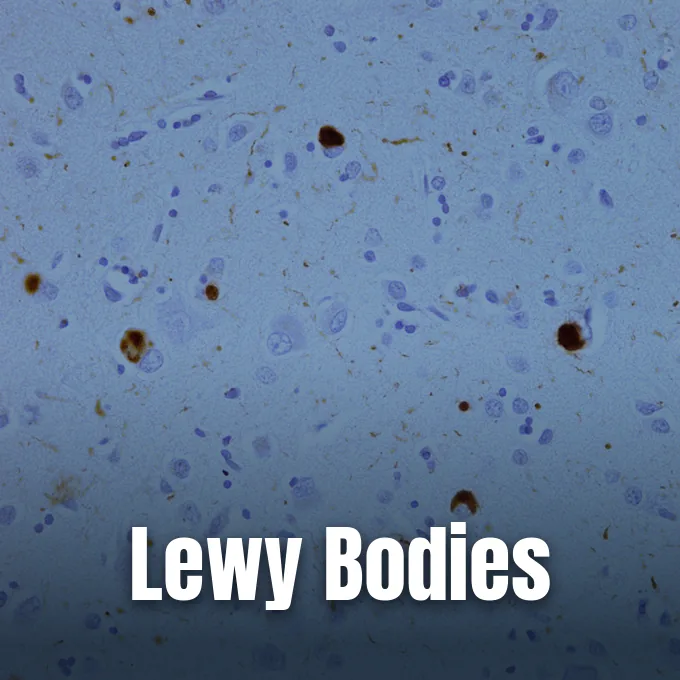
Inside the human brain, neurons rely on steady transport pathways to send chemical signals and keep circuits working properly. When normal proteins begin to misfold and clump together inside these cells, they form dense spherical deposits known as Lewy bodies. These abnormal clumps crowd the cytoplasm, displace cell organelles, and interrupt communication between neural networks [7]. In conditions like dementia with Lewy bodies and Parkinson’s disease, the spread of these protein masses leads to memory loss, motor stiffness, and hallucinations [1].
- Discovery of Lewy Bodies
- Why Do Lewy Bodies Form?
- Classical Versus Cortical Inclusions
- How Toxic Aggregates Disrupt Neural Signaling
- Clinical Overlap Across Synucleinopathies
- Early Warning Signs and Diagnostic Hurdles
- Why Lewy Body Dementia Remains Underdiagnosed
- Treatment Challenges and Caregiver Realities
Discovery of Lewy Bodies
The earliest description of these unusual neuronal deposits dates back to European laboratory work. In 1902, Romanian neurologist G. Marinesco first identified round proteinaceous structures within pigmented cells of the substantia nigra. Eight years later, German physician Fritz Heinrich Lewy tracked similar cellular defects while conducting doctoral research in Berlin. Lewy worked directly with Alois Alzheimer. His research in Berlin linked these protein clumps to paralysis agitans [7].
Scientific recognition of Lewy’s discovery grew over the following decade as other European pathologists examined brain tissue samples from patients who suffered from movement disorders. Spanish neuroscientist Gonzalo Rodríguez Lafora described an additional case in 1913, directly crediting Lewy by naming the round deposits cuerpos intracelulares de Lewy. In 1919, Russian-born neuropathologist Konstantin Nikolaevich Trétiakoff characterized the bodies in French medical journals as corps de Lewy, coining the eponym used in clinics today. Trétiakoff worked in Paris. Fritz Lewy published his full observations in 1923 in his German book, The Study on Muscle Tone and Movement, summarizing clinical investigations into how these protein deposits disrupt human motor control [7].
Medical historians still examine the naming dispute, with scholar Eliasz Engelhardt arguing that Lafora deserves credit because he named the deposits six years before Trétiakoff. Fritz Lewy had turned toward neurology after Alois Alzheimer showed in 1906 that brain plaques cause dementia. The third patient diagnosed with Alzheimer’s disease also had Lewy bodies [7].

Why Do Lewy Bodies Form?
At the microscopic scale, the main component driving the formation of Lewy bodies is a neuronal protein known as alpha-synuclein [3]. In healthy cells, alpha-synuclein is abundant in presynaptic terminals, where researchers believe it helps manage synaptic vesicle turnover and neurotransmitter release during normal communication [8]. However, under pathological conditions, this soluble protein twists out of shape, adopting a toxic beta-sheet shape that clumps into oligomers and elongated fibrils. Point mutations and gene duplications in the SNCA gene, which encodes alpha-synuclein, provide clear genetic evidence that protein misfolding initiates this destructive cellular cascade of resilient fibrillar bundles. The resulting protein clusters accumulate inside nerve cells and disrupt essential metabolic processes [3].
When misfolded proteins accumulate faster than cellular cleanup systems can handle them, the neuron initiates an aggresome response. Cells process abnormal proteins through the ubiquitin-proteasome pathway, tagging damaged molecules with ubiquitin chains for destruction. As molecular machinery becomes overwhelmed, the cell sweeps these tagged clumps together into a central deposit. Ubiquitin and alpha B crystallin gather within these structures [7].
Beyond structural crowding, alpha-synuclein plays an active role in cell maintenance that breaks down once deposits form. Healthy alpha-synuclein helps regulate DNA repair inside neurons, participating in non-homologous end joining to fix double-strand breaks in the genome. When the protein clumps, this repair function drops sharply, triggering programmed cell death. A prion-like seeding mechanism spreads the misfolded state [7].
Classical Versus Cortical Inclusions
Pathologists classify Lewy bodies into distinct anatomical groups based on their shape and distribution in the brain. In the brainstem, classical inclusions appear mainly inside pigmented catecholaminergic neurons located within the substantia nigra and locus coeruleus. When examined under light microscopy, these classical structures measure between 8 and 30 microns in diameter, showing an eosinophilic core surrounded by a pale peripheral halo. The pale halo helps pathologists identify the structure under staining. Electron microscopy reveals that this dense central core consists of haphazard granular particles, while the surrounding corona features radiating protein filaments that interact with nearby cytoplasm [7].
Cortical inclusions present a different appearance compared to brainstem deposits. Found in the cerebral cortex and inside the amygdala (a brain region tied to emotion and memory), cortical Lewy bodies are smaller, faintly eosinophilic, and lack the pale radiating halo seen in classical specimens [7]. Detecting cortical deposits became easier after immunohistochemical staining against alpha-synuclein was introduced [2].

In addition to rounded deposits within cell bodies, abnormal alpha-synuclein forms elongated thread-like structures called Lewy neurites inside axons and dendrites. These diseased processes contain granular debris that mirrors the molecular contents of mature bodies. In the hippocampal formation, Lewy neurites selectively damage the CA2 and CA3 sectors, creating a pattern that distinguishes Lewy diseases from Alzheimer’s pathology [7].
How Toxic Aggregates Disrupt Neural Signaling
The buildup of abnormal protein deposits exerts a heavy toll on neurotransmitter systems that regulate movement, alertness, and cognition. As Lewy pathology spreads through the midbrain, it causes extensive degeneration of dopamine-producing neurons in tegmental cell populations, triggering the motor rigidity and resting tremors characteristic of parkinsonism. Simultaneously, the disease destroys cholinergic neuronal populations in the basal forebrain, depriving the neocortex of acetylcholine needed for sustained attention and working memory. Dopamine loss impairs basal ganglia function [1]. Dr. James Leverenz, a neurologist at the Cleveland Clinic in Ohio, said that these protein clumps “muck up the ability for the brain to transmit signals” through critical neural networks [11].
Recent research shows that the immune system plays an unexpected, harmful role in driving cellular degeneration. In a study published in the journal Science, researcher Dr. David Gate discovered that immune cells known as CD4+ T cells enter the brain tissue of patients with Lewy body dementia. When stimulated with alpha-synuclein fragments, these T cells secrete inflammatory proteins that actively damage surrounding neurons [6].
Neuroinflammation and synaptic failure together produce rapid fluctuations in cognitive capacity that baffle clinicians and family members alike. Unlike the steady decline typically seen in uncomplicated Alzheimer’s disease, patients with widespread cortical Lewy bodies experience dramatic shifts in alertness [1]. One moment an individual converses with total clarity, only to slip into confusion minutes later [10]. As Angela Taylor from the Lewy Body Dementia Association said, this creates a “triple threat” affecting thinking, movement, and mood [11].



Clinical Overlap Across Synucleinopathies
Because alpha-synuclein deposits appear in several clinical conditions, modern neurology groups these illnesses under the umbrella term of synucleinopathies [2]. In primary synucleinopathies such as Parkinson’s, DLB, and Parkinson’s disease dementia, alpha-synuclein deposits clump within nerve cells. A related condition called multiple system atrophy also involves alpha-synuclein, but it is unique because the clumps accumulate primarily inside oligodendrocytes as glial cytoplasmic inclusions rather than within neurons. Glial cells carry the primary burden [3]. Overlap among these disorders led researchers led by K. Menšíková to question whether they represent distinct illnesses or varying expressions of one underlying disease spectrum [2].
The classification of these overlapping conditions evolved through the post-mortem research of Japanese neuropathologist Kenji Kosaka. In 1976, Kosaka reported the first autopsied case of diffuse Lewy body disease in Tokyo, later proposing the formal term Lewy body disease in 1980. By 1996, international medical panels established dementia with Lewy bodies as a distinct clinical entity based on Kosaka’s work. Kosaka classified cases into three main distribution types [4].
Distinguishing between dementia with Lewy bodies and Parkinson’s disease dementia relies on the timing of symptom onset rather than post-mortem pathology [1]. Under the Diagnostic and Statistical Manual of Mental Disorders, Fifth Edition (DSM-5), clinicians diagnose DLB when cognitive decline begins prior to or concurrently with motor parkinsonism [8]. Conversely, doctors diagnose Parkinson’s disease dementia when motor symptoms precede cognitive decline by at least one full year [1]. Both show convergent pathology at autopsy [8].

Early Warning Signs and Diagnostic Hurdles
Recognizing the onset of Lewy body pathology is challenging because the earliest symptoms often appear years or decades before cognitive decline becomes obvious. One of the most telling early markers is rapid eye movement sleep behavior disorder (RBD), a condition where patients lose the normal muscle paralysis of dream sleep and physically act out their dreams. Patients may kick, punch, or shout while asleep, often injuring themselves or their sleeping partners during dream enactment. Clinical studies cited by Armstrong in 2019 indicate that RBD can emerge fifteen years before daytime motor stiffness or memory problems develop in clinical assessments [9].
Autonomic nervous system dysfunction also produces warning signs throughout the body long before brain scans show significant cortical changes. Patients often experience chronic constipation, gut discomfort, and sudden drops in blood pressure upon standing that cause lightheadedness or fainting spells. An impaired sense of smell, known as hyposmia (reduced smell), frequently accompanies these gastrointestinal complaints. Constipation can precede diagnosis by decades [9].
As pathology reaches sensory processing regions, patients begin experiencing recurrent, well-formed visual hallucinations [9]. Individuals frequently report seeing detailed figures of people, children, or animals that are not present, though they often retain insight into their unreality early in the disease [1]. These perceptual disturbances, combined with fluctuating attention and motor slowing, often lead doctors to misdiagnose patients with psychiatric illness, late-onset schizophrenia, or uncomplicated Parkinson’s disease [8].
Why Lewy Body Dementia Remains Underdiagnosed
Despite being the second most prevalent progressive dementia after Alzheimer’s disease, Lewy body dementia suffers from persistent under-recognition in routine healthcare environments. Epidemiological estimates indicate that Lewy body disorders account for between 5% and 25% of all diagnosed dementias in older adults worldwide. In the United States, an estimated 1.4 million individuals live with Lewy body dementia, while approximately 140,000 people are affected in the United Kingdom. Advocacy groups like the Lewy Body Dementia Association in America and the Lewy Body Society in Britain emphasize that because clinical awareness remains low, actual patient numbers are substantially higher than official records show [8, 11].
Field research confirms that local diagnostic rates fluctuate depending on clinical training and access to specialized diagnostic tools. In an 18-month prevalence study across nine secondary healthcare services in two regions of the United Kingdom, Dr. John-Paul Kane and his research team tracked diagnostic patterns for Lewy body disorders. Their study, published in Alzheimer’s Research & Therapy, found that DLB prevalence rates in individual clinical services ranged from 2.4% to 5.9% of dementia cases. Regional services showed uneven rates [5].

Following a confirmed clinical diagnosis, the prognosis for patients living with Lewy body dementia remains challenging. The average life expectancy after diagnosis ranges from five to eight years, though some patients experience a faster decline lasting only four years [8, 9]. The combination of cognitive fluctuations, motor impairment, and autonomic failure progressively undermines daily living until full-time care becomes necessary [9]. Families frequently endure years of diagnostic uncertainty before receiving an accurate medical explanation [8].
Treatment Challenges and Caregiver Realities
Managing Lewy body disorders requires delicate medical care because standard psychiatric treatments can produce catastrophic physical reactions in affected patients. Up to 50 percent of individuals with dementia with Lewy bodies exhibit severe, life-threatening sensitivities to typical antipsychotic drugs commonly prescribed for hallucinations. Administering these medications can trigger acute parkinsonian crises, permanent rigidity, or even sudden death. Clinicians instead use cholinesterase inhibitors like donepezil and rivastigmine to support cognitive function [9].
The devastating human toll of the disease drew widespread international attention following the August 2014 death of beloved American comedian Robin Williams. Williams experienced severe gut discomfort, insomnia, paranoia, and memory lapses that prevented him from recalling lines while playing Teddy Roosevelt in Night at the Museum 3. His widow, Susan Schneider Williams, described his ordeal as a “terrorist inside my husband’s brain,” noting that his true condition was only discovered during post-mortem autopsy. Williams was sixty-three years old [10]. Other prominent cultural figures who succumbed to the illness include American radio host Casey Kasem, French cinema star Nathalie Baye in Paris, American actress Dina Merrill in East Hampton, comic book creator Sam Kieth, and Canadian composer Andre Gagnon in Montreal [12, 14, 15, 16, 17].
Navigating end-of-life decisions for Lewy body patients places emotional strain on families and professional caregivers alike. In the case of Casey Kasem, who passed away in 2014 at age 82 after a 2007 Parkinson’s diagnosis was later corrected to Lewy body dementia, his family engaged in a publicized legal dispute over his healthcare directives. Kasem hosted American Top 40 for decades. Elder law attorney Ira Wiesner in Florida and Conversation Project director Ellen Goodman emphasized that establishing a durable power of attorney early is vital [12]. Film designer Ron Cobb also died of the illness in Sydney in 2020, as reported by his wife Robin Love [13].
- ACADEMIC JOURNAL Gomperts, S. N. (2016). Lewy Body Dementias: Dementia With Lewy Bodies and Parkinson Disease Dementia. Continuum: Lifelong Learning in Neurology, 22(2), 435-463. [Article Link]
- ACADEMIC JOURNAL Menšíková, K., Matěj, R., Colosimo, C., Rosales, R. L., Tučková, L., Ehrmann, J., Hraboš, D., Kolaříková, K., Vodička, R., Vrtěl, R., Procházka, M., Nevrlý, M., Kaiserová, M., Kurčová, S., Otruba, P., & Kaňovský, P. (2022). Lewy body disease or diseases with Lewy bodies?. npj Parkinson’s Disease, 8(1), 3. [Article Link]
- ACADEMIC JOURNAL Kim, W. S., Kågedal, K., & Halliday, G. M. (2014). Alpha-synuclein biology in Lewy body diseases. Alzheimer’s Research & Therapy, 6(5), 73. [Article Link]
- ACADEMIC JOURNAL Kosaka, K. (2014). Lewy body disease and dementia with Lewy bodies. Proceedings of the Japan Academy, Series B, 90(8), 301-306. [Article Link]
- ACADEMIC JOURNAL Kane, J. P. M., Surendranathan, A., Bentley, A., Barker, S. A. H., Taylor, J., Thomas, A. J., Allan, L. M., McNally, R., James, P. W., McKeith, I. G., Burn, D. J., & O’Brien, J. T. (2018). Clinical prevalence of Lewy body dementia. Alzheimer’s Research & Therapy, 10(1), 19. [Article Link]
- ACADEMIC JOURNAL Gate, D., Tapp, E., Leventhal, O., Shahid, M., Nonninger, T. J., Yang, A. C., Strempfl, K., Unger, M. S., Fehlmann, T., Oh, H. S., Channappa, D., Henderson, V. W., Keller, A., Aigner, L., Galasko, D. R., Davis, M. M., Poston, K. L., & Wyss-Coray, T. (2021). CD4+ T cells contribute to neurodegeneration in Lewy body dementia. Science, 374(6569), 868-874. [Article Link]
- WEBSITE Wikipedia contributors. (n.d.). Lewy body. Wikipedia, The Free Encyclopedia. [Article Link]
- WEBSITE Wikipedia contributors. (n.d.). Lewy body dementia. Wikipedia, The Free Encyclopedia. [Article Link]
- WEBSITE Wikipedia contributors. (n.d.). Dementia with Lewy bodies. Wikipedia, The Free Encyclopedia. [Article Link]
- ONLINE NEWS Robbins, R. (2016). How Lewy Body Dementia Gripped Robin Williams. Scientific American. [Article Link]
- ONLINE NEWS Gallman, S. (2015). Robin Williams’ widow speaks: Depression didn’t kill my husband. CNN. [Article Link]
- ONLINE NEWS Caffrey, J. (2014). Casey Kasem and a lesson about end-of-life care. CNN. [Article Link]
- ONLINE NEWS Bartlett, R., & Parker, R. (2020). Ron Cobb, Designer of the ‘Alien’ Ship and the ‘Back to the Future’ DeLorean, Dies at 83. The Hollywood Reporter. [Article Link]
- ONLINE NEWS The Canadian Press. (2020). Pianist and composer Andre Gagnon, dead at 84, remembered as musical ‘jack of all trades’. CTVNews. [Article Link]
- ONLINE NEWS Dangremond, S. (2017). Actress and Philanthropist Dina Merrill Dies at 93. Town & Country. [Article Link]
- ONLINE NEWS Staff. (2026). Nathalie Baye, prolific star of French and Hollywood cinema, dies aged 77. The Guardian. [Article Link]
- ONLINE NEWS Admin. (2026). RIP The Sandman And The Maxx Co-Creator Sam Kieth. TRIPWIRE MAGAZINE. [Article Link]
Cover image: Movalley / Wikimedia Commons, CC0


