





Software startups rolled out automated assistants that live inside text messages in November 2026, offering tools that handle daily errands without forcing people to download separate phone applications. Instead of opening standalone apps, consumers can text these messaging AI agents through standard SMS, Apple iMessage, and Android RCS to organize calendars, research trips, and order household items [1]. Venture backing for these tools reached record sums during the autumn, but Signal President Meredith Whittaker and security researchers warn that automated screen reading creates fresh privacy vulnerabilities [2].
Early Messaging AI Agents Attract Major Backing
Venture funding accelerated when assistant startup Instinct raised $1 billion in September 2026, lifting its company valuation to $10 billion as consumer interest in messaging AI agents grew. That investment followed an earlier $350 million round that valued the startup at $2.5 billion. Instinct lets users speak or text to plan trips, order groceries, book tickets, and cancel paid subscriptions. In September, Instinct began issuing users separate email addresses so the bot can register accounts, contact merchants, and handle inbound messages without cluttering private inboxes. Instinct remains in private beta [1].
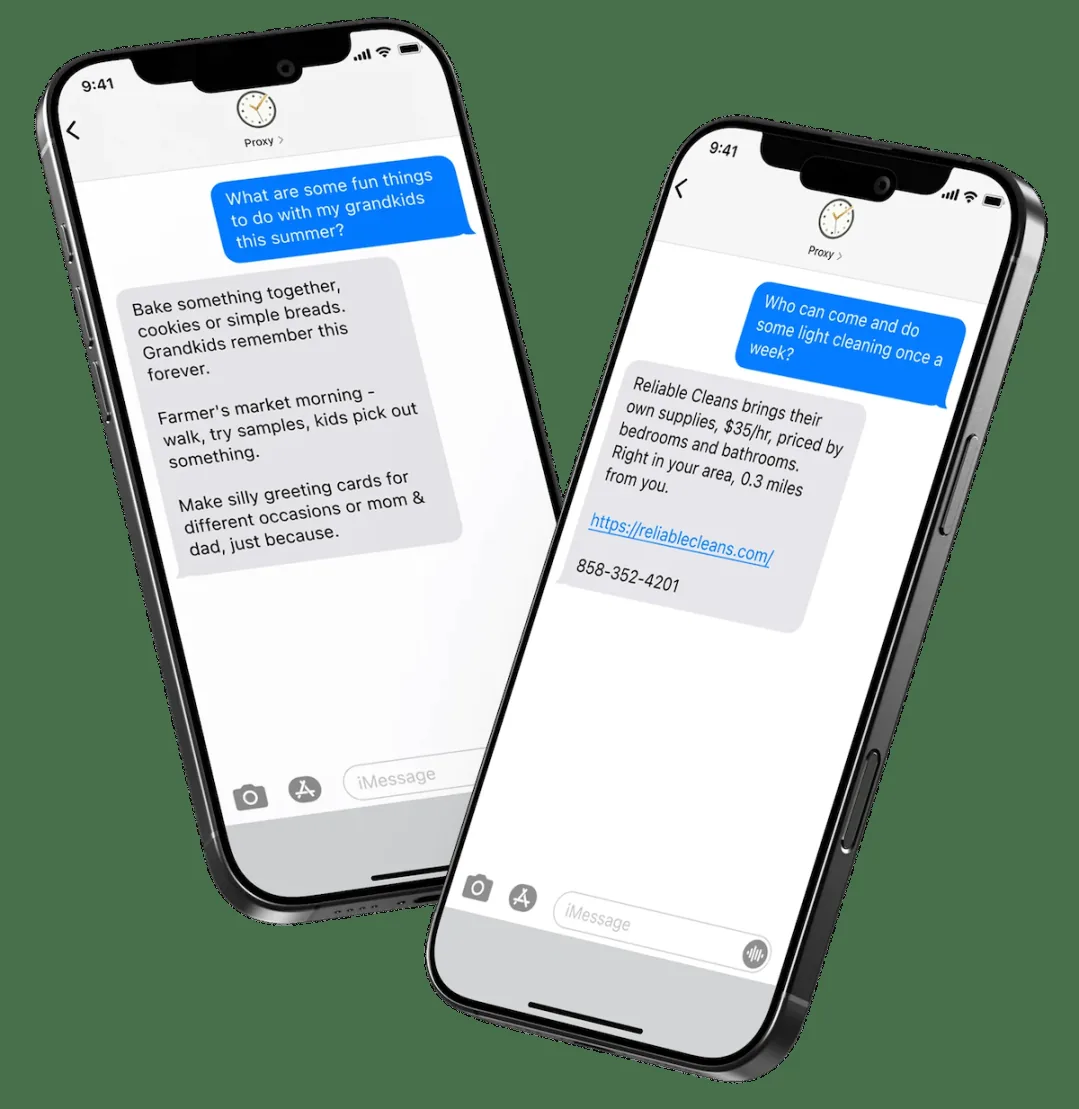
Other services target daily chores and retail platforms through standard phone numbers. Ask Proxy charges $1 per day for personal use, allowing people to text “start” to 820-732-2625 over SMS to request gift ideas, plan weekend events, or send photos of empty tables for dinner advice. For businesses, Ask Proxy charges $15 per worker at large firms and $23 for teams with fewer than 49 employees. Apple cleared Poke for inclusion on Apple Messages for Business in June 2026, marking the platform’s initial AI integration. AI coding startup Cognition acquired Poke’s owner, The Interaction Company of California, in July 2026 for a price in the low nine figures [1].
This growth inside personal messages has drawn pushback from privacy advocates. Signal President Meredith Whittaker said that autonomous bots scanning mobile screens make phone operating systems hostile to user privacy by capturing personal conversations without breaking network encryption. Whittaker called for clear developer opt-outs [2].
Household Schedules for Busy Families
Family organizers have adapted text messaging to help parents coordinate school routines and daily chores. Fambot works as an automated chief of staff that brings together school communications, sports schedules, and meal planning across Gmail, Google Calendar, Outlook, and WhatsApp. Support for Apple Calendar is planned. Every evening, Fambot sends parents an SMS summary detailing the next day’s schedule, upcoming events, and packing requirements such as school uniforms. Parents can reply directly to the message to adjust calendar entries or ask questions. Fambot launched in beta in early September 2026 after raising $3.5 million in pre-seed funding, offering free access before shifting to a subscription model comparable to Netflix [1].
Other family services manage household responsibilities through similar text channels. Ohai converts text messages, forwarded emails, and voice notes into family schedules, chore lists, and meal plans, offering a free tier alongside family subscriptions that start at $9.99 per month. Orbits coordinates household lists and calendar events through both a phone app and SMS messages. Backed by the Andreessen Horowitz Speedrun fund, N49P, and Garage Capital, Orbits books restaurant tables, changes appointments, orders supplies, and requests contractor quotes. Orbits also sends chore reminders over chat [1].

Passing private household details through chat threads raises questions about where personal data ends up. John Strand, CEO of Black Hills Information Security, said that chat bots that capture screen context expose unencrypted views of private household routines. Strand said that because text messages must be decrypted on screen for users to read them, screen-reading software bypasses network encryption without breaking security protocols [2].


How Messaging AI Agents Connect to Operating Systems
Several services expand what messaging AI agents can do by acting on stored personal context. Caddy has run in public beta since April 2026, living inside Apple iMessage for iPhone users and RCS for Android owners. Rather than requiring a separate inbox, Caddy links to calendars and conversations to pull action items from messages, such as friend requests to pick up groceries or meeting notices. Taking another approach, Haven acts as a digital twin that learns user habits and decision styles. Haven remains free in beta on iPhone, Android, and the web, and users can reach it by calling or texting (435) 260-6500 [1].
Other tools give bots broader access to local computing environments. Comma operates as an open-source assistant across browsers and computers, allowing users to control work files through Telegram, WeChat, and Signal. Folk runs on its own private cloud computer. Launched in May 2026, Folk executes multi-step code tasks across iMessage, WhatsApp, and Telegram, pairing a free tier with an $8.33 monthly Pro plan. Maverick acts as an iMessage companion that fixes typos, schedules meetings from voice notes, and cancels subscriptions for €27 or $30.25 per month. Maverick asks for user permission before taking action [1].

Allowing automated tools to run code and link to encrypted chat apps creates friction with secure platforms. Although Comma connects to messaging networks like Signal, Signal has rejected automated bots that scan screen contents. Signal President Meredith Whittaker said that operating system integrations from Apple, Google, and Microsoft compromise developer space by capturing unencrypted screen data [2].
Travel Coordination and Subscription Pricing
Specialized developers have also shaped bots around travel and voice coordination. Miso operates through Apple iMessage to plan trips, pairing artificial intelligence with a human travel team to track flight updates, seat preferences, and frequent-flyer loyalty points. Martin handles personal tasks across SMS, phone calls, WhatsApp, email, and Slack, charging $21 per month to place calls and summarize daily priorities. Iris runs on the Hermes Agent. The bot manages multi-step tasks inside iMessage while proactively following up with users about incomplete requests [1].
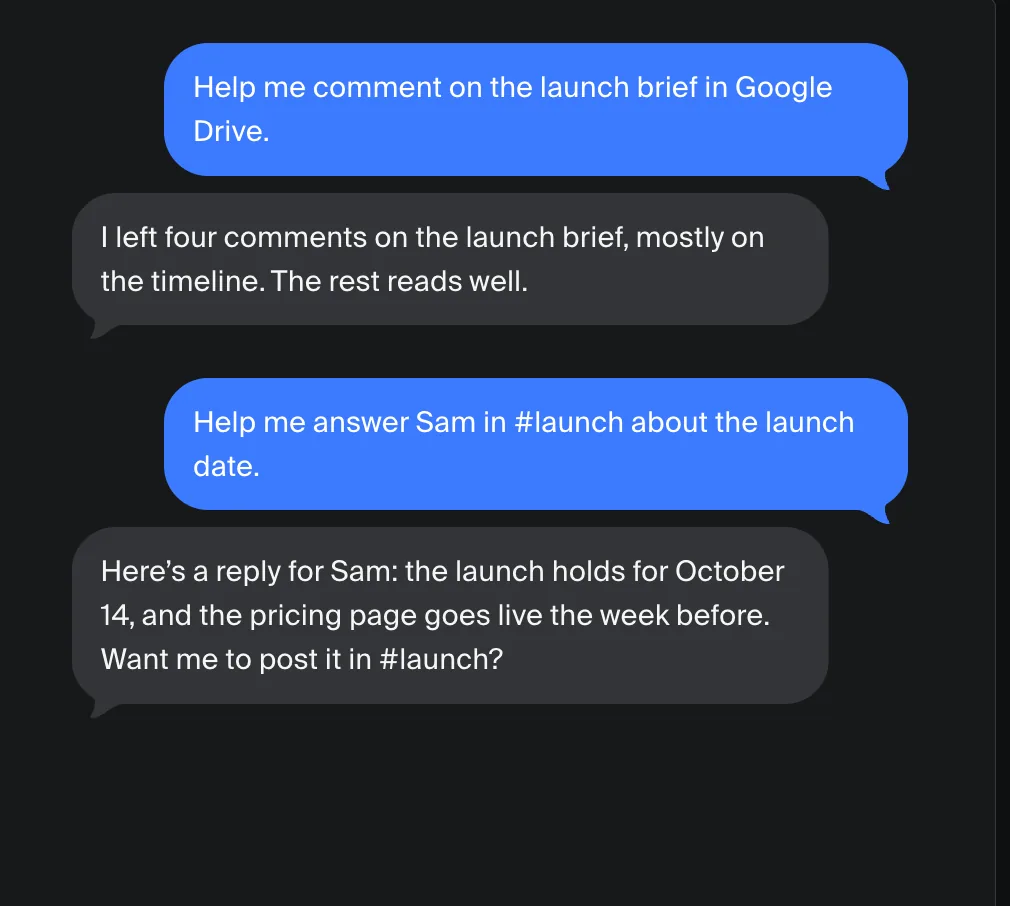
Other chat assistants focus on organizing records and maintaining conversational memories. Pally operates over iMessage, RCS, and Telegram, linking to WhatsApp, Gmail, Google Calendar, and Google Drive to organize receipts, dates, and documents under a free plan. Rene acts as a personal contact that turns natural-language text conversations into follow-up reminders and task summaries. Pricing across the sector varies widely, ranging from free basic access on Haven, Pally, and Comma to monthly subscriptions of $9.99 on Ohai, $21 on Martin, and €27 on Maverick [1].

These pricing models reflect how aggressively tech startups want people to route their personal data through text channels. But operating system makers have not built simple tools that let users restrict automated agents without losing core messaging features. Signal President Meredith Whittaker said tech giants must provide clear documentation and developer opt-outs to prevent background bots from reading private screens [2].
Screen Surveillance and Security Trade-Offs
The spread of autonomous messaging AI agents has triggered pushback from privacy-focused messaging services. Signal rolled out a default setting to block screenshots on Apple iOS 27 and stop AI assistants from capturing screen data on Android devices. Meredith Whittaker said that smartphone AI bots scan screens to gather personal habits and feed external systems. “Right now, these agentic AI integrations are changing this environment in a way that’s making it increasingly hostile to privacy,” Whittaker wrote. Whittaker said Signal previously blocked message screenshots from Microsoft’s Recall AI on Windows 11, but said Apple, Google, and Microsoft do not give developers easy ways to restrict automated agent access [2].
Security researchers say that on-screen scanning undermines traditional message protections. John Strand, CEO of Black Hills Information Security, said that network encryption protects text messages during transit, but content must be decrypted once it appears on a screen. “So, if an AI agent can access screenshots or directly observe what’s happening on your screen, it can read those messages without ever having to break the encryption itself,” said Strand. “That’s the scary part. You can have incredibly strong encryption, but if something can see what the user sees, that encryption isn’t going to protect you at that point.”. Strand warned that an intrusive bot could see private conversations and passwords [2].
Platform constraints still complicate privacy defenses across desktop hardware. Signal confirmed that it can’t implement its screenshot protections on MacOS because Apple lacks the required developer controls. Signal also introduced protective measures to shield chats from AI agents across mobile platforms without disabling essential calling features. Neither Signal nor Apple or Google replied to inquiries regarding on-screen assistant access [2]. As more assistants enter text inboxes, consumers must balance daily convenience against the privacy trade-offs of automated message reading.
- ONLINE NEWS Forristal, L. (2026, November 21). Here are the top AI agents that can live in your text messages. TechCrunch. [Article Link]
- ONLINE NEWS Milden, D. (2026, November 20). Signal Is Blocking Screenshots to Protect Your Messages from AI Agents. CNET. [Article Link]


