





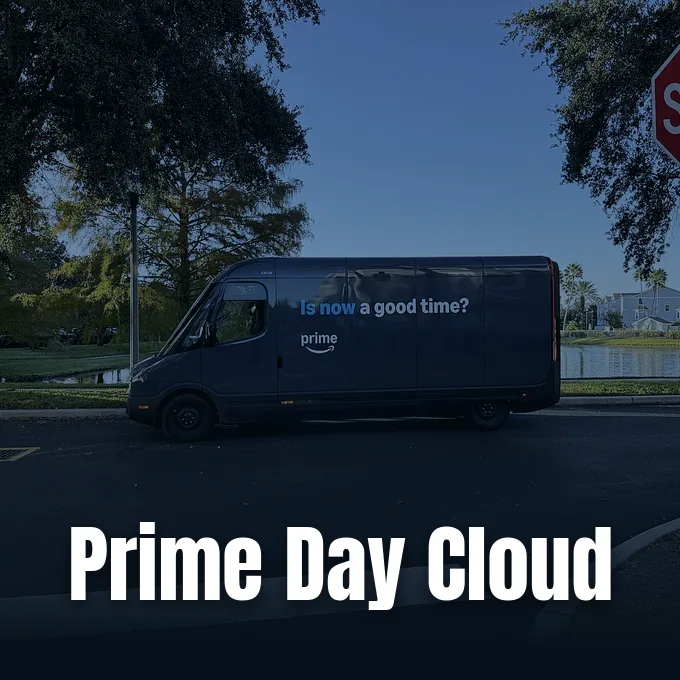
Amazon Web Services published its cloud metrics for Amazon Prime Day, detailing the computing scale that carried the retailer through its June shopping event as fall discounts begin. The AWS report outlines how custom server chips, managed databases, and caching layers sustained billions of retail orders without downtime. While the summer sale ran from June 23 to June 26 in 35 product categories, the newly shared numbers show how cloud systems absorbed traffic spikes so shopping pages didn’t crash. That same server demand returned this week as Amazon opened its second annual fall sales event on October 6 [1].
AWS Infrastructure Powers Amazon Prime Day
Custom server silicon anchored the event. Amazon reported that its in-house AWS Graviton processors ran up to 49% of the Amazon EC2 compute instances that powered Amazon.com across the four-day shopping rush, cutting overall electrical power consumption while serving millions of bargain hunters. Amazon Elastic Block Store peaked at over 24.8 trillion input-output operations and moved more than one exabyte of data daily [1].
Serverless workloads grew at a quick pace to process customer checkout actions and order updates without requiring engineering teams to manage individual virtual machines. AWS Lambda handled over 2.3 trillion function invocations per day during the summer rush, running lightweight code paths for payment authorizations, dynamic catalog updates, and order notifications. For containerized applications, Amazon Elastic Container Service launched an average of 158.3 million daily tasks on AWS Fargate. That volume jumped 47.7 percent over 2025. It didn’t take manual server maintenance to handle that shift [1].
During the week of Amazon Prime Day 2026, the Amazon CloudFront delivery network routed more than 2.1 trillion HTTP requests worldwide. Total requests grew 5 percent over 2025. Edge caching cut loading times for mobile shoppers and prevented local network bottlenecks from slowing checkout pages. The content delivery network kept product images close to shoppers, so core web servers weren’t overwhelmed by repetitive requests during flash sales [1].

Database and Traffic Spikes During Prime Day
Databases faced immense write activity. Amazon DynamoDB, the distributed serverless NoSQL database that underpins Alexa, the retail website, and all Amazon fulfillment centers, processed over 59 trillion requests between June 23 and June 26 while sustaining single-digit millisecond response times. Peak throughput reached 192 million requests per second. Even under that intense write load, DynamoDB didn’t drop incoming orders or slow down warehouse inventory tracking [1].
During the four-day shopping event, Amazon Aurora managed billions of database operations while holding 5,491 terabytes of data and transferring 1,194 terabytes across its storage nodes. Memory caches handled the rest. Amazon ElastiCache served over 2.3 quadrillion daily requests and handled a peak of 2.1 trillion requests in a single minute. That caching layer absorbs frequent read lookups so the main relational database doesn’t struggle under sudden surges of browsing traffic [1].
Streaming pipelines linked payment services to logistics tracking. Amazon Kinesis Data Streams processed a peak of 988 million records per second, feeding live data into internal inventory dashboards. At the same time, Amazon Simple Notification Service delivered 5 trillion messages in a single day, while Amazon Simple Queue Service accepted a peak of 213 million messages per second. These decoupled pipelines ensured that backlogged payment confirmations wouldn’t delay packing lines inside fulfillment centers [1].


Hardware Markdowns on Laptops and Displays
The cloud infrastructure tested in June now supports Prime Big Deal Days. Running October 6 and October 7, the two-day fall sale offers markdowns on laptops, monitors, and desktop accessories for paid Prime members who want to start holiday shopping ahead of schedule. Katherine Stevenson, hardware editor at PCWorld, said it’s an opportune time for buyers to secure computing gear before crowded November sales begin [2].
Among personal computers, the Microsoft Surface Laptop configured with 16GB of RAM and a Qualcomm Snapdragon X Plus processor dropped to $1,099, reflecting a $150.99 discount off its standard price tag. Stevenson said the 2.7-pound notebook provides up to 23 hours of battery life with a 13-inch 1920×1280 touch display and easily handles everyday office chores. Shoppers on tighter budgets found the Asus Vivobook Go discounted to $479.99 after a $120 price cut, powered by an entry AMD Ryzen 5 40 processor built for streaming video and routine web browsing. For desktop setups, an LG 34-inch ultrawide OLED gaming monitor with a 240Hz refresh rate and 3440×1440 resolution fell to $699.99, down $300 from its earlier pricing [2].

Accessories saw steep price cuts. The Amazon Basics Thunderbolt 4 Docking Station, which provides 140 watts of charging and connects three extra monitors, fell to $102.33 after a $46.60 markdown [2]. In home entertainment, Carrie Marshall at TechRadar reported that the Roku Pro Series 65-inch 4K 120Hz OLED TV dropped to $799.99, down $400 from its $1,199 list price. That price undercuts the LG B6 at $1,299 and Best Buy’s LG B6E at $999, matching previous Roku OLED TV retail markdowns [3].
Alexa Pricing Shifts at Amazon Prime Big Deal Days
While third-party electronics offered straightforward savings, discounts on Amazon’s own branded hardware need extra scrutiny due to recent price adjustments. Amazon increased list prices across connected speakers, streaming sticks, and e-readers at the end of August. Those shifts changed the baseline. WIRED reviewer Nena Farrell tracked the retail numbers and said several sale tags merely return gadgets to their earlier regular pricing levels [4].
The fifth-generation Echo Dot rose from $50 to $80 in August, so its current $40 sale price saves only ten dollars compared to its older everyday baseline. The Echo Spot climbed to $110 before falling to $55 for the October sale. The Echo Dot Max rose to $120 before dropping to $80. Larger smart displays followed suit, as the Echo Show 8 rose to $200 before dropping to $125 and the Echo Show 15 climbed to $350 before falling to $250 [4].

Digital reading devices followed that pricing pattern after Amazon adjusted its Kindle catalog ahead of the autumn sale window. The entry Kindle rose to $150, the Kindle Paperwhite jumped to $200, and the Kindle Paperwhite Signature Edition climbed to $250 before dropping to $170 for Prime Day shoppers. The color Kindle Colorsoft rose to $290 before dropping to $190, a cut that still leaves it above earlier pricing tiers. Streaming sticks weren’t exempt either, as the Fire TV Stick 4K Max rose to $85 before falling to $45, while the 55-inch Ember Artline TV dropped to $500 [4].
Audio Gear and Network Systems Testing
Wireless earbuds and over-ear headphones drew steep price cuts during Amazon Prime Day promotions. Shoppers found deals on personal audio from major manufacturers. Apple AirPods Pro 3 fell to $179, down $70 for earbuds featuring heart rate tracking, live translation, and up to eight hours of listening on one battery charge. Over-ear deals included the Nothing Headphone (1) for $189 after a $110 reduction, featuring a transparent housing, tactile volume dials, and 80 hours of battery life when noise canceling isn’t turned on [5].
Smaller tech accessories priced below $50 also received discounts tested by WIRED reviewers seeking dependable everyday gear. The Moft Snap Field Wallet dropped to $40 after a $10 discount, holding up to eight cards with a spare SIM card slot and a folding phone stand. Plugable’s USB-C 9-in-1 Hub fell to $37 after a $13 cut, with 140 watts of power delivery and clearly labeled ports on a sturdy metal frame. The second-generation Arlo Video Doorbell 2K dropped to $47 after a $23 reduction, and it delivers 180-degree HDR video previews [6].
AWS relied on routine chaos engineering and threat monitoring to keep cloud services stable through massive order peaks. AWS Fault Injection Service ran over 44,000 automated failure experiments during Amazon Prime Day, more than six times the testing volume conducted in 2025. Automated threat defense systems saw heavy activity, with Amazon GuardDuty scanning 14.08 trillion hourly log events while Amazon CloudWatch tracked 2.15 quadrillion daily metric observations. Channy Yun of AWS said companies planning large retail events can use AWS Countdown Premium to help manage traffic spikes and protect cloud performance [1].
- PRESS RELEASE Amazon Web Services. (2026, October 6). All the numbers: Amazon Prime Day 2026 powered by AWS. AWS News Blog. [Article Link]
- ONLINE NEWS Stevenson, K. (2026, October 6). Best Prime Day tech deals on Amazon: Top expert-curated picks. PCWorld. [Article Link]
- ONLINE NEWS Marshall, C. (2026, October 6). Roku’s brand-new 65-inch OLED TV is just $799 in the Amazon Prime Day sale. TechRadar. [Article Link]
- ONLINE NEWS Farrell, N. (2026, October 1). The 13 Amazon Device Deals Actually Worth Snagging This Prime Day. WIRED. [Article Link]
- ONLINE NEWS Rabinowitz, H. (2026, October 6). The Best Amazon Prime Day Headphone Deals for Every Kind of Listener. WIRED. [Article Link]
- ONLINE NEWS Higgins, M. (2026, October 6). Score a Deal on WIRED-Tested Gear Under $50 This Prime Day. WIRED. [Article Link]
Cover image: Nielsoncaetanosalmeron / Wikimedia Commons, CC BY 4.0


