





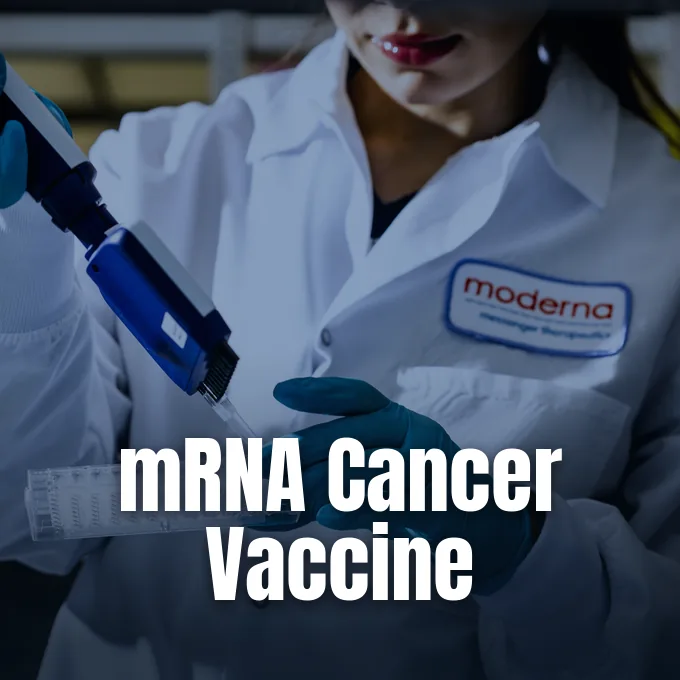
The investigational Moderna cancer vaccine, developed with Merck under the generic name intismeran autogene, reduced the risk of tumor recurrence or death by 42% when combined with Keytruda in patients with high-risk melanoma [4]. Senior writers Adam Feuerstein and Andrew Joseph reported from the European Society for Medical Oncology Congress in Madrid for STAT, tracking the medical and Wall Street implications of the data release [1]. Stéphane Bancel, chief executive of Moderna, said the findings reinforce conviction that mRNA can deliver individualized treatments matched to each patient’s tumor. Drugmakers released the full clinical dataset after early trial results leaked on social media platforms [4].
Clinical Efficacy in Advanced Melanoma
The randomized Phase 3 study enrolled 1,137 patients diagnosed with Stage 2B to Stage 4 melanoma whose primary tumors had already been completely removed through surgery [4]. Participants received either the experimental combination regimen or standard Keytruda paired with a placebo shot across clinical trial centers. Patients in the active group received up to nine intismeran injections administered at three-week intervals, combined with Keytruda infusions given every six weeks for up to nine cycles over roughly one full year of therapy [8]. Although cutaneous melanoma accounts for only about 1% of all diagnosed skin cancers, the malignancy causes the large majority of skin cancer deaths worldwide. Most recurrences develop within the initial two or three years following surgical removal. Dr. Jane Healy, head of oncology early development at Merck Research Laboratories, said patients face profound anxiety during this postoperative period [5].
Over a median follow-up of about two years, the combination regimen cut the risk of recurrence or death by 42% compared to Keytruda alone. The dual therapy also reduced the risk of cancer spreading to distant organs by 38% over Keytruda monotherapy [4]. Dr. David Berman, chief development officer at Moderna, said the Phase 3 findings closely matched earlier Phase 2 data that showed a 49% reduction in recurrence and a 59% drop in distant metastasis. Berman said reproducing those gains across a much broader patient population exceeded expectations [8].
How the Moderna Cancer Vaccine Trains Immune Cells
Unlike conventional vaccines created to prevent viral disease, the Moderna cancer vaccine serves as an individualized therapeutic agent built from genetic sequencing of a patient’s biopsied tumor. Scientists analyze excised tumor tissue to identify up to 34 mutated proteins, known as neoantigens, that distinguish cancerous cells from surrounding healthy tissue. The genetic blueprints for these 34 patient-specific antigens are encoded into messenger RNA and encapsulated within protective lipid nanoparticles similar to those used in Moderna COVID vaccines. Once injected into muscle, patient cells translate the mRNA sequences to assemble the target proteins, prompting immune sentinels to identify those abnormal structures as foreign intruders. This personalized technique trains circulating T cells to hunt specific malignant markers without harming normal organs [8].
The companion therapy, pembrolizumab (sold as Keytruda), unmasks malignant cells that attempt to hide from immune detection [4]. Tumor cells routinely trigger molecular checkpoint receptors to deactivate circulating T cells and evade destruction. Keytruda blocks these inhibitory pathways, effectively removing the biological brakes that keep immune cells from attacking cancer cells [8]. Dr. Jane Healy at Merck Research Laboratories said combining neoantigen training with checkpoint blockade delivers a dual attack that single-agent regimens cannot match [5].
Moderna Cancer Vaccine Recurrence and Survival Endpoints
The primary endpoint of the Phase 3 trial was disease-free survival, measuring whether the Moderna cancer vaccine prolonged remission before tumors returned [1]. Clinical records showed that therapeutic divergence began approximately six months following the start of treatment. Dr. David Berman said this latency period occurs because educating and expanding specialized T cells takes months of repeated biological stimulation. Immune defenses deepened over time as trained T cells multiplied [8].
While recurrence dropped sharply, clinical investigators emphasize that comprehensive data regarding overall patient survival remain pending. Karen Knudsen, chief executive of the Parker Institute for Cancer Immunotherapy, described the preliminary findings as “really encouraging” steps along the development path. “Did people who got the vaccine live longer than people who didn’t? And what was their quality of life?” Knudsen asked, noting that extended tracking is required to resolve those questions. Knudsen said that developing an effective individualized mRNA shot seemed like “fiction” a decade ago when technical obstacles appeared insurmountable [4]. Drugmakers Moderna and Merck reported that clinical trial sites will track patients for several additional years to document overall survival rates and daily health outcomes [5].

Manufacturing Speed and the Enzymatic Process
Personalized medicine historically confronted steep logistical hurdles that made individual biological therapies difficult to deploy. Early vaccine methods forced researchers to culture biological cells over several months, driving production costs higher while risking disease progression before treatments were ready. Moderna bypassed cell-culture delays by adopting a cell-free enzymatic synthesis method that builds customized mRNA sequences in vitro. Because no living cell lines need to be grown, chemical synthesis lets technicians produce a personalized vial of intismeran within weeks of receiving biopsy data. Dr. David Berman said this enzymatic speed lets patients start therapy during the vulnerable postoperative window before micrometastases take hold in distant organs [8].
Berman said scaling down the physical footprint allows manufacturing facilities to produce custom batches without expanding factory buildings. “The nice thing about the system is that it’s purely enzymatic, so no cell cultures need to be grown,” Berman said [8]. Dr. Jane Healy reported that side effects were mild, mainly involving temporary fatigue, fever, and local injection tenderness. Patients tolerated the regimen well across clinical trial cohorts [5].
Why Checkpoint Inhibitors Leave Gaps in Protection
Although checkpoint inhibitors transformed oncology, only about 30 percent of cancer patients respond to these therapies when administered alone. Checkpoint drugs lift the molecular shields that tumors deploy to suppress immune cells, but they cannot generate a targeted immune response from scratch. Without prior antigen education, releasing immune brakes yields minimal clinical benefit. Dr. David Berman said this lack of immune priming explains why many melanoma patients experience disease return on standard Keytruda therapy [8].
The Phase 3 data confirm that pairing neoantigen vaccination with checkpoint inhibitors addresses this persistent therapeutic gap. By supplying 34 tumor targets, intismeran primes T cells before Keytruda removes inhibitory checkpoint signals. The broader pipeline of cancer vaccines entering clinical trials demonstrates how researchers test customized immunization together with immune checkpoint inhibitors. Evaluating individualized patient signatures builds on earlier work exploring whether tumor markers can predict treatment needs in precision cancer medicine. “This shows us that in a significant percentage of patients, the checkpoint inhibitors are not doing anything because the immune system hasn’t even been educated to recognize the cancer cells,” Berman said. Berman said educating T cells represents a necessary step toward improving patient survival across oncology indications [8].

Next Steps for Regulatory Review and Expanded Trials
Following Phase 3 efficacy confirmation, drugmakers Moderna and Merck are preparing submissions for regulatory agencies in the United States and global markets. Dr. Dean Li, president of Merck Research Laboratories, spoke on CNBC’s Squawk Box alongside Moderna CEO Stéphane Bancel, stating that formal discussions with health authorities will begin in the coming months [5]. Full study results have been accepted for peer-reviewed publication in the New England Journal of Medicine, opening detailed protocols to scrutiny by outside oncologists [4]. Regulatory filings will proceed over the next year [5].
Beyond melanoma, pharmaceutical partners are evaluating intismeran across nine additional cancer types in ongoing clinical trials. The clinical development pipeline includes three Phase 3 studies in non-small cell lung cancer, along with trials in pancreatic cancer, gastric cancer, bladder cancer, and renal cell carcinoma [5, 8]. Commercial stakes remain substantial for both companies; earlier trial disclosures previously sent Merck shares up 12% while Moderna stock soared 177%. Merck held a market capitalization of around $333 billion at the time, while Moderna sat near $25 billion. Leerink Partners analyst Mani Foroohar had previously stated that Phase 3 validation was a decisive event for Moderna, confirming that mRNA technology can succeed beyond infectious disease vaccines [5]. Broad clinical efficacy across solid tumors would establish individualized mRNA vaccines as a standard pillar in modern cancer therapy [8].
- ONLINE NEWS Feuerstein, A., & Joseph, A. (2026, October 22). Detailed data confirm Moderna and Merck cancer vaccine met key endpoints in melanoma trial. STAT. [Article Link]
- ONLINE NEWS Feuerstein, A. (2026, October 22). What to expect from the Moderna-Merck cancer vaccine data reveal. STAT. [Article Link]
- ONLINE NEWS Feuerstein, A., & Joseph, A. (2026, October 22). Detailed data confirm Moderna and Merck cancer vaccine met key endpoints in melanoma trial. STAT. [Article Link]
- ONLINE NEWS Mogensen, J. F. (2026, October 22). Here’s what Moderna’s latest mRNA cancer vaccine data actually show. Scientific American. [Article Link]
- ONLINE NEWS Constantino, A. K. (2026, August 19). Cancer vaccine from Moderna, Merck shows promise in late-stage trial; both stocks soar. CNBC. [Article Link]
- ONLINE NEWS Herper, M., & Chen, A. (2026, August 19). Moderna and Merck say mRNA cancer vaccine succeeded in late-stage melanoma trial. STAT. [Article Link]
- ONLINE NEWS JBizNews. (2026, October 22). Detailed data confirm Moderna and Merck cancer vaccine met key endpoints in melanoma trial. JBizNews. [Article Link]
- ONLINE NEWS Park, A. (2026, October 22). A Personalized Cancer Vaccine Lowers Melanoma Recurrence by 42%. TIME. [Article Link]
APA 7: PerEXP Teamworks. (2026, October 23). Moderna Cancer Vaccine with Keytruda Cuts Melanoma Recurrence. PerEXP Teamworks. https://perexpteamworks.com/en/moderna-cancer-vaccine-melanoma-trial/


