



Each autumn, Observe the Moon Night brings communities across the globe together to examine Earth’s nearest celestial companion under evening skies. What drives millions of skywatchers to point binoculars and optical telescopes toward Earth’s nearest celestial neighbor on a single autumn evening? Sponsored by NASA under the broader International Observe the Moon Night initiative (an annual public engagement campaign), the global event unites professional astronomers and casual observers alike. The 2026 celebration takes place on Saturday, Sept. 19, following historic lunar orbital flybys earlier this year. [2]
Origins of Observe the Moon Night
NASA established the observation initiative in 2010 to foster public appreciation for lunar science and space exploration. Since the program began in 2010, people around the world have participated through telescopic observations, hands-on activities, community artwork, and scientific discussions. During the spring of 2026, four astronauts flew around the lunar far side aboard the historic Artemis II mission, marking the first crewed lunar voyage in over 50 years. Renewed lunar exploration has energized global interest in lunar observation. Skywatchers now view the Moon as an active destination for human exploration rather than a static orb. Astronauts examining the lunar surface from orbit observe subtle structural variations across impact basins and crater walls that complement automated imaging returned by robotic orbital exploration probes. [2]
Public interest spans continents, inspiring questions about international collaboration. Does NASA invite international space agencies to participate in lunar initiatives? Inquiries often focus on whether NASA invites ISRO or other foreign space partners to join lunar base frameworks. While public festivities welcome amateur clubs and families from every country, formal agency partnerships operate through separate bilateral pacts such as open science lunar cooperation under the Artemis Accords. Anyone with internet access can register a community viewing party or join a virtual broadcast from home. [2, 3]
Curiosity connects distant observers. A simple telescope reveals ancient impacts across the lunar disk. Science belongs to everyone. [3]
Artemis Milestones and Flight Visualizations
Scientific analysis from crewed flight provides fresh insight into lunar geology. At NASA Headquarters, planetary scientist Dr. Amanda Nahm investigates lunar processes and the scientific dividends yielded by recent lunar flybys. Starting at 6:30 p.m., planetary scientist Dr. Amanda Nahm from NASA Headquarters discusses emerging lunar findings and orbital insights gained from Artemis II. Crew observations from lunar orbit bridge robotic data with human exploration. These scientific perspectives help researchers correlate orbital remote sensing data with visual observations documented by astronauts during circumlunar transit. [2]
Visualizing complex planetary data requires turning raw telemetry into comprehensible imagery. Scientific visualizer Ernie Wright at NASA Goddard specializes in converting laser altimetry and photographic datasets from the Lunar Reconnaissance Orbiter into photorealistic models of the Moon. At 7:30 p.m., scientific visualizer Ernie Wright from NASA Goddard presents a specialized session explaining how orbital telemetry transforms into dynamic videos and planetary maps. These visual renderings allow researchers to examine lunar topography from perspectives impossible to capture with single-angle cameras. [2]

Orbital visualization techniques developed for lunar mapping also inform broader astrophysical exploration. As NASA pursues NASA Cosmic Origins long-term mission planning, cartographic accuracy remains vital for navigating deep space environments. Ground truth remains essential. [2]
Alabama Celebrations at Marshall Space Flight Center
In Huntsville, Alabama, community members can gather on Saturday, Sept. 19, between 5:30 and 8 p.m. CST at the U.S. Space & Rocket Center (the official visitor center for Marshall Space Flight Center). NASA Marshall invites families and media to participate in lunar science workshops. Journalists intending to cover the proceedings must confirm participation by Friday, Sept. 18, at 3 p.m. through Joel Wallace in the newsroom before checking in at the Davidson Center. Visitors can contact media staff in Huntsville at 256-786-0117 for logistics and credentials. Agency experts on site will deliver technical talks on lunar science and exploration while highlighting observation logs compiled during circumlunar transit. [1]
Family-oriented educational programming anchors the festivities in Huntsville. The gathering features Janet Ivey, host of the children’s television series Janet’s Planet, presenting an interactive science stage show for young skywatchers. Educational specialists organize hands-on STEM activities, face-painting stations, and an interactive photo kiosk where children learn basic planetary science concepts. Engaging younger generations inspires discovery. [1]
Local astronomical societies provide hands-on observing opportunities alongside agency scientists. The Von Braun Astronomical Society deploys optical telescopes across the grounds of the U.S. Space & Rocket Center, guiding guests through close-up views of lunar craters, bright planets, and deep-sky targets. The Planetary Missions Program Office at NASA Marshall sponsors the evening. Agency specialists deliver talks detailing how robotic lunar probes coordinate with upcoming crewed landing initiatives. These interactions connect historical aerospace engineering with ongoing planetary exploration. [1]

Maryland Programs and Apollo Lunar Samples
At the Goddard Space Flight Center Visitor Center in Greenbelt, Maryland, celebrations run from 6 p.m. to 9 p.m. EDT on Saturday, Sept. 19. Visitors entering the facility can examine an authentic Apollo 14 lunar sample displayed directly inside the main gallery. Touching history inspires deeper appreciation for ongoing lunar science. Viewing extraterrestrial basalt in person provides tangible evidence of the geological forces that shaped the early Solar System. [2]
NASA Goddard coordinates major robotic lunar missions that continuously gather surface measurements. The celebration is sponsored by the Lunar Reconnaissance Orbiter mission and the Solar System Exploration Division of NASA Goddard. Throughout the evening, attendees participate in interactive hands-on activities, create lunar artwork, and capture photographs at an event selfie kiosk. Outdoor telescopes are positioned across the visitor center grounds for guided stargazing, offering views of the lunar surface weather permitting. [2]
Admission to the Goddard celebration is free and family friendly, operating rain or shine with complimentary visitor parking. Advance registration is not mandatory, though preregistration assists event organizers in managing attendance and logistics. Just as deep-space observatories like NASA’s Roman mission tracking distant celestial targets expand astronomical frontiers, local observation nights connect ordinary citizens with celestial physics. The Moon never stops turning. [2]
Global Stargazing Along the Lunar Terminator
Timing for the celebration coincides with the first quarter moon in September or October, when the lunar disk appears prominently in the late afternoon and evening sky. During this lunar phase, shadows cast along the terminator (the sharp division between lunar day and night) reveal topography with exceptional clarity. Low sun angles accentuate crater rims and mountain ridges. Craters and towering mountain peaks stand out vividly in relief, allowing observers using small instruments to identify geological structures that appear washed out during a full moon. Shadows lengthening across the terminator exaggerate topographical relief, transforming shallow crater depressions and subtle volcanic ridges into dramatic chiaroscuro features easily visible through modest binoculars. [3]
Can novice skywatchers spot specific historic milestones without specialized equipment? While human artifacts remain too tiny to resolve through Earth-based telescopes, the broad volcanic plains where astronauts landed remain visible. Observers can easily locate the Sea of Tranquility, where Apollo 11 astronauts landed in July 1969 to conduct the first crewed lunar surface exploration. Locating these historic basaltic lowlands reminds skywatchers how robotic data and crewed missions jointly expanded humanity’s understanding of our cosmic backyard. [2, 3]
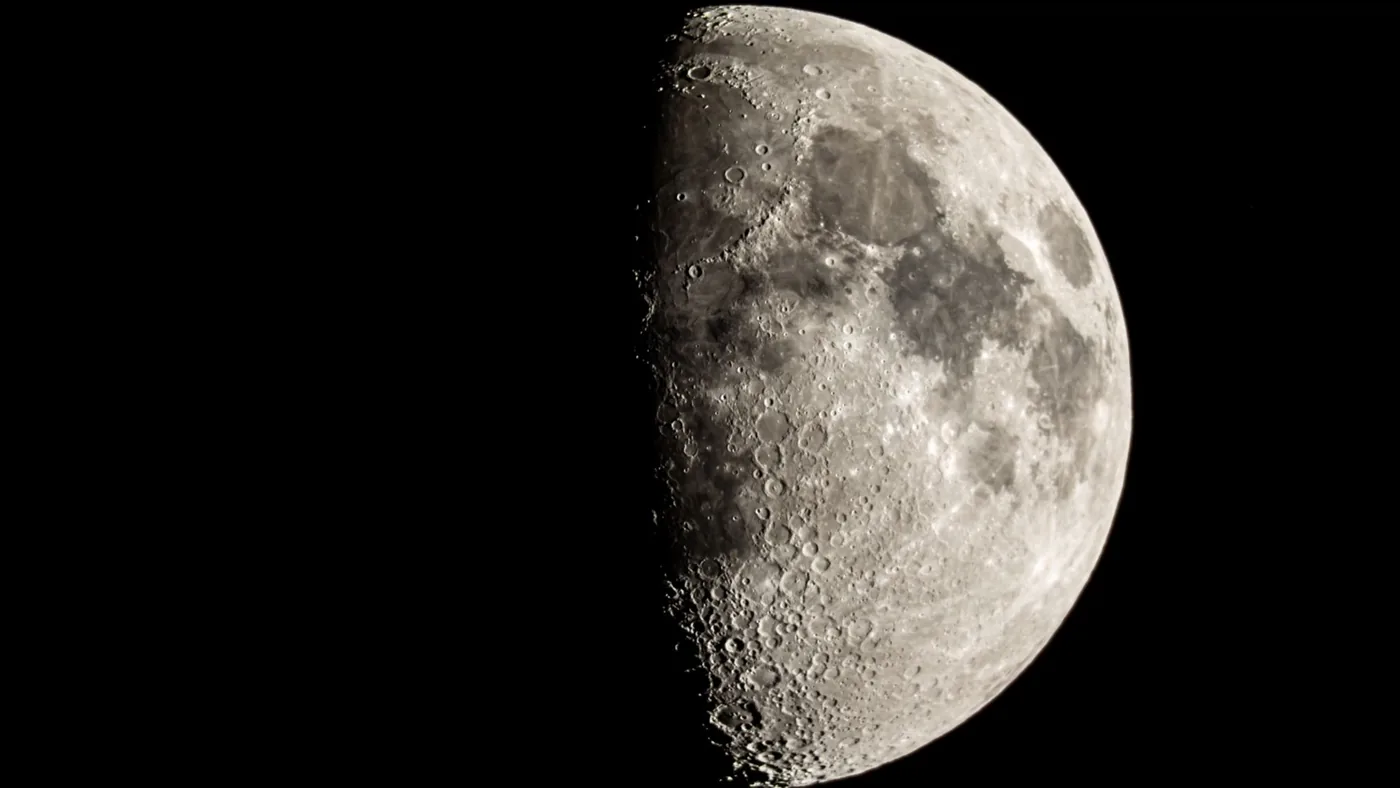
Individuals unable to visit NASA centers can participate in Observe the Moon Night from backyard lawns, rooftops, and local parks [2, 3]. Science writer Anthony Wood at Space.com emphasizes that observing Earth’s satellite requires nothing more than stepping outside with the naked eye or a pair of standard binoculars. NASA hosts an interactive global map listing hundreds of community star parties, public observatory events, and virtual streaming presentations worldwide. These distributed gatherings demonstrate how shared scientific curiosity unites distant communities across international borders. [2, 3]
Telescopes and 3D Printed Lunar Maps
Selecting appropriate stargazing equipment enhances the observing experience for both beginners and experienced amateur astronomers. Space.com highlights the Celestron Nexstar 4SE (a portable optical telescope with a four-inch aperture) as an accessible instrument capable of delivering steady views of lunar crater networks and ancient volcanic plains. Quality optics bring intricate surface features within reach of amateur astronomers. Binoculars also provide superb wide-field perspectives of lunar mares and bright ray systems without requiring complex motorized mounts or lengthy alignment procedures. Proper preparation ensures successful viewing. [3]
Advancements in digital manufacturing allow enthusiasts to interact with lunar data through physical tactile models. Individuals operating a 3D printer can download topographic elevation data gathered by the Lunar Reconnaissance Orbiter to build tactile terrain maps. These physical models can recreate the Apollo 11 touch-down area across the Sea of Tranquility, where astronauts first stepped onto the lunar surface in July 1969. Enthusiasts can print detailed tactile representations of the landing site, exploring elevation profiles and crater topography with their fingertips. Tactile mapping brings planetary science to visually impaired learners and curious students alike. [2, 3]
Participating in Observe the Moon Night requires only looking up as twilight deepens across your local horizon. Skywatchers planning to host neighborhood gatherings or stargazing sessions can register their events on the official NASA map to connect with fellow lunar enthusiasts [2, 3]. Looking upward unites global communities. Exploring our neighboring world provides the essential foundation for upcoming voyages to deep space destinations across the Solar System. [2]
- PRESS RELEASE Wallace, J. (2026, September 15). NASA invites media to International Observe the Moon Night. NASA. https://www.nasa.gov/news-release/nasa-invites-media-to-international-observe-the-moon-night/ [Article Link]
- PRESS RELEASE Khalil, M., & Mersmann, K. (2026, September 15). Celebrate International Observe the Moon Night with NASA. NASA. https://www.nasa.gov/centers-and-facilities/goddard/celebrate-international-observe-the-moon-night-with-nasa/ [Article Link]
- ONLINE NEWS Wood, A. (2026, September 15). International Observe the Moon Night 2026 is on Sept. 19: Here’s how to join in. Space.com. https://www.space.com/stargazing/international-observe-the-moon-night-2026-is-on-sept-19-heres-how-to-join-in [Article Link]
APA 7: TWs Editor. (2026, September 16). How Observe the Moon Night unites global skywatchers. PerEXP Teamworks. https://perexpteamworks.com/en/observe-the-moon-night-celebration/


