



Asus officially released the ROG Xbox Ally X20 gaming handheld on October 15 [1]. The hardware celebrates 20 years of Republic of Gamers with an upgraded OLED display, revised controls, and an AMD Ryzen AI Z2 Extreme processor priced at $1,299.99 [3]. Store shipments reached players on launch day [2]. Early reviews evaluated how the upgraded portable machine performs against competing PC handhelds across demanding modern games [3].
ROG Xbox Ally X20 Hardware and Display Upgrades
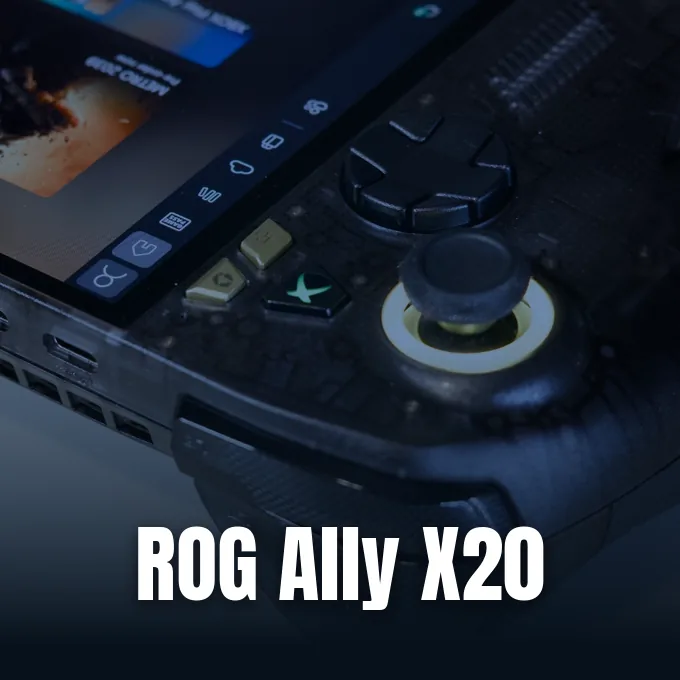
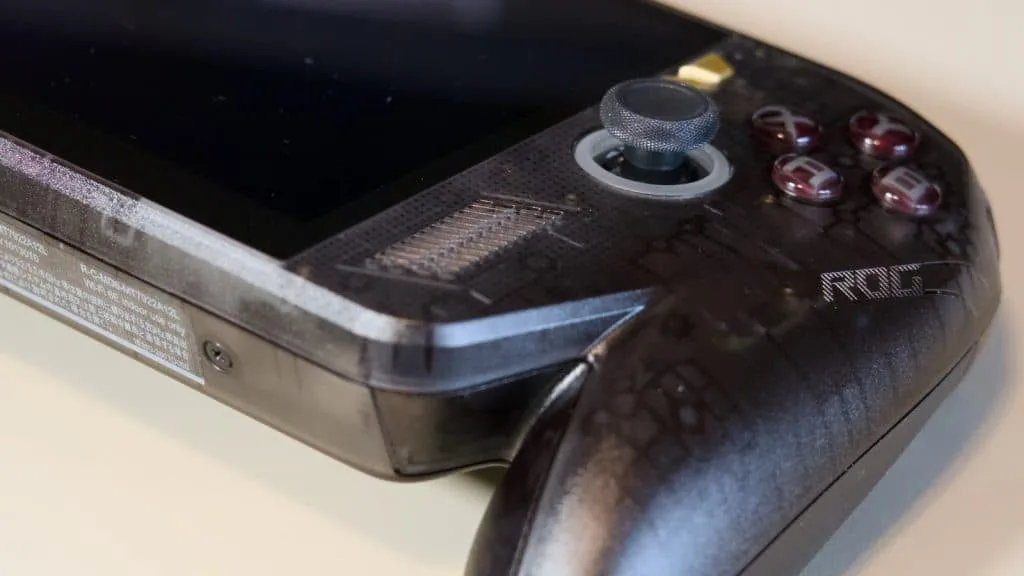
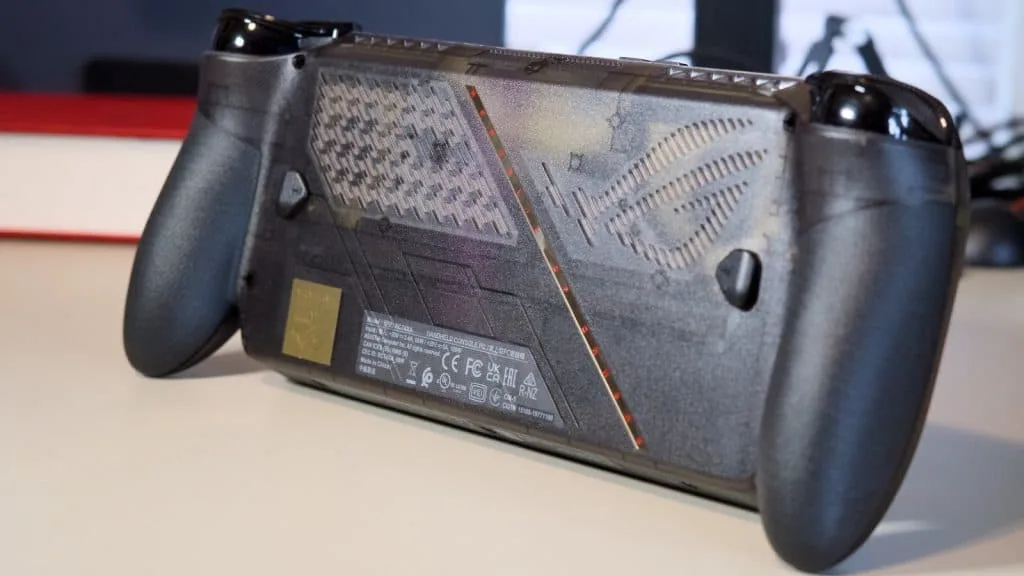
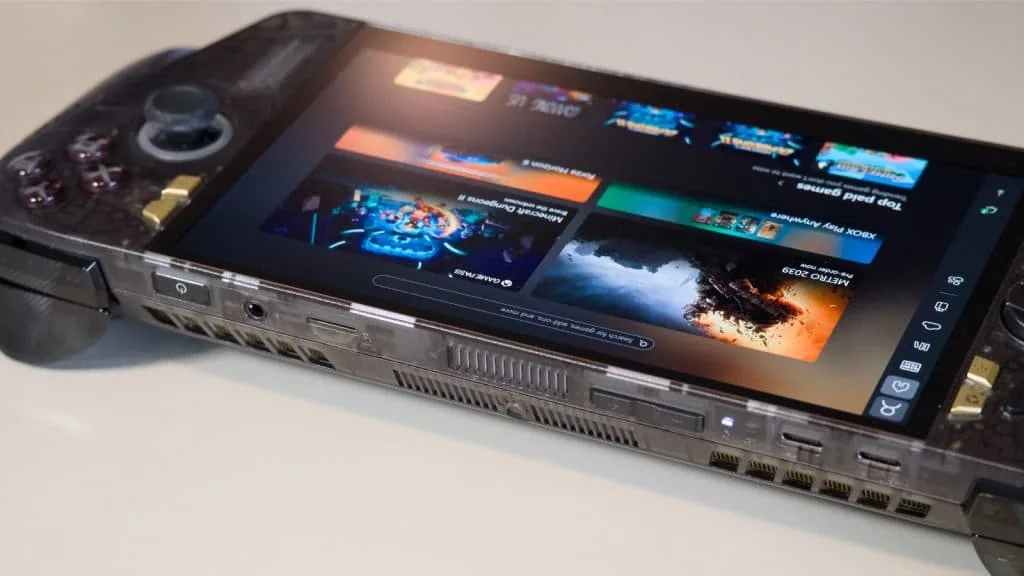
A tinted, semi-transparent dark casing reveals internal circuitry beneath gold-painted trim and commemorative 20th-anniversary markings. Asus kept the familiar Xbox-inspired grips and applied a rubberized texture for a firmer hold [3]. Weight increases to 756 grams. Measuring 30.0 by 12.1 by 5.13 centimeters, the console feels slightly heavier than the earlier 715-gram Ally X, but ergonomic handles balance the bulk comfortably during long gaming sessions [4].
The primary upgrade on the ROG Xbox Ally X20 is its 7.4-inch OLED display, which replaces the 7-inch IPS panel found on the original Xbox Ally X [4]. Running at 1920 by 1080 resolution with a 120Hz refresh rate, the new panel achieves an ultra-low 0.2ms response time that eliminates motion smearing across fast-paced action sequences while Dolby Vision handles cinematic scenes [3]. Peak brightness reaches 1400 nits under VESA DisplayHDR True Black 1400 certification. Older screens topped out at 500 nits [4]. AMD FreeSync Premium Pro dynamically adjusts the refresh rate between 30Hz and 120Hz to prevent screen tearing when frame rates fluctuate during demanding gameplay sequences. An anti-reflection glass coating cuts down glare from room lamps so colors pop across brightly lit scenes [3].
Subtle RGB lighting rings circle both analog sticks [3]. Along the top edge, Asus placed a 3.5mm combo audio jack, a UHS-II microSD Express reader, and two versatile USB-C ports. One port supports USB4 with Thunderbolt 4, while the other handles USB 3.2 Gen 2. Both connectors support DisplayPort 2.1 and Power Delivery 3.0, making it simple to plug in external monitors or high-output battery packs on the road [4].

Transforming D-Pad and TMR Thumbstick Controls
Control refinements focus on input precision and durability [3]. The system swaps older potentiometers for TMR thumbsticks, utilizing magnetic tunneling magnetoresistance sensors to deliver pinpoint tracking and prevent analog stick drift over months of intense portable play across demanding action genres. Rounded face buttons need less pressure to activate, while updated Hall Effect triggers offer smooth analog travel and clicky shoulder bumpers provide crisp tactile feedback with every tap [4].
The transforming D-pad is a standout mechanical addition. Players can lift the D-pad and rotate it 90 degrees to change between four-directional and eight-directional layouts. That rotation raises or flattens the diagonal corners so retro games get clean cardinal directions and fighting games gain smoother diagonal sweeps during complex combo inputs [3]. It’s an adaptable mechanism that solves a common complaint about handheld gamepads without forcing players to carry small detachable parts that could easily get misplaced [4]. Redesigned bumpers sit above the triggers to keep finger transitions natural [3].
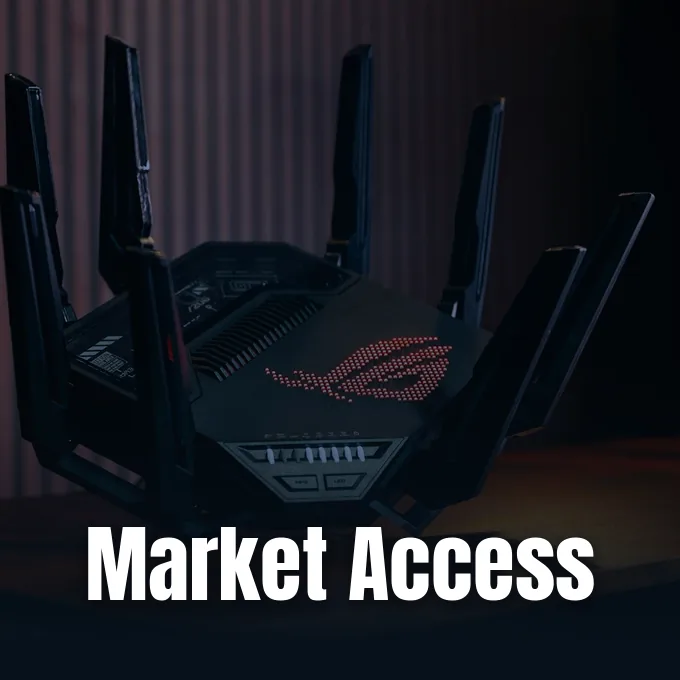
Front stereo speakers support Dolby Atmos spatial sound. Built-in microphones handle party voice chat without headsets. Wireless networking incorporates Wi-Fi 6E and Bluetooth 5.4 to maintain low latency connections for competitive multiplayer sessions and wireless headphone pairing. That focus on portable speed stands apart from stationary hardware where Asus routers secured US approvals to serve fixed enterprise and home environments [3]. A cardboard desk stand comes in the box. Asus omitted a wall charger to minimize electronic waste [4].

Gaming Benchmarks Test the Ryzen Z2 Extreme Processor
Computing horsepower stems from the AMD Ryzen AI Z2 Extreme processor, utilizing identical silicon architecture to the earlier Ally X. The processor boost clock reaches 5 GHz. Graphics are handled by an RDNA 3.5 GPU with 1024 shaders running up to 2.9 GHz, paired with 24GB of LPDDR5X RAM and a 1TB PCIe 4.0 NVMe SSD for fast game loading [4].
Because core silicon remains unchanged, benchmark gains stem from thermal tuning rather than a generational silicon leap [4]. Reviewer Dylan Horetski at Dexerto tested Forza Horizon 6 on high settings at 1080p, reporting sustained frame rates between 50 and 60 FPS in Turbo mode. In Cyberpunk 2077, the handheld sustained near 60 FPS with upscaling active, while enabling AMD frame generation pushed frame rates up to approximately 105 FPS [3]. PC Gamer’s testing in Cyberpunk 2077 at medium settings produced 42 average FPS native and 58 average FPS with upscaling at 35W plugged in, showing dependable performance across modern visual benchmarks [4].
Demanding games lean heavily on modern scaling solutions, including AMD FSR upgrades reaching gaming handhelds to keep motion fluid [3]. In PC Gamer’s tests with Black Myth: Wukong at 1080p Medium, the ROG Xbox Ally X20 posted 26 average FPS native and 40 average FPS with upscaling, comfortably beating the Lenovo Legion Go S while matching the OneXPlayer OneXFly F1 Pro [4]. Indie games run with ease. Lighter titles like Balatro, Hollow Knight: Silksong, and Super Meat Boy 3D run smoothly without driving cooling fan noise to distracting levels [3].
Xbox Ally X20 Software and Console Interface
Windows handhelds often struggle with desktop menus. Asus tackled that barrier on the Xbox Ally X20 by emphasizing the Xbox Fullscreen Experience, which launches into a controller-friendly console interface. The dashboard unites game libraries from Xbox Game Pass, Steam, and other storefronts into one central hub. Players can browse games, adjust system settings, and launch titles without touching desktop icons [3].
Does Windows 11 still present occasional update interruptions or background windows? It does at times, but the operating system provides an undeniable edge over Linux competitors when it comes to game compatibility. Multiplayer releases that enforce anti-cheat protection run natively here, avoiding the compatibility hurdles that lock Steam Deck users out of major online titles. Asus integrates its Armoury Crate overlay to let players switch between Silent, Performance, and Turbo modes on the fly so power draw matches the demands of each game. That software bridge transforms a full PC operating system into something far closer to a dedicated gaming console, letting players move smoothly between storefronts without leaving their gamepad controls [3].
PC Gamer found that plugging in standard phone adapters prevented the handheld from drawing its full 35W profile, which triggered low-power warnings in Armoury Crate. The box contains no charging brick. Because Asus doesn’t include a wall adapter in the retail package, users must supply an external high-wattage USB-PD charger to unlock maximum plugged-in clock speeds [4].
Battery Life and Retail Value Against Competitors
Battery capacity stays pegged at 80Wh. That capacity matches the original Xbox Ally X. In demanding games like Cyberpunk 2077 and Forza Horizon 6 running in Turbo mode, battery life averages two to three hours. Lighter games like Balatro and Silksong run for four to six hours in lower-power modes. Run times stay dependable despite driving a larger OLED screen [3].
Retail pricing marks the biggest talking point for the ROG Xbox Ally X20, which launches at $1,299.99 in the US and £1,300 in the UK. That MSRP represents a $300 price jump over the launch price of the original Ally X, moving the device squarely into premium territory. As PC Gamer observed, “Asus’ 20th anniversary edition of the Xbox ROG Ally X is as bougie as the $300 price bump implies”. In Britain, the standard Xbox Ally X sells for £400 less, while the G3-equipped MSI Claw 8 EX AI+ CG3EM costs just £100 more without providing an OLED display for handheld gaming enthusiasts. For buyers who don’t care about OLED visuals, that price gap makes last year’s hardware look like a tempting bargain [4].
Hardware upgrades do not deliver raw silicon leaps [4]. Gamers upgrading from earlier hardware won’t discover raw processing leaps, but Dylan Horetski from Dexerto said “the X20 delivers enough improvements to justify its premium price tag” due to its display and controls. For players wanting top-tier portable visual fidelity, the ROG Xbox Ally X20 sets a compelling standard across premium PC gaming handhelds [3].
- PRESS RELEASE Xbox Wire. (2026, October 15). ASUS Announces Availability of ROG XBOX Ally X20. [Article Link]
- ONLINE NEWS Pure Xbox. (2026, October 16). The Reviews Are Flooding In For The ROG Xbox Ally X20. [Article Link]
- ONLINE NEWS Horetski, D. (2026, October 15). Asus ROG Xbox Ally X20 review: The handheld to beat. Dexerto. [Article Link]
- ONLINE NEWS PC Gamer. (2026, October 15). After two weeks using the ROG Xbox Ally X20 I respect it despite its giant price tag. [Article Link]


